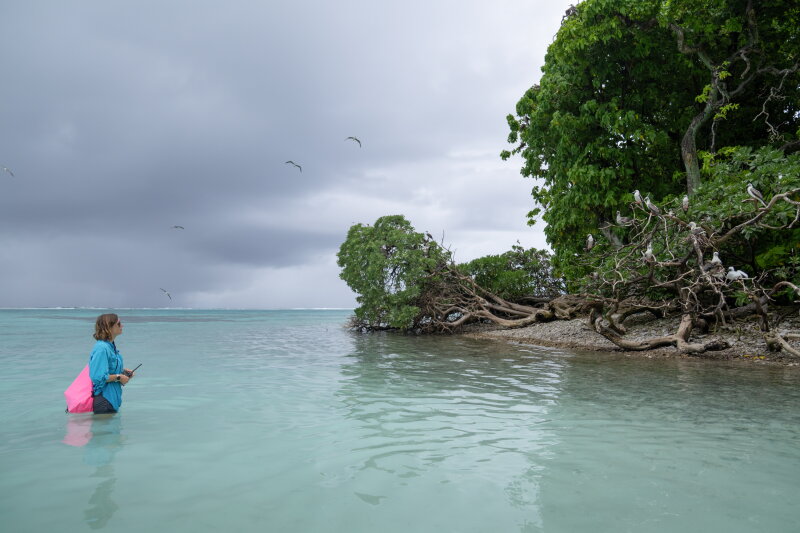
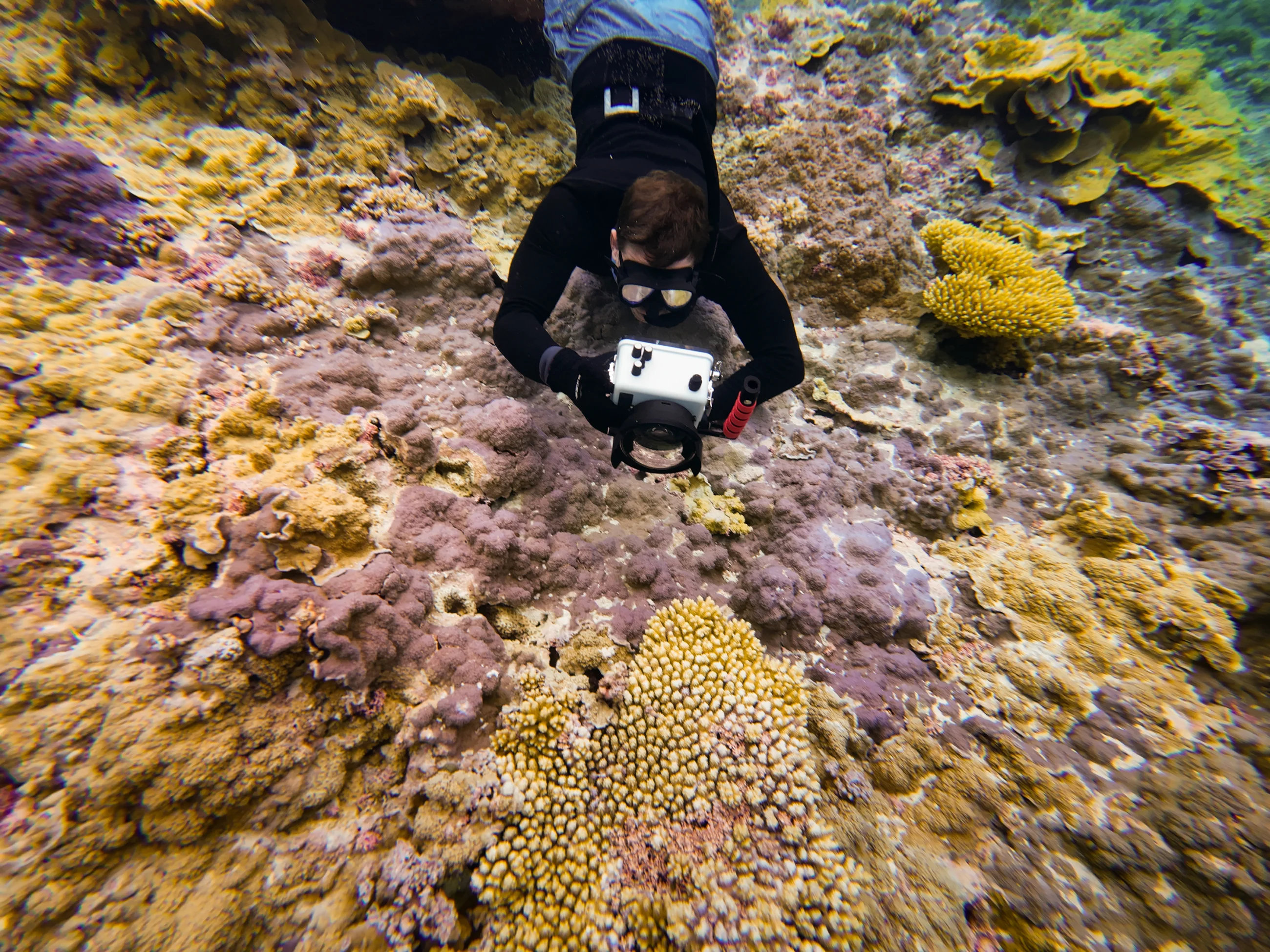
偏远的太平洋拥有世界上一些最原始的珊瑚礁。珊瑚本身比汽车还大,它们纤细的枝杈构成了一个密集的头号水下迷宫。在它们上方,天空中飞满了红脚鲣鸟和白燕鸥等搜寻鱼类的海鸟。
The remote Pacific Ocean has some of the most pristine coral reefs in the world. The corals themselves are bigger than cars, their delicate arms creating a dense underwater maze. Above them, the skies are filled with seabirds like red-footed boobies and white terns, searching for fish.
这些物种虽然被陆地和海洋隔开,但其交织程度远比人们曾经认为的要深。它们的关系是整个生态系统的支柱——这种隐藏的联系正在改变科学家对保护工作的看法。
These species, separated by land and sea, are far more intertwined than once thought. Their relationship is the backbone of an entire ecosystem — a hidden connection that's changing the way scientists think about conservation.
这种联系就是:鸟粪。由于鸟类在其粪便中沉积了营养物质,海鸟群落附近的珊瑚礁通常更健康。这也是热带岛屿和环礁成为广阔太平洋中生物多样性热点地区的原因之一。
That connection: bird poop. Coral reefs near seabird colonies are generally healthier, thanks to the nutrients that birds deposit in their guano. It's one reason tropical islands and atolls are biodiversity hot spots in the vast Pacific Ocean.
在一些岛屿上,这种紧密的伙伴关系已经破裂。由于栖息地丧失和老鼠等入侵物种,海鸟群落数量有所下降。随着鸟类减少,输送到海洋生态系统的营养物质也随之减少。
On some islands, this close-knit partnership has broken down. Seabird colonies have declined because of habitat loss and invasive species like rats. With fewer birds, fewer nutrients reach the ocean ecosystem.
如今,在珊瑚修复项目致力于恢复珊瑚礁的同时,它们也把重点放在了恢复海鸟群落上,以重建这种对两个物种都有帮助的联系。珊瑚礁日益容易受到海洋温度上升的影响,生物学家表示,在一个更炎热的世界里,它们需要各种可能的优势。
Now, as coral restoration projects work to bring back reefs, they're also focusing on bringing back seabird colonies, reestablishing a connection that helps both species. Coral reefs are increasingly vulnerable to rising ocean temperatures, and biologists say they need every advantage in a hotter world.
“如果我们能找到方法来制止对生态系统的局部威胁,在很多情况下,它们会找到自我修复的方法,”大自然保护协会岛屿韧性战略首席科学家亚历克斯·韦格曼(Alex Wegmann)说。“它们能够恢复其自然功能,从而使它们能够适应即将到来的气候影响。”
"If we can figure out ways to just stop the local threats to ecosystems, they will, in a lot of cases, find ways to repair themselves," says Alex Wegmann, lead scientist for The Nature Conservancy's island resilience strategy. "They can reestablish their natural functions that will then allow them to adapt to the climate impacts that are coming."
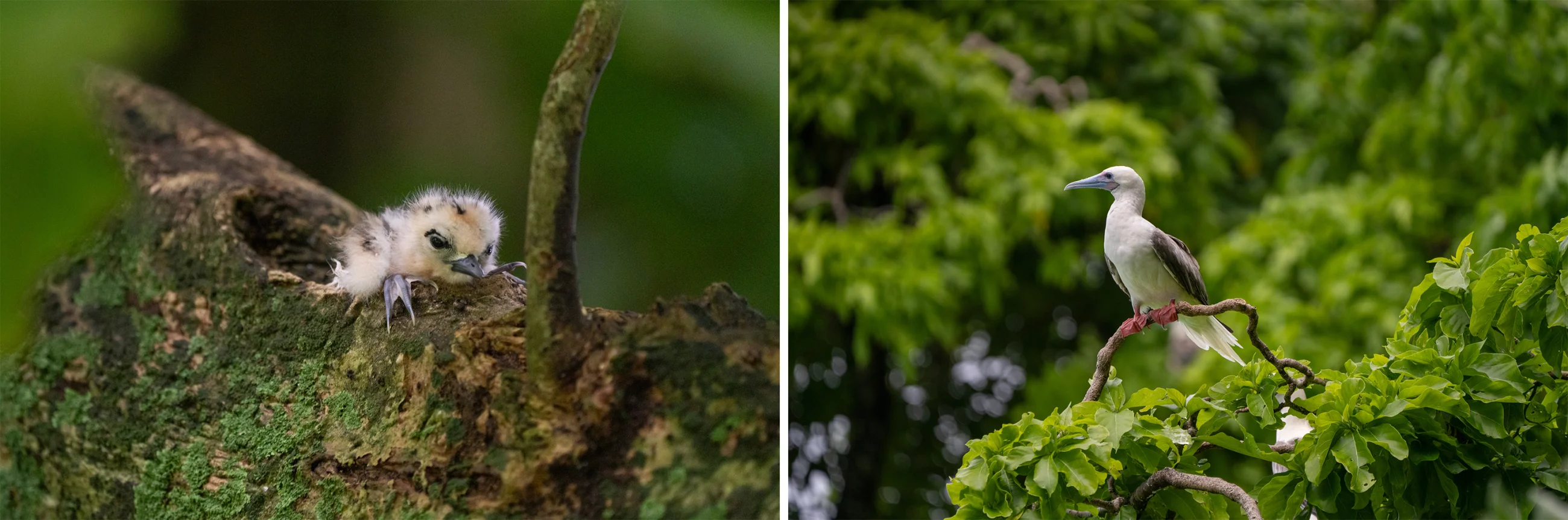
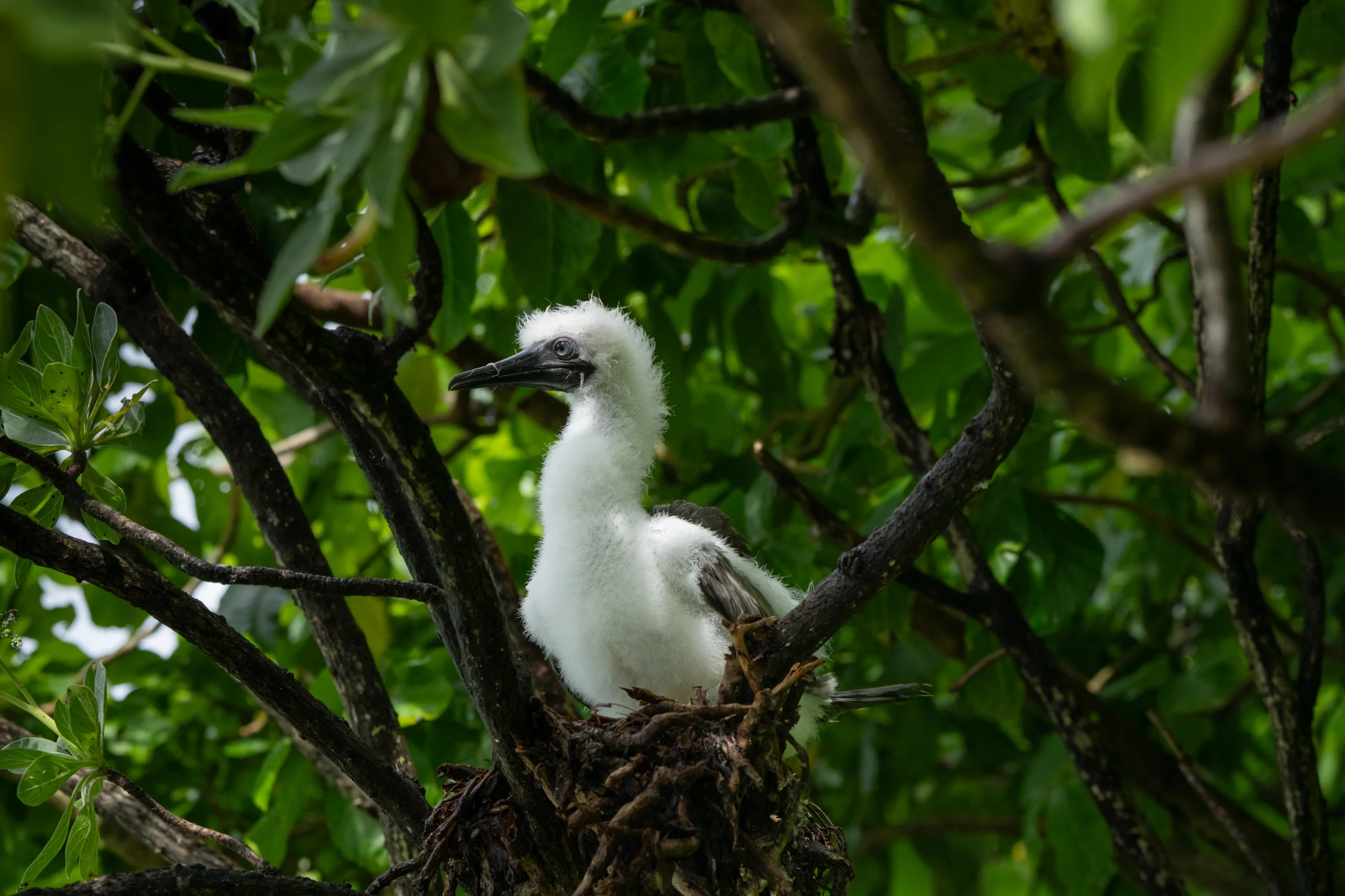
在夏威夷以南一千多英里处,有一个被称为巴尔米拉环礁的小群岛。在那里的雨林中,一只拳头大小、浑身长满毛茸茸白毛的高尔夫球般大小的雏鸟栖息在树枝上。它们的父母在附近盘旋,发出有节奏的叫声。
More than a thousand miles south of Hawaii, there's a tiny group of islands known as Palmyra Atoll. In the rainforest there, a tiny chick the size of a fuzzy, white golf ball perches on a tree limb. The parents hover nearby, chattering rhythmically.
美国鱼类和野生动物管理局帕尔迈拉环礁国家野生动物保护区经理佩奇·米诺抬头看着鸟儿说道:“那是一只白燕鸥雏鸟,而且还是一只幼鸟。”她微笑着补充道:“我觉得它们的叫声听起来就像一根带电的橡树皮筋在断裂。”
"That's a white tern chick, and a young one at that," Paige Mino, manager of the Palmyra Atoll National Wildlife Refuge with the U.S. Fish and Wildlife Service, says as she looks up at the birds. "I think that their call sounds like an electric rubber band snapping," she adds with a smile.
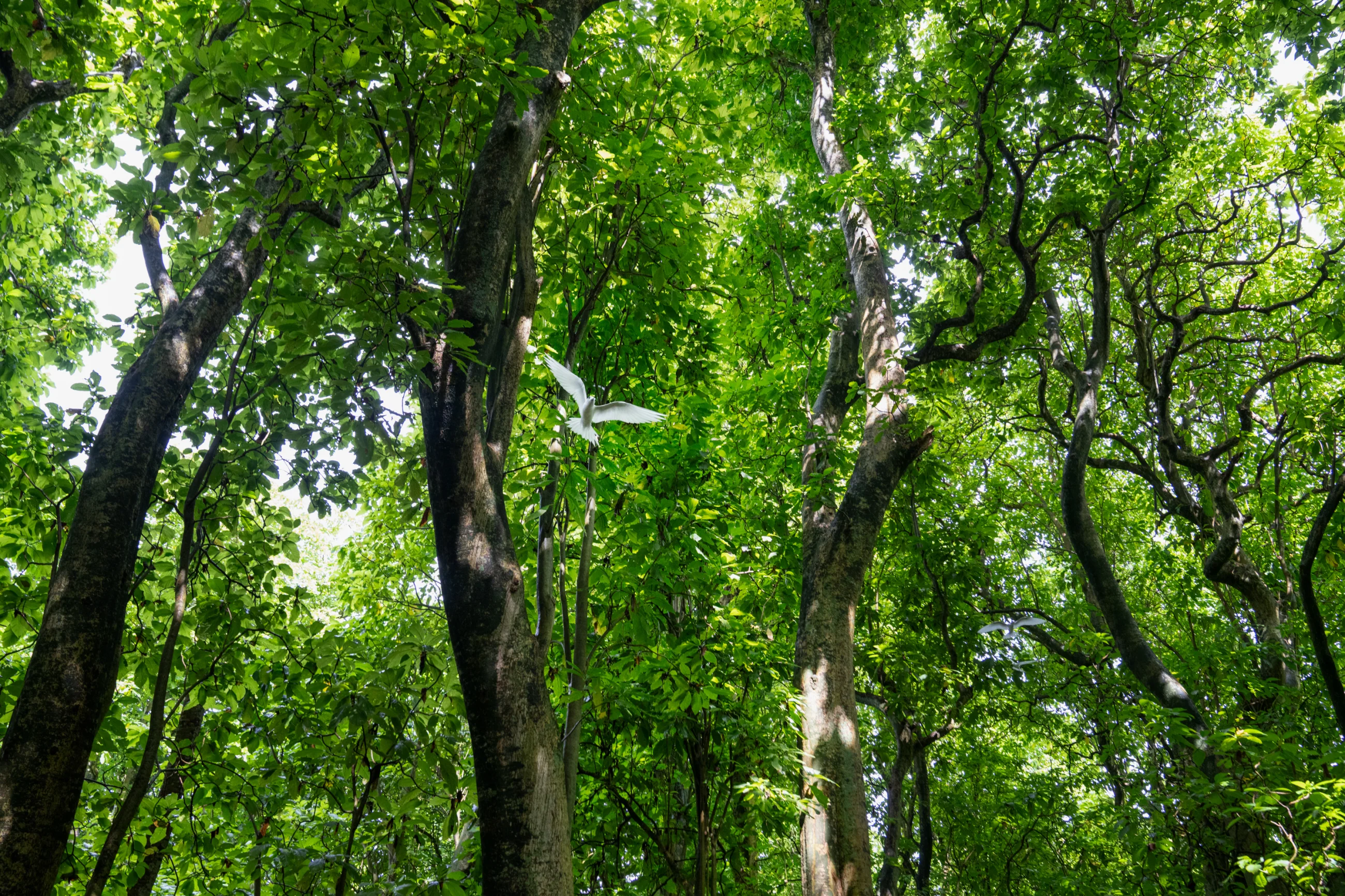
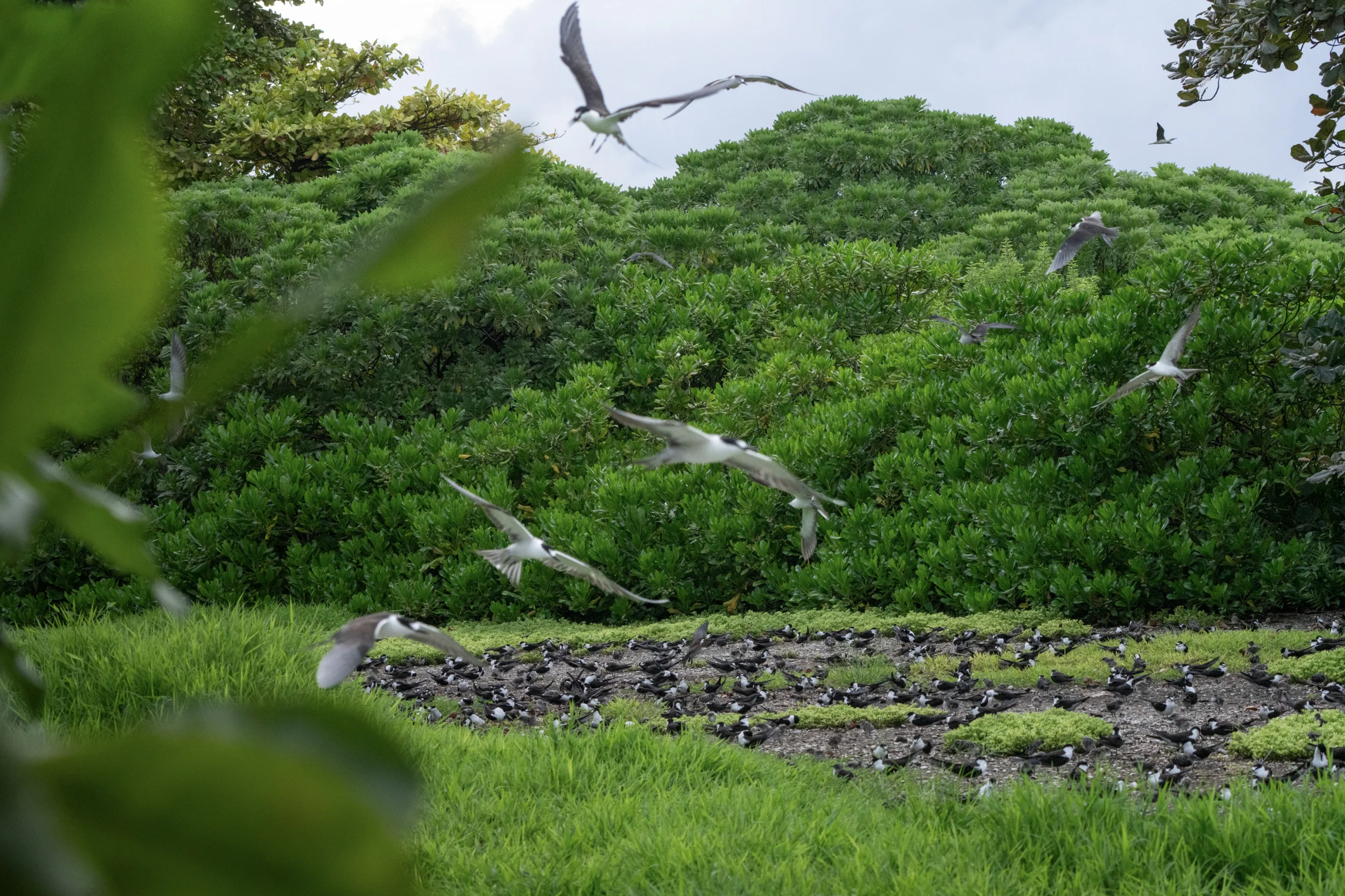
森林里回荡着海鸟的叫声,比如红脚鲣鸟,这是一种长着亮蓝色喙和标志性红脚的大型鸟类。帕尔迈拉环礁上的几乎所有鸟类都依赖海洋,它们每天飞往公海捕食鱼类或乌贼,并带一些回来喂养幼鸟。
The forest echoes with the calls of seabirds, like red-footed boobies, large birds with bright blue beaks and signature red feet. Almost all of the birds on Palmyra Atoll rely on the ocean, flying out to sea daily to feed on fish or squid, bringing some back for their young.
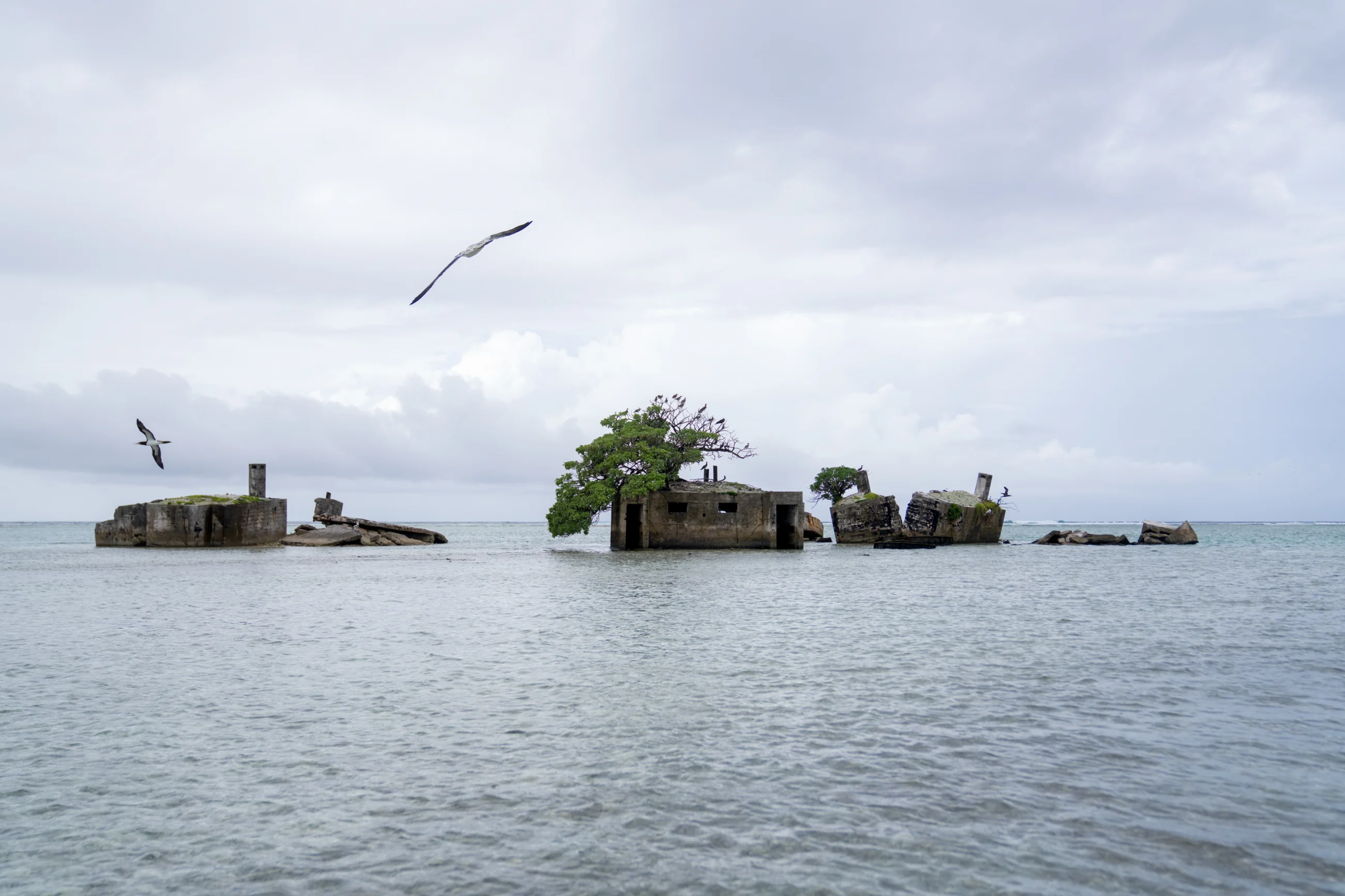
物种的丰富很大程度上要归功于帕尔迈拉环礁偏远的地理位置。虽然它可能曾被乘船横渡太平洋的波利尼西亚人造访过,但这处环礁并未被永久定居。在19世纪,这里开发了椰子种植园。第二次世界大战期间,美军将该环礁改造成了一个后勤站,修建了掩体和道路。
The abundance is thanks in large part to Palmyra Atoll's remote location. While it was likely visited by Polynesians who crossed the Pacific on seafaring voyages, the atoll wasn't permanently inhabited. In the 1800s, coconut plantations were developed. The U.S. military turned the atoll into a logistical station during World War II, building bunkers and roads.
2000年,大自然保护协会从私人所有者手中买下了帕尔迈拉环礁,并将其大部分转交给联邦政府。美国鱼类和野生动物管理局将其作为国家野生动物保护区进行管理。
In 2000, The Nature Conservancy bought Palmyra Atoll from private owners and transferred the majority of it to the federal government. The U.S. Fish and Wildlife Service manages it as a national wildlife refuge.
米诺说:“这里没有污染或超载等人类影响,所以我认为它确实为野生动物和植被提供了繁衍的空间。它让野生动物有机会去做它们天生就会做的事。”帕尔迈拉环礁欣欣向荣的生态系统为科学家提供了一个了解其运作背后隐藏过程的窗口,其中包括一些谜团。
"There's no human impact of pollution or overcapacity, so I think it really gives the wildlife and vegetation the space to thrive," Mino says. "It gives the wildlife a chance to do what they naturally do." Palmyra Atoll's thriving ecosystem has given scientists a window into the hidden processes that make it work, including some mysteries.
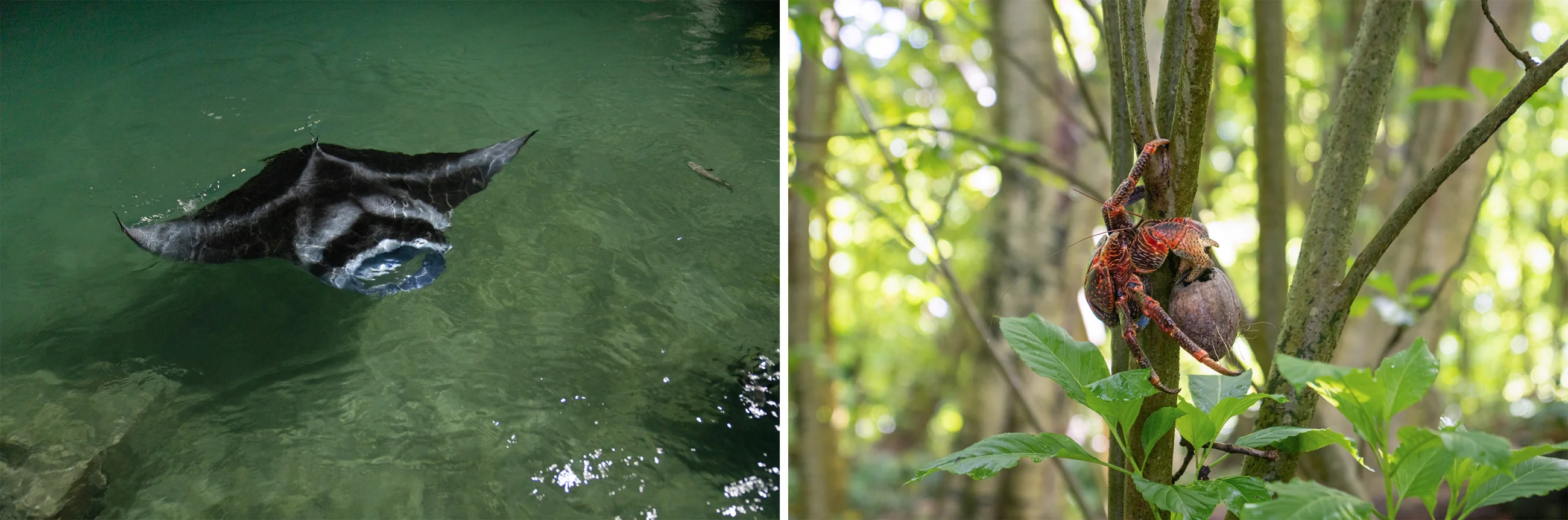
十多年前,一组科学家在帕尔迈拉环礁注意到了一件事:在海鸟群落附近的水域中,更容易看到蝠鲼的身影。这些巨大的蝠鲼翼展可达9英尺,它们在水中一边以微小的浮游生物为食,一边缓缓滑行。这促使他们发现了一个从鸟类开始的高效营养循环系统。
More than a decade ago, a team of scientists noticed something at Palmyra Atoll: Manta rays were more commonly seen in waters near seabird colonies. The massive mantas, some with a 9-foot wingspan, slowly glide through the water as they feed on tiny plankton. That led them to uncover an efficient system of nutrient recycling that starts with the birds.
当海鸟在海上吃完鱼回到陆地上时,它们会栖息在树上。在那里,它们通过粪便沉积了大量养分。一项针对近200个环礁的研究估算,海鸟带回陆地的氮超过10万磅。这起到了肥料的作用,滋养着树木和植物。
When seabirds return to land after eating fish at sea, they roost in the trees. There, they deposit a lot of nutrients in their guano. One study of almost 200 atolls estimated that seabirds brought more than 100,000 pounds of nitrogen back to land. That acts as a fertilizer, nourishing the trees and plants.
这些养分随着帕尔米拉环礁频繁而暴烈的降雨而扩散。它们被冲刷进海洋,在那里帮助了整个海洋食物网。微小的浮游生物生长起来,喂养着更大的浮游生物,而这些浮游生物又被包括鱼类和蝠鲼在内的许多物种吃掉。尽管这不是它们的主要食物来源,但连珊瑚也吃浮游生物。
Those nutrients spread with Palmyra Atoll's frequent, heavy rains. They get washed into the ocean, where they help the entire marine food web. Tiny, microscopic plankton grow, feeding larger plankton that are eaten by many species, including fish and manta rays. Though it's not their primary food source, even corals eat plankton.
大自然保护协会帕尔米拉环礁保护战略工作人员凯蒂·富兰克林表示:“研究表明,来自海鸟粪便的这些海洋养分对于整个礁石生态系统而言,真的极具价值且至关重要。鸟粪将有助于从雨林到礁石滋养整个生态系统,所以我们真的很想带来更多鸟粪。”科学家们弄清了海鸟的作用,是因为帕尔米拉环礁上有些地方很难找到鸟类。有些森林静得诡异。
"Studies show that those marine nutrients from seabird guano are really valuable and important for the whole reef ecosystem," says Katie Franklin, who works on Palmyra Atoll conservation strategy for The Nature Conservancy. "Guano will help nourish the ecosystem from the rainforest to the reef, so we really just want to bring on more guano." Scientists figured out the seabirds' role because there are places on Palmyra Atoll where birds are hard to find. Some forests are eerily quiet.
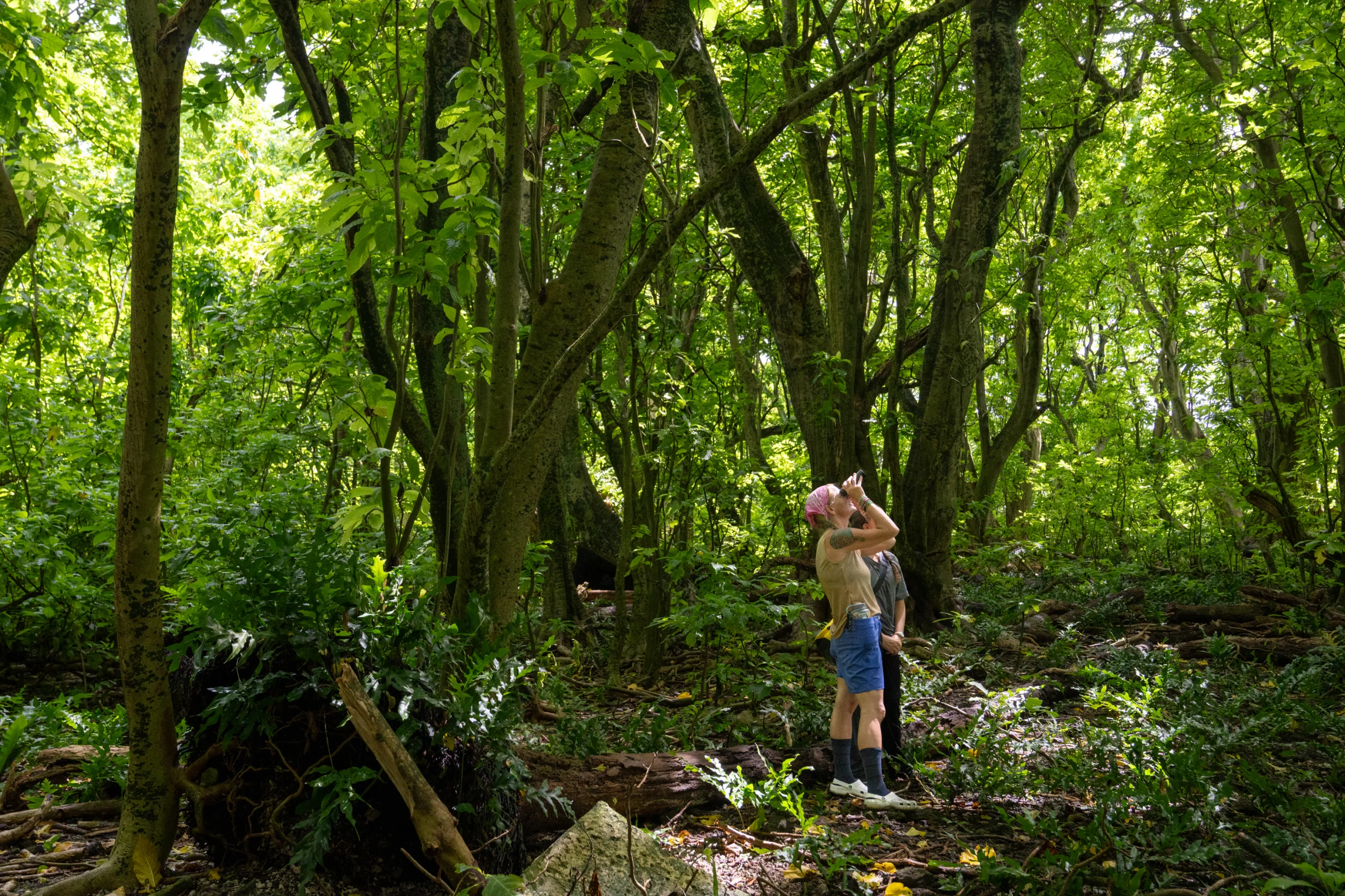
富兰克林拨开巨大的棕榈叶说道:“我们正站在一片密集的椰子树单一栽培林中。这里字面意思上就只有椰子树在生长。这种类型的森林里的鸟类要少得多。”棕榈树干紧密地挤在一起,透进的阳光极少。这些树木是一百多年前建立的椰子种植园遗留的产物。
"We're standing in a dense monoculture of coconut palms," Franklin says, pushing past large palm fronds. "It is literally just coconut palms growing. There are way fewer birds in this type of forest." The palm trunks are densely packed together, letting in very little sunlight. The trees are the legacy of coconut plantations established more than a century ago.
富兰克林说:“所有这些种植椰子树的尝试最终都没有取得多大成功或利润,并且都已被废弃。但这些椰子树种植园产生的影响却持续了下来。”2000年时,帕尔米拉环礁近一半的面积被椰子树覆盖,那里几乎没有海鸟筑巢。这就是美国鱼类及野生动物管理局和大自然保护协会启动一项为期十年的项目、以恢复本土森林的原因。
"None of these attempts at farming coconut palms ended up being very successful or profitable and were all abandoned," Franklin says. "But the impact that these coconut palm plantations made has lasted." In 2000, almost half of Palmyra Atoll was covered in coconut palms, where few seabirds nest. It's why the U.S. Fish and Wildlife Service and The Nature Conservancy have started a decade-long project to bring the native forest back.
在烈日炎炎的热带午后,凯蒂·鲍尔(Katie Baur)正在锯断一棵年轻的椰子树树干。海滩上布满了椰子,它们全都长出了幼树。她是自然保护协会(The Nature Conservancy)的一名保护科学志愿者,在这个环礁上生活了六个月。“这很辛苦——绝对谈不上光鲜,”她笑着说道。
In blazing midday tropical heat, Katie Baur saws the trunk of a young coconut palm. The beach is covered in coconuts, all sprouting young trees. She's a conservation science volunteer with The Nature Conservancy who lives on the atoll for six months. "It's hard — it's definitely not glamorous," she says with a laugh.
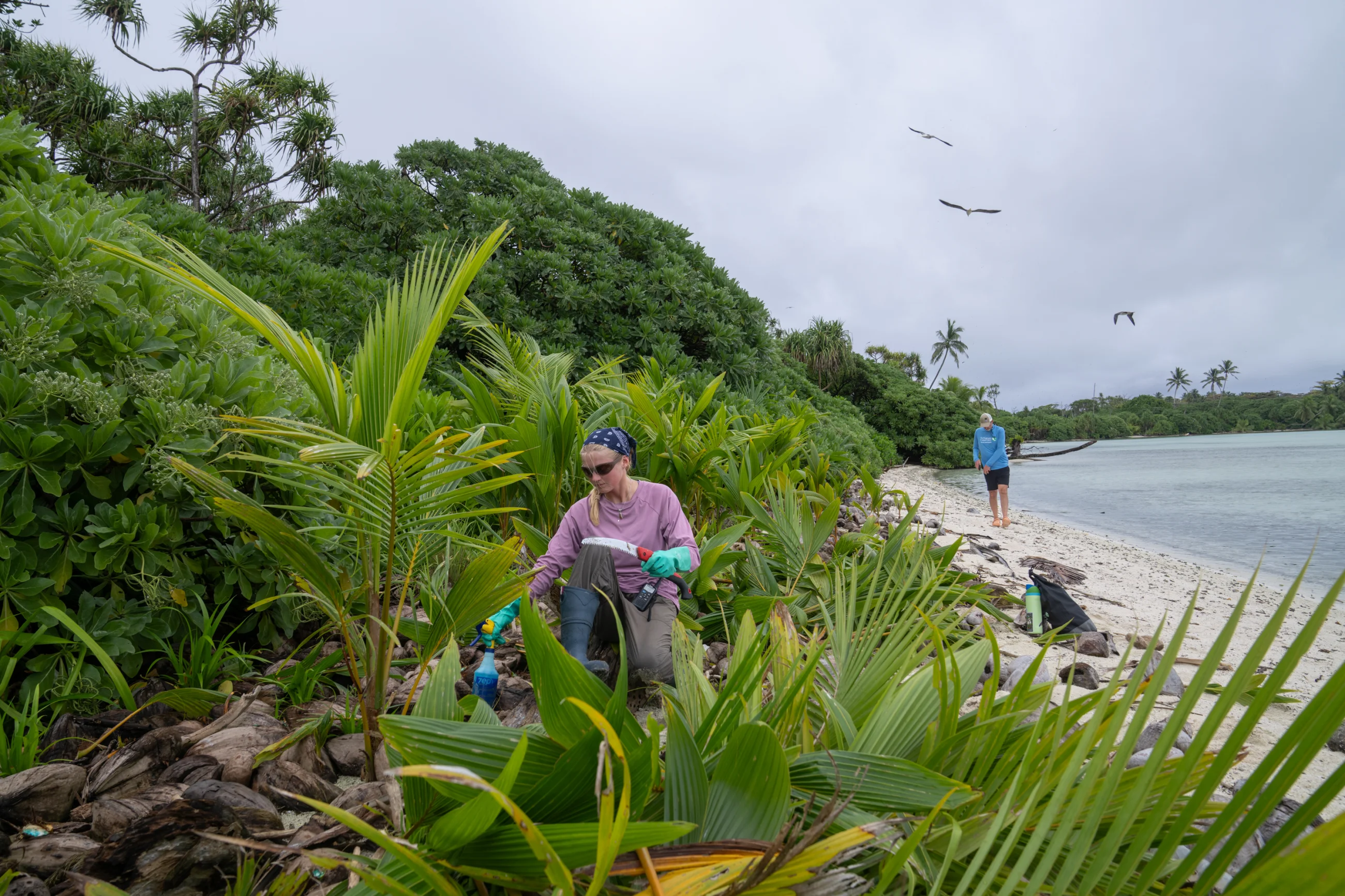
自该项目于2019年启动以来,已有超过100万棵椰子树和椰子树幼苗被清除。鲍尔表示,一旦椰子树消失,本土森林就会迅速恢复。
Since the project started in 2019, more than a million coconut palm trees and sprouts have been removed. Baur says once the palms are gone, the native forest returns rapidly.
“我得以环游这座环礁,看到新的本土植物开始重新生长的地段,”鲍尔说,“因此这让我感到兴奋,因为我知道我现在做的工作,在六个月后、一年后,就会变成那些地方的样子。” 尽管本土森林已重返巴尔米拉环礁(Palmyra Atoll),但该生态系统的恢复还取决于应对另一个棘手的入侵者:老鼠。
"I get to go around the atoll and see places where new native flora is starting to reestablish," Baur says. "So it's exciting for me because I know that the work I'm doing now, in six months, in a year, is going to look like those places." Even as native forest has returned to Palmyra Atoll, the ecosystem's recovery has also depended on tackling another tricky invader: rats.
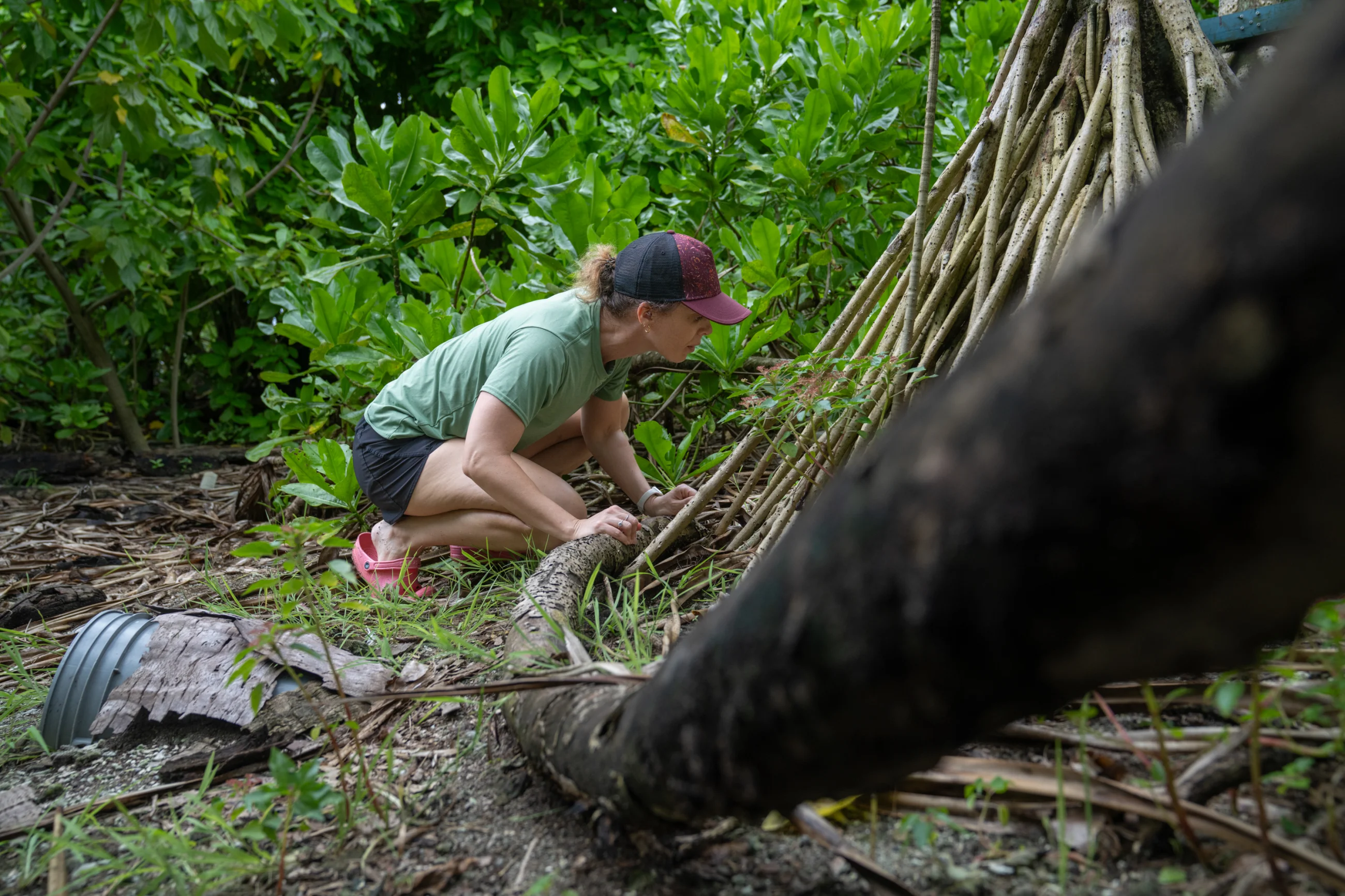
老鼠很可能是在二战期间被意外带到巴尔米拉的,但它们很快就在这里安家落户。
Rats were likely brought to Palmyra during World War II accidentally, but they quickly made themselves at home.
“它们大概以为自己已经上了天堂,”自然保护协会岛屿韧性战略负责人韦格曼(Wegmann)说。“巴尔米拉的生态系统生产力极高。这里到处都是无脊椎动物、陆地蟹、昆虫、蟑螂,有许多它们爱吃的美味东西,而且没有捕食者。” 凭借着充足的食物和全年温暖的天气,老鼠数量激增,估计达到了3万只左右。结果,海鸟数量下降了,尤其是那些在地面筑巢的鸟类。
"They probably thought they had gone to heaven," says Wegmann of The Nature Conservancy's island resilience strategy. "Palmyra is so productive as an ecosystem. There are invertebrates everywhere, land crabs, insects, cockroaches, lots of yummy things for them to eat, and there are no predators." With unlimited food and warm weather year-round, rat populations boomed, topping an estimated 30,000 rats. As a result, seabird populations declined, particularly birds that build their nests on the ground.
这种模式在数百个其他岛屿上也曾出现过。一项研究发现,41%高度受威胁的哺乳动物、鸟类、爬行动物和两栖动物都生活在岛屿上,而外来入侵物种一直是导致物种灭绝的主要因素。
It's a pattern that's been seen on hundreds of other islands. One study found that 41% of highly threatened mammals, birds, reptiles and amphibians are found on islands, where invasive species have been a major driver of extinctions.
2011年,美国鱼类及野生动物管理局(U.S. Fish and Wildlife Service)携手非营利合作伙伴,主导了一场在巴尔米拉环礁消灭老鼠的行动。韦格曼表示,当老鼠被成功清除后,该生态系统迅速反弹。
In 2011, the U.S. Fish and Wildlife Service, along with nonprofit partners, led a campaign to eradicate rats from Palmyra Atoll. Wegmann says when the rats were successfully removed, the ecosystem rebounded quickly.
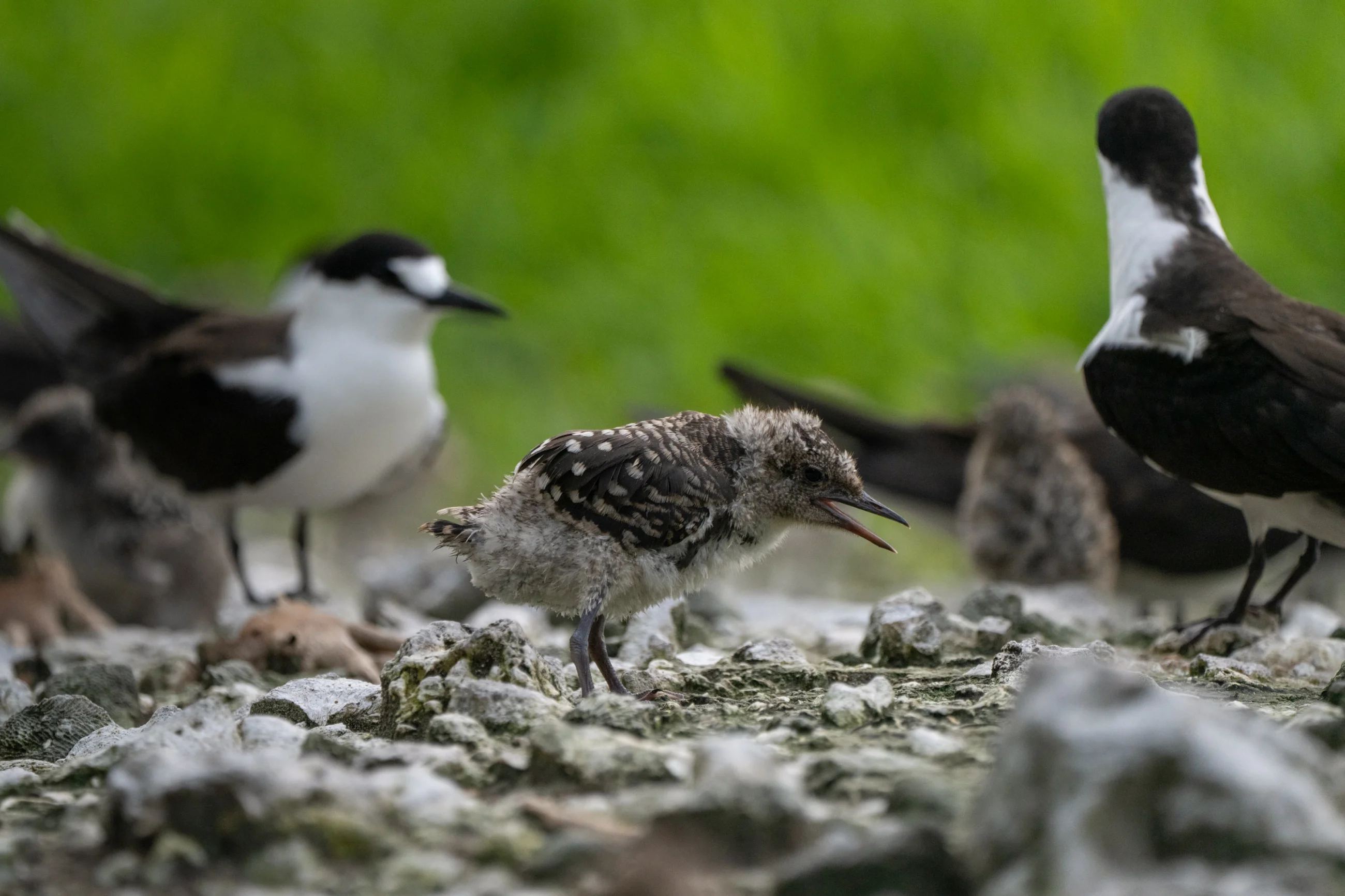
“陆蟹数量激增,森林也随之爆发式增长,”韦格曼说。“我们看到新的蟹类物种出现。我们看到越来越多的海鸟在整个环礁的树木上筑巢。我们还开始看到本土森林树木在有老鼠存在的情况下未能繁殖,而现在开始繁殖了。”研究人员现在希望看到其他似乎已从帕尔米拉环礁消失的海鸟物种回归。据认为曾有八种海鸟在那里筑巢,但如今已不再发现。其中一种——灰背燕鸥,最近重新出现,并在环礁上连续四年筑巢。
"Land crab populations exploded and the forest exploded," Wegmann says. "We saw new crab species emerge. We saw more and more seabirds nesting in trees throughout the entire atoll. And we started to see the native forest trees that had not been reproducing with rats here start to reproduce." Researchers are now hoping to see the return of other seabirds that seem to have disappeared from Palmyra Atoll. Eight species are thought to have once nested there, but are no longer found. One, the gray-backed tern, recently reappeared and has nested on the atoll for four consecutive years.
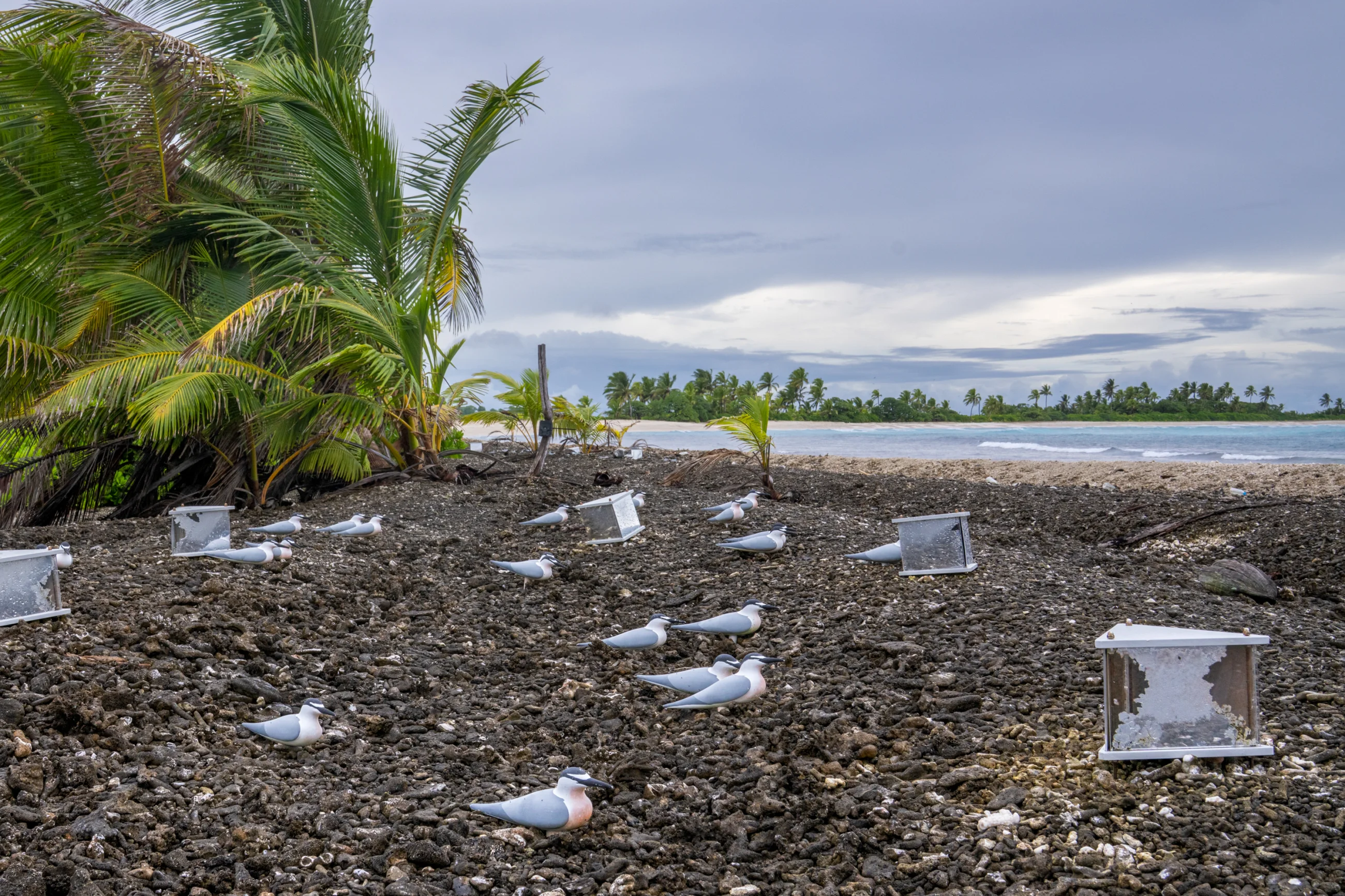
尽管帕尔米拉环礁位于偏远的太平洋地区,但它仍然受到全球变化的威胁。2013年,一次海洋热浪导致海水温度升高数月,引发珊瑚白化并变白。虽然该环礁许多珊瑚礁此后已经恢复,但有些未能像其他地区那样快速恢复。
Even with its remote Pacific location, Palmyra Atoll is still threatened by global changes. In 2013, a marine heat wave elevated ocean temperatures for months, causing the corals to bleach and turn white. Many of the atoll's reefs have since recovered, but some didn't bounce back as readily.
随着气候变暖,全球珊瑚礁的前景堪忧。研究表明,如果人类继续燃烧化石燃料,地球升温将超过工业化前水平的1.5摄氏度(2.7华氏度)。在此水平下,根据政府间气候变化专门委员会的一份报告,全球70%-90%的珊瑚礁将无法生存。
As the climate gets hotter, the future for coral reefs globally is dire. Studies show that if humans continue burning fossil fuels, the planet will heat up more than 1.5 degrees Celsius (2.7 degrees Fahrenheit), compared to preindustrial temperatures. At that level, between 70%-90% of coral reefs worldwide won't survive, according to a report by the Intergovernmental Panel on Climate Change.
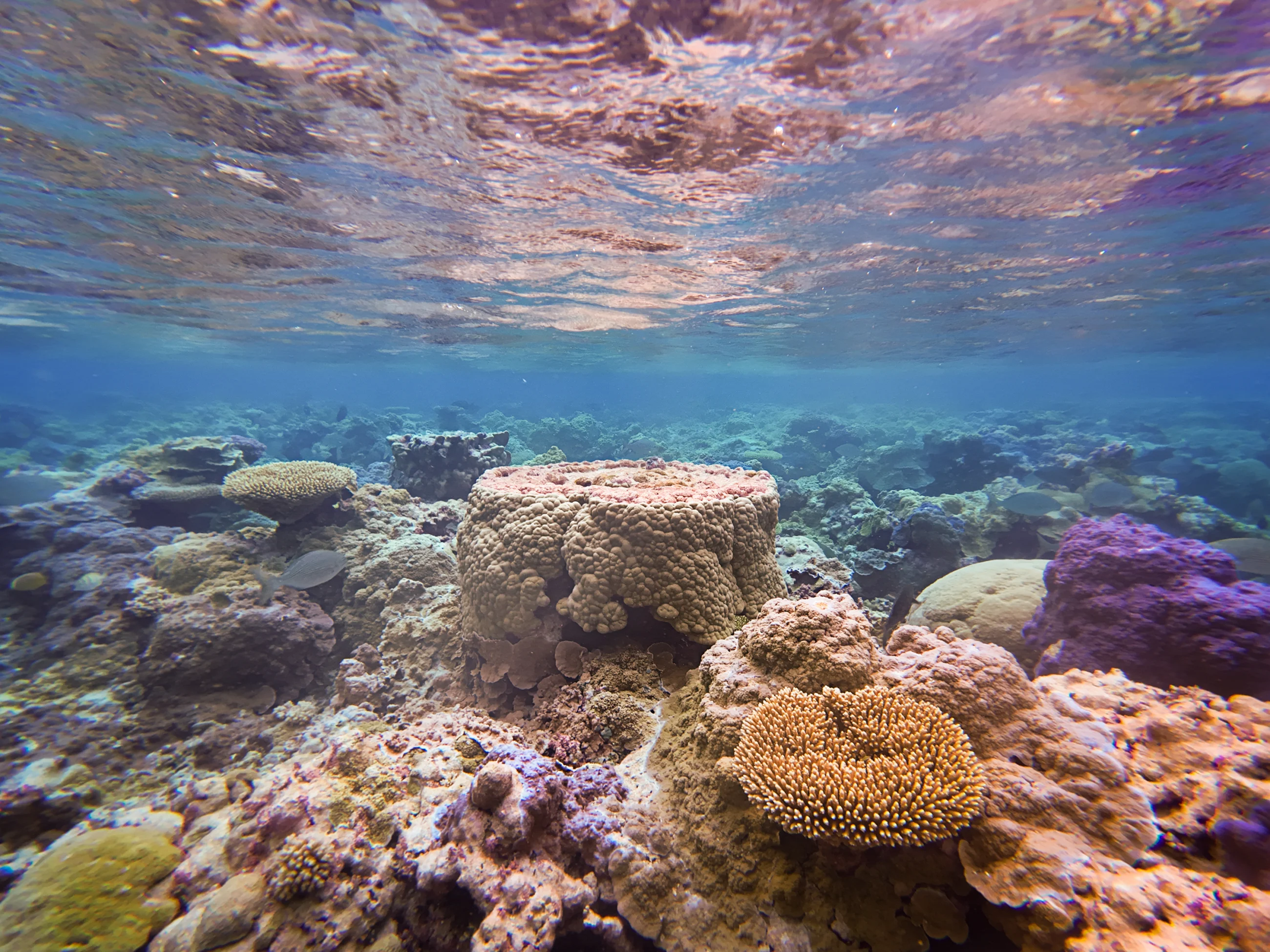
随着海洋热浪变得更加频繁和强烈,研究表明,珊瑚礁在白化事件之间尽快恢复至关重要。
With marine heat waves getting more frequent and intense, research shows it's vital that reefs recover as quickly as possible between bleaching events.
“我们希望尽最大努力给它们提供最好的机会来实现这一点,”韦格曼说。“我们相信,通过为海鸟创造栖息地并最大化海鸟带来的养分益处,我们将为珊瑚礁提供最好的机会,使其能够应对未来可能出现的任何气候变化。”韦格曼表示,在帕尔米拉环礁学到的保护经验正被应用于其他岛屿和环礁,比如印度洋的查戈斯群岛。
"We want to give them the best chance possible to do that," Wegmann says. "And we believe that by creating the habitat for the seabirds and maximizing that seabird nutrient benefit, we will give the reef its best chance of enduring whatever climate future comes." Wegmann says the conservation lessons learned at Palmyra are being applied at other islands and atolls, like the Chagos Archipelago in the Indian Ocean.
椰子棕榈已经占领了太平洋地区200多个环礁的一半森林土地。全球大约四分之一的热带海鸟也依赖环礁进行筑巢。虽然环礁看起来很小,但陆地与海洋之间的联系意味着它们在全球生物多样性中发挥着不成比例的重要作用。
Coconut palms have taken over half of the forested land at more than 200 atolls around the Pacific. Roughly a quarter of all tropical seabirds in the world also rely on atolls for nesting. While atolls seem small, the linkages between land and sea mean they play an outsized role in global biodiversity.
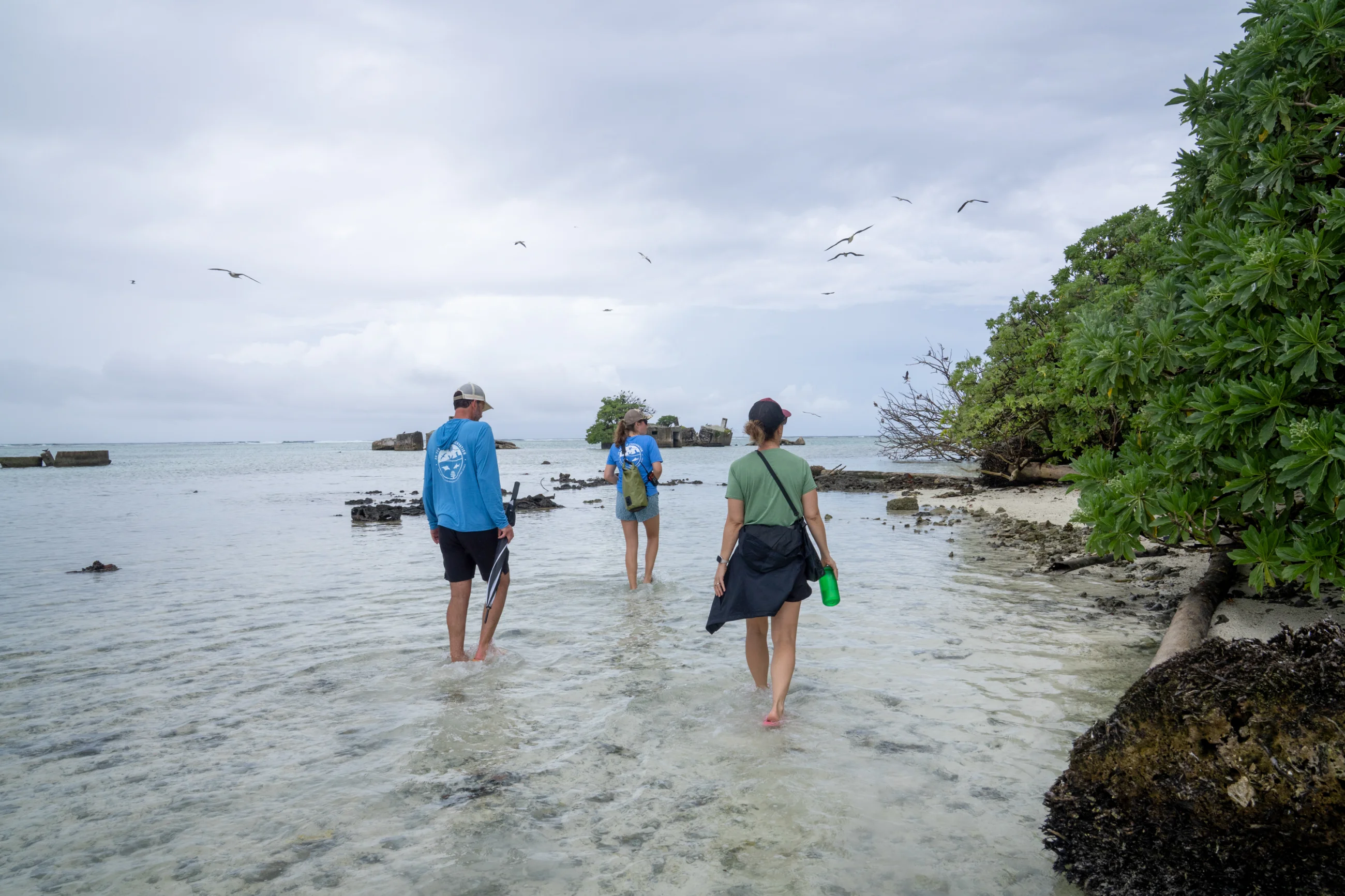
“它们在周围海洋上形成了这种影响力的光环,”韦格曼说。“如果你把太平洋所有环礁所对应的海洋面积加起来,大约相当于南美洲的大小。因此,保护环礁不仅对单个环礁很重要,也对其周围广阔的海洋区域至关重要。”
"They create this halo of influence on the ocean around them," Wegmann says. "If you add up all of the area of ocean for all the atolls just in the Pacific, it's about the same size as South America. So, protecting atolls is important for the individual atoll, but also for a huge amount of ocean surrounding it."