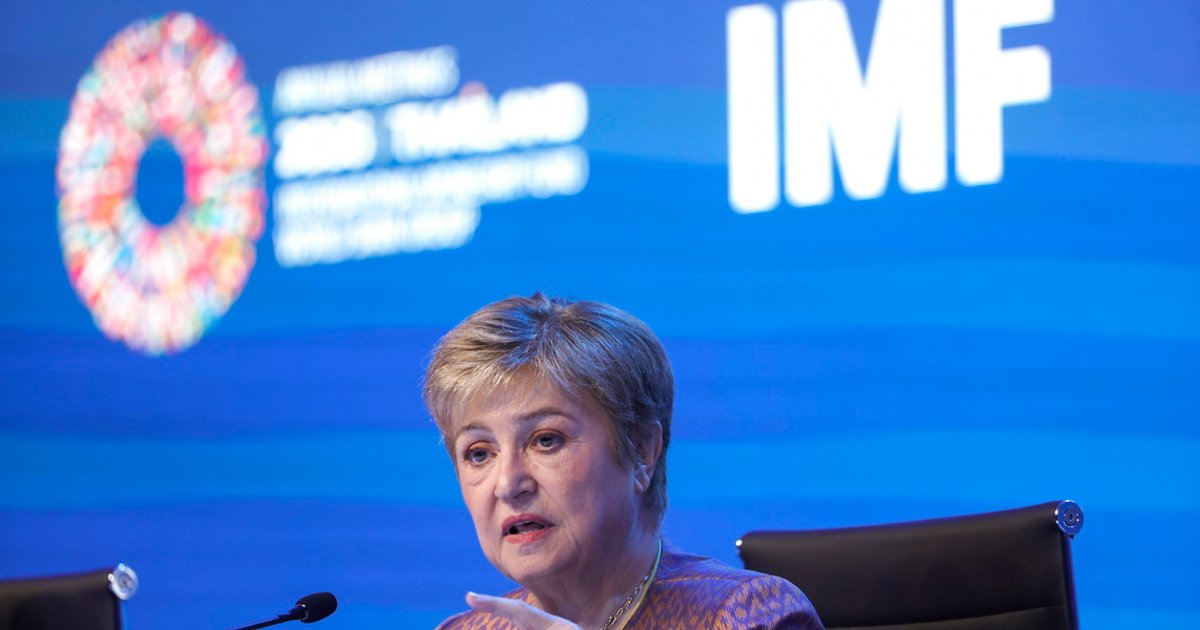
曼谷 – 国际货币基金组织总裁克里斯塔利娜·格奥尔基耶娃于10月14日表示,最近对沙特阿拉伯的袭击可能影响“到处”所有人,因为能源丰富地区的冲突加剧了广泛的经济担忧。
BANGKOK – International Monetary Fund head Kristalina Georgieva said on Oct 14 that recent attacks on Saudi Arabia could impact people “everywhere”, as conflict in the energy-rich region adds to wide-ranging economic concerns.
沙特领导的联盟与也门胡塞武装之间的激烈战斗在最近几天爆发,导致王国各地的机场和能源设施遭到导弹袭击。
A violent battle between a Saudi-led coalition and Yemen’s Houthis has erupted in recent days with missile strikes on airports and energy facilities across the kingdom.
最新一轮战斗是由胡塞武装在周末对利雅得国际机场的袭击引发的,此次袭击造成13人死亡,运营中断,是自2015年以来最严重的袭击。
The latest round of fighting was triggered by Houthi strikes on Riyadh’s international airport at the weekend that left 13 people dead and operations suspended in the worst attack since 2015.
这一升级加剧了人们对中东危机对全球增长影响的担忧,自伊朗在2月被美国和以色列袭击后实际上封锡霍尔木兹海峡这一关键通道以来,原油价格一直在飙升。
The escalation compounds fears about the impact of the Middle East crisis on global growth, with crude prices sent soaring since Iran effectively shut the crucial Strait of Hormuz after it was attacked by the US and Israel in February.
“沙特经济对该地区和世界都很重要,”国际货币基金组织总裁格奥尔基耶娃在曼谷举行的基金会和世界银行年会期间的新闻发布会上表示。
“The Saudi economy is important for the region and the world,” IMF managing director Georgieva said at a news conference during the Annual Meetings of the Fund and World Bank in Bangkok.
“从这个意义上说,这些发展可能对每个人、每个地方都有负面的溢出效应,”她说。
“In that sense, these developments have potentially negative spillovers for everybody, everywhere,” she said.
这一警告是在官员和专家聚集在泰国首都讨论全球经济面临的挑战时发出的,这些挑战包括更高的能源成本以及对人工智能繁荣可持续性的担忧。
The warning comes as officials and experts gather in the Thai capital to discuss challenges facing the global economy, including higher energy costs and concerns about the sustainability of an artificial intelligence boom.
其他障碍包括发达经济体债务激增,随着对央行施加压力以提高利率以抑制通胀,债券收益率达到多十年来的高点。
Other hurdles include ballooning debt in advanced economies, with bond yields at multi-decade highs as pressure grows on central banks to hike interest rates to cool inflation.
“我们目前对政策制定者最紧迫的呼吁是什么?在裂缝扩大之前,紧急修复财政状况,”格奥尔基耶娃说。“现在是增加收入、理性化支出和改善公共财政管理的时候了。”‘达到极限’在其于10月13日发布的备受关注的《世界经济展望》报告中,国际货币基金组织将2026年全球增长预测上调了0.1个百分点,至3.1%。
“What is our loudest call to policymakers right now? Make urgent repairs to the fiscal house before the cracks widen,” Georgieva said. “Now is the time to enhance revenues, to rationalise spending and improve public financial management.”‘Reaching limits’In its closely watched World Economic Outlook released on Oct 13, the IMF raised its 2026 global growth forecast by 0.1 percentage points to 3.1%.
然而,它警告称,虽然人工智能投资增加推动了新的经济活动,但较贫穷的国家并未从中受益,因为它们正面临能源成本飙升的问题。
However, it warned that while new economic activity has been sparked by rising investment in AI, poorer countries are not benefiting as they deal with soaring energy costs.
全球经济“在面对非常频繁的反复冲击和不确定性时仍保持韧性”,格奥尔吉耶娃表示。
The global economy “remains resilient in the face of very frequent repetitive shocks and in the face of uncertainty”, Georgieva said.
“但这种韧性正在达到其极限。”国际货币基金组织总裁呼吁加大对低收入国家的支持,以“夯实其基本面,使其能够抵御冲击”。
“But this resilience is reaching its limits.”The IMF chief called for greater support for low-income countries to “strengthen their fundamentals so they can withstand shocks”.
她指出,全球利率上升也导致债务偿付成本从十年前政府收入的约6%增加到如今的14%。
She noted that a global rise in interest rates had also caused debt servicing costs to increase from around 6% of government revenues a decade ago to 14% today.
此外,在10月14日发布的《全球政策议程》中,基金警告称,债务偿付挑战对“低收入和脆弱经济体”变得尤为突出。
And in its Global Policy Agenda released on Oct 14, the Fund warned that debt servicing challenges had become particularly acute for “low-income and vulnerable economies”.
格奥尔吉耶娃表示,国际货币基金组织一直在“就日益增长的过度全球经济失衡敲响警钟”。
Georgieva said the IMF had been “ringing the alarm bell on excessive global economic imbalances growing”.
“说得简单一些,中国需要多花钱,美国需要多储蓄,欧洲需要多投资,”她补充道。
“To put it very simply, China needs to spend more, the US has to save more and Europe has to invest more,” she added.
自新冠肺炎疫情以及乌克兰和中东战争爆发以来,发达经济体的债务与GDP比率已飙升,政府被迫增加支出以减轻这些冲击的影响。
Advanced economies have seen their debt-to-GDP ratios skyrocket since the Covid-19 pandemic and wars in Ukraine and the Middle East, with governments forced to increase spending to cushion the impact of those shocks.
在中国,国内需求持续低迷与出口历史性激增同时发生,导致贸易顺差不断积累,并在国外日益成为政治难题。
In China, a persistent slump in domestic demand has coincided with a historic surge in exports, accumulating trade surpluses that are becoming more and more politically problematic abroad.
谈及如何应对飙升的国债收益率问题时,格奥尔吉耶娃承认“没有灵丹妙药”。“你必须朝着紧缩债务(以及)降低债务的方向前进,”她说。
Addressing the issue of how to tackle spiking bond yields, Georgieva admitted “there is no magic”. “You have to go in a direction of tightening debt (and) bringing it down,” she said.
“我们向成员国传递的信息是:基本面很重要。把自己的家庭理好;否则,你们的人民和企业将付出代价。”
“(The) message that we are sending to our members: fundamentals matter. Get your house in order; otherwise, your people, your businesses will pay a price.”