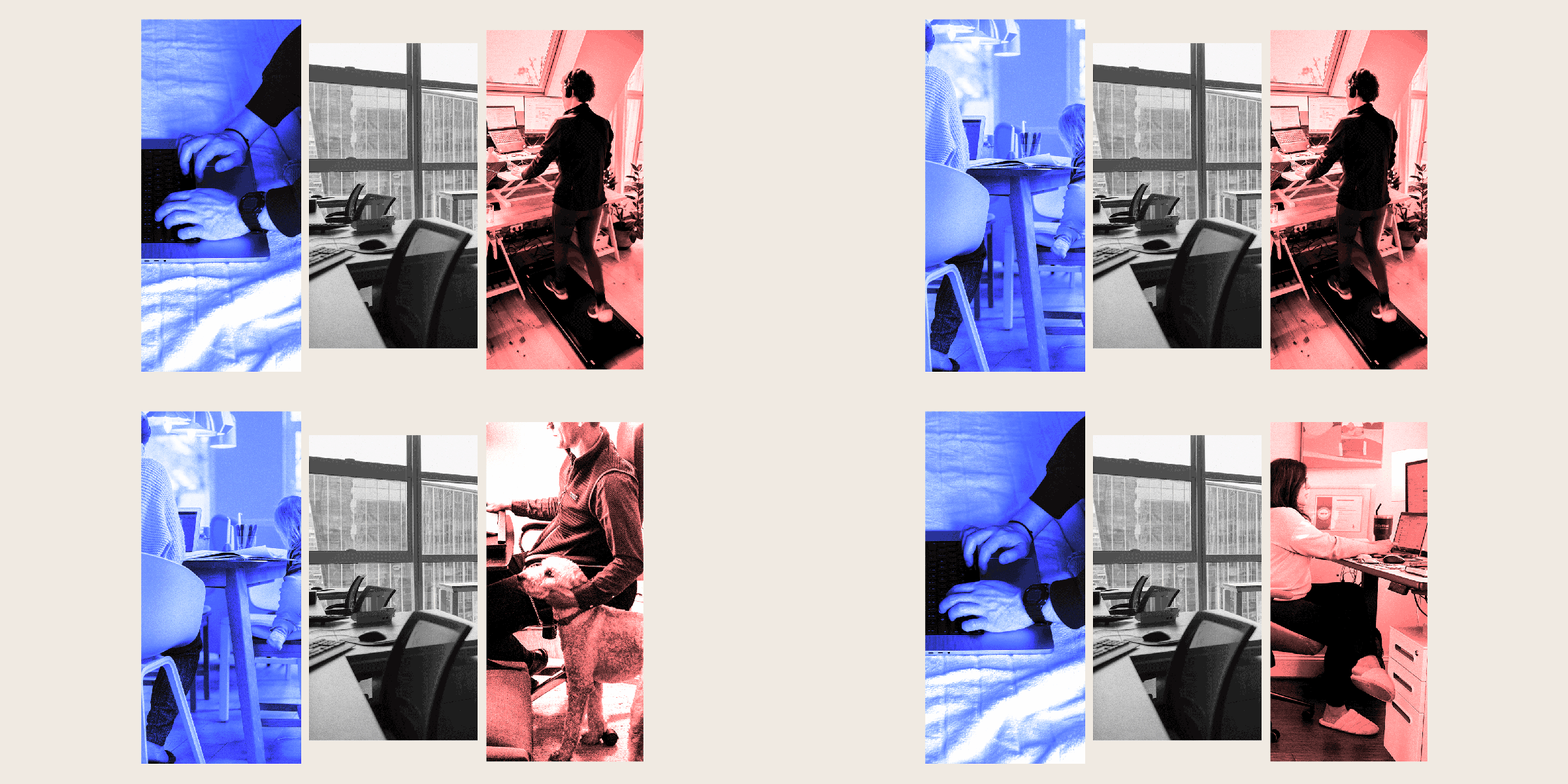
居家办公已经消亡:过去一年里,你很可能从老板那里听到过这种说法的某种版本。但数据表明,居家办公实际上还会继续存在下去。在过去两年里,居家办公的普及率几乎没有变动,约占所有美国工作日的26%。这远低于我们在疫情初期看到的62%,但与2019年仅占7%的微小比例相比,几乎翻了两番。如果疫情从未发生,我们可能需要40年的时间才能达到今天这样的居家办公普及程度。
Work from home is dead: You've probably heard some version of this declaration from your boss over the past year. But the numbers show that WFH is actually very much here to stay. The prevalence of working from home has barely budged over the last two years, at around 26% of all American work days. That's a lot less than the 62% we saw in the early months of the pandemic — but a near quadrupling since 2019, when that share was at a miniscule 7%. Had the pandemic never happened, it probably would have taken us 40 years to get to work from home as much as we do today.
我们已经为企业职场迎来了新常态——远程工作已成为一个更大的少数群体,而对于白领专业人士来说,每周至少有一两天在家办公也已经变得完全正常。这种转变给美国人的生活带来了各种各样的变化——有些影响深远,有些挽救了生命,有些则奇怪且意料之外。没有人比尼克·布卢姆(Nick Bloom)对这些变化的思考更多,他是斯坦福大学的经济学家,也是全球远程工作领域的顶尖专家。
We've reached a new normal for the corporate workplace — one where remote jobs have become a bigger minority, and it's also become totally normal for white-collar professionals to work from home at least a day or two a week. That shift has brought about all kinds of other changes in American life — some profound, some life-saving, some strange and unexpected. Nobody's reflected on those changes more than Nick Bloom, an economist at Stanford who's the world's leading expert on remote work.
当我2021年初首次与他交谈时,布卢姆正忙于帮助重写美国企业的办公政策,向微软、脸书、谷歌和苹果等公司的管理层展示他的研究成果。他曾警告称,随着员工和雇主就我们在哪里工作的新条款展开争夺,随后几年将出现剧烈动荡——而他的预判完全正确。如今尘埃已 largely 落定,我在他居家办公的日子里于他家中采访了他,以便盘点美国居家办公革命最具持久性的影响。
When I first spoke to him in early 2021, Bloom was right in the midst of helping rewrite corporate America's work policies, presenting his research to managers at companies including Microsoft, Facebook, Google, and Apple. He warned that years of intense turmoil would follow as employees and employers fought over the new terms of where we work — and he couldn't have been more right. Now that the dust has largely settled, I caught up with him at his house on one of his WFH days to take stock of the most lasting impacts of America's work-from-home revolution.
人们喜欢居家办公的最大原因之一是它节省了时间。美国人的平均单程通勤时间约为40分钟,而在出门闯荡世界之前,你需要花一点额外的时间洗澡和穿衣打扮,让自己在世人面前显得体面。从床上爬起来打开笔记本电脑呢?
One of the biggest reasons why people love working from home is because it saves them time. The average commute in the US is about 40 minutes each way, and ahead of venturing out into the world, you need to spend a little extra time making yourself presentable to the world by showering and getting dressed. Rolling out of bed and opening your laptop?
这需要30秒钟。根据布卢姆(Bloom)的估计,典型的美国工人每天居家办公可以节省一个半小时。对于科技和金融等适合居家办公的行业的员工来说,他们节省的时间平均每周约为3小时。人们用这些额外的时间做了什么?他们获得了更多的睡眠和锻炼时间,并且在做饭——如果他们有孩子,他们会花更多的时间陪伴孩子。
That takes 30 seconds. By Bloom's estimates, the typical American worker saves an hour and a half for every day they work from home. For those in WFH-friendly sectors like tech and finance, those time savings average about 3 hours a week. What have people done with that extra time? They're getting more sleep and exercise, and they're cooking — and if they have kids, they're spending a lot more time on parenting.
荷兰的一项研究发现,当父母被允许居家办公时,他们的孩子在一项有助于决定其高中升学路径的重要标准化测试中取得了更高的分数。布卢姆说:“这是因为你在家。你知道你的孩子在楼上做作业,如果他们抽大麻,你能闻到味儿。”
One study in the Netherlands found that when parents were allowed to work from home, their kids scored higher on an important standardized test that helps determine their high school track. "It's because you're home," Bloom says. "You know that your kid is up there doing their homework and you can smell it if they're smoking weed."
2020年,在没有残疾的美国人中,有77%的人有工作,而残疾人的这一比例仅为32%。在很多情况下,残疾人希望工作,但在只能去办公室的世界里却无法做到。也许他们因为失明而无法开车,或者他们有膝盖和背部问题,使得在办公室里爬楼梯变得太困难。大流行期间远程和混合办公职位的激增改变了这一状况,使全职岗位的残疾人数量增加了25万多人多。再加上所有由于居家办公的灵活性而不再需要辞职来兼顾育儿责任的女性。这对这些工人和整个经济来说都是件好事。
In 2020, 77% of Americans without a disability had a job, compared with only 32% for those with a disability. In a lot of cases, disabled people wanted to work but couldn't in an office-only world. Maybe they couldn't drive because they were blind, or they had knee and back issues that made navigating the stairs at the office too difficult. The boom in remote and hybrid jobs in the pandemic changed that, increasing the ranks of disabled people with full-time roles by more than a quarter million people. Add to that all the women who, thanks to the flexibility of working from home, no longer had to quit working to juggle their childcare responsibilities. That's been great for those workers, and great for the economy as a whole.
布卢姆说:“混合办公将劳动参与率提高1%到2%并不是不可能的,这可能会使GDP增加大约1%到2%。”这将相当于增加3000亿至6000亿美元的经济价值。“这太巨大了。”
"It's not impossible that hybrid increases labor participation rates by 1 to 2%, which probably increases GDP by about 1 to 2%," says Bloom. That would amount to an additional $300 billion to $600 billion in economic value. "This is huge."
布卢姆和他的联合创始人发现,从2023年到2025年,每周至少居家办公一天的员工比每天去办公室的人生了更多的孩子。他们还计划在未来生更多的孩子。
From 2023 to 2025, people who worked from home at least one day a week had more babies compared to daily office-goers, Bloom and his cofounders found. They also planned to have more kids in the future.
这可能是因为远程工作增强了灵活性,让人觉得多要几个孩子切实可行,同时也有一些基本的生物学原因。“我有个朋友说过一句很棒的话,”布卢姆告诉我,“他说:‘我和妻子发现,她无法通过电子邮件怀孕。’”布卢姆估计,居家办公与美国和北欧生育率大约5%的增长相关——这一增幅具有统计学意义,但并不巨大。尽管如此,对于许多正在应对出生率下降的发育中世界(译者注:原文如此)来说,任何增长都是极其急需的。
That's likely because of the increased flexibility of remote work that makes having more kids feel feasible — and also some basic biology. "My friend had this great line," Bloom tells me. "He said, 'My wife and I discovered she can't get pregnant by email.'" Bloom estimates that working from home is associated with a roughly 5% increase in fertility in the US and Northern Europe — statistically significant, but not huge. Still, any increase is desperately needed in much of the developed world, which is fighting a declining birth rate.
布卢姆指出,这种生育率的回升在30岁及以上、拥有大学学历且已经育有一孩的女性当中最为明显。
The fertility bump, Bloom notes, has been the most pronounced among women 30 and older, who have college degrees, and already have one kid.
在封锁的早期,世界各地的城市居民得以享受更好的空气质量。一旦工作场所进入新的混合办公模式,这些改善还会持续吗?布卢姆和他的合著者通过查看美国各城市的二氧化氮水平(该物质与肺部和心脏疾病有关)来寻找答案。2025年,最大城市的中心区二氧化氮含量比2019年减少了8%。这意味着该国每年可减少1500至3500人死亡。
In the early days of the lockdown, urban dwellers around the world got to enjoy better air quality. Did these improvements continue even once the workplace settled into a new hybrid world? Bloom and his coauthors looked at levels of nitrogen dioxide — which is linked to lung and heart conditions — across US cities to see. In 2025, the largest city centers had 8% less nitrogen dioxide than in 2019. That translates to between 1,500 and 3,500 fewer deaths every year in the country.
居家办公的一个明显输家是城市中心。从旧金山到华盛顿特区,各大城市都在苦苦应对预算缺口,它们将此归咎于商业房地产市场疲软(在旧金山,第二季度有29%的办公空间处于闲置状态,是2019年的八倍)。大城市的公共交通系统则处于更为严峻的境地。连接旧金山及其周边地区的湾区捷运过去能够用车票和停车费收入覆盖大约70%的运营成本。现在,这一比例为23%。下个月,湾区居民将就一项投票议案进行表决,该议案将提高销售税,以维持湾区捷运和其他公共交通系统的运转。
One clear loser of WFH has been city centers. Cities from San Francisco to Washington DC are struggling with budget shortfalls that they've attributed to a weaker commercial real estate market (in San Francisco, 29% of office space sat vacant in the second quarter, eight times higher than in 2019). In an even dire state are public transit systems in major cities. BART, which connects San Francisco to its neighboring areas, used to be able to cover about 70% of its operating costs with fares and parking. Now, it's 23%. Next month, Bay Area residents will vote on a ballot measure that would increase the sales tax to keep BART and other public transit systems afloat.
首先是居家办公,现在轮到了人工智能。这两颗“小行星”在短短几年内接连撞击白领工作岗位,这难道是巧合吗?
First, it was work from home; now it's AI. Is it a coincidence that these two asteroids hurtled into white-collar work within the span of just a few years?
布鲁姆认为,这两者息息相关。他说,向远程和混合办公的转变,为人工智能在工作场所的迅速普及铺平了道路。首先,向数字化沟通(Slack、电子邮件、Zoom)的转变,为企业训练其人工智能模型创造了数据爆发。在此之前,这些对话都是面对面进行的,一旦脱口而出便消失在空气中。如今,其中许多对话都在某种数字媒介上进行,并被记录下来,供后人微调机器。
Bloom argues that the two are related. The transition to remote and hybrid work, he says, made way for the rapid uptake of AI in the workplace. For one, the switch to digital communication — Slack, email, Zoom — created an explosion of data for companies to train their AI models on. Before, these conversations were happening in person, disappearing into the ether as soon as they escaped our vocal cords. Now, so many of them are happening on some digital medium, recorded for posterity to fine-tune the machines.
企业对这些数据求贤若渴。这就是为什么谷歌最近在一次破产拍卖中以1000万美元收购了精神航空公司。谷歌的目标不是创办自己的航空公司,而是为了获取精神航空公司的1亿封电子邮件、5.00亿条微软Teams消息以及3000万行代码。布鲁姆认为,转向数字化沟通也为人工智能时代创造了新的规范。想象一下,你的同事掏出手机录下会议音频,以便随后向所有人发送人工智能转写的会议纪要。
Businesses can't get enough of this data. That's why Google recently purchased Spirit Airlines for $10 million in a recent bankruptcy auction. Google's goal wasn't to start its own airline, but to get access to Spirit's 100 million emails, 500 million Microsoft Teams messages, and 30 million lines of code. Bloom argues that the shift to digital communication also created new norms for the AI era. Imagine your coworker pulling out their phone to record the audio of a meeting so they could send around their AI-transcribed notes to everyone afterwards.
在2019年,这会显得相当诡异。但现在这完全正常了,多亏了我们在大流行期间更多地开始使用Zoom,而且Zoom带有录制按钮。“这确实改变了很多事情,使得使用人工智能变得更加可行,”布鲁姆说。大多数白领喜欢他们比过去更频繁地在家工作。他们认为远程工作革命在很大程度上是积极的。但如果它同时也加速了人工智能在企业工作场所的蔓延,那就有些福祸相依了。
That would have been pretty weird, back in 2019. But that's totally normal now, thanks to the fact that we started using Zoom a lot more in the pandemic, and because Zoom has a record button. "It's just changed a lot of stuff that's made it more feasible to use AI," Bloom says. Most white-collar workers like that they get to work from home more often than they used to. They see the remote work revolution as largely a positive one. But if it also accelerated AI's spread in the corporate workplace, that's more of a mixed bag.
如果这意味着不用担心工作会被Claude取代,他们会愿意回到每天辛苦通勤去办公室的日子吗?毕竟,布鲁姆指出,完全远程的后勤办公室工作可能是最容易实现自动化的。那些仍然需要面对面的魅力、协作和后勤的工作,才是机器依然无法触及的领域。
Would they go back to the daily slog into the office if it meant not having to worry about losing their job to Claude? After all, Bloom notes, it's the fully remote back-office jobs that are probably the easiest to automate. The jobs that still require in-person charm, collaboration, and logistics are the ones the machines still can't touch.