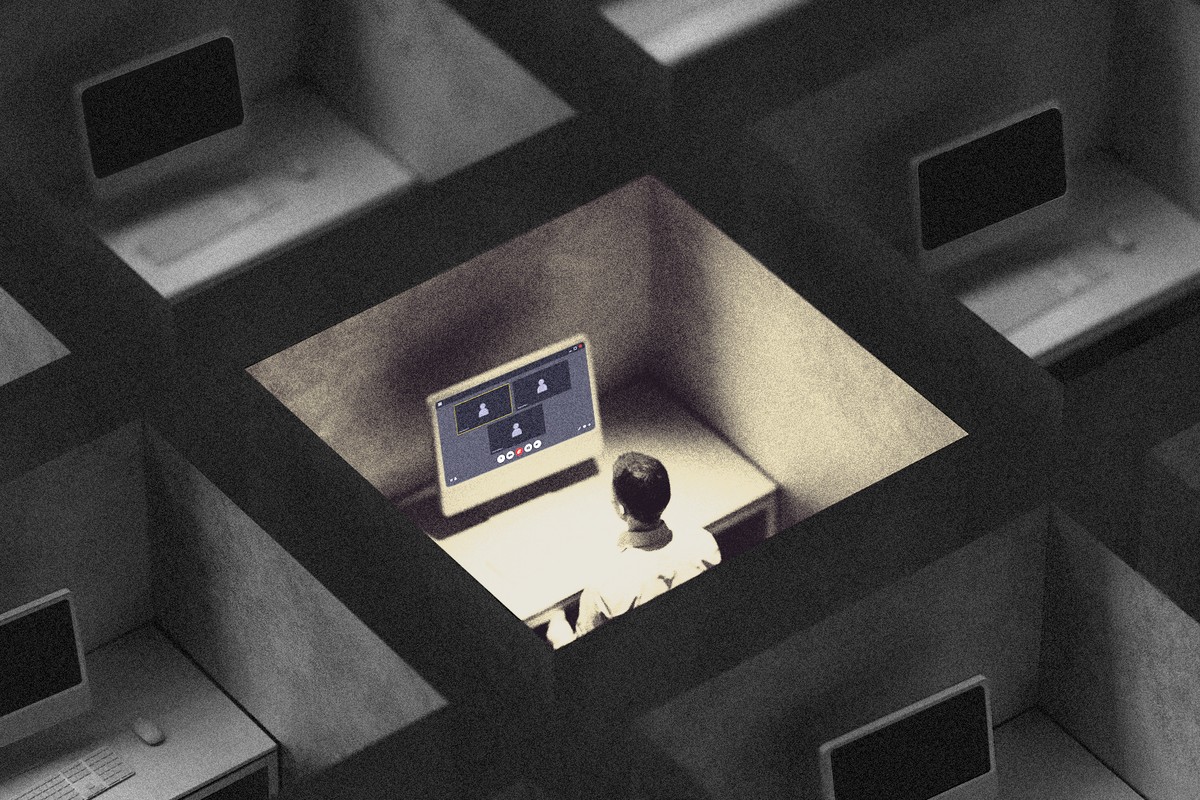
Depot、Instagram、Fidelity 和 TikTok 只是最近要求员工每周五天返岗办公的少数公司之一,这是更广泛趋势的一部分,即实施更严格的返岗规定。此类政策减少了在家办公,但并不总是减少远程工作。许多员工现在通勤到办公室,却整天都在与身处其他地方的同事进行视频通话,甚至只是走廊尽头的同事。他们身处办公室,但仍在远程工作。
Depot, Instagram, Fidelity, and TikTok are just a few of the companies that have recently ordered their employees back to the office five days a week, part of a broader shift toward stricter return-to-office mandates. Such policies cut down on working from home, yet they don’t always cut down on remote work. Many employees now commute to the office only to spend each day on video calls with colleagues who are elsewhere, or even down the hall. They’re in the office but still working remotely.
我们是两位经济学家,多年来一直在研究远程工作如何影响学习、生产力、幸福感和职业发展。我们惊讶地发现,人们常常把在家办公的替代方案想象成一个几乎所有人都在一起的办公室。现代办公室与这种理想截然不同。如今,在家办公的替代方案往往是在一个大多数隔间空荡荡的海洋中工作。
We are two economists who have spent years studying how remote work shapes learning, productivity, happiness, and career progression. We have been struck by how often people picture the alternative to working from home as an office where nearly everyone is together. The modern office looks very different from that ideal. Today, the alternative to working from home is often working in a sea of mostly empty cubicles.
在对1835名受过大学教育的美国工人的9月份调查中,我们发现,在他们最近一天到办公室的那天,超过70%的受访者表示,他们的团队中至少有一名成员当天不在办公楼里。因此,大约一半的受访者当天没有进行完全面对面的会议。而且超过三分之一的受访者表示,他们的会议全部是在线进行的,因为只要团队中有人远程办公,就会将会议完全转为线上。对这些员工来说,通勤到办公室除了为他们的视频通话提供不同的背景之外,几乎没有其他好处。
In a September survey of 1,835 college-educated American workers, we found that, on their most recent day at the office, more than 70 percent of respondents had at least one member of their team who was not in the building with them. As a result, roughly half of respondents had no fully in-person meetings. And more than a third had exclusively online meetings because their teams moved meetings entirely online whenever anyone was remote. For these workers, the commute to the office buys little more than a different background on their video calls.
通勤是有成本的。典型的美国人每天往返上下班花费54分钟,他们将此列为最讨厌的活动之一。然而,当同事确实聚在一起时,这种通勤可能是值得的。
The commute is costly. The typical American spends 54 minutes getting to and from work in a day, which they rank among their most hated activities. Yet when colleagues are actually together, this commute can be worth it.
面对面的交流往往能激发工作的最佳效果,促进创新。在《自然》(Nature)杂志上发表的一项实验中,那些通过面对面方式共同讨论问题的团队提出的创意数量比在线讨论的团队多出了约14%;同时,面对面的交流也有助于加强导师与学员之间的互动,使员工收到的反馈意见增加了约20%。因此,当人们与同事面对面合作时,他们的工作表现通常会更好,他们也会认为这样的工作比独自完成的工作更有意义。
In-person connection often unlocks the best parts of work. It sparks creativity; in an experiment published in Nature, pairs who brainstormed in person came up with about 14 percent more ideas than those brainstorming online. Face-to-face work also boosts mentorship, increasing the comments that people receive on their work by about 20 percent. Perhaps as a result, people consistently do better work when face-to-face with their colleagues and rate this work as more meaningful than work done alone.
然而,这些好处并不稳定。我们的研究发现,即使只有一个远程工作的团队成员,也会削弱那些在同一地点办公的团队成员之间的紧密联系——尤其是当团队会议部分或完全转为线上进行时。因此,在办公室里引入远程工作的方式实际上会削弱通勤所带来的诸多积极影响。
But these benefits are fragile. In our research, we find that having just one distant teammate weakens the connections among those sitting side by side, as team meetings move partially or fully online. Thus, any exposure to remote work in the office eliminates many benefits of the commute.
如今,远程办公已经变得非常普遍,这主要是因为我们仍未彻底摆脱疫情时代留下的两个遗留问题:首先,团队成员分散在多个不同的地点;一个典型的团队可能包括一些在同一城市工作的员工、几名完全远程办公的员工,以及一名在偏远地区办公的员工。因此,即使所有团队成员都在办公室里,团队会议也很可能仍然以线上形式进行。
Working remotely from the office has become so common because we have yet to shed two remnants of the pandemic era. The first is sprawl: Teams stretch across multiple locations. A typical team might have, say, a few employees who work in the same city, a couple who are fully remote, and one who works in a satellite office far away. So even if every teammate were in their office, the team meeting would still be largely online.
在封锁期间,对于那些可以通过Zoom等工具完成的工作来说,距离其实并不重要。许多公司开始雇佣距离团队中心较远的人,并允许现有员工搬到更远的地方工作。通过对一家《财富》500强企业的数据分析,我们发现疫情后该公司约60%的员工至少有一位远程工作的同事(而疫情前这一比例为20%)。在小企业中,员工与总部之间的距离从2019年到2023年几乎增加了两倍,主要原因是一些员工居住得太远,无法定期通勤到办公室上班。
During the lockdown, distance didn’t matter for jobs that could be done over Zoom. Many companies hired people far from their team’s central hub, and allowed existing employees to move farther away. In our analysis of data from one Fortune 500 firm, about 60 percent of corporate employees had at least one distant teammate after the pandemic, up from 20 percent before. Among small businesses, the distance between employees and the central office nearly tripled from 2019 to 2023, driven in large part by employees who live too far away to regularly commute to work.
许多公司只是接受了这种地理上的分散。如果一个团队已经分散,管理者可能认为在底特律招聘候选人并没有什么问题,尽管团队的重心在丹佛。我们的分析发现,如今《财富》500强企业的招聘信息列出多个可能的办公地点的频率是十年前的五倍。
Many companies have simply accepted this geographic sprawl. If a team is already dispersed, managers may see nothing wrong with hiring a candidate in Detroit even though the team’s center of gravity is in Denver. Our analysis finds that job posts among Fortune 500 firms now list multiple possible office locations five times as often as a decade ago.
不良习惯是封锁时期的另一种残留。在新冠疫情期间,许多工人习惯于专注于自己的待办事项,并在更短的时间内完成更多任务。如今,许多人仍然认为与同事的线下互动是对工作的干扰。在他们看来,去办公室意味着花时间通勤,只是为了浪费更多时间在闲聊上。这种观点忽视了这些对话激发新想法、推动他人成长和提升工作质量的潜力。
Bad habits are another remnant of the lockdown. During COVID, many workers became accustomed to focusing on their own to-do list and churning through more tasks in less time. Now many still view in-office interactions with colleagues as distractions from their work. As they see it, going to the office means they spend time commuting just to lose more time chatting. That view misses the potential for these conversations to spark new ideas, propel others’ growth, and improve the quality of their work.
因此,许多人尽可能多地待在家里。我们的分析发现,典型工人实际通勤的天数比公司要求的少一天:要求四天,实际只有三天。这可能听起来不是什么大事,但任何一天,都可能有人待在家里,导致他们在办公室的同事不得不参加Zoom会议。
Consequently, many stay home as much as they can get away with. Our analysis finds that the typical worker commutes in one fewer day than companies require: Ask for four and you get three. This might not sound like such a big deal, but on any given day, someone is likely staying home and causing their on-site peers to be on Zoom calls.
当一个人未到场时,办公室对团队其他人的吸引力就会减弱。这一点对管理者尤其明显;如果领导待在家里,普通员工往往也会效仿。很快,最初遵守规定的人也开始逃避通勤。
When one person fails to show up, the office has less of a draw for the rest of the team. This is especially true for managers; if the leader stays home, the rank and file often follow suit. Pretty quickly, the people who initially followed the rules start to skip the commute too.
即使人们确实去了办公室,许多人也选择发送Teams或Zoom链接,而不是走过去开会。在他们最近一天在办公室的时间里,52%参加会议的工人至少有一次会议是在线上举行的,尽管所有参与者都在同一栋楼里。跳过去开会的步骤可能感觉很高效。但这种便利省掉了创造更深层联系的小瞬间:会议开始前的闲聊,以及返回办公桌途中的简要回顾。
Even when people do go into the office, many send out Teams or Zoom links rather than moseying over to a conference room. On their most recent day in the office, 52 percent of workers with meetings had at least one held online even though all the participants were in the same building. Skipping the schlep to the conference room can feel efficient. But this convenience cuts out the small moments that create deeper connections: the chat before the meeting starts, the debrief on the way back to your desk.
试图扭转这种“远程办公”的趋势,其实就像徒劳无功的西西弗斯式努力一样(即永远无法完成)。那些分散在各个角落的同事们,很难再通过 Zoom 会议重新聚在一起;而当其他参与者其实就在办公室里(只是通过笔记本电脑参加会议时),去会议室开会似乎也毫无意义。强制要求员工回到办公室,并不能确保他们真的会到同一个办公室工作,也不能让他们从线上交流转为线下交流。结果往往是:虽然人们被“强制”回到办公室,但远程工作的模式反而更加普遍了。
Rolling back this trend of working remotely from the office feels Sisyphean. Reuniting colleagues who have scattered to the four corners of a Zoom screen seems impossible. And showing up in a conference room feels pointless when the other participants are a few doors down on their laptop. Mandating more time in an office has neither ensured that colleagues go to the same office nor that they meet in person rather than online. The result is that bringing people back to the office often relocates—rather than reduces—remote work.
不过,这种“孤立的工作方式”并不一定就是新的常态。企业可以通过支付报酬来鼓励远程员工回到办公室,并将招聘重点放在每个团队的核心办公地点;当重新聚集团队变得不切实际时,企业也可以定期组织线下会议。此外,企业还可以重新设计绩效评估机制,以奖励那些只有在面对面交流中才能产生的成果(比如创意突破、导师指导等)。
But an isolated workday doesn’t have to be the new norm. Companies could regather teams, by paying remote workers to relocate and refocusing hiring on each team’s central hub. When recongregating is impractical, they could hold regular off-sites. Companies could revamp performance reviews to reward the things that happen best in person: the creative breakthroughs, the mentorship moments.
这样一来,与同事的交流就会成为工作的重要组成部分,而不会成为人们在家中更快完成任务的障碍。并非每个工作日都必须在办公室进行;但确保那些需要在办公室工作的日子里员工能够真正面对面交流,确实能让工作变得更加人性化。
That way, conversations with co-workers would feel like essential parts of work rather than distractions from the solo tasks that people could do faster from home. Not every workday has to be in the office. But ensuring that in-office days are in-person days could make work feel more human.