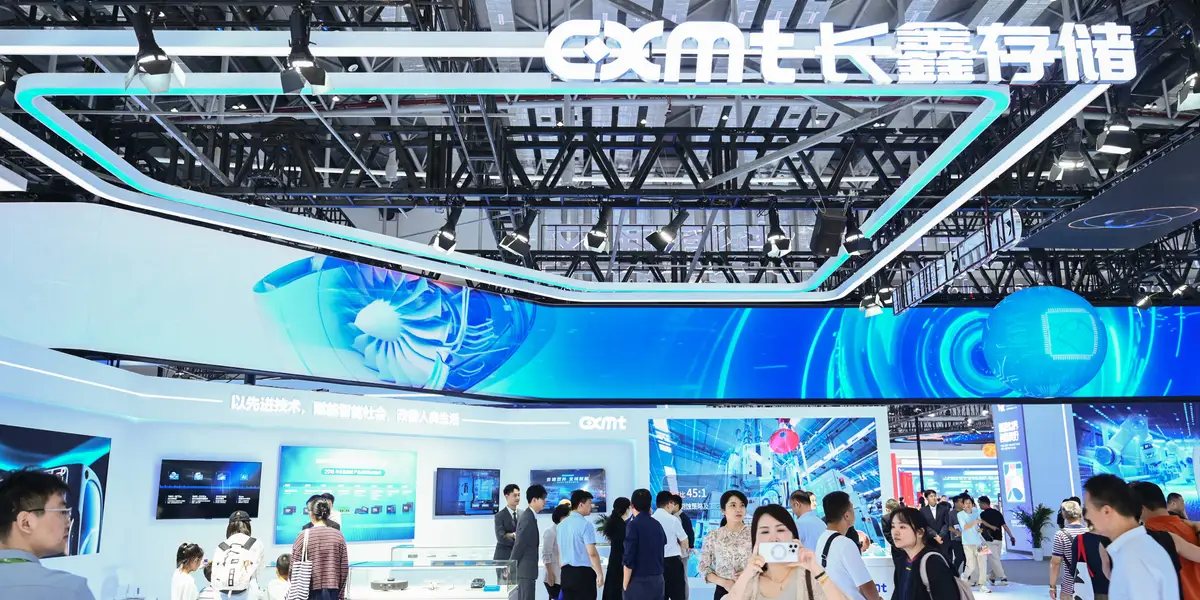
又一天,又一次市场恐慌 — — 这一次是因为担心主导AI内存芯片的小俱乐部可能不再那么独家。罪魁祸首是中国芯片制造商长鑫存储(CXMT),该公司表示已在更高密度的DRAM设计上取得进展,并计划在今年年底前推出服务器内存产品。如果它能够将这项技术转化为可靠的大规模生产,最终可能威胁到美光、SK海力士和三星等内存巨头所享有的定价权 — — 这三家公司是近几个月来AI交易的最大赢家之一。
Another day, another market tantrum — this time over fears that the tiny club dominating AI memory chips could get less exclusive. The culprit was Chinese chipmaker CXMT, which said it had made progress on a denser DRAM design and plans to introduce server-memory products by year-end. If it can turn that technology into reliable, large-scale production, it could eventually threaten the pricing power enjoyed by memory giants like Micron, SK Hynix, and Samsung — three of the AI trade's biggest winners in recent months.
这仍然是一个巨大的“如果”。但这并未阻止投资者迅速做出反应。Roundhill内存ETF(DRAM)下跌超过3%,而主要内存股也出现了明显抛售。AI交易曾经历过类似情形。新产品公告会引发被认为是其靶标的公司出现 brutal 抛售,随后投资者会喘口气重新评估。这一次是否不同?这取决于CXMT声明的可信度。该公司尚未证明其能够匹敌现有厂商的质量,也未达到相同的规模。
That remains a huge "if." But it didn't stop investors from reacting swiftly. The Roundhill Memory ETF (DRAM) slipped more than 3%, while the major memory names also sold off sharply. The AI trade has seen this movie before. A new product announcement triggers a brutal sell-off in the companies supposedly in its crosshairs, only for investors to later take a breath and reassess. Is this time different? It depends on how credible CXMT's claim is. The company hasn't yet proven it can match the quality of the incumbents, nor reach the same scale.
更重要的是,周二抛售的股票实际上是投资者最担心事物的替代品:AI-内存交易失去其稀缺溢价。投资者突然不得不考虑这样一个事实:该行业的竞争格局可能发生变化。当所有人都涌入时,派对就不再酷了,一些投资者正在考虑退出。虽然此次被称作的(所谓的)AI颠覆可能让人联想到OpenAI和Anthropic过去造成的清盘式打击,但它属于另一类。
More than anything, the stocks that sold off on Tuesday are stand-ins for what investors fear most: the AI-memory trade losing its scarcity premium. Investors are suddenly having to consider the fact that the industry's competitive landscape could change. The party isn't cool anymore once everyone shows up, and some investors are eyeing the exit. While this instance of (alleged) AI disruption may feel reminiscent of past wipeouts at the hands of OpenAI and Anthropic, it fits into its own category.
那些公告引发了人们对公司产品或工作流是否最终会被颠覆,甚至可能被淘汰的质疑。而CXMT的发展则更少涉及生存问题,更多聚焦于主要内存芯片制造商的群体是否可能扩大。
Those announcements raised questions about whether a company's product or workflow would eventually be disrupted, and possibly even rendered obsolete. The CXMT development is less existential, and more centered around the question of whether the pool of major memory-chip makers could grow.
真正的问题是,新增供应是否最终会对内存芯片价格和利润率造成压力,迫使行业领导者投入更多资金以保持其优势。这听起来对那些截至目前年内回报率达到三位数的公司来说不是好消息。即使CXMT未能按宣传兑现,内存芯片市场未来可能出现的扰动仍会持续存在。这可能会使那些在内存定价方面最不受直接竞争影响的公司获得溢价。
The real question is whether new supply could eventually pressure memory-chip prices and margins, forcing industry leaders to spend even more to protect their edge. That doesn't sound like good news for companies nursing year-to-date returns in the triple digits. Even if CXMT doesn't deliver as advertised, the prospect of future disruption in the memory-chip market will linger. That could put a premium on the companies best insulated from direct competition on memory pricing.
最终可能会形成两类截然不同的公司:一类主要受益于当前供应紧张的公司,另一类则通过构建更广泛的竞争优势来保护自身。英伟达正是后者的典型例子。该公司凭借巨大的GPU需求,成长为有史以来规模最大的公司。但它也在进军CPU和开源AI领域,通过扩大在AI全栈中的立足点,而非仅仅依赖其旗舰芯片。具有讽刺意味的是,投资者过去两年一直在担心世界是否能生产出足够的AI芯片。
It may ultimately create two distinct groups: firms benefiting primarily from today's supply squeeze, and those building broader competitive advantages to protect themselves. Nvidia is a good example of the latter. The company swelled to largest-company-ever status on the back of immense GPU demand. But it's also pushed further into CPUs and open-source AI, expanding its foothold across the AI stack rather than relying solely on its flagship chips. What's ironic is that investors spent the past two years worrying about whether the world could make enough AI chips.
如今,他们开始担心相反的长期问题:当更多竞争对手出现时会发生什么。因此,尽管最新的AI股票抛售可能会平息,但它所引发的长期问题很可能不会消失。
Now they're starting to worry about the opposite long-term problem: what happens when more competitors show up. So while the latest AI sell-off may fade, the long-term questions it raised probably won't.