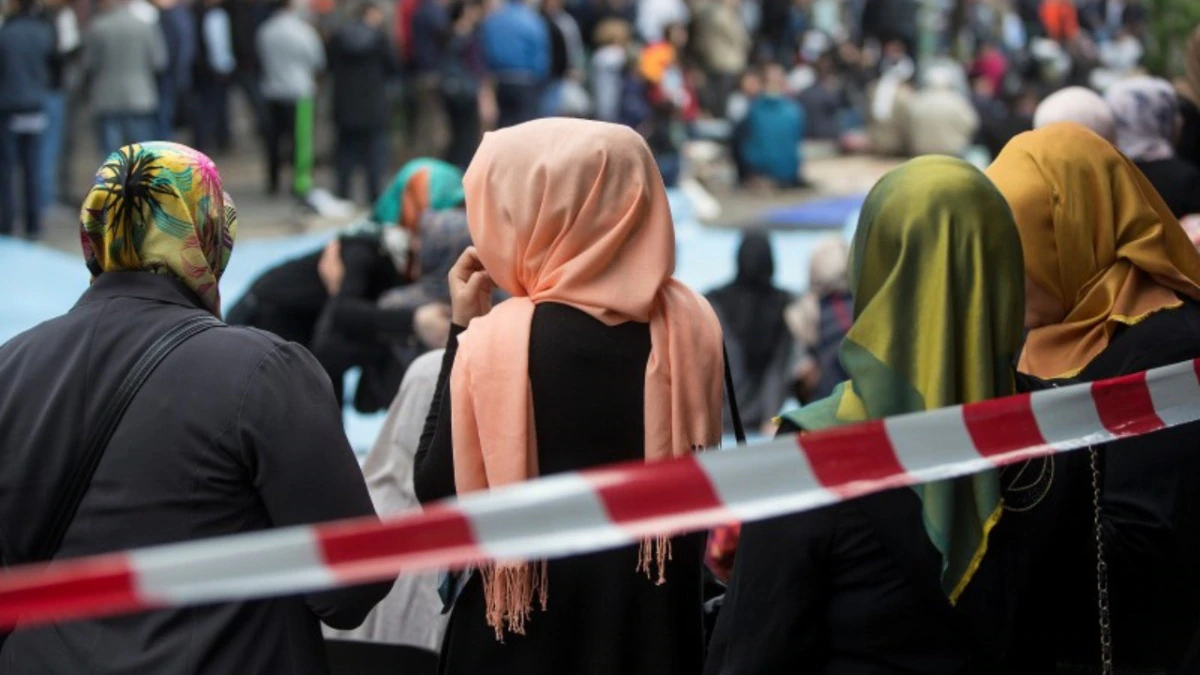
阿塞拜疆推出了新的学校着装规定,限制被认为与世俗教育不相容的服装,实际上阻止了学生和教师在课堂上佩戴伊斯兰头巾(即希贾布)。在一个大约96%人口信奉伊斯兰教的国家,这些限制引发了关于信仰与教育的激烈争论。该修正案上月获批,但并未明确禁止希贾布。相反,它禁止当局认为违背“世俗原则”的服装,该原则适用于国立学校。
Azerbaijan has introduced new school dress-code rules that restrict clothing deemed incompatible with secular education, effectively preventing students and teachers from wearing the Islamic headscarf, or hijab, in classrooms. In a country where around 96 per cent of the population is Muslim, the restrictions have sparked a contentious debate over faith and education. The amendment, approved last month, does not explicitly ban the hijab. Instead, it prohibits clothing that authorities consider contrary to the "principle of secularism" in state schools.
然而,一些学校已经开始拒绝佩戴头巾的学生和教师入校,这引发了全国范围的抗议。对受影响的人而言,这不仅仅是关于校服的问题,还涉及到个人宗教选择自由的获取。教师扎赫拉·哈桑诺娃告诉半岛电视台,她被告知今后不能在学校佩戴希贾布。“老实说,我有点情绪化。我感到受伤,”她说。“(希贾布)是个人选择,如果有一天我想摘下它,那也应该是我的选择。”阿塞拜疆到底做了什么改变?
However, some schools have already begun turning away students and teachers wearing headscarves, which has triggered protests in the country. For those affected, the issue is not simply about a uniform. It is also about access to the freedom to make personal religious choices. Teacher Zahra Hasanova told Al Jazeera that she had been informed she could no longer wear the hijab at school." To be honest, I am a little emotional. I am hurt," she said. "(The hijab) is a personal choice, and if one day I want to take it off, that should be my choice too."WHAT EXACTLY HAS AZERBAIJAN CHANGED?
阿塞拜疆政府修改了管理国立普通教育机构学生着装的规定。其表述目标是建立一种反映阿塞拜疆世俗特征的统一着装规范。阿塞拜疆国家通讯社表示,这些规定旨在确保学校着装遵循该国的“世俗原则”。
The Azerbaijan government has amended the rules governing uniforms for students in state-run general education institutions. The stated objective is to establish a common dress code that reflects Azerbaijan's secular character. The state-run Azerbaijani Press Agency said the rules were intended to ensure that school clothing followed the country's "secular principle".
这些指南还允许在庆祝活动中穿着反映“阿塞拜疆人民的历史、文化以及民族和道德价值观”的服装,但须经相关教学委员会批准。APA表示,这种做法将有助于教师维护“专业标准”,并对“学校的公众声誉”产生积极影响。争议的焦点在于,这些规则并未明确提及头巾,但一些学校却将其解释为禁止佩戴伊斯兰头巾的依据。
The guidelines also allow clothing reflecting the "history, culture, and national and moral values of the Azerbaijani people" to be worn during celebrations, subject to approval by the relevant Pedagogical Council. The APA said the approach would help teachers maintain "professional standards" and positively affect the "school's public reputation".The dispute arose because the rules do not explicitly mention the hijab, yet some schools have interpreted them as grounds to exclude people wearing Islamic headscarves.WHY AZERBAIJAN DRAWS THE LINE AT HIJABS IN SCHOOLSThe answer lies in Azerbaijan's history and constitutional framework.
阿塞拜疆为何在学校问题上对头巾划清界限答案在于阿塞拜疆的历史和宪法框架。阿塞拜疆是南高加索地区的一个前苏联共和国,该地区位于东欧和西亚之间。它在1991年苏联解体后获得独立。苏联时期,宗教活动受到限制。独立后,人们获得了更大的宗教信仰自由,但阿塞拜疆保留了世俗的政府体制。简单来说,世俗国家不会根据一种宗教的规则进行官方治理。
Azerbaijan is a former Soviet republic in the South Caucasus, a region between eastern Europe and western Asia. It became independent in 1991, following the collapse of the Soviet Union. During the Soviet era, religious practices were restricted. After independence, people gained greater freedom to observe their faith, but Azerbaijan retained a secular system of government. In simple terms, a secular state does not officially govern according to the rules of one religion.
阿塞拜疆政府认为,这一原则也应适用于其公共教育体系。该国宪法第7条将阿塞拜疆定义为一个世俗国家。第18条将宗教与国家分离,并明确确立了国家教育的世俗性质。同时,第48条保障良心自由,包括信仰宗教或不信仰宗教的权利。这些条款是当前争议的焦点。政府以世俗教育的名义捍卫统一规则,而批评者则质疑,排除佩戴头巾的学生和教师是否符合宪法对宗教自由的保护。头巾争议引发抗议和绝食行动这些限制引发了抗议和社交媒体运动。
Azerbaijan's government argues that this principle should also shape its public education system. Article 7 of the country's Constitution defines Azerbaijan as a secular state. Article 18 separates religion from the state and explicitly establishes the secular character of state education. At the same time, Article 48 guarantees freedom of conscience, including the right to practise a religion or follow none. These provisions are at the centre of the current dispute. The government is defending uniform rules in the name of secular education, while critics question whether excluding students and teachers who wear the hijab is compatible with constitutional protections for religious freedom.HIJAB ROW SPARKS PROTESTS AND HUNGER STRIKEThe restrictions have prompted protests and a social media campaign.
网上流传的视频显示,学生们据称被学校拒之门外时,抱着老师哭泣。几家当地媒体报道称,至少两所学校的学生因抗议规定而罢课。当局也对示威者采取了行动。阿塞拜疆内政部周一表示,37人因在反对着装规定执行时扰乱公共秩序被拘留。此问题不仅限于学校。被监禁的记者波拉德·阿斯兰诺夫因2020年被判犯有叛国罪,目前正服刑113年,他因新规定发起绝食抗议。
Videos circulating online showed students hugging their teachers and crying as they were reportedly turned away from schools. Several local media reported that students at least two schools boycotted classes to protest against the rules. The authorities have also taken action against demonstrators. Azerbaijan's Interior Ministry said on Monday that 37 people had been detained for disrupting public order while opposing enforcement of the dress-code requirements. The issue is not limited to schools. Imprisoned journalist Polad Aslanov, who was convicted of high treason in 2020 and is serving a 113-year prison sentence, launched a hunger strike over the new requirements.
动荡期间,也有网络封锁的报道流传。然而,这些说法尚未得到包括网络干扰观测站和NetBlocks在内的监测组织数据的确认。头巾争议考验“一国两制”与土耳其的关系此争议也紧张了阿塞拜疆与土耳其的关系,土耳其是阿塞拜疆最亲密的盟友之一。由于两国在文化、语言和政治方面关系密切,两国常用“一国两制”这一短语来描述它们的关系。
Reports of internet blackouts also circulated amid the unrest. However, the claims had not been confirmed by data from monitoring organisations, including the Open Observatory of Network Interference and NetBlocks.HIJAB ROW TESTS 'ONE NATION, TWO STATES' TIES WITH TURKEYThe controversy has also strained relations with Turkey, one of Azerbaijan's closest allies. The two countries often describe their relationship using the phrase "one nation, two states", due to their close cultural, linguistic and political ties.
针对限制的抗议已蔓延至土耳其,示威者聚集在阿塞拜疆驻伊斯坦布尔领事馆外,要求巴库当局重新考虑这些规定。此争议也唤起了人们对土耳其自身头巾限制历史的回忆。
Protests against the restrictions have spread to Turkey, where demonstrators gathered outside Azerbaijan's consulate in Istanbul to demand that authorities in Baku reconsider the rules. The dispute has also revived memories of Turkey's own history of headscarf restrictions.
1997 年军方支持的干预行动常被描述为该国的“后现代政变”,此次干预之后,佩戴头巾的女性在进入大学和在公务员系统的部分岗位工作方面受到限制。土耳其后来放宽了这些限制,使得阿塞拜疆目前的争议对一些土耳其政客和宗教团体而言尤为敏感。土耳其总统雷杰普·塔伊普·埃尔多安的顾问奥克泰·萨拉尔批评阿塞拜疆的举措“不可接受”。
Following the military-backed intervention of 1997, often described as the country's "post-modern coup", women wearing headscarves faced restrictions on entering universities and working in parts of the civil service. Turkey later eased those restrictions, making the current controversy in Azerbaijan particularly sensitive for some Turkish politicians and religious groups. Oktay Saral, an adviser to Turkish President Recep Tayyip Erdogan, criticised Azerbaijan's move as "unacceptable"."Leaving a student who covers her head for reasons of faith at the school gate – how can this fit into any conscience, any sense of justice?" he posted on X.Azerbaijan's governing Yeni Azerbaijan Party (YAP) responded sharply, describing Saral's remarks as "populist and irresponsible".
他在 X 上发文称:“让一名因信仰原因佩戴头巾的学生站在校门口——这如何能契合任何良知,任何正义感?”阿塞拜疆执政党新阿塞拜疆党(YAP)作出强烈回应,称萨拉尔的言论是“民粹主义且不负责任”。该党表示,这些言论可能损害两国关系,并主张阿塞拜疆的教育政策建立在平等、世俗主义和法治基础之上。该党还警告土耳其不要将阿塞拜疆的国内教育政策用于政治目的,强调尽管两国关系密切,但这不构成干涉彼此内部事务的正当理由。
It said the comments risked damaging relations between the two countries and argued that Azerbaijan's education policy was based on equality, secularism and the rule of law. The party also warned Turkey against using Azerbaijan's domestic education policies for political purposes, stressing that close bilateral ties did not justify interference in each other's internal affairs.WHAT DOES AZERBAIJAN'S GOVERNMENT SAY?
阿塞拜疆政府怎么说?阿塞拜疆官员驳斥了这些规定构成宗教歧视的指控。他们认为,这些限制涉及校园环境,而非人们在日常生活中实践信仰的权利。阿塞拜疆议会人权委员会主席扎希德·奥鲁杰表示,该措施并非对宗教自由或言论自由的攻击。“校外佩戴头巾并未被禁止,主要目标是维持教育环境内的统一规则,”他对半岛电视台说道。奥鲁杰还表示,宗教信仰不应与学生在公立学校的着装问题混为一谈。
Azerbaijani officials have rejected accusations that the rules amount to religious discrimination. They argue that the restrictions concern the school environment rather than people's right to practise their faith in everyday life. Zahid Oruj, chairman of the human rights committee of Azerbaijan's parliament, said the measure was not an attack on religious freedom or free expression." There is no ban on wearing headscarves outside school, and the primary objective is to maintain uniform rules within the educational environment," he told Al Jazeera. Oruj also said that religious belief should not be confused with the question of how students dress in public schools.
他指出,许多阿塞拜疆人虽然信仰真主并将《古兰经》视为圣书,却并不一定佩戴头巾。眼下最关键的问题是:当局是否会明确着装规定的具体执行方式?佩戴头巾的学生和教师是否仍会被排除在学校之外?——正文结束
Many Azerbaijanis, he noted, believe in God and regard the Quran as a holy book without necessarily wearing the hijab. The immediate question is whether the authorities will clarify how the dress-code rules should be applied and whether students and teachers wearing hijabs will continue to face exclusion from schools.- Ends