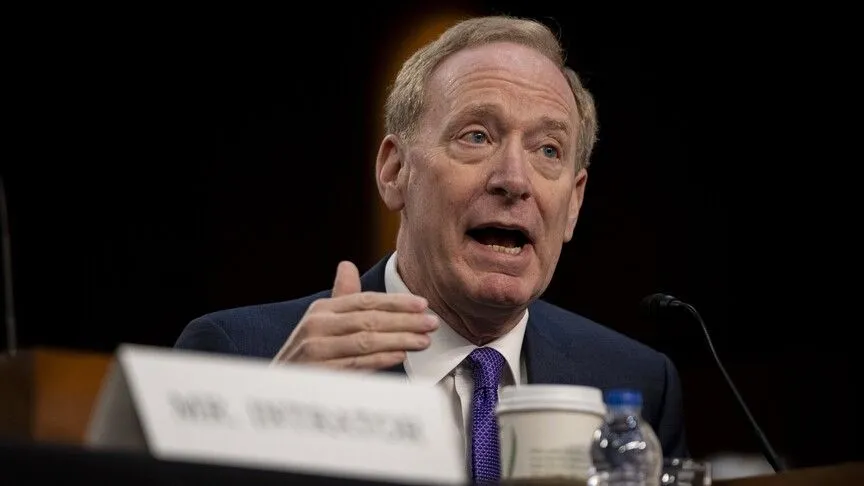
微软公司副董事长兼总裁布拉德·史密斯周三呼吁制定新的人工智能安全法规,指出科技企业应当切实防范风险,而不只是发出风险警示。
Microsoft Vice Chair and President Brad Smith on Wednesday called for new artificial intelligence safety laws, saying tech companies must prevent harm rather than simply warn of risks.
在爱尔兰举行的2026年国际人工智能峰会上,史密斯表示,人工智能技术的发展速度已远超相关安全防护措施的完善速度。
Speaking at the International AI Summit 2026 in Ireland, Smith said AI capabilities had advanced faster than protections.
“无论是欧洲还是世界各地的民众,都不希望我们行业仅仅停留在发出风险预警的层面。他们期望我们切实预防问题的发生,采取实际行动。”他说道,“倘若有必要放缓发展步伐,那么各企业及领导者都应承担起这一责任。”
“The world here in Europe or anywhere does not expect our industry simply to warn about what could go wrong. They expect us to prevent it. They expect us to take action,” he said. “And if we need to slow down, then it is up to each company and each leader to slow down.”
史密斯将2026年称为“人工智能安全领域值得警醒的一年”,并列举了一些负面案例:不受管控的人工智能程序侵入网络系统,还有针对智能家居设备发起攻击的“人工智能蠕虫”。
Describing 2026 as “a sobering year for AI safety,” Smith cited reports of rogue AI agents hacking networks and AI worms targeting connected homes.
“对于一盒牛奶都有诸多安全规范,对于烤箱也有相应的安全规定,可对于人工智能却少之又少。”他补充道。
“There are more safety rules for a carton of milk than for AI. There are more safety rules for your oven than for AI,” he said.
他呼吁整个行业克服对监管的抵触情绪,支持相关事故上报机制、及时向人工智能相关安全事件受害者发出通知,并开展独立评估并将结果向政府及用户公开。
He urged the industry to overcome resistance to regulation and to back incident reporting, notification of victims of AI-enabled breaches, and independent evaluations with findings shared with governments and customers.
“但我们需要法律,需要监管。这些法规必须合理且兼顾平衡,还要充分顾及技术创新的需求。”史密斯强调,“我们必须认识到,人工智能技术发展的速度已经超过了安全防护措施的建设速度,后者必须迎头赶上。”
“But we need law. We need regulation. It needs to be sensible. It needs to be balanced. It needs to take into account innovation,” Smith said. “We need to recognize that the power of AI has moved faster than the safety for it. Safety needs to catch up.”
同样出席此次峰会的OpenAI首席财务官莎拉·弗里亚尔也支持各大人工智能企业加强合作,并称OpenAI一直倡导制定全球性监管规则。
'We need to make sure the defenders have the tools' Also speaking at the event, OpenAI Chief Financial Officer Sarah Friar supported cooperation among leading AI developers, saying the company had called for global regulation.
弗里亚尔透露,OpenAI目前正暂停一款尚未发布的人工智能模型的开发工作,以便开展进一步的安全测试与优化工作。不过她也提醒道,绝不能为了安全而过度放缓研发进度,否则网络安全防护力量就会处于劣势。
Friar said OpenAI is withholding an unreleased model while doing further safety and alignment work, but cautioned against slowing development so sharply that cyber defenders lose ground.
“如果恶意分子能轻易获取相关工具,那我们也要确保网络安全防护方同样拥有必要的工具。”她说。她还提到,OpenAI曾借助人工智能技术来排查自身基础设施中的安全漏洞。
“So the folks with malicious intent have the tools. So we need to make sure the defenders have the tools,” she said. She said OpenAI had used AI to identify vulnerabilities in its own infrastructure.
“我们发现了这些漏洞,并以极快的速度完成了修复,”弗里尔说道。
“We found the vulnerabilities, we patched them at machine speed,” Friar said.
“靠制造恐慌来打入市场并非良策。我们应当提供解决方案,而且这些方案必须体现出透明、开放与诚信等特质。”
“Selling fear is not a good way to come to the world. We have to sell solutions and solutions that feel transparent, open, honest, and so on.”