直到美国总统唐纳德·特朗普在周五逆转了他对俄罗斯石油制裁政策的方向之前,乌克兰的西方盟友一直在加强使用国际法。
Until US President Donald Trump reversed the thrust of his sanctions policy of Russian oil on Friday, Ukraine’s Western allies had been ramping up the use of international law.
专家告诉半岛电视台,对俄罗斯石油实施制裁的国家今年首次根据《海洋法公约》执行了登临和检查权。
Countries sanctioning Russian oil have for the first time enforced boarding and inspection rights under the Law of the Sea this year, experts told Al Jazeera.
“目前的整个想法是扰乱、威慑,并使俄罗斯通过这些船只将石油运送到市场的物流成本更高、更昂贵,而这确实正在发生,”海洋情报公司Windward的分析师米歇尔·博克曼说。一些俄罗斯官员认为情况会更糟。
“The whole idea now is to disrupt, deter and make it more expensive and costly for Russia to logistically get their oil to market on these ships, and that’s definitely happening,” said Michelle Bockmann, an analyst at maritime intelligence company Windward. Some Russian officials believe worse is to come.
“西方国家正试图组织对我们船只的拦截。伦敦和布鲁塞尔正在制定封锁波罗的海及通往该海的海峡的计划。其他关键航运路线也面临威胁,”俄罗斯海事委员会主席尼古拉·帕特鲁舍夫在10月12日访华期间对官员表示。
“Western countries are trying to organise the interception of our vessels. London and Brussels are drawing up plans to blockade the Baltic Sea and the straits leading into it. Other key shipping routes are also under threat,” Russian Maritime Board chairman Nikolai Patrushev told officials during a visit to China on October 12.
西方制裁不仅禁止在制裁领土内购买俄罗斯石油。它们还禁止西方保险的油轮将俄罗斯石油卖给第三方,除非以低于市场价的价格出售,这使得俄罗斯几乎没有或根本没有利润。
Western sanctions not only ban Russian oil purchases in the sanctioning territories. They forbid Western-insured tankers from selling Russian oil to third parties except at below-market prices, which leaves Russia with little or no profit.
自2022年实施制裁以来,俄罗斯一直通过一支不受西方机构所有或保险的“影子船队”油轮出口其约一半的原油,而且这些油轮经常不符合环境和安全标准。
Since sanctions were imposed in 2022, Russia has been exporting about half of its crude oil through a “shadow fleet” of tankers that are not owned or insured by Western institutions, and often do not comply with environmental and safety standards.
正是执行这些标准的权利,使得美国、英国和欧盟能够根据《联合国海洋法公约》(UNCLOS)第110条加强合规性检查,该条款允许沿海国对船只进行检查。
It is the right to enforce these standards that allows the United States, United Kingdom and European Union to step up compliance inspections using Article 110 of the United Nations Convention on the Law of the Sea (UNCLOS), which allows coastal states to inspect vessels.
这已经减少了俄罗斯在躲避石油制裁的猫鼬游戏中的操作空间,而这一游戏已经持续了45个月,自欧盟、美国和其他七国集团(G7)国家实施制裁以来。
That has decreased Russia’s room for manoeuvre in its cat-and-mouse game of circumventing oil sanctions 45 months after the EU, US and other Group of Seven (G7) states imposed them.
“许多这些船只使用了欺诈性登记,它们实际上是无国籍的,”博克曼说。根据《联合国海洋法公约》,她说,“与其只是呼喊,‘嘿,你们的旗帜是什么?你们的保险是什么?’然后让他们在无害通过权下继续航行……他们现在有了法律依据登船检查。”影子油轮从事了各种非法行为,使其受到怀疑并被登船检查。它们在公海上将俄罗斯石油从一艘船转移到另一艘船以掩饰其来源。它们关闭了追踪装置以避免监控,伪造了位置,逃避了保险义务,并悬挂了虚假旗帜。
“A lot of these ships were using fraudulent registries, and they were stateless,” said Bockmann. Under UNCLOS, she said, “Instead of just hailing them, ‘Hey, what’s your flag? What’s your insurance?’ and then letting them merrily go on their way under the right of innocent passage … they now had a legal basis to board them.”Shadow tankers have engaged in various illegal practices that exposed them to suspicion and boarding. They have transferred Russian oil from one vessel to another on the high seas to disguise its provenance. They have turned off their trackers to avoid monitoring, falsified their positions, evaded insurance obligations, and flown false flags.
使用第110条针对这些行为的催化剂是美国,它去年年底援引该条款登船检查了试图规避美国财政部对委内瑞拉石油出口制裁的船只,作为“南方之矛”行动的一部分。
The catalyst for using Article 110 against these practices was the US, which invoked it late last year to board vessels evading US Department of the Treasury sanctions against the export of Venezuelan oil in Operation Southern Spear.
在英国的协助下,美国海军陆战队于去年1月在北大西洋登船扣押了俄罗斯所有的贝拉一号油轮——该船因运输伊朗和委内瑞拉以及俄罗斯石油而被制裁。
With help from the UK, US Marines seized the Russian-owned Bella I, sanctioned for carrying Iranian and Venezuelan as well as Russian oil, in the North Atlantic last January.
英国和法国此后根据《联合国海洋法公约》规则登船检查了几艘其他船只。尽管这些检查相比目前漂浮的数百艘影子油轮来说寥寥无几,但它们对影子舰队施加了压力,专家表示。
The UK and France have since boarded several other vessels under UNCLOS rules. Although these inspections are few compared to the hundreds of shadow tankers afloat, they have put pressure on the shadow fleet, experts said.
“第110条一直就在那里,却没有真正发挥作用,”丹麦奥尔堡大学经济法教授克里斯蒂娜·西格说。“这个工具一直存在,但就是从未被拿出来使用。”这种对法律的新遵守在航运业产生了连锁反应。
“Article 110 had just been sitting there, not really getting any traction,” said Kristina Siig, a professor of economic law at Aalborg University in Denmark. “The tool has always been there, but it just never got pulled out of the drawer.”This new adherence to law has had knock-on effects in the shipping industry.
“尽职调查已成为船舶管理中最大的头痛问题,”希腊比雷埃夫斯几家航运公司董事会成员、海事顾问乔治·希拉达基斯说。
“Due diligence has become the biggest headache in ship management,” said George Xiradakis, a maritime consultant who sits on the boards of several shipping companies in Piraeus, Greece.
他向半岛电视台表示,船舶租赁方与购买方“必须仔细核实船只是否符合国际标准”,并指出:“如今的合规审核所需时间较2025年之前增加了数倍之多。”各制裁国一直在持续打击那些“影子船队”。
Ship charterers and buyers “have to check thoroughly that a ship is in compliance with international standards”, he told Al Jazeera, noting, “The time requirement compared to 2025 has gone up by a factor of several times manyfold.”The sanctioning nations have pursued the shadow fleet relentlessly.
被西方船队拒之门外后,俄罗斯转而寻求使用方便旗。欧盟、英国及美国与相关船舶注册机构接洽,说服它们将这些“影子船只”从注册名单中剔除。
After being evicted from Western fleets, Russia turned to flags of convenience. The EU, UK and US approached those registries and persuaded them to oust the shadow vessels.
博克曼说道:“圣基茨和尼维斯在2024年初率先采取行动……帕劳、加蓬、冈比亚、库克群岛、圣马力诺、巴巴多斯、科摩罗、几内亚比绍以及圣多美,这些国家也都相继采取了类似措施。”
“St Kitts and Nevis were the very first ones in early 2024 … Palau, Gabon, Gambia, Cook Islands, San Marino, Barbados, Comoros, Guinea-Bissau, Sao Tome – they’ve all stopped,” said Bockmann.
今年,俄罗斯的反应是将大量此类油轮重新登记至本国船舶注册系统。
Russia reacted this year by bringing many of those tankers onto its own registry.
据TankerTrackers.com统计,目前有340艘“影子油轮”被登记为俄罗斯籍船只。为此,各制裁国依据《联合国海洋法公约》采取了应对措施。泽连斯基的“制裁主张”乌克兰希望彻底切断俄罗斯来自化石燃料领域的出口收入。该国总统弗拉基米尔·泽连斯基警告称,特朗普与莫斯科关系的缓和将延长这场已持续四年半的俄乌战争。
TankerTrackers.com lists 340 dark or shadow tankers as Russian-flagged. Sanctioning states have responded by using UNCLOS. Zelenskyy’s ‘sanctions’Ukraine wants to see all of Russia’s export revenue from fossil fuels dry up, and its President Volodymyr Zelenskyy has warned that Trump’s rapprochement with Moscow will prolong the four-and-a-half-year Russia-Ukraine war.
今年,基辅方面对俄罗斯30座炼油厂中的至少26座实施了打击,给全球市场带来了不小冲击。
Kyiv has this year struck at least 26 of Russia’s 30 refineries, causing headaches on the global market.
据能源与清洁空气研究中心(CREA)测算,由于中东霍尔木兹海峡出现通航受阻危机,全球石油与天然气价格大幅上涨,俄罗斯今年最初获得了310亿欧元(约合350亿美元)的意外收入。
Russia saw an initial windfall of 31 billion euros ($35bn) this year, after the crisis over the blockage of the Middle East’s Strait of Hormuz raised oil and gas prices worldwide, the Centre for Research on Energy and Clean Air (CREA) calculated.
这笔意外收入暂时扭转了自2022年俄乌战争爆发以来俄罗斯石油与天然气收入持续下滑的趋势:今年3月,相关收入环比增长了52%。
That windfall temporarily bucked a trend of constantly falling Russian oil and gas revenue since the Ukraine war began in 2022. Month-on-month revenues shot up by 52 percent in March.
不过,继7月份下降12%、6月份下降1%之后,8月份俄罗斯的原油、成品油及天然气收入均再度下降8%。《联合国海洋法公约》与国内法:双重约束下的执法工具西格指出,实施检查的官方理由是保障安全;根据《联合国海洋法公约》,“我们有权、实际上也有共同义务去协助彼此实施监管”。
But Russia’s August revenue from crude oil, refined products and gas all fell by eight percent, following a 12 percent drop in July and a one percent drop in June. The binary weapon of UNCLOS and national law The official rationale for inspections is safety, and under UNCLOS “we have a right, we actually have a joint obligation, to try to help each other to police that”, said Siig.
但她强调,推动这些检查行动的真实目的——即通过阻断俄罗斯石油贸易来遏制其在乌克兰的侵略行径——却无法依据《联合国海洋法公约》来强制执行。
But the agenda that drives these inspections – stopping Russia’s war of aggression in Ukraine by interdicting the Russian oil trade – is not enforceable under UNCLOS, she said.
“我们无权命令某些国家禁止出口商品,唯有联合国才具备这一权限,”她说道,“要实施制裁,就必须依靠国家司法管辖权。”正是国内法与国际法的这种结合,使得丹麦与瑞典显得至关重要。
“We are not allowed to tell certain states that they can’t export goods. The only entity that can do that is the UN,” she said. “To enforce sanctions, you have to have state jurisdiction.”That combination of national and international law makes Denmark and Sweden extremely important.
两国共同掌控着波罗的海最狭窄的航道要道,所有船只唯有经由此处才能进入北海及大西洋。因此,那些在列宁格勒州乌斯季卢加与普里莫尔斯克炼油厂装载原油及石油产品的油轮,必须穿越丹麦与瑞典的领海才能抵达全球市场,而相关国内法在这些海域完全适用。
Together, they control the narrowest chokepoints in the Baltic, where shipping has to pass to enter the North Sea and the Atlantic. So tankers loading crude oil and petroleum products at the Ust-Luga and Primorsk refineries in the Leningrad region have to pass through Danish and Swedish territorial waters, where national laws fully apply, to reach global markets.
丹麦海事局数据显示,2025年共有292艘俄罗斯“影子油轮”经行波罗的海;为此丹麦逐步强化了检查机制。2025年2月,丹麦当局开始对停泊在斯卡恩近海的油轮实施合规检查;同年4月,又因发现越南籍“影子油轮”维戈号消防安全措施存在疏漏而将其扣留。
The Danish Maritime Authority recorded 292 Russian shadow tanker transits through the Baltic in 2025, and it has progressively tightened its inspection regime. In February 2025, Danish authorities began compliance inspections on tankers anchored off Skagen, and in April detained the Vietnamese-flagged shadow tanker Vigo after finding its fire safety lax.
同年10月,丹麦进一步扩大了检查范围,将压载系统、燃油品质、排放指标、废弃物管理以及各类证书核验均纳入检查项目。
In October, Denmark broadened inspections to include ballast systems, fuel quality, emissions, waste management and certificate verification.
“丹麦的做法可谓是对俄罗斯采取了‘全方位施压’,”西格说道。如今丹麦当局除要求提供保险证明外,还强制要求这些油轮出示石油运输保险凭证、穿越丹麦海峡的航行计划书以及安全文件。俄罗斯“对北约采取强硬姿态”深知自身可能被困于波罗的海的险境,俄罗斯对此反应激烈。
“The Danish approach has been to throw the book at [Russia],” said Siig, as Danish authorities now ask for an oil insurance certificate, a sail plan through the Danish Straits and safety documents in addition to an insurance certificate, she said. Russia ‘acting aggressively towards NATO’ Conscious of the danger of being bottled into the Baltic, Russia has reacted with fury.
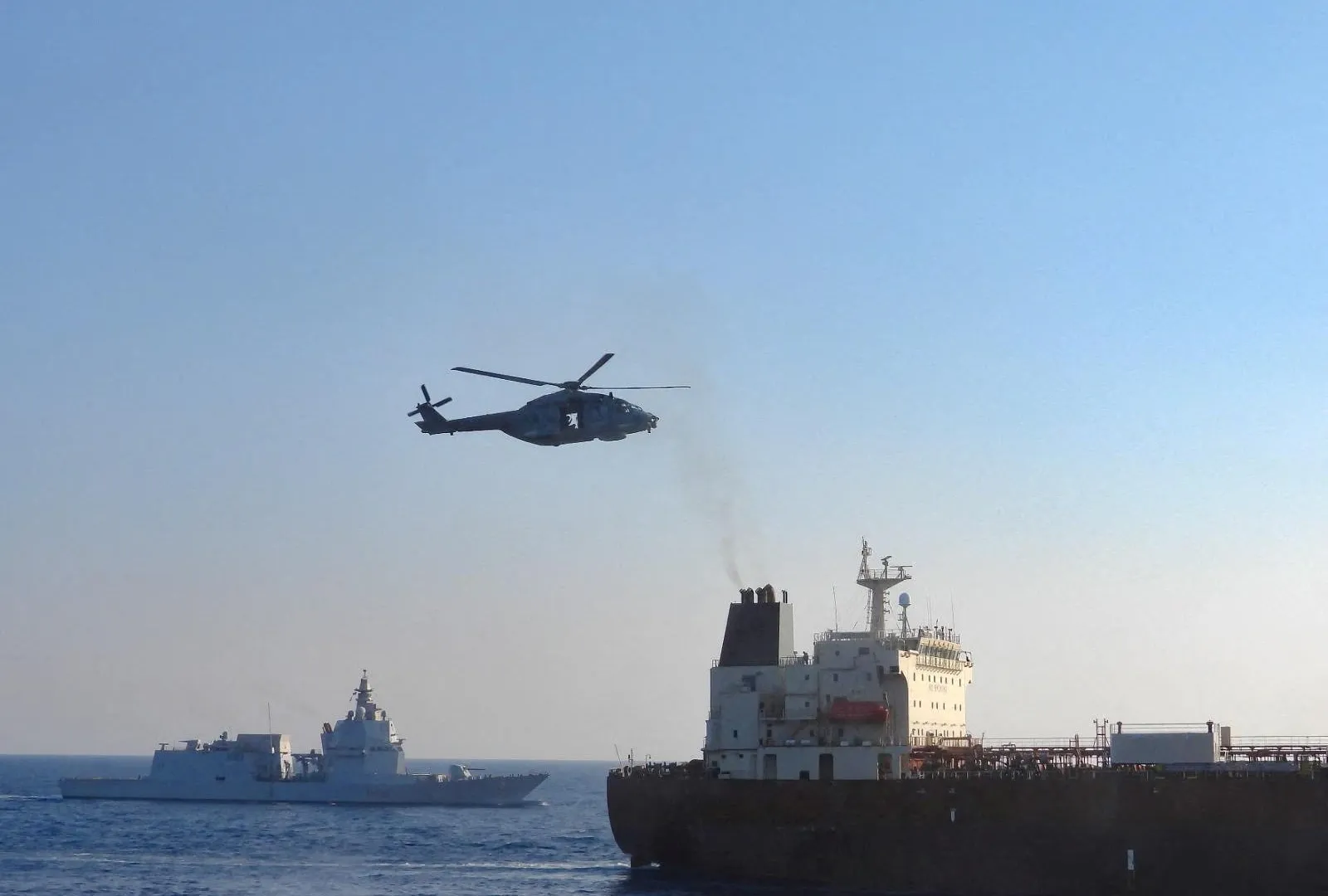
9月14日,一艘俄罗斯护卫舰在丹麦海峡格德瑟以南的国际水域向一架正在对其进行检查的丹麦直升机发射了两枚信号弹。
On September 14, a Russian frigate fired two flares at a Danish helicopter that was inspecting it in international waters south of Gedser, in the Danish Straits.
“俄罗斯军队正日益对波罗的海地区的北约军事单位采取更为激进的行动,”丹麦国防情报局的一份最新报告称。“俄罗斯面临的压力比自乌克兰战争爆发以来的任何时候都更大。乌克兰持续的远程打击正在对俄罗斯境内深处造成越来越广泛的破坏……俄罗斯经济正濒临一场重大危机,这一危机由军事开支、国际制裁和乌克兰的打击共同驱动。”
“Russian forces are increasingly acting aggressively towards NATO military units in the Baltic Sea region,” said a recent Danish Defence Intelligence Service report. “Russia is under more pressure than it has been at any other point during the war against Ukraine. Ukraine’s sustained long-range attacks are causing still more extensive damage deep inside Russia … The Russian economy is on the brink of a major crisis, driven by military expenditures, international sanctions and Ukrainian strikes.”
西格表示,丹麦在首次动用这些国际法条款时正谨慎行事。丹麦当局现在可能正在要求提供油轮保险证书、安全文件、通过丹麦海峡的航行计划以及保险证书,但关闭海峡目前并不在考虑之列,她说。
Denmark is treading carefully as it flexes these provisions of international law for the first time, said Siig. Danish authorities may now be asking for an oil insurance certificate, safety documents, a sail plan through the Danish Straits, and an insurance certificate, but closing off the Strait is not on the cards, she said.
“我未看到任何公开证据表明正在考虑采取此类措施。根据普通海洋法制度,丹麦海峡属于享有过境通行权的国际海峡,丹麦王国有强烈的维护这一基于规则的体系的利益,”西格说。
“I have seen no public evidence that such a measure is being considered. Under the ordinary Law of the Sea regime, the Danish Straits are international straits subject to transit passage, and the Kingdom of Denmark has a strong interest in preserving that rules-based system,” Siig said.
“俄罗斯已经失去了对波罗的海的控制,”她指出。“大家原本相处得很好。然后乌克兰危机爆发,局势突然变得紧张,从地缘政治角度看,他们被困住了。”乌克兰一直在呼吁其盟友更有力地执行制裁。西格表示,“这可能会阻止乌克兰战争,也可能引发一场新的战争。”
“Russia has lost the Baltic,” she noted. “Everybody seemed to be getting along just fine. Then Ukraine happened, and suddenly they got boxed in, geopolitically.”Ukraine has asked its allies to enforce sanctions even more forcefully. That, said Siig, “might stop the Ukrainian war, and it might start a new one”.