企业领导人表示,他们应受到国会调查的保护,因为他们除了与特朗普政府合作别无选择。但历史表明情况并非如此。
Corporate leaders say they should be shielded from congressional inquiries because they had no alternative but to collaborate with the Trump administration. History says otherwise.
10月5日,《国会山报》记者贾斯珀·古德曼和凯瑟琳·哈普古德报道,民主党内部正围绕应对那些直接助长法西斯政权的企业进行何等深入的调查展开日益激烈的争论——而该政权也是美国历史上最腐败的总统任期。进步派人士如参议员伊丽莎白·沃伦(民主党-马萨诸塞州)和众议员马克西妮·沃特斯(民主党-加利福尼亚州),他们分别有望领导参议院银行委员会和众议院金融服务委员会,渴望针对主要科技公司和加密货币交易所的高管,因为这些高管向特朗普提供了财政和实物上的支持。但温和派人士认为,指责过多人是不公平的。
On October 5, Politico writers Jasper Goodman and Kahterine Hapgood reported on a growing battle among Democratic Party leaders over how deeply to investigate businesses that directly abetted a fascist regime, which is also the single most corrupt presidency in the history of the United States. Progressives like Senator Elizabeth Warren (D-MA) and Representative Maxine Waters (D-CA), who are respectively poised to lead the Senate Banking and House Financial Services committees, are eager to target the executives at major tech companies and cryptocurrency exchanges for their financial and in-kind contributions to Trump. But moderates feel that pointing too many fingers would be unfair.
“很多公司之所以这么做,是因为特朗普把枪架在了他们头上,”民主党伊利诺伊州众议员比尔·福斯特(Bill Foster)对《国会山报》说。“我们必须在何时公司只是为了生存而做了他们不得不做的事情,与那些真正加入并通过成为他腐败的合伙人而获利更多的公司之间,保持一点明智。”
“A lot of the companies did things because Trump had a gun on their head,” Representative Bill Foster (D-IL) told Politico. “We’re going to have to be a little bit wise about when companies simply did something they had to do to survive this unprecedented level of corruption, compared to companies that actually got on board and profited more by being a partner in his corruption.”
大型科技前台组织“进步商会”(Chamber of Progress)的戴夫·沃兰德(Dave Vorland)提出了类似的论点。在硅谷对特朗普第二次就职典礼及其新白宫舞厅项目的慷慨资助中,沃兰德写道:“看起来像‘屈膝’的行为,可能更好地被理解为风险管理……公司领导层被特朗普迫使做出了这种选择。”福斯特和沃兰德似乎都在主张,根据企业领导人的行为来评判他们是不公平的。
Dave Vorland of the Big Tech front group Chamber of Progress makes a similar case. In Silicon Valley’s generous funding of Trump’s second inauguration and his new White House ballroom project, Vorland writes that “what looks like ‘bending the knee’ may be better understood as risk management.… the company leaders were forced to make that choice by Trump.”Both Foster and Vorland appear to be arguing that it’s unfair to judge corporate leaders by their actions.
福斯特声称,至少有些“为保持在特朗普好感中的公司、律师事务所和大学所采取的步骤”根本别无选择。这是生存的问题。同样,沃兰德似乎把“风险管理”不仅仅视为一种商业策略,而是一种普遍的道德正当化:如果它能最大化股东价值,那么它就必须超越评判。
Foster claims that at least some “corporations, law firms, and universities that took steps to stay in Trump’s good graces” simply had no choice. It was a matter of survival. Similarly, Vorland appears to treat “risk management” not so much as a business strategy but as an all-purpose moral justification: If it maximizes shareholder value, it must be beyond judgment.
无论国会民主党人在接下来的两年里进行何种调查,都将是国家迈向消化这一段我们历史中极其黑暗篇章的第一步。换句话说,国会对私营部门与特朗普合作的监督,将是我们迫切需要的真相委员会和刑事起诉的前奏。
Whatever investigations congressional Democrats undertake in the next two years will be the nation’s first steps toward metabolizing this utterly dark chapter in our history. In other words, congressional oversight of private-sector collaboration with Trump will be a prequel to the truth commissions and criminal prosecutions that we desperately need.
福斯特与沃兰德试图在国会中的民主党人开始行使权力之前,就预先将某些人物从特朗普时代的叙事中剔除。这样一来,美国人对特朗普时代的认知便只能局限于“被迫合作”这一单一叙事框架。正如奥卢费米·O·塔伊沃所言,当一个国家选择遗忘其历史上某些可耻的事实,那些关于国家特性的论断便极易被未来的煽动者所利用。记忆的政治虽复杂棘手,但对于客观审视特朗普时代而言,这却是不可回避的核心议题。
Yet Foster and Vorland want to preemptively write certain actors out of the story of the Trump years, even before Democrats in Congress start wielding gavels. That would necessarily narrow the kinds of story America can tell itself about what the Trump years were to a narrative of coerced collaboration. As Olúfẹ́mi O. Táíwò writes, when a nation chooses to forget certain facts about a shameful chapter in its history, that keeps certain claims about the nation’s character open to future demagogues. The politics of memory are difficult, but they represent nonnegotiable terrain for any honest reckoning with the age of Trump.
当然,福斯特、沃兰德等人或许会辩称:那些向特朗普政权提供资金或协助的商界及社会领袖,总比斯蒂芬·米勒或皮特·赫格塞斯这类人要好得多。此言不虚。但若仅止步于此,便回避了美国人亟需自问的其他关键问题:当一个邪恶政权崛起并颠覆了社会道德准则,个人是否仍需为自己的行为负责?当社会权力与声望的掌控者暂时要求人们做出违背道德的选择时,这些人又该不该因此受到道德审判?
Surely though, Foster, Vorland and others would respond, business and civic leaders who paid off or assisted the Trump regime aren’t as bad as Stephen Miller or Pete Hegseth. That’s absolutely correct. But to end the conversation there forecloses other questions about the inner workings of Trump collaboration Americans urgently need to ask ourselves. When an evil regime rises and flips public morality on its head, are you still responsible for your actions? Should one be judged for doing the wrong thing when, for a brief period, the gatekeepers of social power and prestige seemed to require it?
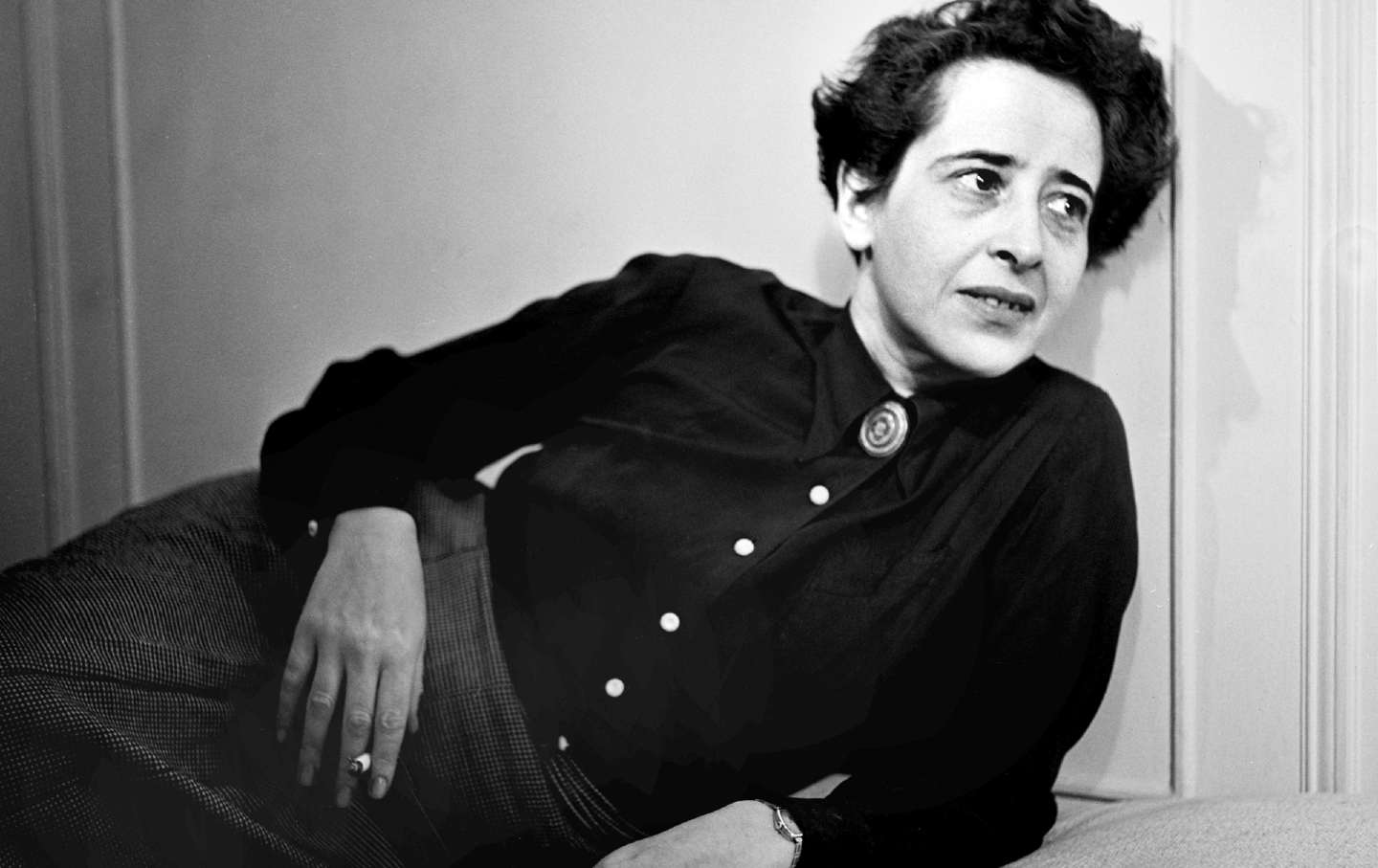
哲学家兼大屠杀幸存者汉娜·阿伦特晚年曾深入思考这些问题——尤其是法西斯与极权政权下的参与者与反抗者究竟有何区别。她尤为关注个人选择及其应承担的责任。
The philosopher and Holocaust survivor Hannah Arendt spent much of her later life thinking about such questions—and about what distinguishes the participants and resisters of fascist and totalitarian regimes from each other. She was particularly interested in the role of individual choice and culpability.
1962年,《纽约客》派阿伦特前往耶路撒冷,报道纳粹高级官员、“最终解决方案”的主要策划者阿道夫·艾希曼的审判过程。在她所著的极具争议性著作《艾希曼在耶路撒冷》中,阿伦特指出,艾希曼既非法西斯意识形态的狂热信徒,也不是被仇恨驱使的恶魔。相反,他只是个乏味的官僚——一个为了在工作中避免任何冲突、从而顺利晋升而实施种族灭绝的“职场达人”。
In 1962, The New Yorker sent Arendt to Jerusalem to cover the trial of Adolf Eichmann, a high-ranking Nazi and key organizer of the Final Solution. In Eichmann in Jerusalem, her highly controversial book about the trial, Arendt argued that Eichmann was neither a fascist ideologue nor a hate-driven monster. Rather, he was a dull bureaucrat—a company man who committed genocide to avoid courting any conflicts in his working life so as to quietly climb the professional ladder.
艾希曼那些平淡无奇的自我辩解之词,与其所犯下的滔天罪行形成了鲜明反差,也促成了阿伦特最著名的论断:“恶的平庸性”。该书一经出版便引发激烈批评,阿伦特则在1964年以文章及广播演讲《独裁体制下的个人责任》予以回应。在她看来,这场争议反映出上流社会中普遍存在的一种心理:人们“不敢轻易下判断”,因为大家都怀疑“没有人能真正算作自由行动的主体”,进而也就“无人需要为自己的行为负责”。
Eichmann’s mundane suite of self-justifications, in stark contrast with the gravity of his actions, inspired Arendt’s best-known phrase: “the banality of evil.”Eichmann in Jerusalem set off furious criticism, to which Arendt responded in her 1964 essay and radio broadcast “Personal Responsibility Under A Dictatorship.”In her view, the controversy revealed “a widespread fear of judging” within high society, due to “the suspicion that no one is a free agent, and hence the doubt that anyone is responsible or could be expected to answer for what he has done.”
受过良好教育的人都知道,各种系统性力量与庞大机构无时无刻不在影响着我们的日常行为。但在阿伦特看来,这种认知往往演变为一种推卸个人责任的风气——成了逃避自身责任的现成借口。
Educated people recognize that systemic forces and vast institutions influence our daily behavior at all levels. But to Arendt, this acknowledgment too often shaded off into an ethos of personal non-accountability—a readymade rationale for avoiding any responsibility for one’s actions.
从这个角度来看,沃兰德声称科技巨头们“因特朗普的施压而被迫选择接受监管并管理风险,而非公开对抗”的说法便站不住脚了。从定义上讲,人不可能被“强迫”做出某种选择:倘若这些科技公司真想这么做,完全也可以选择公开对抗的道路。与此同时,福斯特的辩护言论则将这种试图逃避公众对其行为评判的企图推向了荒谬的极端。
Seen in this light, Vorland’s claim that tech leaders have “chosen access and risk management over public confrontation” because “they were forced to make that choice by Trump” begins to fall apart. By definition, one cannot be “forced” into a choice: The tech companies could have chosen the path of “public confrontation” if they wanted to. Meanwhile, Foster’s apologia takes this bid to sidestep public judgment of one’s actions to absurd new heights.
据他所说,特朗普“用枪指着这些公司的头”。然而这些公司不过是市值数十亿美元的法人实体,根本不存在所谓的“脑袋”;它们享有普通美国人难以想象的特权与社会礼遇。这些公司的掌权者们并未面临被国家处决的威胁,顶多只是可能损失部分营收罢了。
In his words, Trump “had a gun on their head.”But “they” are multibillion-dollar corporations—legal fictions without heads at all, who enjoy privilege and social deference on a scale unimaginable to ordinary Americans. The bosses of these entities weren’t facing imminent execution at the hands of the state, but only the prospect of diminished revenue.
这类机构的规划议程并非某种凌驾于道德抉择之上的冰冷力量;实际上,它们是由机构内部的特定人物推动的,而这些人本也可以做出别的选择。当特朗普试图撤销大型律所保罗·韦斯旗下律师的安全许可时,时任该律所主席布拉德·卡普立刻主动提出为总统提供价值4000万美元的免费法律服务。同样,在特朗普威胁要撤销哥伦比亚大学的研究经费时,代理校长克莱尔·希普曼也同意向特朗普政府支付巨额款项,废除学校的多元化、公平与包容项目,还以被歪曲且被用作工具的“反犹主义”定义来压制校园内的异议声音。
The planning agendas of such institutions aren’t some impersonal force hovering above the messy world of moral decision-making; rather, they are subtended by particular people within them, who could have chosen otherwise. When Trump tried to revoke security clearances for attorneys at the major law firm Paul Weiss, it was then-chairman Brad Karp who raced to offer the president $40 million in pro bono legal work. Likewise, when Trump threatened to revoke Columbia University’s research grants, it was acting president Claire Shipman who agreed to pay millions to the Trump administration, crush the school’s roster of diversity, equity, and inclusion programs, and police dissent at her campus by wielding a false and weaponized definition of antisemitism.
这些都是特定人物做出的特定选择。他们的许多同行则做出了别的选择,而这些人至今安然无恙,他们所在的机构也依然蒸蒸日上。
These are particular people who made particular choices. Many of their peers made other choices. Those peers are still alive, and their institutions are still thriving.
据《纽约时报》的调查,卡普“被同事们形容为极其善于讨好他人,有时甚至到了过分的地步”。希普曼曾是一名有线电视新闻主播,后来还为白领女性撰写了多本关于机场社交技巧的励志书籍。两人都是民主党的常客捐款人,并公开表达过自己倾向于自由派的立场。
Karp is “described by colleagues as the consummate people pleaser, sometimes to a fault,” according to a New York Times investigation. Shipman was once a cable news anchor who wrote airport self-help books for white-collar professional women. Both are regular Democratic donors who have publicly voiced broadly liberal commitments.
有那么几个月,似乎某个煽动分子会夺走他们的声望与公共资金。与此同时,许多观点与他们相近的知名评论员却鼓吹所谓的“氛围转变”;体面人士不得不开始将法西斯分子视为“体面之人”。于是,卡普与希普曼便成了这个好战政权的傀儡——这个政权会当街绑架、杀害那些不愿惹恼权贵的人。
Then, for a few months, it looked like a demagogue might take away their prestige and public funding. At the same time, prominent pundits with views akin to theirs were heralding a “vibe shift;” respectable people had to consider fascists respectable now. And so Karp and Shipman became puppets of a warmongering regime that kidnaps and murders citizens in the street because they didn’t want to anger anyone important.
阿伦特对此不会感到惊讶。在《个人责任》一文中,她回忆起自己作为犹太知识分子在纳粹德国的生活经历:她虽对纳粹政权的行径感到震惊与愤慨,却并未陷入困惑——毕竟纳粹所做的一切正是他们宣称要做的。
Arendt would not be surprised. When she described life as a Jewish intellectual in Nazi Germany in “Personal Responsibility,” Arendtt wrote that she was shocked and outraged by the regime’s actions, but not disturbed: The Nazis, after all, were doing exactly what they said they would do.
她写道:“真正令我们不安的并非敌人的行径,而是那些朋友的举动。他们并未造成这种局面,对纳粹政权也并无责任;只是被纳粹的成功所折服,无法用自己的判断力去反驳他们所理解的‘历史定论’。”不过,卡普、希普曼以及那些科技巨头们的行为真的有那么错吗?当时的情况极其特殊,是我们生平从未遇到过的。在这种极端环境下,我们又该以怎样的标准来评判他人呢?
No, she wrote, “what disturbed us was the behavior not of our enemies but of our friends, who had done nothing to bring this situation about. They were not responsible for the Nazis, they were only impressed by the Nazi success and unable to pit their own judgment against the verdict of History, as they read it.”Still, did Karp, Shipman, and the tech giants do anything that was really so wrong? These were extreme circumstances, unprecedented in any of our lives. To what standard can we hold people in these situations?