
尽管全球经济面临着诸多挑战,但它依然展现出极强的韧性。伊朗局势带来的影响相对有限;目前来看,利率上升也并未显著抑制经济增长;人工智能更是推动了投资热潮。
Despite everything that has been thrown at the global economy, it remains remarkably hardy. The Iran war is extracting a modest toll, higher interest rates don't appear to have slowed growth so far, and AI is driving an investment boom.
不过,本周国际货币基金组织上调了全球经济增长预期,但这种增长势头能持续多久仍存变数。运气以及能否准确解读市场信号,都将起到关键作用。
But there are limits to the staying power of the growth for which the International Monetary Fund updated forecasts this week. Luck — and reading the right signals from markets — will play a role.
当前的经济增长也并非毫无瑕疵:能源价格大幅上涨令民众生活艰难;极端天气导致大宗商品价格上涨;部分政策制定者则担忧用于建设数据中心的相关技术投入存在过度现象。此外,人们对未来经济走势的担忧也合情合理。此次经济放缓会是温和型的——就像2001年互联网泡沫破裂后那样;还是会像2008年雷曼兄弟倒闭或新冠疫情爆发时那样出现深度衰退呢?
The expansion isn't flawless: The sharp climb in energy prices is causing hardship, extreme weather is forcing up commodity prices, and some policymakers worry about excess spending on technologies vital for data centers. Nor is it churlish to contemplate what comes next. Will the inevitable slowdown be mild, as occurred after the dom collapse in 2001, or deeper, like the period that followed the failure of Lehman Brothers Holdings Inc. in 2008, or the shutdowns in response to Covid.
各国央行及财政部门将再度肩负重任。不过,若要真正做到“不惜一切代价”——借用前欧洲央行行长马里奥·德拉吉曾使用的这一表述——恐怕并非易事。
Central banks and fiscal authorities will again be called upon. Doing whatever it takes, however, to use the phrase deployed to great effect by former European Central Bank President Mario Draghi, might not be so simple.
多个发达经济体的财政空间似乎已接近枯竭,债券市场也传递出对各国政界能否引导经济走向可持续发展路径的疑虑。以法国为例,该国学生纷纷走上街头抗议,长期国债收益率也大幅飙升;其所需的经济救助规模显然远超葡萄牙、希腊乃至那些规模中等的新兴市场国家。
Budgets in several advanced economies appear close to exhaustion and bond markets are signaling their skepticism that politicians can put them on a sustainable path. France, for example, where students have taken to the streets and long-term rates have skyrocketed, would require a far bigger rescue than Portugal, Greece or a moderately sized emerging market.
不过眼下,经济危机尚远未到来。国际货币基金组织周二预测,2027年全球经济增长率将升至3.4%,高于今年预计的3.1%——这一数值也略高于此前的预期。美国和中国仍将表现突出:美国的经济增速有望略超预期;中国则将实现4%的增长,与先前预测持平。而作为发达经济体债券抛售潮发源地的法国,前景则显得黯淡许多。
But for now, a reckoning is still a way off. Global growth will quicken to 3.4% in 2027, the IMF projected on Tuesday, up from an estimated 3.1% this year — itself a slightly better outcome than previously anticipated. The US and China will again be the standouts: America will do a bit better than forecast, and China will notch a 4% advance, unchanged from the prior forecast. France, the epicenter of a bond selloff in advanced economies, faces dimmer prospects.
这些预测是在该基金会在曼谷举行的年会上发布的。它们与其说是值得庆祝的理由,不如说是表明最糟糕的情况尚未发生。一年前,全球各界仍在努力消化美国加征高额关税所带来的影响,众多交易员也为美元的未来前景忧心忡忡。然而,“抛售美国资产”的论调最终未能成真;华盛顿政府针对伊朗实施制裁后引发的油价飙升,也并未彻底破坏整体经济前景。
The predictions, released at the fund’s annual meeting in Bangkok, aren't so much cause for celebration as a recognition that the worst hasn’t come to pass. Twelve months ago, the world was still digesting steep US tariffs and traders were wringing their hands over the future of the dollar. But the “Sell America” narrative fizzled and Washington’s other own goal, the jump in oil that followed its attack on Iran, hasn't shredded the outlook.
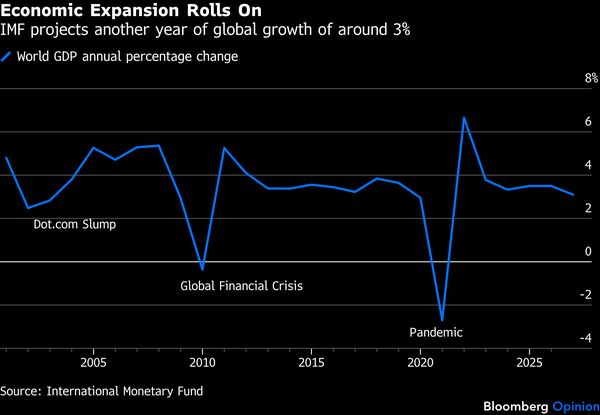
当前面临的种种困难其实放在更宏观的视角下来看也更容易理解:要让经济增长率脱离3%左右的水平,需要诸多不利因素共同作用才行。疫情曾导致全球国内生产总值下降2.7%,而次贷危机则使经济产出短暂陷入负增长区间。
Contemporary hurdles might be better understood in perspective. It takes a lot to knock growth out of the 3% vicinity. The pandemic led to a decline in world gross domestic product of 2.7%, and the subprime meltdown pushed output slightly into negative territory.
如今看似稳健的经济形势,其实有赖于政策制定者不犯下重大错误。目前来看,他们所采取的举措与言论均符合预期。美联储继上月加息后,很可能再度上调利率;欧洲央行以及印度、澳大利亚的央行也均释放了偏“鹰派”的信号。不过在许多国家,通胀水平仍高于既定目标。
Today’s nominally solid scenario depends on policymakers not making any major mistakes. For now, they are saying and doing the right things. The Federal Reserve is likely to hike rates again after nudging them up last month, and the ECB, and central banks in India and Australia made similarly hawkish noises. In many instances, inflation remains higher than targets.
那么,当下次经济陷入严重困境时会发生什么?谁能挺身而出化解危机?其效果又能否与以往的经济衰退时期相媲美呢?最终,这一重任仍将落在各国央行肩上——因为掌控财政政策的各国政府如今处境艰难。不断攀升的债券收益率已削弱了各国财政部以合理成本进行融资的能力。
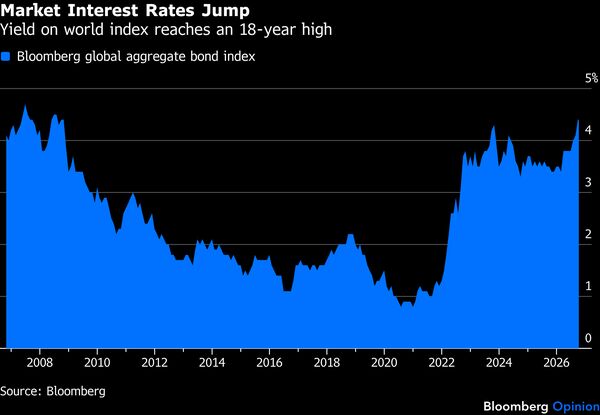
What happens the next time the economy gets into a really serious scrape? Who rides to the rescue — and will it be as effective as during earlier slumps? It will, ultimately, be left to central banks because governments, which control fiscal policy, are on treacherous ground. The capacity of national treasuries to borrow at competitive rates has been diminished by soaring bond yields.
根据新加坡总统尚达曼·尚穆加拉特南的说法,这可能是一件祸中之福。他在2007-2009年全球金融危机期间担任财政部长,并在进入政坛前领导了新加坡中央银行。固定收益市场的动荡为领导人提供了一个整顿家底的机会,因为预算妥协往往在严重后果临近时达成。他上周在该城邦国立大学与国际货币基金组织总裁格奥尔基耶娃的小组讨论中表示,抓住这个机会至关重要。格奥尔基耶娃借鉴了摇滚传奇乐队齐柏林飞艇的意象,将不断攀升的债务比作“楼梯”——只不过不是通往天堂的楼梯。
That could be a blessing in disguise, according to Singapore President Tharman Shanmugaratnam, who was finance minister during the Global Financial Crisis of 2007-2009, and led the central bank before entering politics. The fixed-income upheaval provides leaders with an opportunity to put their house in order because budget compromises are often reached when dire consequences loom. It’s vital this chance be seized, he said on a panel with IMF chief Kristalina Georgieva at the city-state's national university last week. Georgieva borrowed from rock legends Led Zeppelin, likening mounting debt to a “stairwell”— just not to heaven.
虽然我们可能还没有陷入地狱,但全球经济前景虽然不错,却伴随着诸多限定条件。这些条件可能比基准预测更具后果。上一次国际货币基金组织在泰国举办其旗舰活动是在1991年,当时泰国及其邻国正处于多年高速增长的边缘。苏联已经解体;全球化和繁荣是当时的热词。很少有人看到,在十年结束前,亚洲将被货币危机和深度衰退所笼罩。导火索是曼谷决定放弃支撑泰铢的努力。
While we might not be in hell, rarely has a pretty good outlook for the global economy come with so many qualifiers. They may be more consequential than the baseline forecasts. The last time the IMF held its showcase in Thailand, in 1991, the kingdom and its neighbors were on the cusp of years of runaway growth. The Soviet Union had collapsed; globalization and prosperity were the buzzwords. Few saw the currency crisis and deep recession that would envelop Asia before the decade was out. The spark was Bangkok’s decision to abandon efforts to prop up the baht.
泰国自身的经济目前表现尚可。但就像全球经济一样,它并不惊艳。
Thailand’s own economy is traveling reasonably these days. Yet, like the global one, it isn’t amazing.