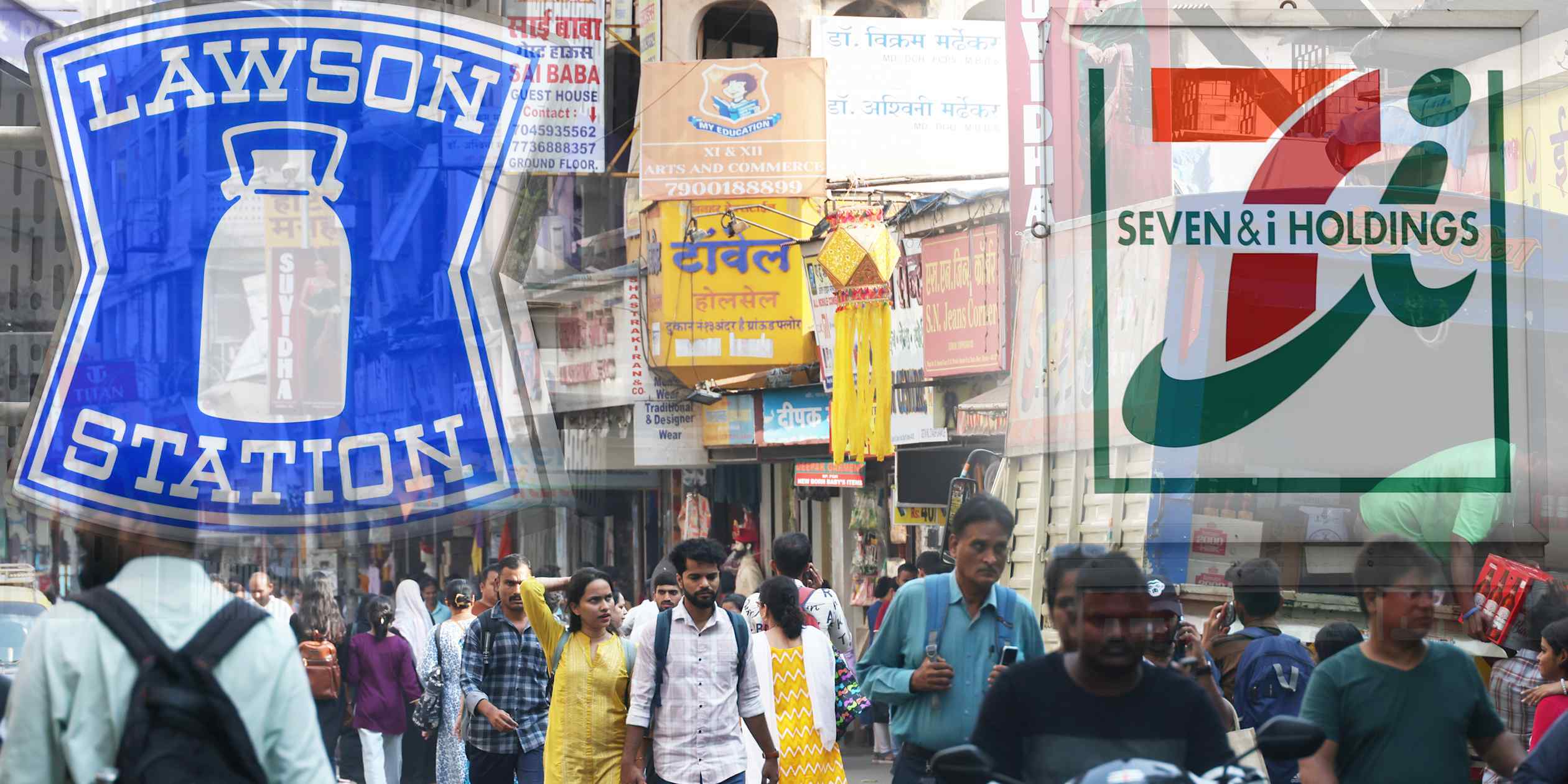
尽管得到了利安达集团的支持,但这反映出城市市场竞争激烈,现代零售商正与快速配送玩家展开角逐,这引发了对像日本罗森这样的新外资进入者前景的质疑,他们正押注于世界上人口最多的国家。
despite the backing of the Reliance conglomerate reflects a fiercely competitive urban market where modern retailers are fighting quick-delivery players, raising questions over the prospects of new foreign entrants like Japan's Lawson that are betting big on the world's most populous country.
外资零售商已在印度试水近二十年,被不断扩大的中产阶级所吸引,也因为个人消费占国内生产总值的近60%。咨询公司Redseer估计,杂货市场将从2026年的6580亿美元增长到2030年的9920亿美元。
Foreign retailers have been trying their luck in India for nearly two decades, drawn by the lure of an expanding middle class and the fact that personal consumption accounts for nearly 60% of gross domestic product. Consultancy Redseer estimates the grocery market will grow from $658 billion in 2026 to $992 billion in 2030.
罗森计划明年在孟买开设五家直营门店,并通过特许经营和许可协议,瞄准在2050年前拥有1万家门店。另一家零售商法国家乐福则通过与服装集团的特许经营协议,于9月重返印度市场,此前该公司曾在2014年退出该市场。
Lawson is set to open five company-owned stores in Mumbai next year and is eyeing 10,000 stores by 2050 through franchise and licensing agreements. Another retailer, France's Carrefour, relaunched in India in September through a franchise deal with the Apparel group, having quit the market in 2014.
分析人士表示,这些及任何其他新进入者都需要通过区分其产品来在印度市场脱颖而出。
Analysts say these and any other new entrants will need to differentiate their offerings to stand out in India.
包括家乐福和德国麦德龙集团在内的公司一直受到限制,因为规定禁止外资在销售多种品牌的零售业务中持股超过51%,这限制了它们只能经营批发现金自提中心,而无法经营它们设想的面向消费者的门店。罗森计划通过最初仅销售其自有品牌产品来规避投资限制。
Companies including Carrefour and Germany's Metro AG have been stymied by rules that limit foreign ownership in retail operations selling multiple brands to 51%, restricting them to operating wholesale cash and carry centers, rather than the consumer-focused outlets that they envisioned. Lawson plans to get around investment restrictions by initially selling only its private-label products.
在类似家乐福与服装集团之间的安排下,特许经营商负责建设和运营门店,同时向家乐福支付许可费和特许权使用费。在这种情况下,家乐福作为零售商受益于此类安排,因为财务责任完全由特许经营商承担。
Under an arrangement like the one between Carrefour and Apparel, franchise operators set up and run the stores while paying license fees and royalties to Carrefour. The retailer, in this case Carrefour, benefits from such arrangements because the financial responsibility lies entirely with the franchisee.
但随着快速配送服务的兴起,无论是外资还是本土零售商面临的挑战都加深了,分析人士表示,7-Eleven的困境凸显了购物习惯的快速变化,尤其是在印度大城市。Blinkit、Swiggy和Zepto凭借承诺在20分钟内送达从食品杂货到iPhone的一切商品,赢得了富裕买家的青睐。
But the challenge for retailers, both foreign and domestic, has deepened due to the rise of quick-delivery services, with analysts saying 7-Eleven's travails underscore rapid changes in shopping habits, particularly in large Indian cities. Blinkit, Swiggy and Zepto have captured the imagination of affluent buyers with promises of delivering everything from groceries to iPhones in less than 20 minutes.
截至3月结束的财年中,Swiggy的快速配送服务实现扣除折扣后的销售额2020亿卢比(约21亿美元),几乎是两年前的三倍。在Blinkit,销售额飙升近五倍,达到4860亿卢比。这一繁荣得益于零售商网点的快速扩张,Swiggy的仓库数量翻倍至1143个,Blinkit的仓库数量激增四倍至2243个。
Swiggy's fast-delivery services notched 202 billion rupees ($2.1 billion) in sales net of discounts in the fiscal year ending March, almost three times that of two years ago. At Blinkit, sales soared nearly five times to 486 billion rupees. The boom was backed by rapid expansions of the retailers' footprints, with Swiggy doubling the number of its warehouses to 1,143, and the count at Blinkit soaring four times to 2,243.
这种增长促使亚马逊和沃尔玛旗下的Flipkart等在线巨头也纷纷投身快速配送领域。与此同时,塔塔集团通过Big Basket提供快速配送服务。
Such growth has prodded online heavyweights such as Amazon and Walmart's Flipkart to throw their hats into the fast-delivery ring. The Tata group, meanwhile, offers quick deliveries through Big Basket.
然后是信实工业,其通过信实零售部门在电子、时尚、生活方式、医药和食品杂货等领域经营超过2万家门店,但并未与7-Eleven的核心主打业务——食品和零食——形成竞争。它也加入了这股热潮,推出了Jio Mart。除了7-Eleven,该部门还曾与鞋履制造商Clarks和牛仔品牌G-Star等合资合作,但均告失败。
Then there is Reliance Industries, which operates over 20,000 stores across electronics, fashion, lifestyle, pharmaceuticals and groceries through its Reliance Retail arm but did not compete with 7-Eleven's core proposition of food and snacks. It has jumped on the bandwagon with Jio Mart. Beyond 7-Eleven, the unit has also had unsuccessful joint ventures with the likes of shoe maker Clarks and denim brand G-Star.
快速配送服务正在让城市消费者远离DMart和信实零售等有组织的零售商。然而,低收入家庭仍然光顾成千上万家社区夫妻店,这些店铺存放相对廉价的大众市场品牌。许多这类被称为kirana的店铺提供赊销服务,并对标价给予一定折扣。
Quick-delivery services are weaning urban consumers off organized retailers like DMart and Reliance Retail. Low-income households, however, continue to frequent the thousands of neighborhood mom-and-pop stores that stock relatively inexpensive mass-market brands. Many of these shops, known as kirana offer goods on credit and some discount on the sticker prices.
快速配送正在冲击印度城市市场,尤其是高端消费群体,而这种影响主要体现在大型连锁超市和杂货零售商身上。知识公司(The Knowledge Company)董事长兼首席执行官阿尔温德·辛格哈尔(Arvind Singhal)表示:“原本会流向线下零售商的大量增长,实际上正转向快速配送。”
"Quick-delivery is making a dent in urban India, particularly among the higher-end consumers, and the impact is being felt more by the large format supermarkets and grocery retailers," said Arvind Singhal, chairman and managing director at consultancy The Knowledge Company. "A lot of growth, which would have otherwise come to offline retailers, is actually going to quick deliveries."
一些零售商也承认了这一问题。达玛特(DMart)首席执行官安舒尔·阿萨瓦(Anshul Asawa)在6月对分析师表示,班加罗尔和孟买等大都市的门店正面临来自竞争的“相当程度的冲击”,因为消费者更倾向于选择快速配送,“尤其是购物篮较小的订单”。
Some retailers acknowledge the issue. DMart CEO Anshul Asawa told analysts in June that stores in metropolitan cities such as Bengaluru and Mumbai faced a "fair amount of impact" from competition, with buyers preferring quick deliveries, "especially for the lower basket sizes."
他补充道:“我怀疑这种情况在未来几年不会改变。”辛格哈尔指出,7-Eleven在印度提供的商品种类远不及本土连锁企业如达玛特和瑞安零售(Reliance Retail),以及地区性玩家如MK零售或Ratnadeep零售,这些企业销售的商品种类繁多,从食品杂货到日常必需品,包括炊具和文具。7-Eleven在日本和东南亚等主要市场的核心优势——新鲜食品——在印度几乎没有起到帮助作用,因为像Zomato和Swiggy这样的食品配送服务正蓬勃发展。
He added, "I am suspecting that's not going to change over the next few years." Singhal said 7-Eleven offered a much smaller assortment of goods compared with homegrown national players like DMart and Reliance Retail, as well as regional players like MK Retail or Ratnadeep Retail, which sell a wide gamut of products including groceries and daily essentials ranging from cookware to stationery. 7-Eleven's key offering in its major markets like Japan and Southeast Asia -- fresh food -- did little to help the company in India, where food delivery services like Zomato and Swiggy are flourishing.
“鉴于来自大型连锁零售商和社区店铺的激烈竞争,我认为像7-Eleven这样的店铺并没有强烈的商业前景,”辛格哈尔说。
"Given the stiff competition from large format retailers and neighborhood stores, I don't see a strong business case for such stores [as 7-Eleven]," Singhal said.
此外,外国品牌名称如今也带来的附加价值越来越少。安达斯投资银行(Anand Rathi Investment Banking)董事巴拉特·比尔拉(Bharat Birla)表示:“在当今印度市场,即使是外国零售商,提供标准化商品也将变得更加困难,因为如今的消费者已经不再被外国品牌所打动。”
What's more, a foreign name adds less value these days. "Offering standardized merchandise will be a tougher play in the Indian market today, even for foreign retailers, because consumers today are no longer impressed by foreign brands," said Bharat Birla, director at Anand Rathi Investment Banking.
“他们想要价值,”他说。人们不会仅仅为了日常采购而离开家门,“任何外国企业都应考虑到这些细微差别,尤其是在大都市地区。”劳森正通过开发不含肉类和蛋类的食品,以及销售日本特色食品如饭团和御田锅来定制其产品。但分析师对其自有品牌策略持怀疑态度:虽然小众产品可能有助于最初吸引眼球,但更大的挑战在于让人们定期光顾其门店。
"They want value," he said. People do not leave home simply for a normal grocery run, "and any foreign player should factor in these nuances, especially in the metro cities." Lawson is tailoring its offerings by developing food products free of meat and eggs, as well as selling Japanese specialties like rice balls and oden hot-pot dishes. But analysts are skeptical about its private brand strategy: While niche offerings could help grab eyeballs initially, the bigger challenge is to get people to visit its stores regularly.
“这里最大的挑战在于购物形式正在快速变化,”咨询公司Wazir Advisors的董事总经理哈尔明德·萨尼说。“因此,为了蓬勃发展,劳森可能需要探索线上销售,否则维持势头可能会很困难。”
"The biggest challenge here is that the shopping format is rapidly changing," said Harminder Sahni, managing director at consultancy Wazir Advisors. "So in order to thrive, Lawson has to possibly explore online sales, otherwise it could be difficult to sustain the momentum."
Birla表示,品牌成为消费者的向往对象至关重要。这就是Zara、H&M、优衣库、Marks & Spencer在时尚领域,Starbucks在食品领域,以及宜家在家居和家具领域在印度蓬勃发展的方式,尽管“多品牌是完全不同的形式。”Birla说:“品牌必须让消费者感到向往,才能打破网购的循环,这一点在服装行业已经实现,但在多品牌形式的杂货行业则稍显困难。”
Birla said it is crucial for brands to become aspirational. This is how Zara, H&M, Uniqlo, Marks & Spencer in fashion, Starbucks in food, and Ikea in homeware and furniture have flourished in India, though "multibrand is a different format altogether." "The brand has to be aspirational for consumers to break the cycle of shopping online, which has happened in apparel, but it is a little difficult in grocery in a multibrand format," Birla said.
他补充道:“品牌需要更具针对性和小众化,比如只做高端产品线,这才值得人们专门前往门店。”“否则,要让人们做一些不方便的事情就会很困难。”
"It has to be a little more niche and targeted, like doing only a gourmet line, which merits visiting a store. "Otherwise it's tough to get people to do something that is not convenient."