根据国际货币基金组织(IMF)一位高级官员的说法,由于国内经济疲软,中国人民币在实际价值上被低估,而刺激需求的措施远未达到所需水平。
China’s yuan is undervalued in real terms because of the country’s flagging domestic economy, and steps to revive demand have fallen far short of what’s needed, according to a senior International Monetary Fund official.
该货币的疲软“反映了”需要解决的国内基本失衡的症状,IMF亚太部门负责人克里希纳·斯里尼瓦桑在曼谷接受采访时如是说,IMF正在那里举办年度会议。IMF在2026年的最新评估显示,人民币被低估的幅度在17.3%至25.3%之间,中值为21.3%。
The currency’s weakness “reflects the symptom” of underlying domestic imbalances that need to be fixed, Krishna Srinivasan, the organization’s Asia-Pacific department chief, said in an interview in Bangkok, where the fund is hosting an annual meeting. The IMF’s latest assessment in 2026 indicated the yuan’s undervaluation in the range of 17.3% to 25.3%, with a midpoint of 21.3%.
北京已采取措施提振需求,包括上月宣布的一揽子计划,被标称为“小规模刺激”。但斯里尼瓦桑表示,这还远远不够。“他们需要更加雄心勃勃来解决失衡问题。”他说。
Beijing has taken measures to boost demand, including a package announced last month that was labeled a “mini-stimulus.”But that’s not sufficient, Srinivasan said. “They need to be a lot more ambitious to address the imbalances.”
他指出,人民币的实际有效汇率——一种在通胀调整后,将一种货币与一篮子同类货币进行比较的衡量方式——因中国极低的通胀率而贬值。“这自动提供了竞争力提升,”他说。“这正是多年来贸易顺差增加的原因。”中国的出口蓬勃发展及其货币价值已成为全球辩论的焦点。该国周三公布的贸易数据显示,其今年贸易顺差有望超过2025年记录的1.2万亿美元,创历史新高。
He said the yuan’s real effective exchange rate — a way of measuring a currency against a basket of its peers after adjusting for inflation — has depreciated because of China’s very low inflation rate. “That automatically provides a competitiveness boost,” he said. “That’s been the reason why the trade surplus has increased over the years.”China’s booming exports and the value of its currency have become a focal point of global debate. The country posted trade data Wednesday that showed it’s headed for a record surplus this year in excess of the $1.2 trillion recorded in 2025.
包括德国总理弗里德里希·默茨在内的领导人一直施压北京,要求其允许货币升值,以遏制中国商品涌入其市场,这正在损害当地生产者并导致岗位流失。但中国对这些海外出口的依赖以支撑增长的趋势仍在上升,因为房地产低迷和就业创造疲软正在拖累国内需求。
Leaders including German Chancellor Friedrich Merz have piled pressure on Beijing to allow its currency to strengthen in order to curb the flow of Chinese goods into their markets, which has been hurting local producers and wiping out jobs. But China’s reliance on those overseas shipments for growth has continued to increase, as a real estate slump and weak job creation weigh on domestic demand.
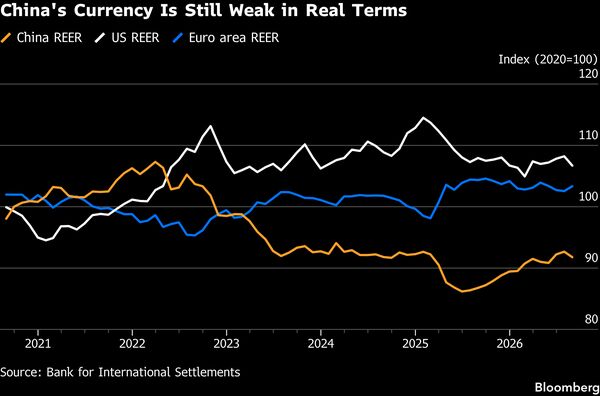
汇率问题尤其具有争议性,这是因为存在分歧:人民币的估值是导致失衡的原因,还是失衡的结果。
The exchange-rate question has been especially contentious, because of disagreements about whether the yuan’s valuation is a cause of the imbalances or a consequence of them.
中国央行上周以一份罕见且冗长的正式文件介入了这场辩论,为其货币管理进行了辩护。该文件引用了国际货币基金组织关于人民币实际汇率被低估的研究,但认为这不应被解读为对名义汇率的评判,也不应被视为支持特定货币对人民币升值的呼吁的依据。
China’s central bank weighed into this debate last week with a rare and lengthy formal document that defended its management of the currency. It cited the IMF research on the yuan’s undervalued real rate, but argued that this shouldn’t be read as a judgment on the nominal rate, or as justification for calls to engineer a yuan appreciation against specific currencies.
该行表示,国际货币基金组织对中国的政策建议是通过扩大国内需求来重新平衡经济,而非推动人民币升值。
The bank said the IMF’s policy recommendation for China is to rebalance its economy by expanding domestic demand, not to push for yuan appreciation.
斯里尼瓦桑表示,中国政府长期未能解决经济失衡问题,导致人民币实际汇率贬值,并延缓了其他问题的解决,例如地方政府债务风险。
Srinivasan said the Chinese government has left economic imbalances unaddressed for too long, contributing to the yuan’s real depreciation and prolonging the resolution of other problems such as local government debt risks.