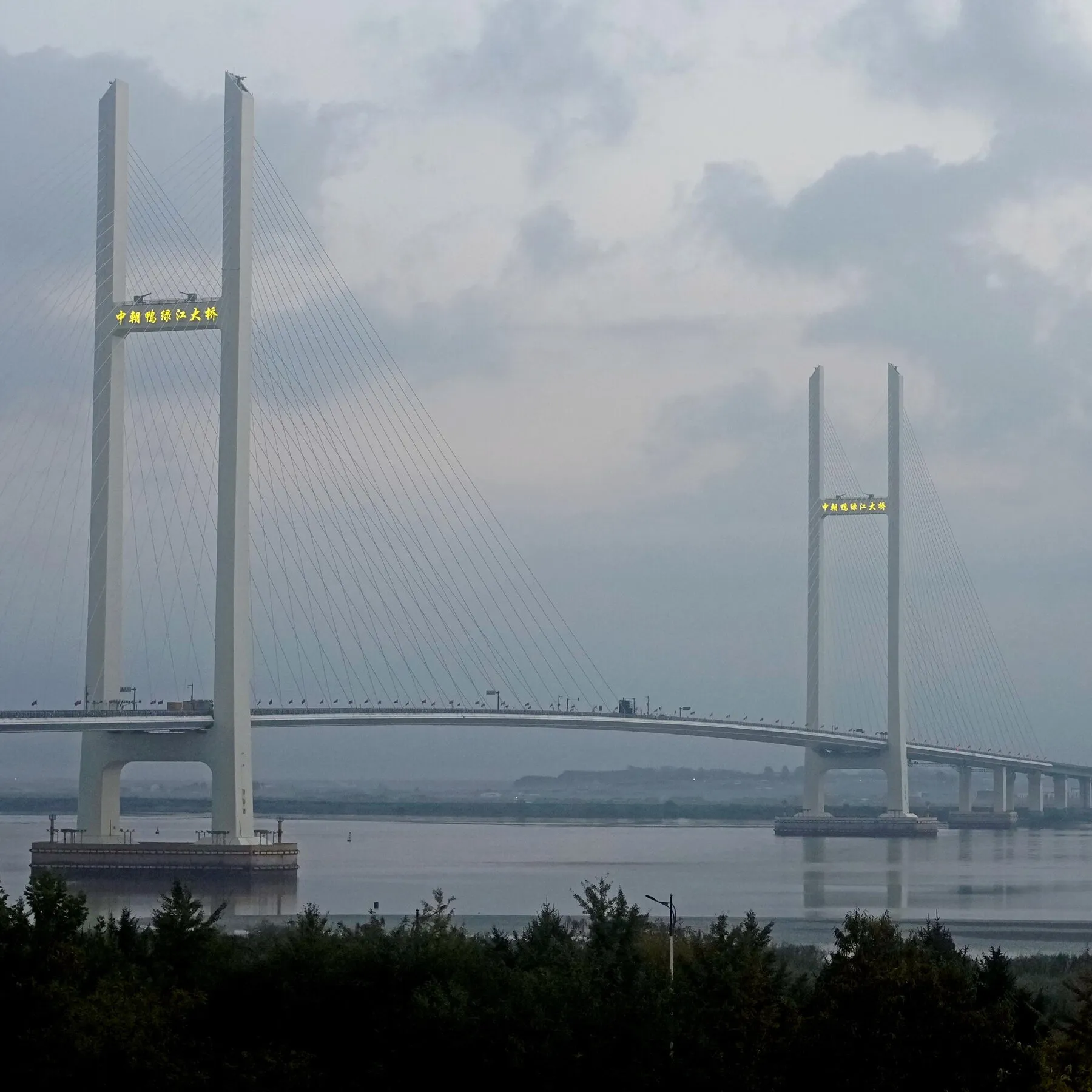
备受期待的新鸭绿江大桥终于正式通车。尽管国际社会对朝鲜实施着各类制裁措施,但中朝两国的贸易往来仍在持续扩大。
The long-delayed opening of the New Yalu River Bridge comes as the two countries expand trade despite international sanctions imposed on North Korea.
周四,朝鲜与中国共同举行了新鸭绿江大桥的通车仪式。这座大桥是两国间规模最大的边境通道,它的启用标志着即便面临旨在限制朝鲜经济及核计划的国际制裁,两国间的贸易合作依然在稳步发展。
North Korea and China on Thursday opened the New Yalu River Bridge, the largest border crossing between the two countries, a sign of growing trade despite international sanctions aimed at constraining North Korea’s economy and nuclear weapons program.
在通车仪式举行前几周,从边境地区返回的旅客称,已有大量卡车与汽车沿着这条双向四车道、全长近两英里的大桥从中国驶入朝鲜。该桥连接着中国的丹东市与朝鲜的新义州市——后者坐落于鸭绿江畔,这条江流构成了两国间的绝大部分边界线。
In the weeks leading up to the opening ceremony, travelers returning from the river border reported that trucks and cars were already crossing the four-lane, nearly two-mile long bridge from China into North Korea. The bridge connects the Chinese city of Dandong to Sinuiju, a North Korean city on the Yalu River that forms much of the border between the two countries.
据中国官方媒体报道,就在一个月前,朝鲜与俄罗斯刚刚共同启用了两国间第一座公路桥——一座规模要小得多的图们江界桥。接连开通的两座桥梁充分体现出朝鲜与其两大盟友关系的日益紧密。
Its opening, which was reported by the Chinese state media, comes just a month after North Korea and Russia inaugurated their first — and much smaller — road bridge across the Tumen River border. The consecutive bridge openings underscore Pyongyang’s deepening ties with its two main allies.
此前,朝鲜向俄罗斯提供了武器与兵力支援以协助其开展对乌战争,为此俄罗斯修建了这座公路桥,以此作为连接朝鲜的唯一铁路线的补充。随着朝俄关系不断升温,中国也着力拓展与朝鲜的贸易往来,力求维持自身在该邻国经济领域的影响力。
Russia built its road bridge to supplement its lone rail link with North Korea after Pyongyang sent weapons and troops to aid Moscow’s war against Ukraine. As North Korea’s relationship with Russia has strengthened, China has moved to expand its own trade with Pyongyang in an effort to maintain its economic influence over its neighbor.
2024年,莫斯科与北京携手推动解散负责监督制裁执行情况的联合国相关委员会,此举实际上削弱了国际社会对朝鲜的制裁力度。两国还共同呼吁华盛顿放宽对朝鲜的限制措施,坚称现行制裁根本无法阻止朝鲜的核武器研发进程。
Moscow and Beijing had already weakened the international sanctions against North Korea when they worked together in 2024 to dissolve the United Nations panel responsible for monitoring the enforcement of sanctions. Both countries have also urged Washington to ease restrictions on Pyongyang, arguing that the sanctions have failed to halt the country’s nuclear weapons development.
分析人士警告称,这些新桥梁可能成为朝鲜的贸易通道,而朝鲜的经济正因联合国制裁而承受压力,这些制裁禁止关键出口,包括煤炭和劳工,并严格限制燃料进口。
Analysts warn that these new bridges could serve as a trade route for North Korea, whose economy has been strained by U.N. sanctions that prohibit key exports, including coal and labor, and severely restrict fuel imports.
迄今为止,新义州和丹东主要通过建于83年前的中朝友谊桥相连,该桥仅有一条铁路线和一条公路车道。这座老旧的桥梁无法承载超过20吨的卡车,且限速严格为每小时三英里。2009年,中国提出建设更宽的新鸭绿江桥,作为更广泛努力的一部分,旨在将朝鲜进一步纳入其经济圈。
Until now, Sinuiju and Dandong were linked primarily by the 83-year-old Sino-Korean Friendship Bridge, which features just a single rail line and one road lane. The aging structure could not hold trucks weighing over 20 tons and had a strict three-mile-per-hour speed limit. In 2009, China proposed building the wider New Yalu River Bridge as part of broader efforts to bring North Korea further into its economic sphere.
该桥于2014年建成,中国承担了估计为3.29亿美元的建设费用。但开通被推迟了12年,因为朝鲜花时间修建连接道路、海关站和配套设施。
Construction was completed in 2014, with China footing the bill estimated at $329 million. But the opening was delayed for 12 years, as North Korea took time building connecting roads, customs stations and supporting facilities.
但平壤也担心变得更加依赖中国。数十年的国际制裁使朝鲜几乎所有的对外贸易都依赖中国。联合国安理会将朝鲜的主要出口列入黑名单后,朝鲜对华贸易逆差急剧扩大。
But Pyongyang was also concerned about becoming even more dependent on China. Decades of international sanctions have left North Korea reliant on China for nearly all of its external trade. After the U.N. Security Council blacklisted North Korea’s top exports, the country’s trade deficit with China ballooned.
“从朝鲜的角度来看,新鸭绿江桥的开通可能使中国商品能够更快、更大量地进入,但无法保证朝鲜能够显著增加对华出口,”首尔国家安全战略研究所的分析师金圭范(音译)表示。“朝鲜几乎没有动力欢迎其对华贸易逆差和依赖程度继续加深的情景。”分析人士指出,在同意开通桥梁之前,朝鲜可能曾寻求一些让步,以便促进对华出口,并为更多朝鲜劳工在那里就业创造机会。
“From North Korea’s perspective, the opening of the New Yalu River Bridge could allow Chinese goods to enter more quickly and in larger volumes, with no guarantee that North Korea could significantly increase its own exports to China,” said Kim Gyu-beom alyst at the Seoul-based Institute for National Security Strategy. “There is little incentive for North Korea to welcome a scenario in which its trade deficit and dependence on China continue to deepen.”Analysts suggested that before agreeing to open the bridge, North Korea may have sought concessions that would facilitate exports to China and create opportunities for more North Korean workers to be employed there.
朝鲜领导人金正恩面临的挑战是,在筹集硬通货的同时,进口重建经济所需的中国原材料和设备。朝鲜主要通过走私、派遣海外劳工、网络行动和加密货币盗窃等非法手段实现了后者。
North Korea’s leader, Kim Jong-un, has faced the challenge of importing the Chinese raw materials and equipment needed to rebuild his economy while also raising hard currency. North Korea has largely accomplished the latter through illicit means such as smuggling, sending workers overseas, cyber operations and cryptocurrency theft.
金正恩推动国内生产更多消费品,同时以新冠肺炎疫情为由打击从中国走私的此类产品。他还试图通过吸引中国游客前往朝鲜新建的海滨和山地度假胜地来减少长期存在的贸易逆差。
Mr. Kim pushed his country to produce more consumer goods domestically while cracking down on the smuggling of such products from China, using the Covid-19 pandemic as justification He has also sought to reduce the chronic trade imbalance by attracting Chinese tourists to newly built coastal and mountain resorts across North Korea.
在朝鲜因乌克兰战争而与莫斯科关系日益密切之后,中国加快了与朝鲜的重新接触。中国领导人习近平去年邀请金正恩和俄罗斯总统弗拉基米尔·V·普京参加北京的军事阅兵。因疫情暂停的北京至平壤铁路服务于今年3月恢复,习近平主席于6月访问了平壤。
China accelerated its re-engagement with North Korea after Pyongyang grew closer to Moscow during the Ukraine war. China’s leader, Xi Jinping, invited both Mr. Kim and President Vladimir V. Putin of Russia to a military parade in Beijing last year. Rail service between Beijing and Pyongyang, suspended during the pandemic, resumed in March, and Mr. Xi visited Pyongyang in June.
根据中国数据,朝鲜与中国的官方贸易额在今年上半年达到15亿美元,达到联合国全面制裁于2017年全面实施以来的最高水平。
Official trade between North Korea and China reached $1.5 billion in the first half of this year, according to Chinese data, hitting its highest level since comprehensive U.N. sanctions were fully implemented in 2017.