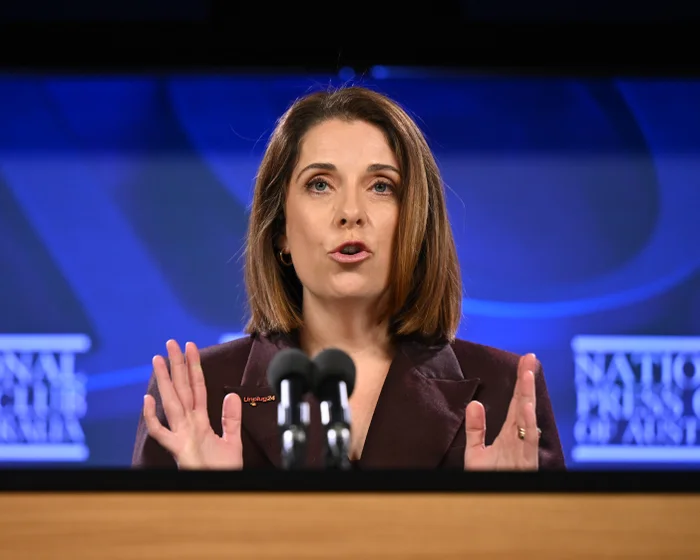
通信部长还表示,她正在考虑修订相关数字责任法案,以便澳大利亚公民可以直接起诉那些违反新规定的大型科技公司。这一直是绿党支持该法案的关键要求;而联盟党则指责工党企图“秘密控制澳大利亚人的言论自由”。
The communications minister also said she was considering updates to the digital duty of care laws to allow individual Australians to directly sue big tech companies flouting the new rules. This has been a key demand from the Greens for their support for the laws, while the Coalition accuses Labor of plans to "secretly control Australian speech".
“这并不是关于人们在互联网上说了什么,”威尔斯周四在国家新闻俱乐部上说道,“而是关于互联网平台的行为。你有权不同意我的观点或政府的立场,也有权相信自己想相信的任何事情——这些权利不会受到数字责任法案的侵犯。希望你们免受伤害的权利能够得到更好的保障。”威尔斯强调:“我们并没有控制言论自由,也没有进行秘密监控。”
"This is not about what people say on the internet," Wells told the National Press Club on Thursday. "It's about what platforms do on the internet, and your right to disagree with me or the government or believe whatever you want to believe will not be impinged by a digital duty of care. "Your right to be free from harm, hopefully, will be improved." Wells said that "if adults "We are not controlling free speech, and we are not conducting covert surveillance," Wells said.
这项经过数月讨论和咨询后于周四提交议会的数字责任法案,将为澳大利亚的在线安全体系增添新的规定。政府表示,该法案将要求科技平台“为所有澳大利亚人提供安全的在线环境”,并取代现有的各种在线行为准则和标准,通过更全面的义务要求来保护用户免受某些“有害”内容的侵害。
The digital duty of care laws, introduced into parliament on Thursday after months of discussion and consultation, would add several planks to Australia's online safety regime. The government said it would place "an overarching obligation" for tech platforms "to provide a safe online environment for all Australians", and replacing an existing range of online codes and standards with a broader duty-of-care requirement to protect users from certain "harmful" content.
威尔斯指出,该法案将涵盖涉及厌女、恐怖主义宣传、自杀行为、自残内容以及饮食失调等相关信息。这些规定将适用于社交媒体、网络游戏、应用程序和聊天机器人等平台。
Wells has suggested misogynistic, pro-terror, suicide and self-harm, or eating disorder content would be captured by the laws, which will apply to platforms such as social media, online games, apps and chatbots.
“谁创造了这些内容,谁就应该对其可能带来的风险负责,”威尔斯说,并将这些改革比作汽车上的安全带(即“安全措施”)。
"If you build it, you are responsible for its risks," Wells said, likening the reforms to having seatbelts in cars.
“我们必须把负担从受害者的肩上转移到制造伤害发生环境的公司身上。”这些变化还包括政府所称的“我的信息流,我做主”,允许社交媒体用户选择退出算法内容推送,而仅看到他们主动选择关注的页面的内容。平台若不遵守将面临超过1亿美元的罚款。
"We must shift the burden from the shoulders of victims to the companies that are creating the environments where harms occur." The changes also provide for what the government has dubbed "my feed my way", allowing social media users to opt-out of algorithmic content feeds and instead see content only from pages they have actively chosen to follow. Platforms face fines of more than $100m for non-compliance.
但这些改革遭到保守派运动团体和政客的激烈反对,他们声称将内容归类为“有害”的能力将为政府审查创建一个框架。
But the reforms have been met with ferocious opposition from conservative campaign groups and politicians, who have claimed the ability to class content as "harmful" would create a framework for government censorship.
这一问题在周末于布里斯班举行的保守派政治行动大会(CPAC)上成为关键议题。运动团体“前进”(Advance)将其称为“大兄弟法案”,将其与工党被废除的错误信息法案相提并论,并在一项要求废除该法案的请愿书上收集了近75,000个签名。
The issue was a key talking point at the Conservative Political Action Conference (CPAC) conference in Brisbane over the weekend. The campaign group, Advance has dubbed it a "Big Brother bill", likening it to Labor's dumped misinformation bill and collecting nearly 75,000 signatures on a petition calling for it to be scrapped.
自由党前排议员詹姆斯·帕特森声称该法案是秘密控制澳大利亚言论、审查澳大利亚言论的企图。影子通信部长莎拉·亨德森表示,联盟党强烈反对该法案。
Liberal frontbencher James Paterson claimed the bill was a bid "to secretly control Australian speech, to censor Australian speech". The shadow communications minister, Sarah Henderson, said the Coalition was vehemently opposed to the bill.
一个关键的批评是监管者和研究人员创建所谓“木偶账号”(即各种网络上的化名账户)的能力,政府认为这对于测试平台如何遵守立法至关重要。
One key criticism is the ability of regulators and researchers to create so-called "sockpuppets", or pseudonymous accounts on various networks, which the government argues is critical to test how platforms are complying with legislation.
但右翼媒体人物、播客和政客对这一条款进行了抨击。保琳·汉森声称这将导致“由人工智能驱动的政府机器人群向你灌输宣传并记录你的在线行为”。
But rightwing media personalities, podcasters and politicians have railed against this provision. Pauline Hanson claimed it would lead to "swarms of AI-powered government bots to feed you propaganda and record what you do online".
韦尔斯驳斥了这些说法,表示“木偶账号”仅用于研究和执法目的。电子安全专员必须每年报告其使用木偶账号的情况,且此类账户只能“在防止账户被关闭所必需的范围内”与在线服务的其他用户互动。
Wells dismissed these suggestions, saying "sockpuppets" would only be used for research and enforcement purposes. The eSafety commissioner must report annually on its use of sockpuppets, and such accounts can engage with other users of an online service "only to the extent necessary to prevent closure of an account".
威尔斯表示:“认为任何资源都会被用于作为独立监管机构传播政府宣传,而不是用于阻止向悉尼西区的13岁男孩发送支持恐怖主义的内容,或向西澳大利亚州的14岁女孩发送与饮食障碍相关的内容——这种观点根本站不住脚。”绿党参议员莎拉·汉森-扬声称,反对该法案的运动“是在为大型科技公司掩盖真相”。
Wells said: "The idea that any capacity would be spent as an independent regulator trying to spread government propaganda, rather than trying to shut down pro-terror content going to 13-year-old boys in Western Sydney or eating disorder content going to 14-year-old girls in Western Australia, is not a tenable argument." Greens senator Sarah Hanson-Young claimed the campaigns against the legislation were "running cover for big tech".
她说道:“暗示这与审查制度或压制任何内容有关,完全是无稽之谈。这是一场虚假的辩论,与实际情况毫无关系,纯粹是激进右翼在主导大型科技公司的说辞。”
"To suggest this is about censorship or about shutting down anything is absolute rubbish. It is a fake debate, it's got nothing to do with it, and it is purely the radical right running the speaking points of big tech," she said.
绿党总体上支持该法案,但希望工党加强相关规则,包括赋予普通澳大利亚人因科技公司违规而提起私人诉讼的权利,并大幅提高罚款金额。
The Greens are broadly supportive of the bill, but want Labor to strengthen rules, including adding the ability for ordinary Australians to take private action against tech companies for breaches, and for fines to be dramatically increased.
威尔斯表示,这是“我们可能会考虑的方案”,并指出此类机制在美国已经取得成功。但她同时敦促联盟党重新开启谈判。
Wells said it was "something we would contemplate", noting such schemes had been successful in the United States. But she also urged the Coalition to reopen negotiations.
该法案将提交参议院调查,并于11月底提交报告。工党希望在今年内通过该法案。
The bill will be go to a Senate inquiry, to report back in late November. Labor hopes to pass it this year.