
Anthropic PBC首席执行官达里奥·阿莫代伊曾呼吁放慢人工智能的发展步伐,并曾公开表示人工智能对人类发展造成“非常、非常糟糕”结果的概率为25%。但在他的技术重塑世界之前,Anthropic正在给华尔街带来一场即时冲击:营收急剧放缓,这可能导致万亿美元的人工智能交易泡沫破裂。
Anthropic PBC Chief Executive Officer Dario Amodei has called for a slowdown in the pace of artificial intelligence development and famously put a 25% probability on AI going “really, really badly” for humanity. But before his technology reshapes the world, Anthropic is delivering an immediate shock to Wall Street: a dramatic revenue slowdown that threatens to deflate the trillion-dollar AI trade.
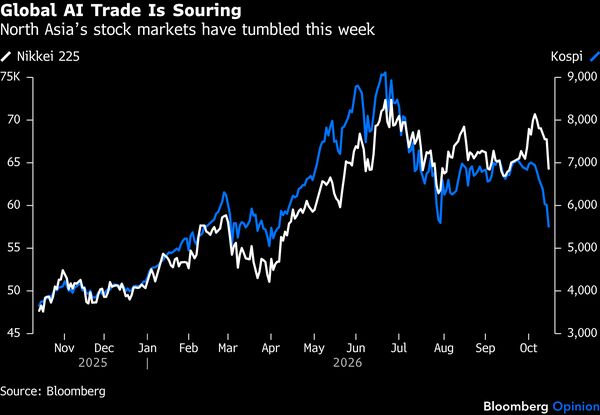
在备受期待的首次公开募股之前,Anthropic向潜在投资者告知——正如舒莉·任报道的那样——在备受期待的首次公开募股之前,Anthropic向潜在投资者告知其第三季度营收达到168亿美元。这比6月所在的季度增长不到50%,比今年早些时候的三位数增长明显放缓,表明势头可能正在放缓。根据SemiAnalysis的估计,其年化营收预计将达到约740亿美元,略高于7月底的650亿美元。消息传出后,全球芯片抛售潮加剧。韩国综合股价指数一度暴跌9.3%,日本日经225指数一度下跌5.4%。
Ahead of a much-anticipated initial public offering, Anthropic informed prospective investors that By Shuli Ren Ahead of a much-anticipated initial public offering, Anthropic informed prospective investors that its third-quarter revenue hit $16.8 billion. That’s less than a 50% increase from the June quarter and a marked deceleration from triple-digit growth earlier this year, indicating that the momentum may be slowing. Its annualized revenue is projected to reach about $74 billion, slightly above the $65 billion figure at the end of July, according to SemiAnalysis estimates. The global chip rout deepened after the news broke. South Korea’s Kospi tumbled by as much as 9.3%, while Japan’s Nikkei 225 fell by as much as 5.4%.
Anthropic的急剧放缓有可能掩盖本财报季预期中的亮眼报告,直接改变华尔街历史性人工智能融资周期的经济学。就在几天前,银行为Anthropic联合组建了600亿美元的新人工智能芯片融资,并正为主要竞争对手OpenAI寻求另外50亿美元的资金。在股票方面,Anthropic预计将于11月初开始推介其首次公开募股,市场对其估值高达2万亿美元。
Anthropic’s drastic slowdown threatens to overshadow stellar reports expected this earnings season, directly altering the economics of Wall Street’s historic AI funding cycle. Just days earlier, bankers were syndicating $60 billion of fresh AI chip financing for Anthropic and looking to fund another $50 billion for its chief rival, OpenAI. On the equity side, Anthropic is expected to begin marketing its IPO in early November, with markets pegging the valuation of up to $2 trillion.
Anthropic最新的营收数据是否预示着整个行业范围内的普遍放缓?一项在4月和5月进行的、针对近400家企业的近期调查显示,蜜月期可能已经结束。随着人工智能的高昂价格带来的震惊从罕见变为司空见惯,四分之一的机构完全推迟或取消了其人工智能计划。这一趋势表明,企业需求对价格的敏感度远超华尔街的假设。
Could Anthropic’s latest revenue figure signal a broader industry-wide slowdown? A recent survey of almost 400 businesses, conducted in April and May, shows that the honeymoon period may already be over. With AI sticker shock having gone from rare to routine, one in four organizations delayed or cancelled their AI initiatives altogether. The trend indicates that enterprise demand is far more price-elastic than Wall Street assumed.
更多的预警信号正在整个行业显现。重仓人工智能的投资者遭遇了一连串令人不安的动荡,首先是中国长鑫存储技术的崛起。该公司在上市不到三个月后宣布在存储芯片技术上取得突破,这威胁到三星电子公司、SK海力士公司和美光科技公司长期把持的寡头垄断地位。与此同时,向人工智能模型开发商出租计算能力的垃圾级新云服务商的信贷市场正在收紧。银行正在缩减芯片贷款承销业务,从悉尼到新加坡的新云服务商首次公开募股被撤回,行业先驱CoreWeave公司的债券收益率已飙升至15%。
Further warning signs are showing up across the sector. Investors with heavy AI exposure faced a succession of unsettling disruptions, starting with China’s CXMT Corp. The company announced a breakthrough in memory chip technology less than three months after its market debut, which threatens to disrupt the longstanding oligopoly held by Samsung Electronics Co., SK Hynix Inc., and Micron Technology Inc. At the same time, credit markets are tightening for junk-rated neocloud providers, which rent computing power to AI model developers. Banks are curtailing chip loan underwritings, neocloud IPOs from Sydney to Singapore are being pulled, and bond yields for sector pioneer CoreWeave Inc. have surged to 15%.
尽管如此,这些担忧可能是短暂的。长鑫存储技术可能拥有原型机;大规模生产则是另一回事。一旦全球债券收益率稳定,垃圾级公司的金融状况也可能会有所缓解。
Still, these worries can be fleeting. CXMT may have a prototype; mass production is a different matter. Financial conditions for junk-rated companies might also ease once global bond yields stabilize.
相比之下,Anthropic的急剧减速——这很可能是企业需求降温与同OpenAI不断升级的价格战共同作用的产物——为华尔街带来了一种范式转变。这些数字迫使投资者提出一个关键问题:1万亿美元的人工智能基础设施支出是否合理,还是市场已经过度建设?由于据估计将一吉瓦的计算能力投入使用的成本高达300亿美元以上,资本纪律完全取决于最终用户的需求。
By comparison, Anthropic’s sharp deceleration — a likely product of both cooling enterprise demand and an escalating price war with OpenAI — presents a paradigm shift for Wall Street. The figures force investors to ask a pivotal question: Is $1 trillion in AI infrastructure spending justified, or is the market already overbuilt? With estimates placing the cost of bringing one gigawatt of compute power online at upwards of $30 billion, capital discipline hinges entirely on end-user demand.
像雷·达利欧这样的怀疑论者长期以来一直警告称,人工智能投资热潮已接近临界点。Anthropic的数据为这位亿万富翁的观点提供了一个鲜明、可量化的数据支持。
Skeptics like Ray Dalio have long warned that the AI investment boom was nearing a breaking point. Anthropic’s numbers provide a stark, quantifiable data point in the billionaire’s favor.