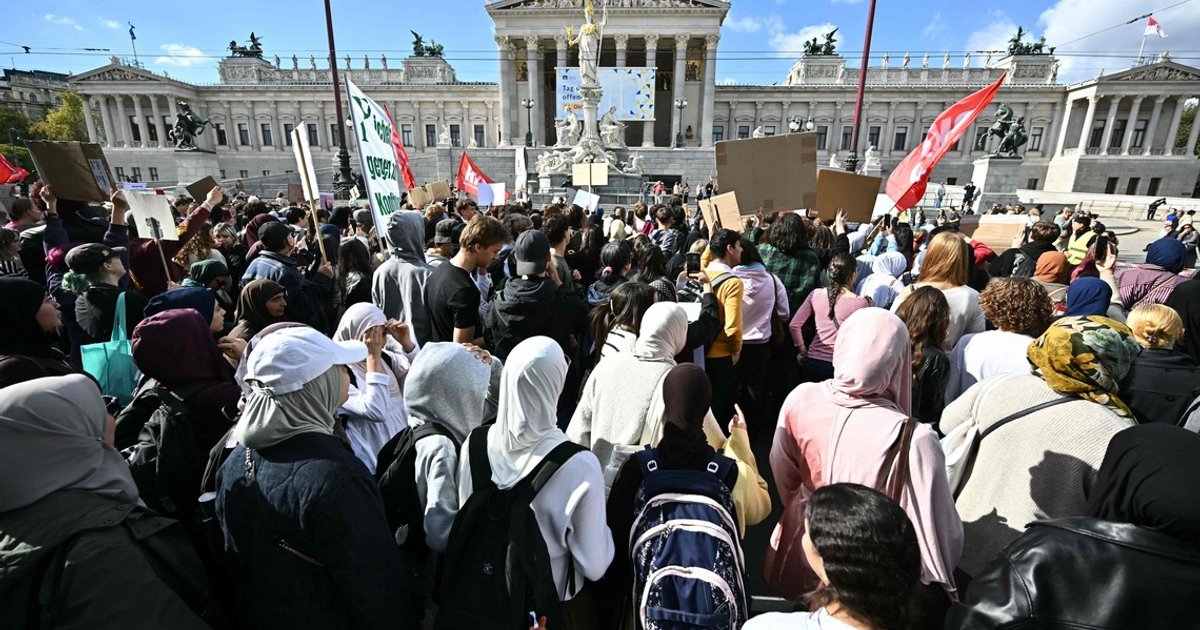
维也纳——随着奥地利新学年拉开帷幕,针对14岁以下女童的头巾禁令在街头和课堂上引发了抗议,数十名学生拒绝遵守该禁令。
VIENNA – As the new school year gets under way in Austria, a headscarf ban for girls under 14 has sparked protests on the streets and in the classroom, with dozens of pupils refusing to comply.
奥地利保守派领导的政府坚称,这项于9月1日出台的禁令促进了性别平等,并保护穆斯林女孩免受“隔离与压迫”。
Austria’s conservative-led government has insisted that the ban, introduced on Sept 1, promotes gender equality and protects Muslim girls from “segregation and oppression”.
但批评人士辩称,该禁令针对穆斯林群体带有不成比例的针对性,侵犯了宗教自由,并迫使年轻女孩以让她们感到不适的方式着装。
But critics argue that it disproportionately targets Muslims, infringes upon religious freedom and is forcing young girls to dress in a way that makes them feel uncomfortable.
根据教育部的数据,自禁令生效以来,奥地利全国各地的教育当局已与家长举行了127次会谈,并就涉嫌违法的行为提交了52份报告。
Since the ban took effect, education authorities across Austria have held 127 meetings with parents and filed 52 reports over alleged breaches of the law, according to the education ministry.
该禁令的反对者也在全国各地举行了抗议活动,每次都有数百人聚集。“我的一部分”在维也纳的一场示威活动中,37岁的泽赫拉(Zehra)不愿透露自己的姓氏,她表示她的两个女儿(分别九岁和13岁)对这项禁令感到“伤心和愤怒”。
Opponents of the ban have also held protests across the country, with several hundred people gathering each time. ‘Part of me’At a demonstration in Vienna, Zehra, 37, who did not want to give her last name, said her two daughters, aged nine and 13, were “sad and angry” about the ban.
她说:“我们抚养孩子时告诉他们,你可以决定自己想成为什么样的人——而这部法律恰恰相反。”
“We raise our children by telling them, you can decide who you want to be – and this law is the exact opposite,” she said.
12岁的塞哈姆(Seham)说,她在学校摘下头巾时感到“害怕”,“因为我已经戴了两年,它感觉就像是我的一部分”。
Seham, 12, said she felt “afraid” to remove her headscarf at school “because I’d worn it for two years and it felt like a part of me”.
在与学校领导进行讨论后,她说自己被允许用另一种非传统的头部遮盖物来遮盖头发,但她仍然“更愿意戴全套头巾”。
After discussions with school leaders, she said she was allowed to cover her hair with an alternative non-traditional head covering, but would still “rather wear the full headscarf”.
根据2021年政府统计数据,奥地利900万居民中约有8%是穆斯林。
Roughly 8% of Austria’s nine million residents are Muslim, according to 2021 government statistics.
根据欧洲基本权利局(FRA)2024年的一份报告,他们在欧盟受到的针对穆斯林的种族主义和歧视比率最高。
They suffer the highest rates of racism and discrimination against Muslims in the EU, according to a 2024 report by Europe’s FRA rights agency.
在2024年的选举中,极右翼的自由党首次获胜,尽管它未能组建政府。这个反移民政党在选民民意调查中继续名列榜首。
In the 2024 elections, the far-right Freedom Party won for the first time even though it failed to form a government. The anti-immigration party continues to top voter opinion polls.
这项新法律是奥地利第二次试图限制学校中的头巾。此前,保守派与自由党之间的执政联盟曾在2019年对小学生推出了头巾禁令。
The new law is Austria’s second attempt to restrict headscarves in schools after a coalition between the conservatives and the Freedom Party introduced a ban for primary school pupils in 2019.
该法律被宪法法院推翻,理由是针对穆斯林群体的条例与宗教中立性不符。“承受压力”奥地利伊斯兰宗教社群正在支持针对新头巾禁令的法律诉讼,该社群表示,已收到约70起关于其实施过程中遇到困难的家庭报告。
That law was overturned by the constitutional court on the grounds that a regulation targeting only Muslims was incompatible with religious neutrality. ‘Under pressure’The Islamic Religious Community in Austria, which is supporting legal action against the new headscarf ban, said it had received around 70 reports from families about difficulties during its implementation.
该组织在一份声明中表示:“一项以保护儿童福利为由的正当法律,却正在让恰恰是这些儿童在学校承受压力。”
“A law that was justified as protecting children’s welfare is putting precisely those children under pressure at school,” the group said in a statement.
宪法法院向法新社证实,已收到关于该法律的法律诉讼,预计将于2027年上半年作出裁决。
The constitutional court confirmed to AFP that it had received a legal complaint about the law and a decision is expected in the first half of 2027.
当女孩拒绝遵守法律时,学校必须与学生及其家长进行一系列讨论,然后才能将案件提交给教育当局。最终,继续忽视禁令的家长可能会被罚款。
When girls refuse to comply with the law, schools are required to hold a series of discussions with pupils and their parents before cases are referred to education authorities. Ultimately, parents who continue to ignore the ban can be fined.
教育部长克里斯托夫·维德克尔(Christoph Wiederkehr)在发给法新社的声明中表示,迄今为止只有127次会谈这一事实表明,“绝大多数学生和家长是合作的”。
In a statement sent to AFP, Education Minister Christoph Wiederkehr said the fact there had only been 127 meetings so far showed “that the vast majority of pupils and parents are cooperative”.
他补充说:“此外,数据表明,在发生违规行为时与相关家长进行的讨论绝大多数是成功的。”
“In addition, the figures show that the discussions held with the parents concerned in the event of a violation are, for the most part, successful,” he added.
维也纳教育当局表示,“根据迄今为止进行的讨论,给人的印象是这些女孩希望自愿佩戴头巾”。
Education authorities in Vienna said that “on the basis of the discussions held so far, the impression has emerged that the girls wish to wear the headscarf of their own accord”.
12岁的桑迪(Sandy)说,她大约在一年前开始戴头巾,因为“我非常重视我的宗教信仰,我希望能够践行它”。
Sandy, 12, said she began wearing a headscarf about a year ago because “I place a lot of importance on my religion and I want to be able to live it”.
一位曾在首都与两名受影响女孩共事的教师告诉法新社,没有迹象表明她们是被迫戴头巾的。
A teacher who has worked with two affected girls in the capital told AFP there was no sign they were being forced to wear headscarves.
这位希望保持匿名的教师表示,这些女孩花了几周时间适应新规定,并寻找头巾的可接受替代品。“这让她们感到非常不舒服。”法新社
The girls had spent weeks adapting to the new rules and searching for acceptable alternatives to headscarves, said the teacher, who wished to remain anonymous. “It is very uncomfortable for them.”AFP