研究表明,人工智能能够扭曲记忆,这引发了人们对机器成为过去记录者时将会发生什么情况的质疑。
Studies show that artificial intelligence can distort memories, raising questions about what happens when machines become keepers of the past.
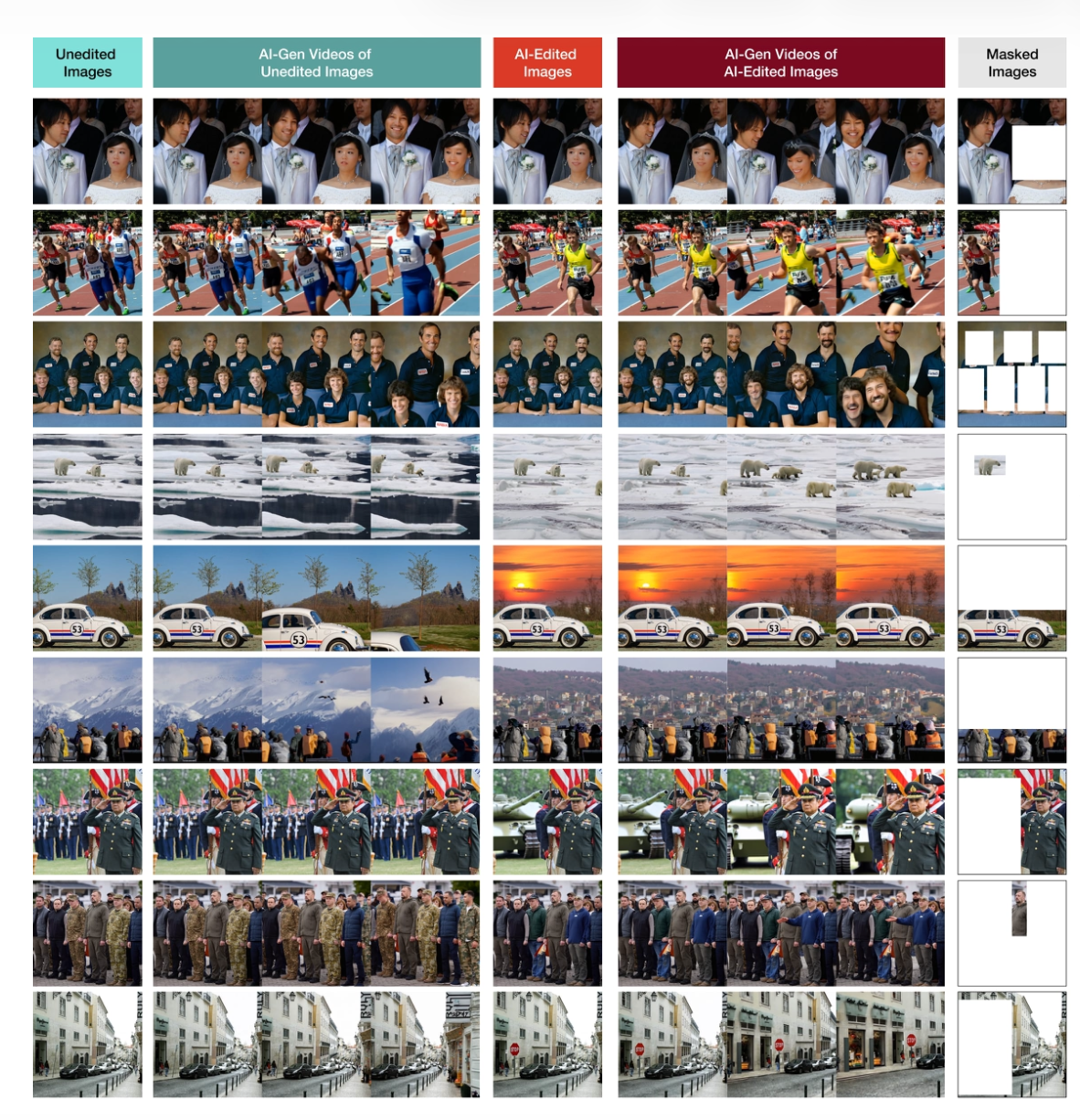
休息一段时间后,一些人再次看到了相同的照片。另一些人则看到了经人工智能修改的版本——其中的面部表情被改变、加入了军事人员或添加了气候变化的迹象。随后进行了一项记忆测试。
After a break, some saw the same photos again. Others saw AI-altered versions — with facial expressions changed, military personnel inserted or signs of climate change added. Then came a memory test.
迈斯对测试结果感到不快。那些观看了经人工智能修改的图像的人,其错误回忆大幅增加。她说,更糟糕的是,他们对这些虚假记忆的自信心更高。迈斯说:“基本上,我认为所有这些都非常危险。”
Maes winced at the results. Those viewing the AI-altered images had a large increase in false recollections. Even worse, she said, their confidence in the false memories was higher. “I think of all this as very dangerous, basically,” Maes said.
到目前为止,公众的大部分焦虑都集中在一些研究人员所称的“认知投降”上:随着机器接管越来越多的思考工作,人们将变得更不愿意或更没有能力仔细审视这些机器所告知的内容,这种可能性令人担忧。但另一种可能性受到的关注要少得多:人工智能可能会改变我们的记忆。
So far, much of the public anxiety has centered on what some researchers call “cognitive surrender”: the possibility that, as machines take over more of the work of thinking, people will become less inclined or less able to scrutinize what those machines tell them. But another possibility has received far less attention: AI may be changing what we remember.
涉及对政治事件、犯罪甚至新电影的看法的最新研究表明,人工智能生成的图像和对话可以将虚假细节植入我们的大脑,甚至让我们坚信某些事情曾经发生过,而事实并非如此。
New research that involves perception of political events, crimes and even new movies suggests AI-generated images and conversations can implant false details into our brains, even leaving us confident things happened when they did not.
记忆的作用不仅是保存过去。它还提供了我们用来理解现在和预测未来的知识与经验。它有助于构建自我意识、维持人际关系,并指导个人和集体的决策。
Memory does more than preserve the past. It supplies the knowledge and experience with which we understand the present and anticipate the future. It helps construct a sense of self, sustain relationships, and guide both individual and collective decisions.
然而,记忆也是人类心灵的一大局限。我们只能保留所经历事情的一小部分。细节会消失。回忆会变得模糊。当我们重温记忆时,它们可能会发生改变。
Yet memory is also one of the human mind’s great limitations. We retain only a fraction of what we encounter. Details disappear. Recollections blur. Memories can change as we revisit them.
人工智能似乎几乎完美地契合了弥补这些缺陷的需求。它能存储海量信息,在几秒钟内完成检索,并找回一个人可能永远遗失的细节。但这些特质也使其潜在风险巨大。这些系统不仅仅存储过去;它们会对过去进行解读、总结和重构。而有时它们会出错。
AI seems almost perfectly suited to compensate for these shortcomings. It can store enormous amounts of information, search it in seconds, and retrieve details a person might have lost forever. But these qualities also make it potentially risky. These systems do not merely store the past. They interpret it, summarize it and reconstruct it. And sometimes they get it wrong.
后果远不止于某人是否记错了一张照片或一次对话。法院在从车祸到性侵犯等各类案件中常依赖回忆,尽管数十年的研究已证明目击者记忆多么容易扭曲。历史本身取决于个人和社会保留、遗忘并最终相信的过去。
The consequences extend far beyond whether someone misremembers a photograph or a conversation. Courts routinely depend on recollections in cases ranging from car accidents to sexual assault, even though decades of research have demonstrated how easily eyewitness memories can be distorted. History itself depends on what individuals and societies preserve, forget and eventually come to believe about the past.
人类记忆并不完美 Maes 是人工智能的先驱之一。在如今长达 35 年多的职业生涯早期,她帮助开发了一些塑造早期互联网的算法。但她长期以来更感兴趣的是 AI 的另一种可能性:不是取代人类智能的机器,而是拓展人类智能的机器。
Human memory is imperfect Maes is one of the pioneers of artificial intelligence. Early in a career that now stretches more than 35 years, she helped develop some of the algorithms that shaped the early internet. But she has long been more interested in a different possibility for AI: not machines that replace human intelligence, but machines that expand it.
对 Maes 而言,这个问题关乎个人。随着年龄增长,她的母亲开始遗忘日常生活的碎片。
For Maes, the question was personal. Her mother began forgetting pieces of everyday life as she grew older.
“我母亲会忘记昨天谁来过,或者别人告诉过她什么,”Maes 说。她会给自己留便条:“‘哦,我女儿告诉我她将在那天起两周后来。’” Maes 开始构想一种比笔记本强大得多的东西:一种能悄无声息记录一个人一生的记忆助手。
“My mother would forget who visited yesterday or what somebody told her,” Maes said. She would make notes to herself: “‘Oh, my daughter told me she is coming down two weeks from that day.’”Maes began imagining something far more powerful than a notebook: a memory assistant that could quietly keep track of a person’s life.
对于阿尔茨海默病和其他痴呆症患者而言,这个问题显得尤为迫切,这些疾病以记忆丧失为特征,会剥夺一个人独立应对日常生活的能力。
That question takes on particular urgency for people with Alzheimer’s disease and other forms of dementia, diseases defined by memory loss that can rob a person’s ability to navigate everyday life independently.
Maes 的研究小组现在已经构建了几种外部记忆系统的版本。Memoro 和 MemPal 使用可穿戴或可携带的设备结合人工智能来捕捉日常经验的碎片,并使其在以后可以被检索。忘记了在交谈中别人告诉你的内容?可以询问。记不清把钥匙放在哪里了?该系统可能能够帮助找到它。
Maes’s research group has now built several versions of a kind of external memory system. Memoro and MemPal use AI with devices that can be worn or carried to capture pieces of everyday experience and make them retrievable later. Forget what someone told you during a conversation? Ask. Can’t remember where you left the keys? The system may be able to find it.
与其要求衰老的大脑在记忆方面变得更好,不如直接让它获得另一个记忆库的访问权限。
Instead of asking an aging brain to become better at remembering, give it access to another memory reservoir altogether.
在老年人中的早期测试结果令人鼓舞。Maes 的母亲现在 96 岁,由于认知衰退过于严重,她自己无法从该技术中受益,Maes 说。但这位科学家对类似这些系统的前景抱有巨大乐观,认为它们最终可能帮助许多人在其生物记忆变得不可靠时仍能保持独立。已经有商业产品开始提供此类服务,例如可以编程输入个人生活史的互动回忆工具,以及帮助引导人们完成如刷牙等任务的个性化智能眼镜。
Early tests with older adults have been promising. Maes’s mother, now 96, has experienced too much cognitive decline to benefit from the technology herself, Maes said. But the scientist has huge optimism that systems like these could eventually help many others preserve independence as their biological memories become less reliable. Commercial products are already beginning to offer some services along these lines such as interactive recall tools that can be programmed with people’s life histories and personalized smart glasses that help guide people through things like brushing their teeth.
但如果机器成为我们记忆的延伸,那么我们自己构建的记忆又会怎样?
But if machines become extensions of our memories, what happens to those we make for ourselves?
更多依赖人工智能 一些关于可能正在发生的事情的最清晰证据来自 Maes 研究的另一个角落。
Relying more on AI Some of the clearest evidence of what may be happening comes from another corner of Maes’s research.
在一项实验中,去年发布并目前正在接受同行评审,54 人被要求就诸如“幸福对他们意味着什么”等主题写 SAT 风格的作文。一组人没有使用任何在线工具。另一组可以使用去除了人工智能生成答案的 Google 搜索。第三组可以使用 ChatGPT。
In one experiment, which was releasedlast year and is undergoing peer review, 54 people were asked to write SAT-style essays on subjects such as what happiness means to them. One group had no online tools. Another could use Google search, stripped of AI-generated answers. A third could use ChatGPT.
在写作过程中,放置在他们头皮上的电极记录了他们大脑中的电活动。差异非常显著。未使用任何工具的人表现出不同脑区之间最强且最广泛分布的连接模式。Google 用户的表现处于中间水平。而使用 ChatGPT 的人则表现出最弱的连接性。
As they wrote, electrodes placed across their scalps recorded electrical activity in their brains. The differences were striking. The people writing unaided showed the strongest and most broadly distributed patterns of connectivity between different areas of the brain. Google users fell somewhere in the middle. The ChatGPT users showed the weakest connectivity.
当参与者后来被要求引用他们刚刚写的文章时,那些依赖 ChatGPT 的人回忆自己的话语时遇到了相当大的困难。
When participants were later asked to quote from essays they had just written, those who had relied on ChatGPT had considerably more trouble recalling their own words.
记住不仅仅是把信息存放在大脑某处的问题。注意力、努力、检索以及建立联系的工作都有助于记忆的巩固。生成式人工智能可以减少其中的一些工作。
Remembering is not simply a matter of depositing information somewhere in the brain. Attention, effort, retrieval and the work of making connections all help memories take hold. Generative AI can remove some of that work.
“我们更可能看到的是人类开始衰退,而不是人工智能接管,”他说,并补充说他担心一个“思考变得可选”的世界。已经有一些迹象表明,研究人员有时所说的“去技能化”正在发生。肖(Shaw),一名博士后研究员,指出了一些研究,这些研究表明,习惯于在人工智能辅助下执行某项任务的人——例如医生借助人工智能诊断癌症患者——在该辅助消失时可能会遇到困难。
“What we are more likely to see is humans starting to decay instead of AI taking over,” he said, adding he fears a world in which “thinking becomes optional.”There are already hints of what researchers sometimes call “de-skilling.”Shaw, a postdoctoral researcher, points to studies suggesting that people who become accustomed to performing a task such as doctors diagnosing patients with cancer with AI assistance can struggle when that assistance disappears.
一项发表于2025年《柳叶刀·胃肠病学与肝病学》期刊的研究详细说明了这种潜在影响。研究人员考察了19名经验丰富的医生及其对近1500次结肠镜检查的评估,发现医生开始常规使用人工智能后,他们独立检测癌前病变的能力下降了约20%。
A 2025 study published in The Lancet Gastroenterology & Hepatology details the potential effect. Researchers looked at 19 experienced doctors and their assessments of nearly 1,500 colonoscopies and found that after the doctors began routinely using AI, their ability to detect precancerous growths on their own fell by about 20 percent.
“他不再以同样的方式使用那块‘心智肌肉’,”他说。“如果你不用它,你就会失去它。”对于儿童,他担心的是一个更根本的问题:他们可能在某些能力尚未完全发展之前就将认知工作外包出去。“他们可能一开始就永远不会发展出那些关键的或核心的批判性思维能力,”肖说。
“They are not using that mental muscle in the same way,” he said. “If you don’t use it, you lose it.”For children, he worries about an even more fundamental problem: They may outsource cognitive work before some of those abilities have fully developed. “They may never develop those key or core critical-thinking capabilities in the first place,” Shaw said.
这一切并不意味着使用 ChatGPT 和其他人工智能代理必然会让人们变得能力下降。最近的研究并未表明普通的人工智能使用必然导致认知衰退或永久性记忆丧失。研究仍处于早期阶段,而人类早在很久以前就一直在使用工具——算盘、手表、词典、计算器——来外包思考和记忆。
None of this means that using ChatGPT and other AI agents inevitably makes people less capable. Recent studies do not demonstrate that ordinary AI use inevitably causes cognitive deterioration or permanent memory loss. The research is in its early stages, and humans have been outsourcing thinking and memory to tools — abacuses, watches, dictionaries, calculators — for a very long time.
但生成式人工智能带来了新的复杂情况。我们越来越依赖它来解释它为我们检索到的信息 — — 而人们似乎非常愿意接受它所说的话。纳夫和肖进行的实验中,参与者即使在收到错误信息时,也以很高的比例遵循了人工智能的建议。当人工智能出错时会发生什么?
But generative AI introduces a new complication. We increasingly rely on it to interpret the information it retrieves for us — and people appear remarkably willing to accept what it says. Participants in experiments Nave and Shaw conducted followed AI advice at high rates, even when receiving wrong information. What happens when AI is wrong?
本周,研究人工智能伦理与社会的学者们在瑞典马尔默参加年度会议,许多人正聚焦于一个特定问题:当人工智能开始干涉人类记忆时会发生什么?
This week, researchers who study AI ethics and society gathered for an annual conference in Malmö, Sweden, where many are focusing on a particular question: What happens when artificial intelligence starts meddling with human memory?
越来越多的研究表明,生成式人工智能可能以惊人的持久性干扰记忆。这包括扭曲我们的记忆、模糊我们自身思想与机器生成思想之间的界限,甚至植入从未发生过的事件的记忆。
A growing body of research suggests that generative AI can interfere with memory in surprisingly durable ways. That includes distorting what we remember, blurring the boundaries between our own thoughts and those generated by machines, and even planting memories of events that never happened.
在一项研究中,研究人员要求参与者观看一段犯罪视频,发现被生成式人工智能聊天机器人提问的参与者产生的错误记忆是其他人的三倍。在另一项研究中,人们被要求在有无人工智能的情况下生成想法,一周后他们难以回忆哪些想法来自机器,哪些是他们自己的。
In one study, researchers asked participants to watch a video of a crime and found that those questioned by a generative AI chatbot had three times as many false memories. In another, people were prompted to generate ideas with and without AI, and a week later they had trouble remembering which ideas originated with the machine and which ones were their own.
其他实验表明,人工智能生成的错误信息可能导致人们记住从未发生过的事情。在一个实验中,近一半的参与者错误地记得从未存在过的电影重制版,包括由威尔·史密斯主演的《黑客帝国》版本。在另一个实验中,人工智能生成的视频让人们相信他们记得从未发生过的政治丑闻。然而,研究人员指出,深度伪造在制造错误记忆方面并不始终比文本更有效。一些最新证据表明,这一问题可能比研究人员预期的更难以解决。
Other experiments suggest AI-generated misinformation can lead people to remember things that never happened at all. In one experiment, nearly half of participants falsely remembered movie remakes that never existed, including a version of “The Matrix” starring Will Smith. In another, AI-generated videos convinced people they remembered political scandals that never happened. However, the researchers noted that deepfakes were not consistently more effective than text in creating false memories. Some of the newest evidence suggests that the problem may be harder to solve than researchers expected.
但这是建立在人类仍然对机器进行独立检查的假设之上的。如果影响力反过来呢——正如西姆的研究所示——人工智能可能会改变人们用来挑出其错误的判断力和记忆力,从而破坏人类作为最后防线这一整个前提。
But that assumes the human remains an independent check on the machine. If the influence runs the other way, as Sim’s research suggests, AI may alter the judgment and memories people rely on to catch its mistakes, which undermines the whole premise of the human backstop.
在最近的一项实验中,西姆招募了331名观看了一段汽车撞击行人短视频的人。一两天后,参与者阅读了一份人工智能生成的事故总结。对一些人来说,总结准确地描述了视频中的交通情况。对另一些人来说,人工智能自信地指出了错误的交通标志。
In a recent experiment, Sim recruited 331 people to watch a short animated video of a car striking a pedestrian. A day or two later, the participants read an AI-generated summary of the accident. For some, the summary accurately described a traffic the video. For others, the AI confidently identified the wrong sign.
在收到准确总结的人中,近84%的人正确记住了这个标志。而在收到误导性版本的人中,这一比例仅为45%左右。告诉参与者该总结是由人工智能生成的,并不能保护他们免受其影响。
Among people who received the accurate summary, nearly 84 percent correctly remembered the sign. Among those who received the misleading version, just about 45 percent did. Telling participants that the summary had been generated by AI did not protect them from being influenced by it.
西姆说:“人工智能会犯错,这是常识。”但她表示,研究表明,“人类的监督可能并不是解决这一问题的绝佳方案。”
“It’s pretty common knowledge that AI can make mistakes,” Sim said. But, she said research shows “human oversight may not be a great solution to this problem.”