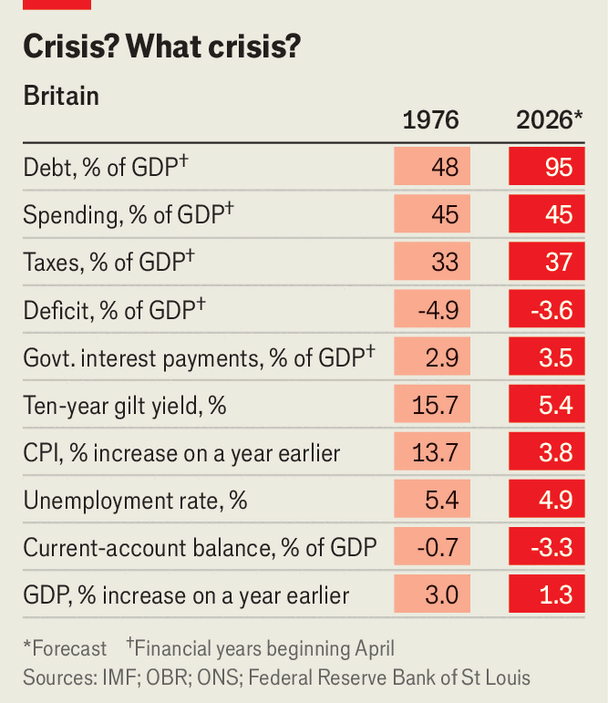
1976 年与 2026 年的相似之处令人毛骨悚然。当时如今天,衰退的幽灵笼罩着英国,其经济深受能源危机、通货膨胀和缺乏竞争力之苦。这两年,陷入困境的工党都任命了一位新首相,尽管该党仅在两年前才赢得大选。而这两位首相随后都选择了一位名为希利的财政大臣。
The similarities between 1976 and 2026 are eerie. Then as now the spectre of decline haunted Britain, its economy troubled by energy crises, inflation and a lack of competitiveness. In both years the embattled Labour Party appointed a new prime minister, despite having won office only two years before. And both leaders then chose chancellors called Healey.
现任财政大臣约翰·希利正准备于 10 月 28 日发布预算案,他很可能担心会重蹈 1976 年前任丹尼斯·希利的覆辙。那一年 9 月 28 日,早期的希利正准备登机,因英镑自由落体式暴跌,被迫折返并向国际货币基金组织申请紧急贷款。12 月达成的 39 亿美元救助协议,向工业革命的发源地施加了通常只留给世界上最不可靠经济体的屈辱性条件。
As John Healey, today’s chancellor, prepares for the budget on October 28th, he might well worry that he will suffer the fate of Denis Healey, his predecessor in 1976. On September 28th that year, the earlier Healey was about to board a plane when sterling’s freefall forced him to turn back and apply for an emergency loan from the IMF. A $3.9bn bail-out, agreed upon in December, imposed on the birthplace of the industrial revolution the sort of humiliating conditions normally reserved for the world’s sketchiest economies.
保守党领袖凯米·巴德诺赫去年警告称,政府正按此轨迹再次不得不伸手向国际货币基金组织求援。1976 年的表层回响依然存在。当时投资者发起抵制,拒绝购买英国政府债券(即“金边债券”),除非提供高得多的收益率。如今的债券持有人要求英国支付的借贷成本高于任何其他七国集团国家。
Kemi Badenoch, the Conservative leader, warned last year that the government was on track once again to go cap in hand to the IMF. There are superficial echoes of 1976. Then investors revolted, refusing to buy British government bonds (or “gilts”) unless they offered much higher yields. Today’s bondholders charge Britain more to borrow than any other G7 country.
但尽管英国能从 1976 年汲取许多教训,再次求助国际货币基金组织的可能性不大。如今的情况远没有那么糟糕。1976 年通货膨胀率为 13.7%,国际货币基金组织预计今年将为 3.8%。十年期金边债券收益率当时为 15.7%,现在为 5.4%(见表)。且经济已处于另一个时代。边际税率高达 98%。政府与工会达成全经济范围的工资协议。1976 年工党大会通过动议,呼吁将该国最大的四家银行和七家保险公司国有化。
But though Britain can learn much from 1976, another trip to the IMF is unlikely. Things are nowhere near as bad today. Inflation was 13.7% in 1976; the IMF reckons it will be 3.8% this year. Ten-year gilt yields, then 15.7%, are now 5.4% (see table). And the economy was in another era. Marginal tax rates hit 98%. The government struck economy-wide wage deals with the unions. The Labour conference of 1976 passed a motion calling for the nationalisation of the country’s biggest four banks and seven insurance companies.
最重要的是,英国在 50 年前对其货币的管理方式截然不同。1976 年 3 月初,1 英镑价值 2.02 美元;到十月已跌至 1.57 美元,原因是英国对经济的尴尬失误。英格兰银行试图通过出售外汇储备来支撑英镑价值,但以失败告终。6 月,它向其他央行借入更多资金。而当这些债务在 12 月到期时,希利被迫求助于国际货币基金组织。
Most importantly, Britain managed its currency very differently 50 years ago. At the beginning of March 1976 £1 was worth $2.02; by October it had fallen to $1.57, driven by Britain’s embarrassing mismanagement of its economy. The Bank of England tried, and failed, to prop up the value of sterling by selling its foreign-currency reserves. In June it borrowed more from other central banks. And when those debts came due in December, Healey was forced to turn to the IMF.
如今政府更愿意让英镑在外汇市场上自由浮动,使再次出现 IMF 争端的可能性变得不大。但这并不意味着英国已脱离困境。今天,财政危机会呈现不同的形态。英国的债务占 GDP 比率为 95%,几乎是 1970 年代水平的两倍。经济增长明显放缓,使该国更易受到市场情绪突变的冲击。
The government is now happier to let the pound float freely on currency markets, making a repeat of the IMF drama improbable. But that does not mean Britain is out of the woods. Today a fiscal crisis would take a different form. Britain’s debt-to-GDP ratio is 95%, nearly double its level in the 1970s. Growth is much slower, leaving the country more exposed to sudden changes in market sentiment.
因此,2026 年的危机可能从国债市场开始。政府有两项防线可以防止局势失控:削减赤字的计划以及负责抑制通胀的独立央行。但如果其中任何一项受到质疑,收益率可能会飙升。这可能引发恶性循环——借贷成本的急剧上升恶化公共财政,进而进一步推高收益率。全球市场如今比 1976 年更加复杂和相互关联,波动性在其他地区的跳升也可能产生同样影响。
A crisis in 2026, therefore, might start in the gilt market. The government has two defences against things spiralling out of control: a plan for cutting the deficit and an independent central bank charged with keeping inflation down. But if either were doubted, yields could surge. This could start a vicious cycle, in which soaring borrowing costs worsened the public finances and in turn sent yields even higher. So might a jump in volatility elsewhere, since global markets are now far more complex and interconnected than in 1976.
为防范此类危机,希利应向其前任学习。第一课是灵活性的重要性。1976 年,官员们不仅试图抵制汇率变动,工会还拒绝接受实际工资削减,助长了通胀并加深危机。灵活的劳动力市场和货币市场为经济提供了冲击吸收器。
To guard against such a crisis, Mr Healey should learn from his predecessor. The first lesson is the importance of flexibility. In 1976 it was not just that officials tried to resist changes to exchange rates. Unions refused to accept real-terms pay cuts, fuelling inflation and deepening the crisis. Flexible labour and currency markets give the economy shock absorbers.
希利先生还必须确保投资者真正相信他会削减赤字。丹尼斯·希利曾抱怨说,1976年的危机本可以避免:他的削减开支措施已经初见成效,只有悲观的预测吓坏了市场。他的说法有一定道理,因为实际支出低于预期,但恐慌仍然造成了切实的损害。市场信任本身至关重要,尤其是对英国而言——该国存在经常账户赤字(就像1976年那样),而且依赖那些善变的外国人的善意来维持资金。
Mr Healey also needs to ensure that investors really believe he will cut the deficit. Denis Healey grumbled that the 1976 crisis was avoidable: his spending cuts were working and only pessimistic forecasts spooked markets. He had a point, since spending came in below forecast, but the panic still caused real damage. Credibility in markets matters in itself, especially for Britain, which runs a current-account deficit (as in 1976) and relies on the kindness of flighty strangers to fund itself.
国际货币基金组织(IMF)引发的危机伤害了英国的自尊心。但它也为丹尼斯·希利带来了一个外部约束——IMF——这有助于他在许多后座议员反对的情况下,强制执行急需的开支削减。正如前财政部常任秘书麦克弗森勋爵所说:“英国政府唯一能真正掌控局势的时候,就是它直面深渊之时。”如今的政府开支已经占GDP的45%,与1976年相同,而人口老龄化、健康状况恶化等问题将进一步加剧压力。
The IMF crisis wounded British pride. But it also gave Denis Healey an external constraint—the IMF—that helped enforce much-needed spending cuts against the will of many backbenchers. As Lord Macpherson, a former Treasury permanent secretary, puts it: “The only time the British state gets a grip on anything is when it is staring into the abyss.”Spending today is already 45% of GDP, as in 1976, and an ageing, sicker population will add to the strain.
一场危机或许是迫使约翰·希利或他的继任者做出艰难但必要抉择的唯一途径。■ 如需对英国重大事件进行更深入的专家分析,请订阅我们的每周付费新闻通讯《Blighty》。
A crisis might be the only way to force John Healey or his successors to make tough but necessary choices. ■ For more expert analysis of the biggest stories in Britain, sign up to Blighty, our weeklyr-only newsletter.