本周在阿拉斯加,特朗普总统重申了他的承诺:如果共和党赢得中期选举,将向每位美国人发放5000美元。这紧随其向奥巴马医改受益者发放500美元、向医疗保险受益者发放90美元之后,此外还有迄今未兑现的承诺,即通过关税收入或政府效率部门节省的资金发放返还。
This week in Alaska, President Trump reupped his promise of $5,000 to every American if Republicans win the midterms. That follows his $500 payments to Obamacarers and $90 to Medicare beneficiaries, plus so-far-unfulfilled pledges of rebates from tariff revenue or Department of Government Efficiency savings.
所有政客在内心深处都相信选民可以被收买。特朗普只是对此更加坦率。然而令人困惑的是,向选民大撒钱在选举中的记录糟糕透顶。
All politicians in their gut believe voters can be bought. Trump is simply more transparent about it. Yet the puzzling thing is that shoveling money at voters has a terrible electoral track record.
在特朗普的第一个任期内,共和党通过了一项旨在2018年中期选举前增加工资收入的大规模减税法案。但该法案几乎自推出之日起就不得人心,当年秋天共和党失去了众议院控制权。
During Trump’s first term, Republicans passed a big tax cut timed to fatten paychecks ahead of the 2018 midterms. But the bill was underwater with voters almost from day one, and that fall Republicans lost the House of Representatives.
去年,共和党起草了《一揽子美好法案》,旨在中期选举前向选民钱包注入现金,而根据AdImpact的数据,税收仍是他们头号广告主题。然而,Politico七月份的一项民调发现,认为该法案伤害他们的人多于认为它帮助他们的人(根据法案内容,这其实说不通)。
Republicans wrote last year’s One Big Beautiful Bill to inject cash into voter wallets ahead of the midterms, and taxes remain their No. 1 ad theme, according to AdImpact. Yet a July Politico poll found more people thought the bill hurt them than helped (which, based on the bill’s contents, makes little sense).
特朗普可能受到2020年新冠疫情救济期间发放支票受欢迎程度的启发。2021年,拜登总统在其刺激法案中包含了1400美元的支票。选民并不感激,反而对随后出现的通胀愤怒不已,并在2022年中期选举和2024年总统选举中给予民主党沉重打击。
Trump may be inspired by the popularity of the checks distributed as Covid-19 relief in 2020. In 2021, President Joe Biden included $1,400 checks in his stimulus bill. Far from thankful, voters were furious at the inflation that followed and handed Democrats stinging defeats in the 2022 midterm and 2024 presidential elections.
这或许能解释为什么特朗普的5000美元提议并未帮助共和党。据《华尔街日报》上个月的一项民调显示,64%的受访者认为这是个坏主意,而只有23%认为这是个好主意。
That may help explain why Trump’s $5,000 offer isn’t helping Republicans. By 64% to 23%, respondents to a Wall Street Journal poll last month called it a bad rather than good idea.
这并不反映公众突然变得谨慎理财。相反,这正是诺贝尔奖得主、行为经济学家理查德·塞勒所说的“禀赋效应”:我们对已经拥有的东西,比尚未拥有的东西赋予更高的价值。选民对新的减税措施或现金补贴无动于衷,却坚决反对削减现有项目或提高当前税率。这也解释了为何他们支持限制或降低价格:他们还记得2020年时享受的低价格,并希望重现那种情况。
This doesn’t reflect newfound fiscal prudence on the part of the public. Rather, it is what Nobel-winning behavioral economist Richard Thaler calls the “endowment effect”: we put more value on something we already have than something we don’t. Voters are unmoved by new tax cuts or cash handouts yet dead set against cuts to their existing programs or increases to current taxes. It also explains why they support capping or reducing prices: they remember the low prices they paid back in 2020 and want them back.
仅靠民意,还不足以让国会帮我们摆脱每年2万亿美元的赤字困境,但或许能让他们停止继续挖坑。
Public opinion alone won’t get Congress to dig us out of our $2 trillion annual deficit hole, but it might get it to stop digging.
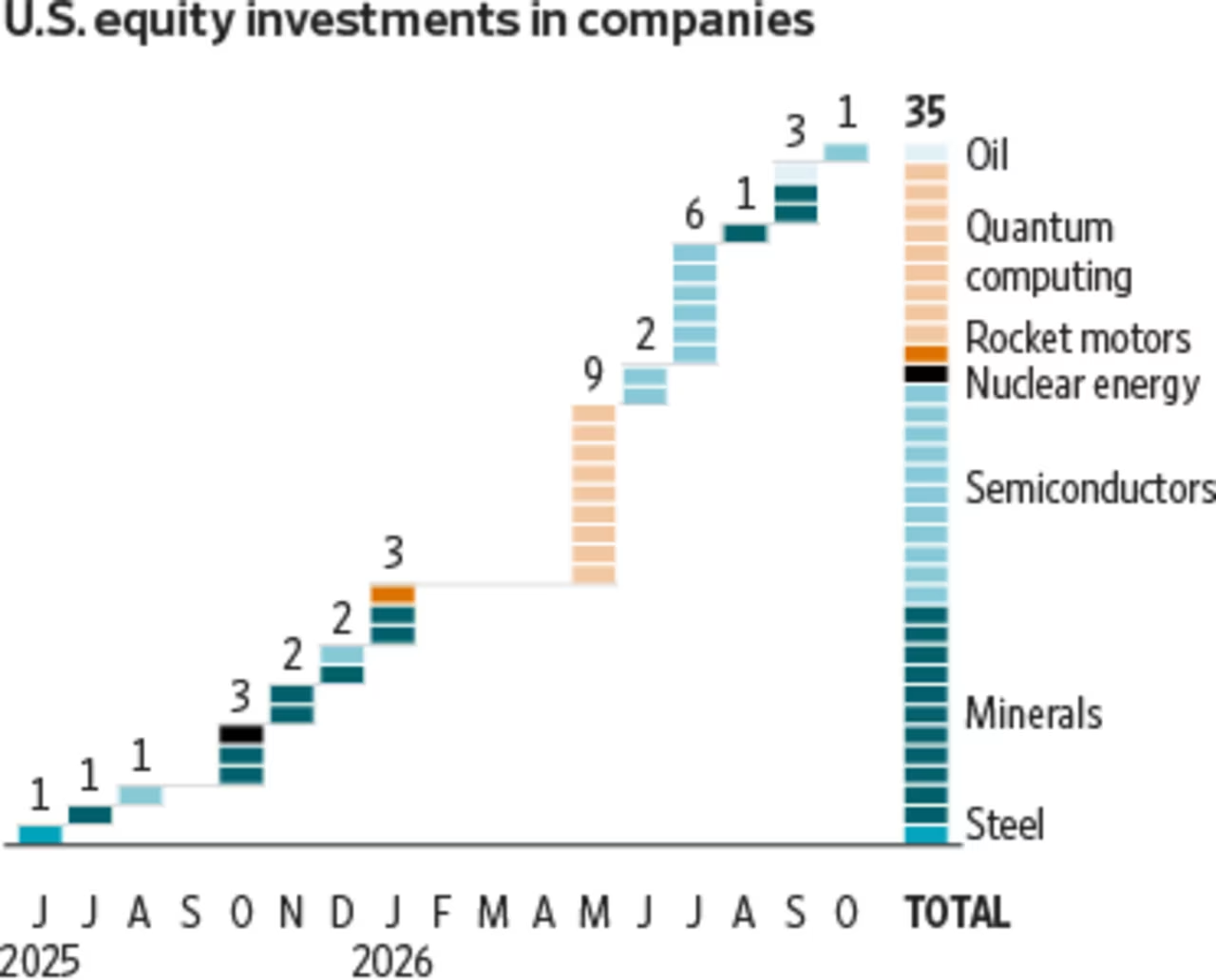
“社会主义的威胁来自内部。”凯托研究所的斯科特·林西科姆在推出一个全新数据看板时如此断言。该看板显示,自去年6月以来,美国已对35家公司进行了股权投资。林西科姆发现,在过去80年里,除了危机或战争时期,美国从未在非危机情况下对健康运营的公司进行此类投资。尽管公众普遍反对这类收购,但经济创新集团的一项民意调查显示,支持这一做法的共和党人(29%)比民主党人(22%)更多。
“The socialist threat is coming from inside the house.”So declares the Cato Institute’s Scott Lincicome upon rolling out a new dashboard showing that, since June last year, the U.S. has taken equity stakes in 35 companies. Lincicome could find no precedent in the prior 80 years for taking such stakes in healthy companies outside of crises or war. While the public broadly opposes such purchases, a poll by the Economic Innovation Group finds more Republicans (29%) than Democrats (22%) support them.
通货膨胀是个问题,但情况或许会好转。在聚焦生活成本负担能力的中期选举前几周,受伊朗战争对能源市场影响,总体通胀率有所上升。即便剔除食品和能源因素,核心物价仍超出预期上涨0.3%,即同比上涨2.6%,这使得美联储再次加息的可能性增大。其中一个推动因素是人工智能建设正在推高计算机设备的价格。
Inflation is bad. It may get better. A few weeks ahead of a midterm election focused on affordability, headline inflation climbed because of the Iran war’s impact on energy. Even without food and energy, core prices rose a more-than-expected 0.3%, or 2.6% on the year, increasing the probability the Federal Reserve raises rates again. One contributor: The AI build-out is pushing up computer-equipment prices.
不过,缓解或许已在路上。高盛经济学家估计,人工智能带来的压力已将核心个人消费支出通胀率推高了0.45个百分点,其中一半源于测量偏差。他们预计,这一影响将在未来一年逐渐减弱至0.1个百分点。
But relief may be in store. Goldman Sachs economists estimate AI pressures have boosted the core personal-consumption-expenditures inflation rate by 0.45 percentage point, of which half is due to mismeasurement. They expect this contribution to fade to 0.1 point in the coming year.
短期借贷的政府容易招致麻烦。美国财政部长斯科特·贝森特正在减少对长期债券的依赖以填补财政赤字,希望借此抑制长期利率。但国际货币基金组织的埃拉·达布拉-诺里斯和罗德里戈·瓦尔德斯警告称,当通胀可能推高短期利率时,采取短期借贷策略会“放大货币与财政之间的反馈效应”。一份配套的研究报告指出,央行的加息举措可能“导致公共债务大幅且持续增加,财政和金融状况显著恶化,以及产出、通胀和私人投资出现更大幅度的下滑”。
Governments that borrow short invite trouble. Treasury Secretary Scott Bessent is reducing dependence on long-term bonds to finance the deficit, hoping to keep down long-term rates. But borrowing short when inflation threatens to push short-term rates higher can “amplify the monetary-fiscal feedback,” warn Era Dabla-Norris and Rodrigo Valdés of the International Monetary Fund. An accompanying research report says central-bank rate hikes can “lead to large and persistent increases in public debt, more pronounced deteriorations in fiscal and financial conditions, and significantly larger declines in output, inflation, and private investment.”
订阅支持是我们新闻工作的基础。《华尔街日报》经济版读者可享受新订阅的特别优惠。如果您已经是《华尔街日报》青少年版(WSJr)的订阅用户,感谢您的支持。
Subscriptions make our journalism possible. WSJ Economics readers can enjoy a special rate on a new subscription. If you’re already a WSJr, thank you for your support.
周四、周五、周日,我是《华尔街日报》的首席经济评论员。40多年来,我一直在美国及全球范围内撰写有关经济、市场和政治的文章。
Thursday Friday Sunday I’m The Wall Street Journal’s chief economics commentator. I’ve been writing about economics, markets and politics for more than 40 years, in the U.S. and from around the world.
《华尔街日报》经济版每周两次为您带来关键洞见、新闻与评论。请将反馈发送至 wsjeconomics@wsj.com(如果您在收件箱中阅读此邮件,直接回复即可)。马特·格罗斯曼为本期简报做出了贡献。如果您有线索要提供,请通过以下方式提交。
WSJ Economics brings you essential insights, news and commentary, twice weekly. Send your feedback to wsjeconomics@wsj.com (if you’re reading this in your inbox, you can just hit reply). Matt Grossman contributed to this newsletter. Got a tip for us? Here’s how to submit.