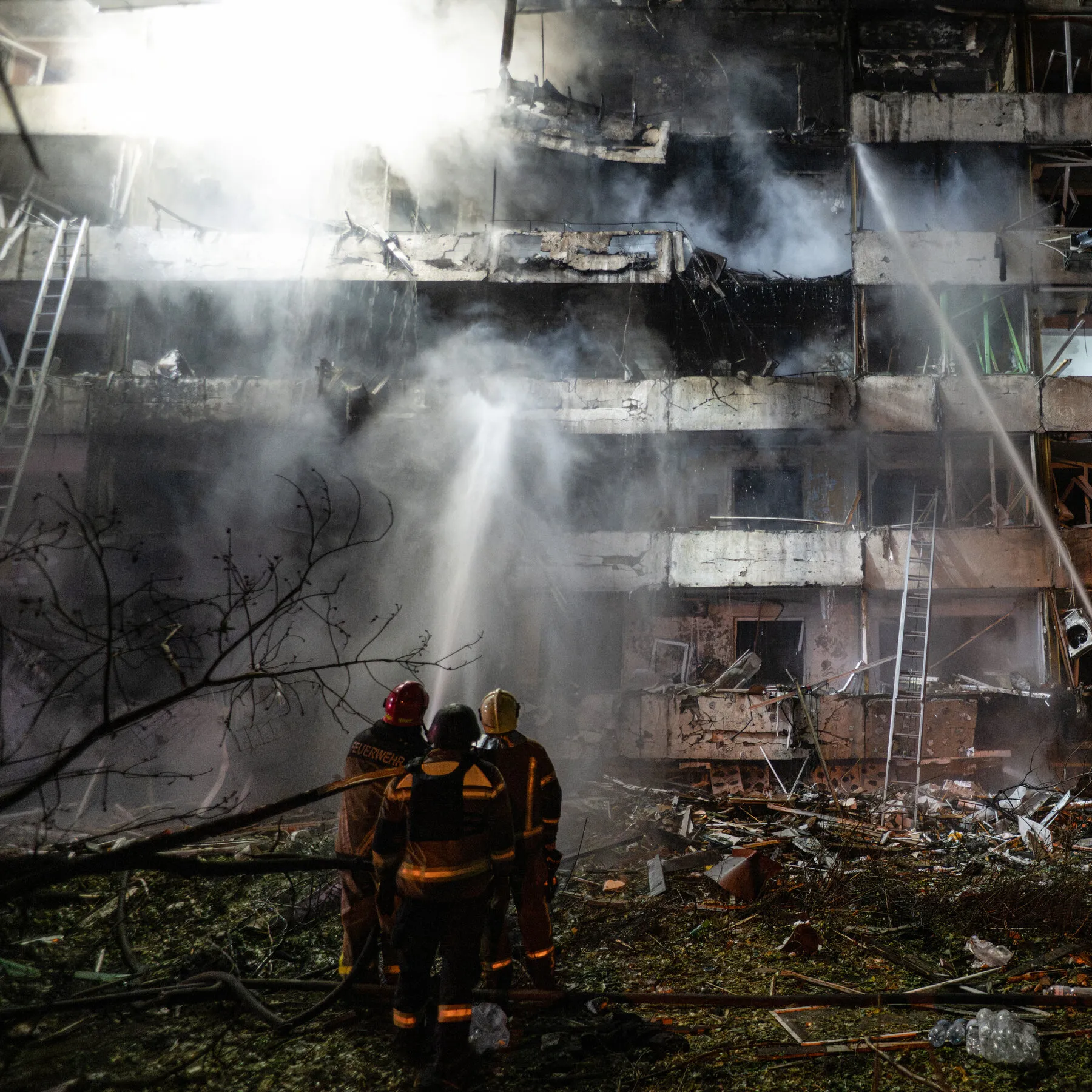
使一个国家屈服于轰炸并非易事。但俄罗斯正在尝试。俄罗斯在战场上并未取得胜利,而是抓住机会在乌克兰城市中制造巨大的人道灾难。在战争中,仅凭传统空袭很难迫使一个国家完全投降。俄罗斯似乎下定决心要尝试。
It’s Hard to Bomb a Country Into Submission. But Russia Is Trying. Moscow is not winning on the battlefield. Instead, it is seizing an opening to inflict immense human suffering in Ukrainian cities. It’s almost impossible to force a country to surrender solely through a conventional air campaign in war. Russia seems determined to try.
随着乌克兰防空能力削弱、基础设施在多年俄罗斯打击后已受损,俄罗斯似乎看到在今冬对基辅进行毁灭性轰炸的机会,企图迫使乌克兰彻底屈服。在这种新的胜利理论下,俄罗斯押注其对乌克兰城市的导弹和无人机袭击能够造成如此巨大的人道苦难,从而在前线作战上取得胜利。
With Ukraine’s air defenses diminished and its infrastructure weakened after years of Russian strikes, Moscow appears to see an opening to pound Kyiv into total submission this winter. Under this new theory of victory, Russia would be wagering that its missile and drone attacks on Ukrainian cities can inflict so much human misery that they will succeed where its troops have failed on the front.
自夏季以来,俄罗斯利用日益增强的武备,连续不断地对弹药库、加油站、图书仓库、钢铁厂、电力站、数据中心和商船发动打击。许多袭击使用了新型喷气式无人机,为俄罗斯日夜不断的攻势增添了令人震惊的新元素。
Since the summer, Russia has used its growing arsenal to unleash wave after wave of strikes on ammunition depots, gas stations, book warehouses, steel factories, power plants, data centers and commercial ships. Many of the attacks have been carried out with fast new jet-powered drones that have added a frightening new element to round-the-clock Russian onslaughts.
结果是,乌克兰首都基辅感受到压力增大,经济在承压的同时,供电系统——它保障家庭取暖和马桶冲水——在未来几个月面临潜在崩溃的风险。与此同时,本周乌克兰与特朗普政府的新冲突也加剧了局面。
The result is a sense of increased pressure in the Ukrainian capital, Kyiv, as the economy teeters under the strain and as the energy system, which keeps homes heated and toilets flushing, faces potential collapse in the coming months. Adding to the strain is a new clash between Ukraine and the Trump administration that has come to a head this week.
“俄罗斯试图在冬季来临前通过大量破坏来恐吓乌克兰人屈服,”瑞森全球(Rasmussen Global)欧洲政治咨询公司高级副总裁哈里·内德尔库(Harry Nedelcu)表示。“本质上就是为了迫使其投降。”历史以及对乌克兰人民的任何理解都表明,这一努力注定会失败。
“The Russians are inflicting a lot of damage in an effort to terrify Ukrainians ahead of winter into giving up,” said Harry Nedelcu, a senior director at Rasmussen Global, a European political advisory firm. “Essentially, into capitulating.”History — and any understanding of the Ukrainian people — suggests that the effort will fail.
在越南、波斯湾、科索沃以及最近的美以对伊朗战争中,摧毁经济和民生的轰炸行动未能迫使对方投降。俄罗斯自身的空中行动如今已进入第五年,由于乌克兰找到了击落导弹的创新方法,且其人民已适应轰炸,该行动仅取得了有限成效。
In Vietnam, the Persian Gulf, Kosovo and, more recently, the U.S.-Israeli war against Iran, bombing campaigns that wrecked economies and civilian life failed to force a surrender. Russia’s own air campaign, now in its fifth year, has yielded limited results as Ukraine has found inventive ways to shoot down missiles and as its people adapted to bombardments.
“惩罚对手的平民人口并试图瓦解其意志,在历史上强迫其承认失败的记录极差,”华盛顿战略与国际研究中心的军事专家塞思·G·琼斯说。
“Punishing the adversaries’ civilian population and trying to break its will has a very poor historical track record for coercing it to concede defeat,” said Seth G. Jones, a military expert at the Washington-based Center for Strategic and International Studies.
乌克兰也在开展自身的空中行动,使用无人机袭击帮助克里姆林宫战争融资的俄罗斯炼油厂。乌克兰总统弗拉基米尔·泽连斯基最近曾暂停这些袭击,以遵守特朗普总统要求俄罗斯石油重新流入全球市场的要求。
Ukraine has waged its own air campaign, using drones to hit Russian oil refineries that help finance the Kremlin war effort. President Volodymyr Zelensky of Ukraine had recently halted the strikes to comply with President Trump’s demand that Russian oil flow back onto global markets.
但除了更多限制乌克兰作战能力的美国措施之外,未得到任何回报——包括本周对星链军用级姐妹卫星互联网服务的限流——一脸愤怒的泽连斯基周三表示,炼油厂袭击将恢复。
But with nothing offered in return except more American restrictions on Ukraine’s ability to fight, including a throttling this week of Starlink’s military-grade sister satellite internet service, a visibly angry Mr. Zelensky said on Wednesday that the refinery strikes would resume.
尽管如此,乌克兰官员和分析人士承认,此类袭击无法像俄罗斯对乌克兰的袭击那样对俄罗斯经济造成同样规模的破坏。他们担心,莫斯科如今在空中行动上的成功可能性比战争中的任何其他时刻都更大。
Still, Ukrainian officials and analysts acknowledge that such strikes cannot inflict as much damage on the Russian economy as Russia’s strikes on Ukraine. And they fear that Moscow is now better positioned to succeed in its air campaign than at any other moment in the war.
他们指出三个主要因素。乌克兰的防空系统因多年袭击和美国军事援助的减少而被削弱。俄罗斯的导弹和无人机库存规模和效能均有所提升。此外,乌克兰的能源基础设施如今极为脆弱,一次打击就能造成曾经需要多次袭击才能达到的破坏程度。
They point to three main factors. Ukraine’s air defenses have been depleted by years of attacks and a drop in American military assistance. Russia’s arsenal of missiles and drones has grown in both size and effectiveness. And Ukraine’s energy infrastructure is now so fragile that a single hit can inflict as much damage as several strikes once did.
俄罗斯对其能够摧毁乌克兰能源系统的信心,在基辅上月向欧洲官员展示的一份被截获的攻击计划中暴露无遗,该计划的副本被《纽约时报》获取。
Russia’s confidence that it can knock out Ukraine’s energy system is laid bare in an intercepted attack plan that Kyiv presented to European officials last month, a copy of which was obtained by The New York Times.
该计划估计,俄罗斯需要大约70枚弹道导弹、720架远程无人机和150枚制导炸弹,才能切断基辅、哈尔科夫和敖德萨三城的供水、供电和供暖。根据《纽约时报》对乌克兰空军数据的分析,这大约相当于乌克兰防空系统每月平均被突破的弹道导弹和无人机数量。
The plan estimates that Russia would need some 70 ballistic missiles, 720 long-range drones and 150 guided bombs to cut off the cities of Kyiv, Kharkiv and Odesa from water, power and heating. That is roughly the number of ballistic missiles and drones that break through Ukraine’s air defenses each month on average, according to a Times analysis of Ukrainian Air Force data.
也就是说,莫斯科认为,一个月的打击就能实现此前四个冬季的攻击从未做到的事情:摧毁乌克兰的能源系统。
Essentially, that means Moscow thinks that one month of strikes could do what four winters of attacks never did: wreck Ukraine’s energy system.
本月早些时候的攻击已经暴露出电网的脆弱性。这些袭击迫使当局在基辅实施计划性停电,尽管秋季气温温和、日照时间长,使得电力需求相对较低。去年,计划性停电直到十月下旬才开始。
The grid’s vulnerability was evident after attacks earlier this month. The strikes forced the authorities to introduce scheduled power outages in Kyiv, even as mild autumn temperatures and long daylight hours have kept electricity demand relatively low. Last year, scheduled outages did not begin until late October.
能源专家表示,问题部分源于基辅依赖位于首都的三座热电联产厂。多年攻击导致这些电厂无法满负荷运行,每次新的袭击都会迫使它们快速停机。
Energy experts say the problem stems partly from Kyiv’s reliance on three combined heat-and-power plants in the capital. Years of attacks have left them unable to operate at full capacity, and each new strike knocks them offline quickly.
战争爆发前,这三座电厂的发电容量约为1.3吉瓦,足以满足基辅冬季约四分之三的用电需求。乌克兰设施平台研究小组的能源分析师玛丽亚·察图里安表示,到今年秋季,该容量已降至约500兆瓦。
Before the war, the three plants had a generating capacity of about 1.3 gigawatts, enough to cover roughly three-quarters of Kyiv’s power needs during winter. That capacity was reduced to about 500 megawatts by this fall, said Maria Tsaturian, an energy analyst at the research group Ukraine Facility Platform.
周三,俄罗斯用弹道导弹袭击了这三座电厂,进一步降低了它们的输出 — — 至少是暂时的。
On Wednesday, Russia struck all three plants with ballistic missiles, further reducing their outputs — at least temporarily.
根据一名乌克兰政府官员和一名在基辅的欧洲外交官的说法,基辅很可能在进入冬季时仅拥有非常有限的自行发电能力。两人均要求匿名,以讨论这一敏感话题。
As a result, Kyiv is likely to enter the winter with very limited electricity generating capacity of its own, according to a Ukrainian government official and a European diplomat in Kyiv, both of whom requested anonymity to discuss a sensitive subject.
这使得基辅不得不依赖城外设施的电力供应,其中包括位于南部的热电厂、西部的核电站以及三座水电站。本月,俄罗斯已对这座热电厂以及多个将电力从其他发电厂输送至首都的变电站发动了袭击。
That leaves Kyiv dependent on electricity from facilities outside the city, which include a thermal power plant to its south, nuclear plants to the west and three hydroelectric stations. Russia has struck the thermal plant and a number of substations that carry power from the other plants into the capital this month.
察图里安女士称这是一种“焦土战术”,旨在让基辅完全断绝电力供应。
Ms. Tsaturian called it a “scorched-earth tactic” designed to cut Kyiv off entirely from power.
如果俄罗斯的袭击计划得逞,基辅、哈尔科夫和敖德萨将损失90%的发电能力,供暖供应也将减少90%,同时供水和排污系统也会遭受严重中断。
If Russia’s attack plan is successful, Kyiv, Kharkiv and Odesa would lose 90 percent of their electrical capacity, have their heating supplies fall by 90 percent, and suffer severe disruptions to their water and sewage systems.
俄罗斯之所以如此自信,很大程度上源于乌克兰防空力量的不足,尤其是缺乏美国制造的“爱国者”拦截导弹——这是乌克兰抵御弹道导弹的最佳防御手段。周三,乌克兰表示,在俄罗斯发射的39枚弹道导弹中,仅成功击落了4枚,而其中大部分导弹的目标正是乌克兰的能源基础设施。此次袭击是整场战争以来俄罗斯发动的规模最大的攻击之一。
Russia’s confidence largely derives from Ukraine’s shortage of air defenses, above all the U.S.-made Patriot interceptors that are its best protection against ballistic missiles. On Wednesday, Ukraine said it shot down only four of 39 ballistic missiles that Russia launched, most of which were aimed at the country’s energy infrastructure. That assault was one of Russia’s largest of the entire war.
尽管乌克兰已经学会拦截俄罗斯的大部分远程无人机,但新型喷气式无人机却逐渐突破了防线。这些无人机飞行时速可达数百英里。基辅正加紧研制新的拦截设备,同时向西方盟友寻求能够击落这些无人机的传统武器。
While Ukraine has learned how to intercept many of Russia’s long-range drones, the new class of jet-powered ones, which fly at hundreds of miles an hour, are slipping through. Kyiv is racing to build new interceptors and pressing Western allies for conventional weapons that can bring them down.
乌克兰驻北约大使阿廖娜·盖特曼丘克表示,她向盟友提出的请求清单中,现在已包括战斗机可发射的空中对空导弹,以及同样被证明行之有效的中程地对空导弹系统。
Alyona Getmanchuk, Ukraine’s ambassador to NATO, said her list of requests to partners now included air-to-air missiles that fighter jets could fire to down jet-powered drones, along with medium-range surface-to-air systems that have also proved effective.
俄罗斯的空中攻势也给乌克兰的工业支柱造成了严重破坏。乌克兰最大钢铁生产商梅特投资公司的首席运营官奥列克桑德·米罗年科本月表示,在俄罗斯向该公司发射17枚弹道导弹后,他们被迫关闭了最大的工厂。
Russia’s air campaign has also inflicted severe damage on Ukraine’s industrial backbone. Oleksandr Myronenko, chief operating officer of Metinvest, Ukraine’s largest steel producer, said this month that the company had been forced to close its biggest plant after Russia fired 17 ballistic missiles at it.
Metinvest拥有超过3.6万名员工,是乌克兰最大的私营纳税人之一。工厂停工意味着国家预算收入减少,最终也将影响战争所需资金。乌克兰财政部长谢尔希·马尔琴科本周向议会表示,今年年度税收收入的缺口可能达到约17亿美元。
Metinvest, which employs more than 36,000 people, is one of Ukraine’s largest private taxpayers. The factory shutdown means less money for the state budget and, ultimately, for the war effort. Serhii Marchenko, Ukraine’s finance minister, told Parliament this week that the shortfall in annual tax revenue could reach about $1.7 billion this year.
乌克兰多次呼吁举行有限停火,重点保护能源设施或港口基础设施,并认为此举符合双方的利益。但来自拉斯穆森公司的内德尔库先生表示,他并不理解俄罗斯为何会同意现在停止空袭,尤其是在冬季来临之前。
Ukraine has repeatedly called for a limited cease-fire focused on energy facilities or port infrastructure, arguing that one would be in both sides’ interest. But Mr. Nedelcu, from Rasmussen, said he did not see why Russia would agree to stop its air attacks now, especially before winter.
“他们用来向乌克兰施压的唯一手段就是这些空袭,”他说,“他们别无他法。”金·巴克参与了报道。康斯坦特·梅欧是《泰晤士报》负责乌克兰战事报道的记者。
“The only card they have to pressure the Ukrainians are these air attacks,” he said. “They don’t have anything else.”Kim Barker contributed reporting. Constant Méheut is a Times correspondent covering the war in Ukraine.