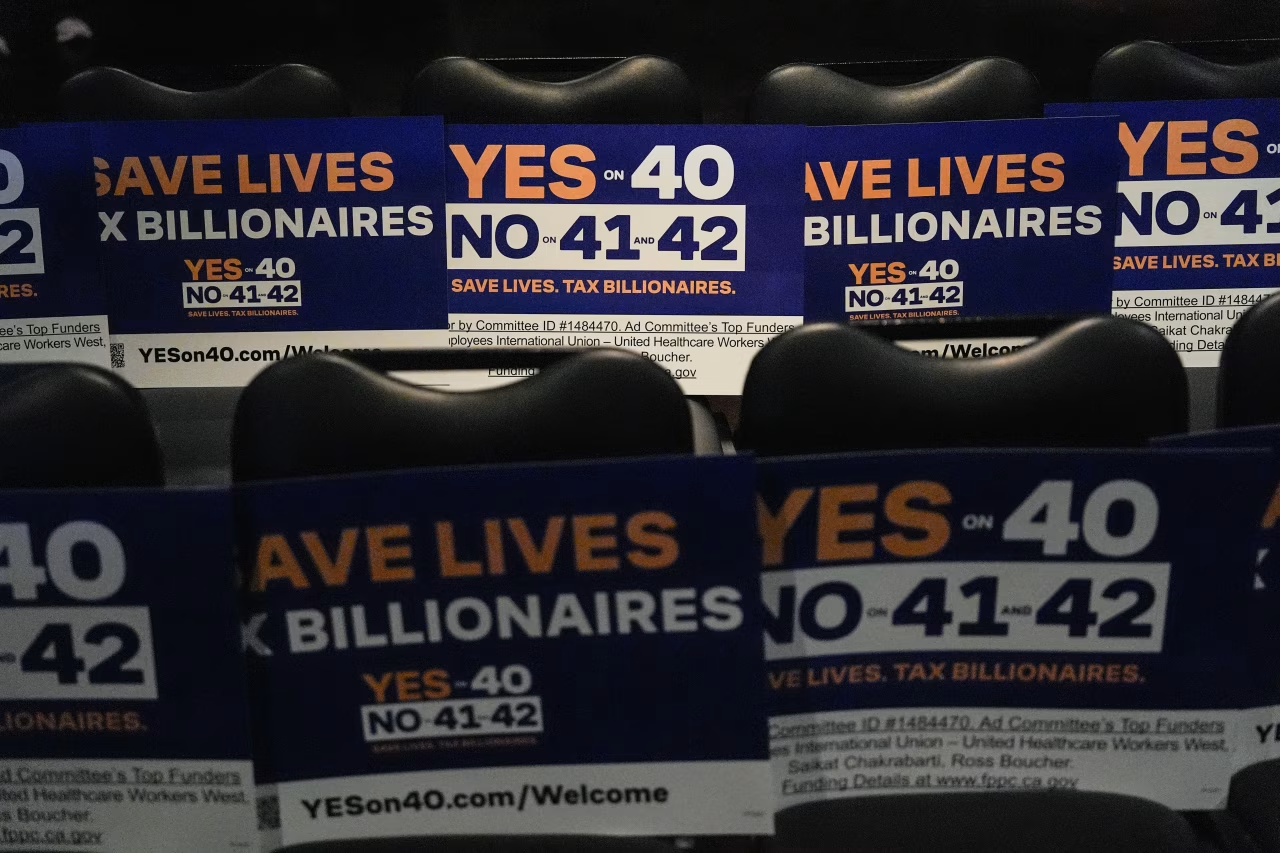
加州选民在今年中期选举投票时拥有一个特殊的机会。他们可以让法国再次伟大。这就是批准财富税的投票议案所涉及的内容。
Californians have a special opportunity when they vote in this year’s midterm. They can Make France Great Again. That’s what’s at stake in the ballot measure to approve a wealth tax.
提案40在美国本轮选举中有充分理由成为全美选票上最重要的议题。这仅部分归因于财政计算以及对资产超过10亿美元者征收5%税的经济学。从政策本身来看,这是一条狗。
Proposition 40 has a good claim to be the most significant item on the ballot anywhere in America this cycle. That’s only partly due to the fiscal math and the economics of the proposed 5% tax on those with assets above $1 billion. On the merits, the policy is a dog.
提案40所体现的态度同样危险。其前提是,任何私人财富都构成对国家资源的非法转移。尽管最初仅针对10亿美元以上的财富,但在提案40背后的学术文献中,人们可以看出没有限制原则。
As dangerous is the attitude Proposition 40 embodies. Its premise is that any and all private wealth constitutes an illegitimate diversion of resources away from the state. Despite the initial application to fortunes only above $1 billion, one discerns in the academic literature behind Proposition 40 no limiting principle.
这与美国的政治传统格格不入,在美国的传统中,财产权是自由的基石。该税完全是再分配性和惩罚性的,在这方面其哲学上的激进性被低估了。可能是因为它对经济构成的威胁如此分散注意力。
This is foreign to America’s political tradition, in which property rights are a foundation of our liberty. The tax is entirely redistributive and punitive, and in this regard its philosophical radicalness is underappreciated. Probably because the danger it poses to the economy is so distracting.
这时候法国就出现了。值得注意的是,提案40及一般财富税的关键学术倡导者都是法国人。加州大学伯克利分校经济学教授埃马纽埃尔·萨埃兹被列为提案40的作者之一。他经常合作的加布里埃尔·祖克曼是财富税的直言不讳的支持者。正是他们两人,比其他任何经济学家都更多地为在美国引入财富税提供了思想外衣。
That’s where the French come in. It’s notable that the key academic advocates of Proposition 40, and wealth taxes in general, are French. Emmanuel Saez, an economist who teaches at University of California, Berkeley, is credited as one of the authors of Proposition 40. His frequent collaborator Gabriel Zucman is a vocal proponent. Between them they have done more than any other economists to provide an intellectual veneer to the case for introducing wealth taxes in America.
萨埃兹和祖克曼的结论源自托马斯·皮凯蒂,也是法国人,他的2014年著作《二十世纪的资本》重新激发了学术界和公众对不平等的兴趣。皮凯蒂的政治影响力比其著作的方法学可信度更持久,关于这些人是否能够准确测量“财富”的争论仍在激烈进行。
Messrs. Saez and Zucman derive their conclusions from Thomas Piketty, also French, whose 2014 book, “Capital in the Twenty-First Century,” revived academic and popular interest in inequality. Mr. Piketty’s political influence has proved more durable than his book’s methodological credibility, and debate still rages about whether any of these people can accurately measure “wealth” at all.
这并不是在指责法国人,他们在不骚乱的时候也可以是可爱的人。但提案40的法国渊源意义重大。首先,这些经济学家来自一种与美国截然不同的政治经济传统。
This isn’t a knock on the French, who can be lovely people when they aren’t rioting. But the French origins of Proposition 40 are significant. For one, these economists come from a political-economy tradition very different from America’s.
更重要的是,他们来自一个破产的国家。法国刚刚结束了又一周因政府缺钱而引发的骚乱。这一次,学生们要求为学校拨付更多资金。在其他时候,则是政府雇员、退休人员和农民。政府债务占国内生产总值的比例接近120%,财政赤字每年超过国内生产总值的5%,根本没有钱可以给他们。
More to the point, they come from a country that is broke. France has just wrapped up another week of rioting over its government’s lack of money. This time students are demanding more cash for schools. At various other times it was government employees, retirees and farmers. With a nearly 120% ratio of government debt to gross domestic product and fiscal deficits above 5% of GDP each year, there’s no money to give them.
这助长了一种方便的幻想:如果富人能被迫缴纳他们应尽的税款,那么法国——以及由此延伸的欧洲其他破产国家——就会有足够的钱可供花费。过去十年的全球税收辩论大多源于这一神话。
This has encouraged the spread of the convenient fantasy that France—and, by extension, Europe’s other bankrupt states—would have enough money to spend if only the wealthy could be forced to pay their fair share of taxes. Most of the global tax debate of the past decade traces back to this myth.
问题在于,法国已经尝试过自己的财富税。结果是失败的。该税收一直产生的收入低于预期,埃马纽埃尔·马克龙总统在2018年废止了它。法国经济学家在这次经历中设法避免了关于激励、繁荣或财政可持续性的任何教训。但他们认为自己知道如何让财富税运作得更好。
The problem is that France already tried a wealth tax of its own. It was a flop. The levy consistently generated less revenue than predicted, and President Emmanuel Macron scrapped it in 2018. French economists managed to avoid learning anything about incentives, prosperity or fiscal sustainability from this experience. But they do think they know how to make a wealth tax work better.
财富税的支持者认为,法国的尝试之所以失败,是因为它免除了大量财富,尤其是与企业所有权相关的财富。关键的是,富有的法国人也能够将他们的税务居所转移到欧洲其他地区以避免缴纳这项税。
Wealth-tax supporters argue the French attempt failed because it exempted large pools of wealth, especially related to business ownership. Crucially, wealthy Frenchmen also were able to shift their tax residence elsewhere in Europe to avoid it.
在这两种情况下,“解决方案”都是普遍性,无论是在地理上还是在税基的定义上。原则很简单:财富税必须被征收,而且必须在所有地方征收。
The “solution” in both instances is universality, both geographically and in terms of the definition of the tax base. The principle is simple: Wealth taxes must be applied, and they must be applied everywhere.
瞧,这就是命题40的关键特征所在,比如它对企业所有权份额的适用,以及它试图阻止可能搬离加州的加州居民。这也解释了为什么对这群人来说,财富税能在美国落地生根如此重要。
Et voilà. This explains key features of Proposition 40, such as its application to ownership stakes in businesses and its attempts to thwart Californians who might move elsewhere. And also why it’s so important to this crew that wealth taxation take root in America in the first place.
同样的思路也解释了他们早先一次失败的尝试——试图说服美国采纳欧洲式的公司税制(如果你非要查,就谷歌搜“OECD BEPS”)。那时的目标同样是普及欧洲的税收水平。扎克曼先生是这一主张的主要倡导者。
Similar thinking explains an earlier failed attempt to persuade America to adopt a European style of corporate taxation (Google “OECD BEPS” if you must). There too the goal was to universalize European levels of taxation. Mr. Zucman was a leading proponent.
许多欧洲人似乎认为,美国的税制是他们本国财政的最大威胁。这把问题的根源诊断错了。但事实的确是,只要美国仍然是投资者和公司相对友好的家园,资本和人员流动的现实就会在实际上限制法国征税自身的能力。要改变这种状况,就必须在美国围绕产权和税收的政治经济体制中制造一次剧烈的冲击——而命题40正是这一过程的开端。
Many Europeans seem to believe that America’s tax system is the greatest threat to their own national finances. This misdiagnoses the root of their troubles. Still, it’s true that as long as the U.S. is available as a relatively friendly home for investors and companies, the reality of capital and human mobility will impose a practical limit on France’s ability to tax itself. Changing this would require a wrenching breach in America’s political economy surrounding property rights and taxation—a process Proposition 40 would begin.
修复法国的公共财政是一个值得追求的目标。但加州人并没有义务去帮忙。
Fixing France’s public finances is a worthy goal. But Californians are under no obligation to help.