随着欧盟即将对中国混合动力汽车进口实施配额,中国汽车制造商将被诱惑着把他们的顶级车型送过去。他们花了数十年时间磨练技术实力,以与欧洲最优秀的汽车竞争。但这样做会是一个错误。
With the European Union set to impose a quota on hybrid vehicle imports from China, the country’s automakers will be tempted to send over their top-of-the-line models. They’ve spent decades honing their technical prowess to compete with the continent’s finest. But that would be a mistake.
西方驾驶员目前还没有把中国视为奥迪、宝马或梅赛德斯-奔驰等豪华品牌的替代选择。比亚迪股份有限公司于4月推出的豪华运动轿车腾势Z9GT在欧洲远非畅销车型。据咨询和数据提供商Dataforce的数据显示,自其巴黎首发以来,该车在欧洲仅录得60辆新车注册。消费者并不在寻找昂贵且陌生的品牌。他们想要的是在生活成本危机期间买得起的好车。
Western drivers aren’t yet looking to China for alternatives to fancy marques from Audi AG, BMW AG or Mercedes-Benz Group AG. The Denza Z9GT, a luxury sports car that BYD Co. launched in April, is nowhere near a bestseller. It has recorded just 60 new vehicle registrations in Europe since its Paris debut, according to consultancy and data provider Dataforce. Consumers aren’t looking for expensive, unfamiliar brands. What they want is good cars that they can afford during a cost-of-living crisis.
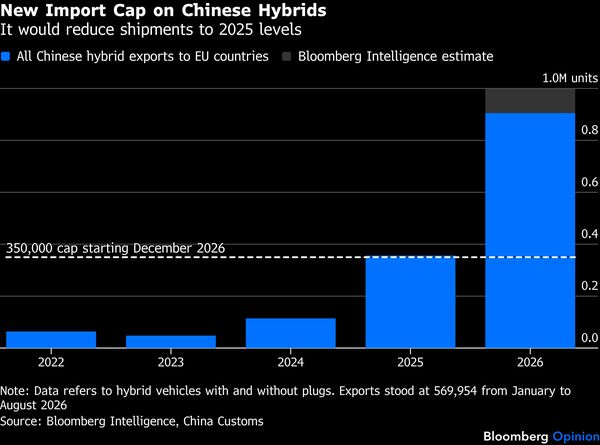
但每年35万辆中国混合动力汽车的进口上限,将在12月左右生效,这意味着汽车制造商将不再能依赖销量。相反,比亚迪、奇瑞汽车股份有限公司和上汽集团股份有限公司等企业——这些企业合计今年迄今为止在中国向欧洲销售的混合动力汽车中占比达90%——应重新校准其当前车型阵容,优先考虑相对价格更高、配置更好的车型,这些车型仍能低于欧洲和亚洲竞争对手的产品价格。
But an import cap of 350,000 Chinese hybrid vehicles a year , taking effect as soon as December, means carmakers can no longer rely on volume. Instead, the likes of BYD, Chery Automobile Co. and SAIC Motor Corp. — which collectively accounted for 90% of the Chinese hybrids sold in Europe so far this year — should recalibrate their current lineups to prioritize comparatively pricier, better-equipped models that can still undercut offerings from European and Asian rivals.
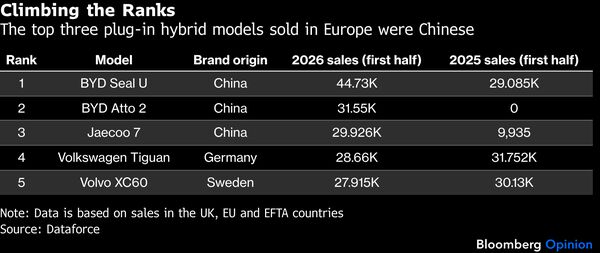
观察目前最受欢迎的车型,可以作为一个有用的起点。今年欧洲插电式混合动力汽车销量榜首的是比亚迪的海豹U,这是一款中型家庭SUV,在德国的官方指导价为44,990欧元(约合5万美元)。即使在制造商提供的大幅折扣之前,其价格也比更成熟的竞争对手便宜大约5%至15%。
A look at the most popular models offers a useful starting point. Topping the list of Europe’s plug-in hybrid sales this year was BYD’s Seal U, a mid-size family SUV that has a list price of €44,990 ($50,000) in Germany. That’s roughly 5% to 15% cheaper than more established competitors even before a substantial discount provided by the manufacturer.
与其在进口上限的限制下追逐那些难以捉摸的豪华买家,比亚迪采取更可行的策略是逐步向上市场迈进。例如,它可以基于海豹U的良好记录,推出更大、配置更高、价格更高的车型。比亚迪唐DM-i插电式混合动力SUV显然是一个合适的候选车型。比亚迪若将其引入欧洲,并将该车型定位在现有产品之上一个档次,将是明智之举。
Instead of reacting to the import cap by chasing those elusive luxury buyers, a more viable strategy would be for BYD to move upmarket in more incremental steps. For example, it could build on Seal U’s track record by introducing larger, better-equipped models at higher price points. Its Tang DM-i plug-in hybrid SUV is an obvious candidate. The carmaker would be smart to bring it to Europe and position the model a notch above existing offerings.
如果这款七座车型在德国的售价约为48,000欧元,那么它将比更小的海豹U具备显著的溢价,同时仍能有效低于大众或斯柯达的可比车型。尤其是在提供丰厚折扣的情况下,这一点更为明显。毕竟,考虑到符合条件买家可享受的所有补贴(包括政府补贴),海豹U的售价可以低至29,500欧元。比亚迪可以为需要更宽敞车辆的家庭提供更具性价比的选择,而无需诉诸低价竞争。
If the seven-seater is priced around €48,000 in Germany, it would command a meaningful premium above the smaller Seal U while comfortably undercutting comparable models from Volkswagen or Skoda. That’s especially the case if hefty discounts are extended. After all, that Seal U can be bought for as little as €29,500 once all rebates, including government ones, for eligible buyers are factored in. The Chinese carmaker could offer families who need roomier vehicles more car for the money, without resorting to bargain-basement pricing.
随着中国汽车制造商越来越多地将目光投向海外以寻求增长和更高利润率,把握好这一平衡尤为重要。比亚迪在今年1月至6月期间,首次实现出口收入超过国内收入。同一款车型在中国境外通常可以卖出国内两倍的价格,这相当于每辆车的毛利润实现等额增长。
Getting that balance right is particularly important as Chinese automakers increasingly look overseas for growth and better margins. BYD made more revenue from exports than at home for the first time during January to June. The same car can generally be sold for double the price outside China, translating to an equivalent increase in gross profit per vehicle.
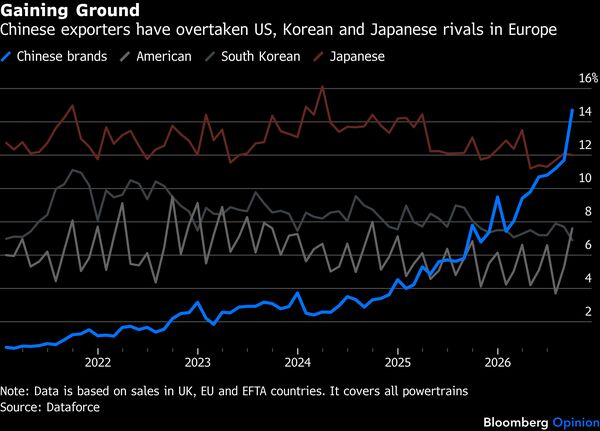
混合动力汽车进口的年度上限不太可能长期容纳中国车企的增长野心。通过升级产品线,他们可以赢得时间,并在欧洲工厂提升本地产能之前改善盈利能力——而本地生产将不受关税或进口配额的限制。
The annual cap on hybrid imports is unlikely to accommodate Chinese carmakers' growth ambitions for long. Upgrading their offerings will buy them time and help improve profitability until their European factories ramp up local production, which won’t be subject to tariffs or import quotas.
浙江零跑科技有限公司周一在巴黎车展上表示,公司已于本月在西班牙的首个欧洲设施开始生产B10电动SUV。比亚迪预计其匈牙利工厂将于明年投产。奇瑞也有类似计划;吉利汽车控股有限公司将于2028年在其与福特汽车公司的西班牙合资企业开始运营。
Zhejiang Leapmotor Technology Co. said on Monday at the Paris Motor Show that it had started building the B10 electric SUV at its first European facility in Spain this month. BYD expects its Hungary plant to come online next year. Chery has a similar plan; Geely Automobile Holdings Ltd. is due to begin operations at its Spain joint venture with Ford Motor Co. in 2028.
本地生产的汽车最终可能主导中国品牌在欧洲的业务,这一趋势将有利于具备足够资本投资国内生产的企业。这一转变很重要,因为北京计划于明年4月将电动汽车和混合动力汽车的出口税返还比例从13%降至9%,这一点我之前曾预测过。
Locally made cars may eventually dominate Chinese brands’ operations in Europe, a trend that will favor players with sufficient capital to invest in domestic production. The transition is important because Beijing plans to trim an export tax rebate for electric vehicles and hybrids to 9% from 13% next April, something I’ve previously predicted.
目前,中国企业应抵制将最昂贵车型运往欧洲的诱惑,而应花时间通过进口或本土制造逐步推出更高端的产品。他们最终可能获得收取溢价的权利,但首先需要专注于巩固其欧洲业务 — — 尽管配额政策已被实施。
For now, instead of giving in to temptation to ship its most expensive models to Europe, Chinese players should take the time to gradually introduce higher-end offerings, either through imports or onshore manufacturing. They may eventually earn the right to charge premium prices, but they need to focus on solidifying their European businesses first — despite the imposition of quotas.