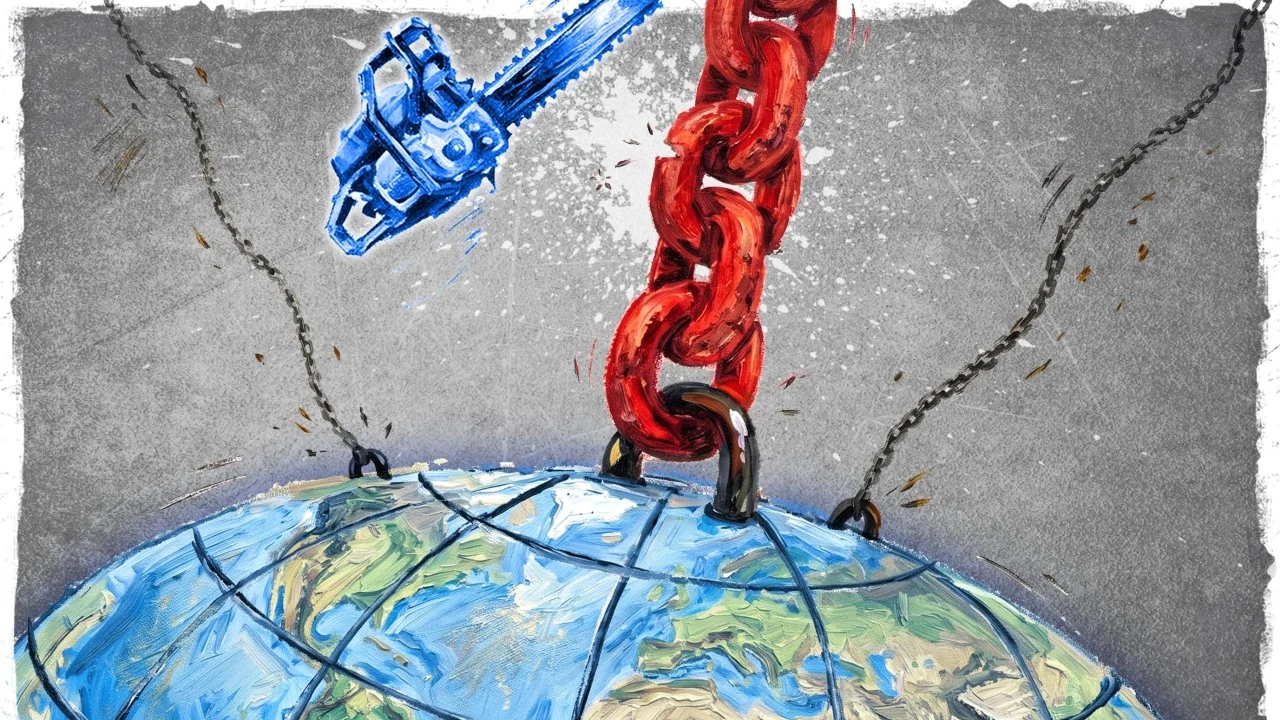
关于全球与中国“脱钩”的讨论已持续多年,印度和越南等新兴经济体很快就能取代中国成为“世界工厂”的猜测也是如此。
Talk of global decoupling from China has persisted for years, as has speculation that emerging economies such as India and Vietnam could soon replace it as the “world’s factory”.
但对于印度硬件工程师尼拉杰·阿罗拉来说,印度电子制造业的增长并未消除从中国采购零部件的需求,反而改变了这些进口的性质。
But for Indian hardware engineer Neeraj Arora, the growth of India’s electronics manufacturing industry has not eliminated the need to source components from China. Instead, it has changed the nature of those imports.
十年前,阿罗拉从世界第二大经济体进口成品手机充电器。如今,这些产品中的更多可以在印度制造,但当地制造商组装时仍依赖中国零部件。
A decade ago, Arora imported finished phone chargers from the world’s second-largest economy. Today, more of these products can be made in India, even as manufacturers there still rely on Chinese parts for assembly.
“他们没有单一产业,而是构建了一个生态系统,”阿罗拉说。他多次前往深圳、东莞和广州——中国南部的制造中心,那里提供种类繁多、价格具有竞争力的零部件,从电源开关晶体管到充电芯片。
“They don’t have a single industry; they have created an ecosystem,” said Arora, who has travelled repeatedly to Shenzhen, Dongguan and Guangzhou – southern China’s manufacturing hubs that offer a wide range of competitively priced parts, from power-switching transistors to charging chips.
阿罗拉的经历,连同更广泛的经济数据,说明了寻求多元化供应链的国家所面临的挑战:将生产转移出中国,并不一定意味着减少对中国产业的依赖。摩根士丹利投资银行最近的一份报告研究了这一模式,认为尽管存在贸易紧张,中国在全球供应链中的作用反而得到加强。
Arora’s experience, together with broader economic data, illustrates the challenge facing countries seeking to diversify their supply chains: shifting production out of China does not necessarily mean reducing reliance on Chinese industry. A recent report by investment bank Morgan Stanley examined this pattern, arguing the country had strengthened its role in global supply chains despite trade tensions.
“中国通过在全球进口中获取增值内容,并向[新兴市场]增加出口,继续深化其在全球供应链中的存在,”该行分析师(包括首席亚洲经济学家切坦·阿希亚和首席中国经济学家罗宾·兴)在本月初发布的报告中写道。
“China has continued to deepen its presence in global supply chains by capturing value-added content in global imports and increasing exports to [emerging markets],” the bank’s analysts, including chief Asia economist Chetan Ahya and chief China economist Robin Xing, wrote in the note, published earlier this month.
分析师认为,世界第二大经济体“处于有利地位”以深化这种存在,理由包括其对高增长领域的关注、一体化供应链、与战略目标相一致的金融体系以及大量熟练工人。
The world’s second-largest economy was “well-positioned” to deepen that presence, the analysts argued, citing its focus on high-growth sectors, integrated supply chains, a financial system aligned with strategic goals and a large pool of skilled workers.
上游优势 印度和越南等国家面临的挑战在于,它们是否能够发展出在国内生产更多投入品所需的工业专业知识和网络。但对数据的进一步分析表明,随着这些经济体的制造业扩张,中国的供应仍然必不可少。
The upstream advantage The challenge facing the likes of India and Vietnam is whether they can develop the industrial expertise and networks required to make more inputs at home. But a closer look at the data suggests that as manufacturing expands in these economies, Chinese supplies remain essential.
这些发展表明,区域供应链正在实现更广泛的整合,以中国为中心。摩根士丹利分析师表示:“虽然印度在电子制造业方面取得了显著进展,但它仍然从中国进口大量中间品和资本货物。”分析师指出,印度进口的中国内容中有52%用于国内投资。
These developments indicate broader regional supply-chain integration, centred around ChinaMorgan Stanley analysts“While India has made significant headway in electronics manufacturing, it still imports a large part of its intermediate and capital goods from China,” the Morgan Stanley analysts wrote, noting that 52 per cent of India’s imported Chinese content went into domestic investments.
超越产品最终组装地点,他们追踪了“增值内容”——即一个国家通过供应链中所使用的货物和服务所贡献的价值。例如,一件在越南组装的产品,可能仍然包含中国零部件或依赖中国机械。
Looking beyond where products are finally assembled, they tracked “value-added content” – the value contributed by a country through the goods and services used along the chain. A product assembled in Vietnam, for instance, may still contain Chinese parts or rely on Chinese machinery.
基于这一指标,分析师发现,中国在全球进口中的增值内容占比从2017年的12.6%上升至2024年的14.3%。报告还发现,中国投入品在经常被吹捧为制造业竞争对手的亚洲经济体中正发挥着日益增长的作用。
Using this measure, the analysts found that China’s share of value-added content in global imports rose from 12.6 per cent in 2017 to 14.3 per cent in 2024. The report also found that Chinese inputs are playing a growing role in Asian economies often touted as manufacturing rivals.
根据分析师的说法,在越南,进口的中国内容中有55%被用于出口。他们还写道:“我们还发现,中国的增值内容不仅在亚洲其他地区对美国的出口中增加了,而且在非美国市场中也增加了。”
In Vietnam, 55 per cent of imported Chinese content is channelled towards exports, according to the analysts. “We also find that Chinese value-added content has not just increased in the rest of Asia’s exports to the US, but also to non-US markets as well,” they wrote.
“总体而言,这些发展表明,区域供应链正在实现更广泛的整合,以中国为中心。”阿罗拉的经历说明,替代中国大陆的制造业生态系统有多么困难。他表示,台湾的高端产品不太适合他的印度客户所需的低成本商品,而越南则提供的选择较少。“只有中国具备这样的生态系统,”他说。
“Overall, these developments indicate broader regional supply-chain integration, centred around China.”Arora’s experience illustrates how difficult mainland China’s manufacturing ecosystem is to replace. Taiwan’s higher-end products, he said, were less suited to the low-cost goods his Indian customers needed while Vietnam offered fewer options. “Only China has that ecosystem,” he said.
尽管如此,阿罗拉表示,他相信印度正在取得进展。他引用了本土电子巨头迪克森科技(Dixon Technologies)向电视和手机组装领域扩张,以及印度企业设计和开发电路板和原型机的能力不断增强,这些工作曾经需要前往深圳才能完成。然而,尽管取得了进展,当地制造商仍然依赖中国庞大的元器件供应商网络。
Nevertheless, Arora said he believed India was making headway. He cited the expansion of home-grown electronics giant Dixon Technologies into television and phone assembly, as well as the growing ability of Indian firms to design and develop circuit boards and prototypes that once required trips to Shenzhen. Despite the progress, however, local manufacturers continue to rely on China’s extensive network of component suppliers.
阿罗拉估计,与印度仅在2015年左右才开始提速的推动相比,中国在电子制造领域积累了20至25年的经验。他主张,印度可以在五到七年内达到世界第二大经济体目前的能力,尽管他预计到那时中国也将进一步领先。
Arora estimated that China had gained 20 to 25 years of electronics manufacturing experience, compared with India’s push that gathered pace only around 2015. He argued India could reach the current capabilities of the world’s second-largest economy within five to seven years, although he expected China to have moved further ahead by then.
新德里也在推动在国内开发更多投入品。政府于2025年启动、并在2026-27年预算中扩大至4000亿卢比(42亿美元)的电子元器件制造计划,支持本地生产零部件和半成品。据印度政府称,截至8月,已有106个项目获批,38家工厂开始投产。
New Delhi is also pushing to develop more of its inputs at home. The government’s Electronics Component Manufacturing Scheme, launched in 2025 and expanded to 400 billion rupees (US$4.2 billion) in the 2026-27 budget, supports local production of parts and partially assembled products. By August, 106 projects had been approved and 38 plants had begun production, according to the Indian government.
但政府也承认,印度在关键元器件方面仍然依赖进口,包括印刷电路板、摄像头和显示模块、连接器及电容器。
But the government also acknowledged that India remained dependent on imports for critical components, including printed circuit boards, camera and display modules, connectors and capacitors.
越南也在追求类似目标,即加强其国内供应商基础。2025年9月生效的一项修订后的工业政策,为技术转让、培训和认证,以及旨在帮助本地企业为跨国制造商供货的计划提供支持。
Vietnam is pursuing a similar goal of strengthening its domestic supplier base. A revised industrial policy that took effect in September 2025 provides support for technology transfer, training and certification, as well as programmes intended to help local companies supply multinational manufacturers.
西方脱钩的局限 对于美国和欧洲而言,脱钩叙事在这些地区可以说是最为突出的,减少对中国依赖的努力已经改变了产品的采购来源以及它们到达目的地的方式。但摩根士丹利的分析师发现,来自世界工厂的直接进口减少并不一定意味着这些商品中的中国含量降低。
The limits of Western decoupling For the United States and Europe, where the decoupling narrative has arguably been most pronounced, efforts to reduce dependence on China have transformed where products are sourced and how they reach their destinations. But the Morgan Stanley analysts found that lower direct imports from the world’s factory do not necessarily translate into less Chinese content in those goods.
他们估计,美国和欧盟共同占全球对中国增值内容依赖增加的约80%。虽然中国在美国直接进口中的份额从2017年的22%降至目前约8%,但美国进口商品中中国增值内容的份额近年来基本保持稳定,2024年为15.4%。
They estimated that the US and EU together accounted for about 80 per cent of the increase in global reliance on Chinese value-added content. While China’s share of direct US imports plunged from 22 per cent in 2017 to about 8 per cent currently, the share of Chinese value-added content in US imports has remained broadly stable in recent years, standing at 15.4 per cent in 2024.
分析师发现,美国有更多行业对中国的依赖有所增加而非减少,在13个制造业行业中,只有五个行业自2016年以来其进口商品中中国增值内容的份额出现了显著下降。
The analysts found that more US sectors had increased their reliance on China than reduced it, with only five of 13 manufacturing sectors recording a material decline in the share of Chinese value-added content in their imports since 2016.
“美国仍然从中国进口同样多的增值内容,只是不再是直接进口,”他们写道。
“The US is still importing just as much value-added content from China, just not directly,” they wrote.
报告指出,货物经历了广泛的重新路由。根据分析师的说法,目前美国进口商品中约25%的中国内容通过第三方经济体间接进入美国,较2017年增加了10个百分点。其中近一半的间接增值内容仅通过三个经济体:墨西哥、台湾和越南,其中越南尤为突出,其对美国出口中中国内容的份额远高于其他国家。
The report identified extensive re-routing of goods. About 25 per cent of Chinese content in US imports now reached the country indirectly through third economies, up 10 percentage points from 2017, according to the analysts. Nearly half of this indirect value passed through just three economies: Mexico, Taiwan and Vietnam, with the latter standing out for a much higher share of Chinese content in its exports to the US.
分析师表示,自2022年起,间接渠道的使用增加——尤其是这一点——是“美中贸易独有的”,这与生产转移到其他国家以服务美国市场,同时仍然依赖中国输入相一致。
The analysts said the greater use of indirect channels, particularly from 2022 onwards, was “unique to US-China trade” and consistent with production moving to other countries to serve the American market while continuing to rely on Chinese inputs.
“我们没有观察到美国以外地区进口中出现类似的向间接渠道转移的趋势,欧盟进口也没有这种情况,”他们说,并估计欧洲进口中中国增值内容的份额从2017年的6.9%上升至2024年的8.3%。
“We do not observe a similar shift towards indirect channels in imports of the rest of the world outside the US, nor for EU imports,” they said, estimating that the share of Chinese value-added content in Europe’s imports had edged up from 6.9 per cent in 2017 to 8.3 per cent in 2024.
中国制造业机器为何持续运转 中国投入在海外供应链中的顽固持续性反映了该国在广泛行业中的无与伦比的实力。
Why China’s manufacturing machine endures The stubborn persistence of Chinese inputs in overseas supply chains reflects the country’s unrivalled strength across a wide range of industries.
摩根士丹利报告发现,过去十年,中国在全球进口中的增值内容份额在13个制造业部门中的10个部门有所增加,既包括纺织品、皮革和鞋类等低增值行业,也包括更具技术先进性的行业。
The Morgan Stanley report found that China’s share of value-added content in global imports increased in 10 of 13 manufacturing sectors over the past decade, with gains in both lower-value-added industries such as textiles, leather and footwear and more technologically advanced sectors.
例如,2024年,中国在全球电气和光学设备进口中的增值内容份额达到33%,机械和设备为24%,运输设备为10%。
In 2024, for instance, China accounted for 33 per cent of the value-added content in global imports of electrical and optical equipment, 24 per cent in machinery and equipment and 10 per cent in transport equipment.
“这些模式表明,即使最终装配转移到其他地方,中国仍保留着更高价值的生产环节,同时中国继续为新兴制造中心提供所需的设备和投入品,”分析师们表示。
“These patterns are consistent with China retaining higher-value production processes even as final assembly moves elsewhere, while China continues to supply the equipment and inputs needed by new manufacturing hubs,” the analysts said.
与此同时,海关数据周三显示,中国上月出口同比激增36.3%,达到4471.8亿美元。这一势头——受全球科技需求强劲以及“黄金周”假期前的出货高峰推动——使其2026年贸易顺差创下月度新高,并使该国有望在今年再创纪录差距。
Meanwhile, China’s exports surged 36.3 per cent year on year to US$447.18 billion last month, customs data showed on Wednesday. The momentum – driven by strong global tech demand and a pre-holiday shipping rush ahead of the “golden week” break – logged a monthly high for its trade surplus in 2026 and put the country on course for another record gap this year.
高盛上周发布的一份独立报告考察了中国在全球出口中的比重上升情况。据该行分析,该比重从2000年的4%上升至2025年的15%,超过了德国在20世纪70年代和日本在20世纪80年代曾达到的峰值。
A separate report from Goldman Sachs last week examined China’s rising proportion of global exports. According to the bank’s analysis, that share increased from 4 per cent in 2000 to 15 per cent in 2025, outpacing the peaks previously reached by Germany in the 1970s and Japan in the 1980s.
“我们的基准测试显示,中国强劲的实际出口增长在未来几年可以持续,”该行分析师表示。“目前跑道依然清晰——但最终将取决于进口经济体更强劲的经济增长。”摩根士丹利的报告还强调,新兴技术可能成为进一步增长的来源。“中国在全球供应链中扮演越来越关键的角色,不仅在低成本零部件供应方面,而且在高端资本品方面也是如此,”分析师写道。
“Our benchmarking exercise implies that robust real export growth [in China] can continue over the next few years,” the bank’s analysts said. “The runway is therefore clear for now – but eventually will depend on stronger economic growth in importing economies.”The Morgan Stanley report also highlighted emerging technologies as a potential source of further growth. “China is increasingly playing a critical role in global supply chains, not just in low-cost component supplies but also in high-end capital goods as well,” the analysts wrote.
“我们的中国团队还认为,随着中国以‘工业5.0’形式进入工业发展新阶段,其在全球制造业的优势将得到加强,”他们补充道,指的是由人工智能和机器人技术赋能的制造业。
“Our China team also believes China’s advantage in global manufacturing will be strengthened as it enters a new phase of industrial development in the form of ‘Industry 5.0’”, they added, referring to manufacturing enabled by artificial intelligence and robotics.
摩根士丹利5月发布的一份早前报告认为,人形机器人和其他机器人技术可能帮助中国巩固其在全球制造业的主导地位,此前中国在电动汽车制造领域已扩张十年。
An earlier report by Morgan Stanley released in May argued humanoids and other robotics technologies could help China consolidate its dominance over global manufacturing, building on its decade-long expansion in electric vehicle manufacturing.
该行分析师预计,中国在全球出口中的份额将从报告发布时的约15%上升至2030年的16.5%。
The bank’s analysts projected that China’s share of global exports would reach 16.5 per cent by 2030, up from about 15 per cent at the time of the report.
对于致力于成为替代制造中心的国家而言,研究结果表明,它们也需要发展出中国花费数十年建立的供应商、专业知识和网络。“多元化是可以实现的,但脱钩将面临挑战,”分析师认为。
For countries pushing to become alternative manufacturing hubs, the findings suggest they would also need to develop the suppliers, expertise and networks that China has spent decades building. “Diversification is achievable, but decoupling will be challenging,” the analysts argued.