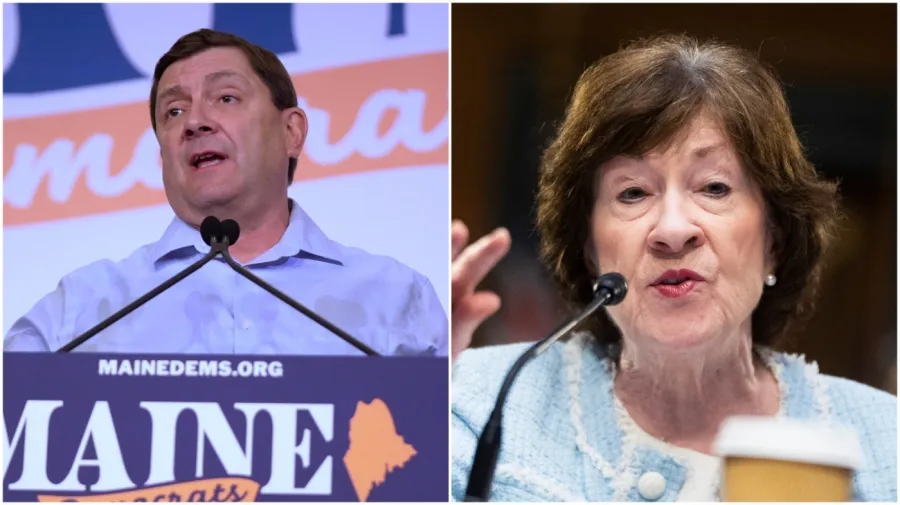
参议员苏珊·柯林斯(苏珊·柯林斯,缅因州,共和党)周四与民主党候选人特洛伊·杰克逊在缅因州选民前往投票站前的最后一场参议院辩论中交锋。两人围绕特朗普总统、竞选资金、移民改革以及他们的投票记录互相抨击,因为参议院选举已进入最后冲刺阶段。柯林斯强调她在投票中采取两党合作的方式,并非盲目追随本党或特朗普,而杰克逊,一名前州参议院议长,则反复试图将她与特朗普的议程联系起来。
Sen. Susan Collins (R-Maine) faced off against Democratic candidate Troy Jackson on Thursday in the final Senate debate before Maine voters head to the polls. The two traded jabs over President Trump, campaign financing, immigration reform and their voting record as the Senate race enters its final stretch. Collins stressed her bipartisan approach to voting and did not blindly follow her party or Trump, while Jackson, a former state Senate president, repeatedly looked to tie her to Trump’s agenda.
由缅因公共广播公司与《波特兰先驱报》合作主办的这场一小时辩论,随着两人互相指责而变得激烈。在某个时刻,镜头外的一名抗议者打断了辩论,可以听到他对柯林斯喊道:“人工智能数据中心正在摧毁我们的气候。”“这显然是特洛伊的支持者之一,”柯林斯说,杰克逊迅速予以否认。这场备受关注的选举中,五届连任的现任议员柯林斯正努力在偏蓝的缅因州保住她的席位,对手是杰克逊,他在格雷姆·普拉特纳因性侵指控和短信丑闻退出后成为该党的候选人。
The hour-long debate, hosted by Maine Public in collaboration with The Portland Herald, heated up as the two levied accusations at one another. At one point, a protester off camera interrupted the debate, and could be heard shouting at Collins, “AI data centers are destroying our climate.”“This is obviously one of Troy’s supporters,” Collins said, which Jackson quickly denied. The closely watched race has Collins, a five-term incumbent, fighting to hold onto her seat in blue-leaning Maine, against Jackson, who became the party’s nominee after Graham Platner dropped out due to sexual assault allegations and a texting scandal.
以下是周四晚辩论的三个要点:柯林斯试图与特朗普及其政府其他成员划清界限,但面临质疑,即她对总统的反对是否实际上改变了华盛顿特区重大投票的结果。当被要求举出一次她投票反对特朗普并显著改变结果的例子时,柯林斯指出她努力阻止国防部长皮特·赫格塞斯的确认。柯林斯说,她组织了共和党人反对他的提名,但另一位共和党参议员在最后一刻改变了主意。
Here are three takeaways from Thursday night’s debate: Collins looked to distance herself from Trump and other members of his administration but faced questions about whether her opposition to the president has actually changed the outcome of major votes in Washington, D.C. When asked to name a time where she voted against Trump and significantly changed the outcome, Collins pointed to her efforts to block Defense Secretary Pete Hegseth’s confirmation. Collins said she had organized Republican opposition to his nomination, but another GOP senator changed his mind at the last minute.
她很快被指出并未改变投票结果,赫格塞斯仍然领导着五角大楼。这位缅因州共和党人承认,虽然她的努力最终未能成功,但一项分析发现有56次她的投票改变了结果。
She was quickly called out for not changing the outcome of a vote, with Hegseth still leading the Pentagon. The Maine Republican acknowledged that while her effort ultimately fell short, an analysis had found 56 instances in which her votes changed an outcome.
柯林斯没有明确指代哪些投票。杰克逊抓住这个时机,指责柯林斯只有在她的投票不需要时才会与特朗普和共和党决裂。“现实是,100%的时间里,当唐纳德·特朗普需要她时,苏珊·柯林斯都会出现,”杰克逊说。这位民主党人指出,柯林斯投票推进特朗普的大规模减税和支出法案,尽管她最终反对该法案的最终版本。
Collins did not specify which votes she was referencing. Jackson pounced on the moment and accused Collins of only breaking with Trump and the GOP when her vote is not needed. “The reality is that 100 percent of the time, when Donald Trump needs her, Susan Collins is going to be there,” Jackson said. The Democrat pointed to Collins’s vote to advance Trump’s sweeping tax and spending bill, despite her eventual opposition to the final legislation.
柯林斯反驳称,对她的投票记录进行更广泛的审查显示,她有72%的时间支持总统,而非对方声称的90%至100%。她还宣传自己投票确认三位自由派大法官的记录——索尼娅·索托马约尔大法官、埃琳娜·卡根大法官和肯坦吉·布朗·杰克逊大法官,这三位大法官过去由不同的民主党总统提名。在关于竞选资金的激烈交锋中,柯林斯反客为主,指责这位民主党人违背了拒绝亿万富翁和企业政治行动委员会资金的承诺。
Collins pushed back, arguing that a broader review of her record showed she sided with the president 72 percent of the time, rather than 90 to 100 percent as claimed. She also touted her record of voting to confirm three liberal Supreme Court justices — Justices Sonia Sotomayor, Elena Kagan and Kentanji Brown Jackson — who were nominated by different Democratic presidents in the past. Collins turned the tables on Jackson during a fiery exchange over campaign financing, accusing the Democrat of breaking his promise to reject money from billionaires and corporate political action committees.
杰克逊周四承认,尽管做出了承诺,他的参议院竞选活动确实收到了亿万富翁的捐款,这引起了听众明显的反应。“就我竞选活动中可能拥有的亿万富翁而言,这是准确的,”杰克逊说,随后坚称这些捐款不会影响他的投票。“等我进入美国参议院,我会对这些亿万富翁征税,”他继续说道。“所以,如果他们想在这个竞选期间给我钱,我想那由他们决定。”
Jackson admitted Thursday that his Senate campaign received donations from billionaires despite the promise, receiving a noticeable reaction from the audience. “As far as the billionaires that I might have on my campaign, that is accurate,” Jackson said, before insisting that the contributions would not influence his votes. “I’m going to tax those billionaires when I get to the U.S. Senate,” he continued. “So, if they want to give me money during this campaign, I guess that’s up to them.”
他承认从石油和制药行业收到了1.5万美元,并表示他已将这笔钱捐给了慈善机构,以履行他的竞选承诺。柯林斯还批评杰克逊错过了他自己设定的发布竞选资金报告的截止日期一天,他说这是因为他的竞选活动收到了大量捐款而导致延迟。
He acknowledged receiving $15,000 from the oil and pharmaceutical industry, saying he had donated the money to charities in keeping up with his campaign pledge. Collins also criticized Jackson for missing his self-imposed deadline to release his campaign finance report by one day, which he said was delayed because of the flurry of contributions his campaign had received.
伊朗战争成为辩论中的主要争议点,杰克逊认为,柯林斯未能利用其作为参议院拨款委员会主席的强大职位来帮助结束这场冲突。“现在阻止它的方式就是切断资金,”他说。柯林斯多次批评特朗普处理战争的方式,并指出她投出了众多反对继续军事行动的票。杰克逊还指出了这场冲突对经济的影响,包括上涨的燃料价格对缅因州渔业和伐木业造成了特别严重的打击。
The Iran war emerged as a major point of contention in the debate, with Jackson arguing that Collins had failed to use her powerful position as chair of the Senate Appropriations Committee to help put an end to the conflict. “The way to block it now would be to shut off funding,” he said. Collins has repeatedly criticized Trump’s handling of the war and pointed to numerous votes she cast against continuing military operations. Jackson also pointed to the conflict’s effects on the economy, including rising fuel prices that have hit Maine’s fishing and logging industries particularly hard.
柯林斯认为,国会本应有权参与开战决策。“国会肯定应该被咨询,”她说,为自己在战争权力法案规定的最初60天期限后投票停止冲突的行为辩护。
Collins argued that Congress should have had a say in the decision to go to war. “Congress definitely should have been consulted,” she said, defending her votes to halt the conflict after the initial 60-day period under the War Powers Act.