福光相互人寿保险公司正维持较高的现金储备水平,以此作为应对全球市场波动以及国内政府支出增加风险的缓冲措施。
Fukoku Mutual Life Insurance Co. is maintaining an elevated cash position as a buffer against volatile global markets and concerns about rising government spending in the country.
作为日本首家公布下半财年投资计划的寿险公司,福光认为随着债券收益率的上升幅度超出预期,公司仍有空间将部分资金从外国债券转向日元债券。继上一财年实施大规模资产调整之后,该公司预计除非收益率大幅超出预期范围,否则后续调整幅度将较为温和。
Fukoku, which is the first life insurer in Japan to outline plans for the fiscal second half, also sees scope to move a bit more from foreign bonds into yen bonds as yields rose more than expected. Following last fiscal year’s large-scale move, the insurer expects any further shift would be moderate unless yields rise significantly beyond its projected range.
根据日本生命保险协会7月底发布的数据,日本各寿险公司管理的投资资产总额高达约386万亿日元(约合2.4万亿美元),因此它们的投资决策备受全球市场关注。未来几周内其他寿险公司也将陆续公布各自的投资策略,这些动向同样会引发投资者的密切关注。
Investment decisions by Japan’s life insurers are closely tracked globally as their invested assets total about ¥386 trillion ($2.4 trillion), according to the end-July data from the Life Insurance Association of Japan. Investors will also be closely watching other insurers’ strategies as they are unveiled in the coming weeks.
“自年初以来市场不确定性持续加剧,因此我们尚无足够信心动用现金去配置特定资产,”福光人寿投资规划部执行主管小野寺佑辅在接受彭博社采访时说道,“我们希望保持谨慎态度,维持一种能在市场出现突发波动时迅速做出反应的资金配置状态。”据该公司透露,目前现金及存款占其一般账户资产的比例约为6%,这一数值高于以往2%至3%的水平。
“Market uncertainty has deepened since the beginning of the year, so we don’t have enough conviction to draw down cash and allocate it to specific assets,” Yusuke Onodera, executive officer of the investment planning department at Fukoku, told Bloomberg News in an interview. “We want to remain cautious and maintain a position that allows us to move quickly in the event of sudden market swings.”Cash and deposits are currently about 6% of the insurer’s general account assets, higher than the historical range of 2-3%, according to the company.
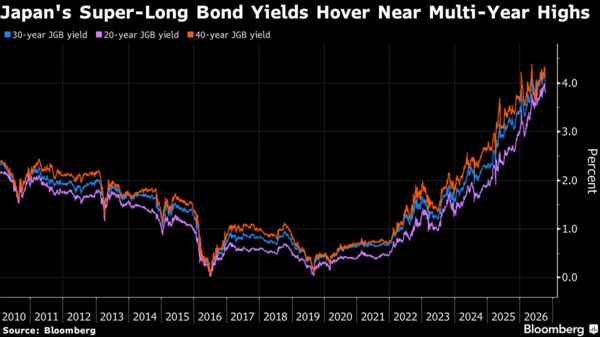
受美伊冲突引发的通胀担忧、全球政府财政状况恶化的忧虑以及高市早苗首相的财政政策计划影响,日本的超长期债券市场近期承受较大压力。高市早苗正试图推动一项削减食品及软饮料销售税的法案,但目前尚不清楚在不增加额外债务发行的前提下,由此产生的财政缺口将如何填补。
Japan’s super-long bonds have been under pressure due to inflation concerns triggered by the US-Iran war, worries about worsening government finances globally and Prime Minister Sanae Takaichi’s fiscal plans. Takaichi is seeking to enact a bill to cut the sales tax on food and soft drinks, while questions remain over how the resulting revenue shortfall will be funded without the issuance of additional debt.
“对于财政扩张的担忧尚未消除,债券收益率面临的上升压力依然存在,”奥诺德拉表示。他认为,这种不确定性可能会持续下去,尤其是在下一财年的预算以及新发行的政府债券数量在年底前尚未明确之前。
“Concerns about fiscal expansion haven’t been dispelled, and upward pressure on yields remains,” Onodera said. Uncertainty is likely to persist, particularly until next fiscal year’s budget and the amount of new government bond issuance become clear toward year-end, he said.
奥诺德拉还提到,Fukoku公司已经下调了本财年增持日本政府债券的目标金额,从原来的1100亿日元降至800亿日元。该公司在4月份曾计划将债券持有量增加1100亿日元。
Fukoku has also lowered this fiscal year’s target for increasing Japanese government bond holdings to ¥80 billion, Onodera said. This compares with its plan in April to raise the holdings by ¥110 billion.
“在积累了足够的资本后,我们决定不再对到期的次级债务进行再融资,这减少了可用于投资的资金规模,”奥诺德拉解释道。“我们的投资策略没有发生变化,仍然以购买日元债券为主。”Fukoku预计本财年下半年的10年期日本政府债券收益率将在2.7%至3.5%之间波动,并预计到财年末时收益率将达到3.3%。上周五上午,这些债券的收益率为2.94%;而该收益率在上个月曾升至1996年以来的最高水平。
“Following the build-up of sufficient capital, we decided not to refinance maturing subordinated debt, which reduced the amount of new money available for investment,” Onodera said. “There has been no change in our investment strategy, which focuses on yen bonds.”Fukoku expects the 10-year JGB yield to trade in the 2.7-3.5% range in the second half of the fiscal year, and sees the yield at 3.3% at the end of the fiscal year. The yield on the bonds was around 2.94% on Friday morning, after it rose last month to the highest level since 1996.