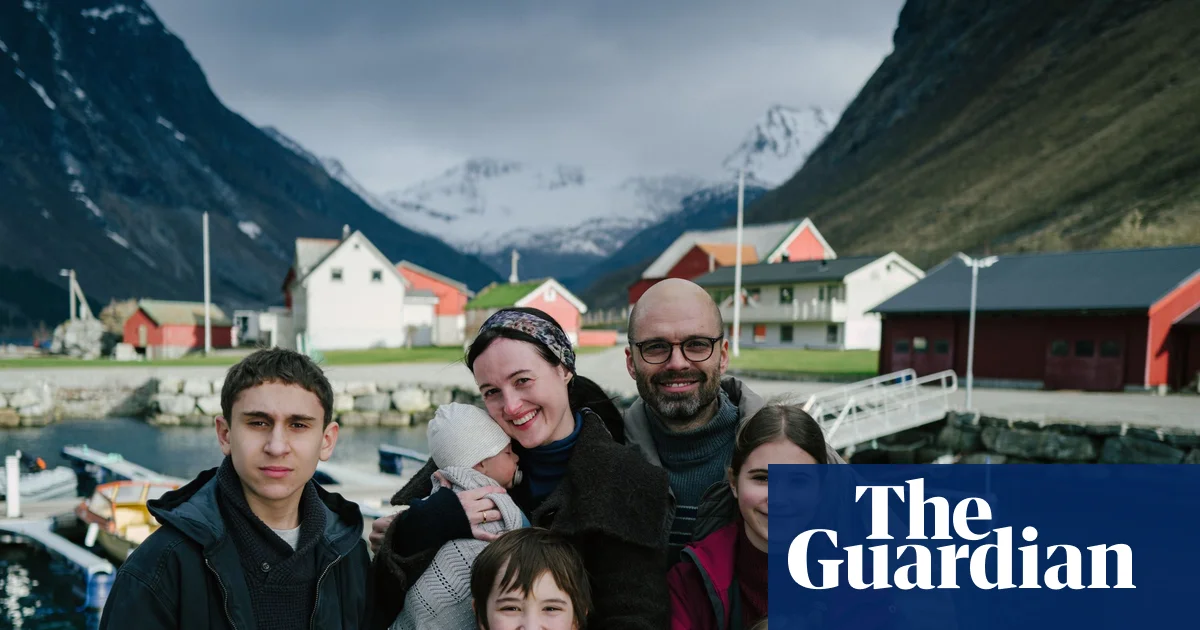
Problematic … Fjord,由克里斯蒂安·蒙居执导并编剧。摄影:©Tudor Panduru克里斯蒂安·蒙居的戛纳获奖作品呼应了一则罗马尼亚夫妇的新闻——他们的孩子被挪威政府带走。该片即将赴伦敦电影节,两位作者解释了影片如何揭露真实的伪善。
Problematic … Fjord, written and directed by Cristian Mungiu. Photograph: ©Tudor Panduru Cristian Mungiu’s Cannes winner echoes the news story of a Romanian couple whose children were taken by the Norwegian government. As it heads to London film festival, two writers explain how the film exposes real hypocrisies‘On paper, both countries agree that smacking your child is illegal’: Romanian journalist Andrei Popoviciu When Cristian Mungiu’s Fjord was shown in Romania as a one-day preview this June, the reception was extraordinary.
“在纸面上,两国都同意体罚孩子是非法的”:罗马尼亚记者安德烈·波波维奇克里斯蒂安·蒙居的《峡湾》于今年六月在罗马尼亚进行为期一天的预映,观众反响异常热烈。全罗马尼亚53个城镇、96家影院据称在一夜之间吸引了超过4万人次观影,这一数字在罗马尼亚的艺术影院中极为罕见。但当地的反应与电影本身关系不大,更多像是一次关于欧盟内部价值观冲突的旧伤口再度被撕开。
Across 53 towns and 96 cinemas, the film reportedly pulled in over 40,000 viewers in a single night, a number arthouse cinema rarely sees in Romania. But the response here had little to do with cinema. It felt instead like a reopening of a familiar fault line about the clash of values within the EU itself.
影片呼应了2015年的一起事件:来自罗马尼亚、居住在挪威的五旬节派夫妇马里乌斯和鲁思·博德纳里乌的五名子女,被挪威儿童福利机构Barnevernet从家中带走,原因是担心可能存在体罚和宗教灌输。
The film echoes events from 2015, when the five children of Marius and Ruth Bodnariu, a Pentecostal couple from Romania living in Norway – part of a Neo-Protestant minority long viewed with suspicion in Orthodox Romania – were removed from their home by Barnevernet, Norway’s child welfare authority, amid concerns over possible corporal punishment and religious indoctrination.
此事在罗马尼亚的后续发酵持续了数月,伴随外交摩擦、公开示威以及持续的媒体报道。子女最终被送回,博德纳里一家随后重新定居罗马尼亚。蒙居并未逐帧复述该故事,但罗马尼亚观众毫不费力地辨认出其来源。
The fallout in Romania stretched on for months, with diplomatic friction, public demonstrations and constant media coverage. The children were eventually returned, and the Bodnarius later resettled in Romania. Mungiu doesn’t retell the story beat for beat, but Romanian viewers had no trouble recognising where it came from.
观众之间的分歧在于影片对这一众所周知的故事所作的处理方式。有人称其“危险地令人困惑”,在未表明明确立场的情况下提出关于虐待、融入和信仰的问题。另一些人则反驳说,影片的立场体现在形式上——同情的分配、哪些角色拥有内心独白、哪些角色被简化为功能性人物。
What divided viewers here was what the film did with a well-known story. Some have called it “dangerously confusing”, raising questions about abuse, integration and belief without taking a clear position. Others counter that its stance is embedded in form, in how sympathy is distributed, which characters get interiority and which are reduced to function.
对一些人而言,这是一种对教条式自由主义的大胆批评;而对另一些人来说,它削弱了对体罚的明确道德界限,并对宗教保守主义给予了不当的温情。在最激烈的情况下,这场争论甚至蔓延到对欧盟能否容纳自身矛盾的更广泛焦虑中。
To some, it’s a brave critique of dogmatic liberalism, while to others, it dilutes a clear moral boundary on corporal punishment while extending undue warmth to religious conservatism. At its most charged, the debate spills into a broader anxiety about whether the EU can sustain its own contradictions.
数周后,这种紧张再次显现。当一段罗马尼亚母亲在公共场所虐待女儿的病毒视频在网络上重新点燃同样的分歧时(许多人为她辩护,称其是在行使必要的纪律,另一些人则直接谴责她),这表明当地的态度可能正在转变,但转变并不均衡。
That tension surfaced again weeks later, when a viral video of a Romanian mother mistreating her daughter in public reignited the same split online (many defended her as exercising necessary discipline, others condemned her outright) suggesting attitudes here may be shifting, but unevenly.
值得停下来思考的是,两国之间的法律差距实际上是多么狭窄,因为影片的接受度却把它当作一道鸿沟。罗马尼亚于2004年将体罚定为刑事犯罪,挪威则早在1987年就已立法。从纸面上看,两国已经同意打孩子是违法的,但真正的距离在于法律与观念之间的差距。
It’s worth pausing on how narrow the legal gap between the two countries actually is, because the film’s reception treats it as a chasm. Romania criminalised corporal punishment in 2004, Norway in 1987. On paper, both already agree smacking your child is illegal, but the real distance is between law and belief.
联合国人权机构最近指出,尽管已有禁令,罗马尼亚仍需转变那些认为体罚比其他方式更有效的家长的观念。与此同时,东正教会始终未能完全摆脱一种民间神学——即严格的纪律能够培养正直的孩子——即便教义和法律日益相悖。
A UN human rights body recently noted that despite the ban, Romania still needs to shift the mindset of parents who believe corporal punishment works better than the alternative. The Orthodox church, meanwhile, has never fully shed a folk theology in which strict discipline raises a righteous child, even as doctrine and law increasingly say otherwise.
值得注意的是,关于影片到底在倡导什么,几乎没有共识。有观点认为,片中的配角——社会工作者、律师、邻居——过于单薄,无法承担所要求的道德分量。还有人指责孟乔因有意偏袒基督教保守派家庭,给予其温情,而让挪威的制度显得冷漠且程序化。
What’s notable is how little agreement there is about what the film actually endorses. Some say the supporting characters – social workers, lawyers, neighbours – are too thin to carry the moral weight asked of them. Others accuse Mungiu of stacking the deck, giving the Christian-conservative family warmth while leaving Norwegian institutions cold and procedural.
芒吉乌曾谈到挑战“左翼原教旨主义”,保守派将这一说法视为自身的辩护,尽管他同样谴责其右翼对应物。辩护者反驳说,一位同情受害者的导演,必须愿意在进步社会中捍卫保守少数群体,就像他会捍卫被保守派包围的进步群体一样,因为任何阵营的多数群体都倾向于需要一个“异类”来妖魔化。
Mungiu has spoken of challenging “leftwing fundamentalism”, a phrase conservatives have seized on as vindication, though he has equally condemned its rightwing counterpart. Defenders counter that a director sympathetic to victims must be willing to defend a conservative minority in a progressive society just as he’d defend a progressive one surrounded by conservatives, since majorities of any stripe tend to need an “other” to demonise.
一些评论家认为,一旦电影面向观众,创作意图就不再重要,因此无论芒吉乌拒绝选边站队的本意是什么,这部电影的戏剧结构几乎默认地产生了对这家人的同情。
Some critics have said that intent stops mattering once a film reaches an audience, so whatever Mungiu meant by refusing to pick a side, the dramatic architecture produces sympathy for the family almost by default.
我个人认为,《峡湾》是一部关于一个确信自身出于良好意图的体系,是否能想象自己会犯错的电影。这种反应在奥斯陆到布加勒斯特的教堂、家庭和政府办公室中都能找到,也存在于我们生活的这个两极分化的世界里——即确信自己的一方只需要辩护,从不需要纠正。
My own sense is that Fjord is a film about whether a system convinced of its own good intentions can imagine being wrong. It’s the same reflex found in churches, homes and government offices from Oslo to Bucharest and across the polarised world we live in – the certainty that one’s side only ever needs vindication, never correction.
“挪威将自己视为一个比其他国家更重视儿童权利的国家”:挪威作家马格努斯·诺姆 挪威常被赞誉的“信任社会”的另一面,可能表现为对其机构智慧的天真信念,但关于巴尔内弗内特(Barnevernet,即儿童保护服务)的讨论早已存在:一个由易犯错的人类组成的不完美体系,却拥有深入家庭内部的权力。
‘Norway sees itself as a country that takes the rights of children more seriously than others’: Norwegian writer Magnus Nome The flipside of Norway’s often lauded “trust society” can manifest as a naive belief in the wisdom of its institutions, but there have long been discussions about Barnevernet, the child protection service: an imperfect system consisting of fallible humans, wielding the power to reach into the inner sanctum of the family.
欧洲人权法院在2018年至2021年间多次判定挪威败诉,系统性错误已被证实。在一起关键案件中,欧洲人权法院认定该体系违反规定,因为它没有将家庭团聚作为优先事项,而是从一开始就将最初的寄养安置视为永久安置,而非致力于让儿童与亲生母亲团聚。在另一起针对“巴尔内弗内特”的判决中,法院批评将一名穆斯林母亲的儿子安置在一个福音派基督教家庭,尽管母亲曾要求孩子在反映其文化和宗教背景的环境中成长。
Systemic mistakes have been made: the European court of human rights ruled against Norway in multiple cases between 2018 and 2021. In a key case, the ECHR found the system in violation by not prioritising family reunification, treating an initial foster home placement as permanent from the start instead of working towards reunification with the biological mother. In another ruling against Barnevernet, the court criticised placing the son of a Muslim mother in an Evangelical Christian family, despite the mother’s request for her child to grow up in an environment reflecting his cultural and religious background.
前一起案件导致挪威最高法院作出一系列判决,使家庭团聚目标成为强制性要求,确保父母享有更高水平的最低联系,并提高了强制收养的门槛。后一起案件促使该国《儿童福利法》进行修订,规定在寄养安置期间必须采取积极措施,保护儿童的文化、宗教和语言身份。《峡湾》描绘的是这些变化发生之前的体系。
The former case resulted in a series of Norwegian supreme court rulings that made a reunification goal mandatory, ensured a higher level of minimum contact for parents and raised the threshold for forced adoption. The latter resulted in a revision in the country’s Child Welfare Act, mandating active steps to preserve a child’s cultural, religious and linguistic identity during foster placements. Fjord is a portrait of the system prior to these changes.
关于这些问题的严肃公共辩论往往难以开展,部分原因是对具体案件的讨论不可避免地基于单方面信息,因为“巴尔内弗内特”为了涉案儿童的利益而坚持严格保密。公众只能听到父母的说法,这使父母得以塑造公众叙事,颠倒了权力关系。同时,这也让“巴尔内弗内特”无需回应具体的不当行为指控。
A serious public debate about these issues has often been hard to accomplish, partly because discussion of specific cases is inevitably based on one-sided information, as Barnevernet adheres to strict confidentiality for the sake of the children involved. We only get the parents’ version, allowing them to form the public narrative, flipping the power dynamic. At the same time it relieves Barnevernet of having to counter concrete allegations of wrongdoing.
长期以来,针对“巴尔内弗内特”的严厉批评一直根深蒂固,影响广泛;拥有数万名愤怒成员的社交媒体群组、多少有些全职性质的活动人士(通常有个人经历)以及十几个国家的街头抗议。一个小国的社会服务引发如此惊人的国际骚动,实属罕见。2016年,针对“巴尔内弗内特”的抗议活动。
There has long been a deep vein of harsh criticism directed at Barnevernet, reaching wide and far; social media groups numbering tens of thousands of furious members, more or less full-time activists (often with personal experience) and street protests in more than a dozen countries. It’s a surprising amount of international commotion around the social services of a small nation. Protests against Barnevernet in 2016.
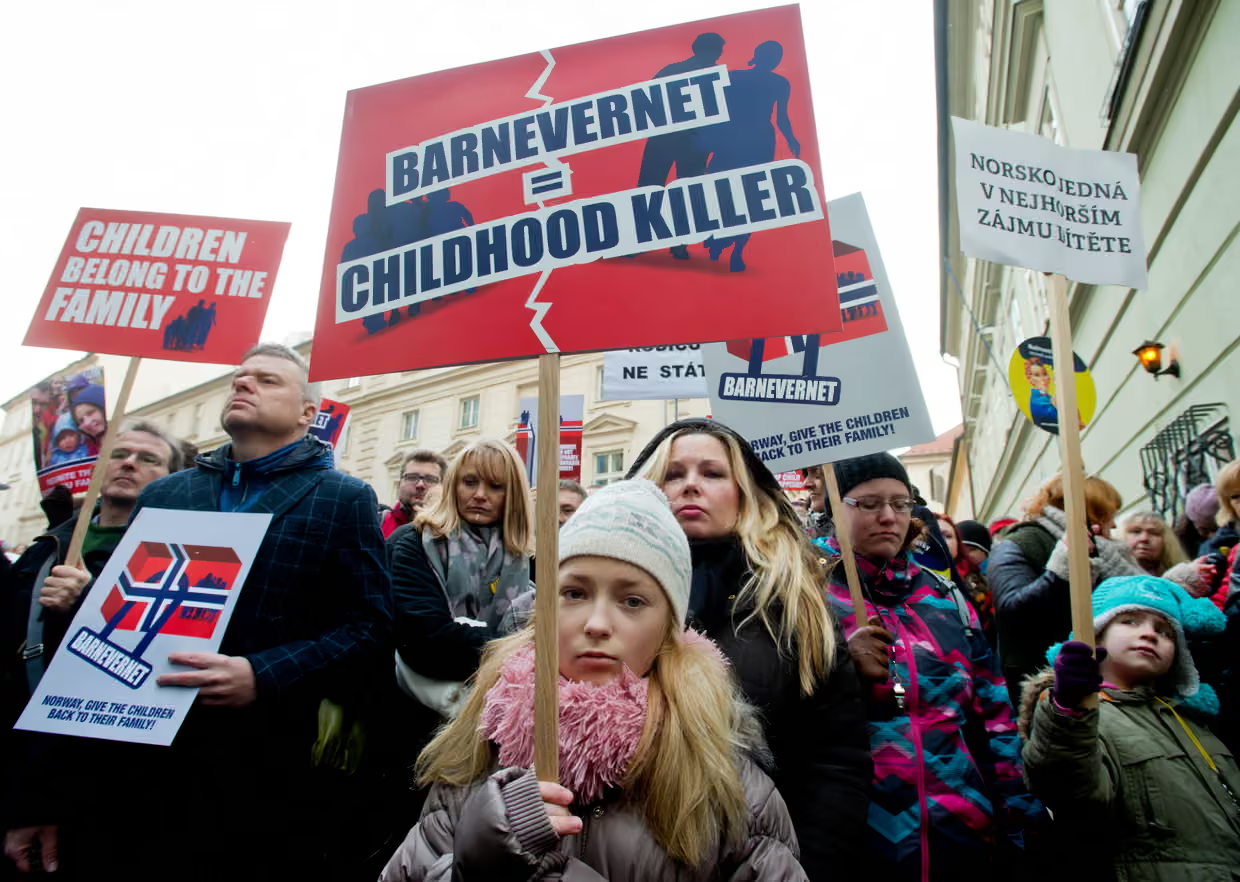
摄影:CTK/Alamy 在活动人士圈子里,批评常常从原则性关切跨入激进的阴谋论:有人声称收养是为了牟利、器官摘取以及未成年人的有组织性贩卖,还有指责这是一种超自由主义的灌输项目,或是国家批准的优生学计划。因此,社会工作者经历了骚扰和威胁。
Photograph: CTK/Alamy Within the activist circles, the critiques frequently cross from principled concern into radical conspiracy theories: there are claims of adoptions for profit, organ harvesting and organised sex trade of minors, and accusations of being an ultraliberal indoctrination project, or a state-sanctioned eugenics programme. As a result, social workers have experienced harassment and threats.
虽然这些荒唐的阴谋论最近已被主要报纸VG驳斥,但戏剧化故事的传播范围远远超过有据可查的驳斥——尤其是当这些故事被缺乏当地洞察力的外国媒体以及像俄罗斯RT这样的宣传机构放大时,它们总是乐于呈现“证据”以证明自由西方的堕落。
While the wild conspiracy theories have been debunked, most recently by the major newspaper VG, the reach of dramatic tales far surpasses that of well-documented refutations – not least when amplified by both foreign media with little local insight, and propaganda outlets such as the Russian RT, always happy to present “evidence” of the degeneracy of the liberal west.
这种泛滥的错误信息(不仅限于挪威)有时会阻碍必要的讨论,因为批评会被自动认为源于怪人。但大多数人都同意,包括在Barnevernet内部,认为就该系统展开持续的讨论是必要且健康的。
Such rampant misinformation ( not limited to Norway ) can at times hinder necessary debate, with criticism automatically assumed to originate from cranks. But most agree, including within Barnevernet itself, that an ongoing debate about the system is necessary and healthy.
人们可以把峡湾及其所呈现的问题视为保守主义对抗自由左翼、无力的个人对抗傲慢的体制,或是将父母权利置于儿童权利之上的冲突。
One can see Fjord, and the issue it portrays, as conservatism against liberal leftism, powerless individuals against an arrogant system, or a conflict between prioritising parents’ rights over those of the children.
大多数父母,我也在其中,会坚持认为他们比国家的任何机构更清楚什么对自己的孩子最好——但其中一些父母也会知道,有些家长对孩子极不称职,却恰好持有完全相同的观点。挪威视自己为一个比其他国家更重视儿童权利的国家,意识到虽然采取行动可能带来伤害的风险,但被动不行动和对父母的自动顺从同样可能造成伤害。
Most parents, myself among them, will insist they know what’s best for their own children better than any arm of the state – but some of those parents will also know of families with dangerously unfit parents that hold exactly the same opinion. Norway sees itself as a country that takes the rights of children more seriously than others, aware that while taking action carries the risk of harm, passive inaction and automatic acquiescence to parents can be equally damaging.
Fjord可能并非完全客观,也未必讲述了完整的故事,但它比之前对巴尔内弗的电影描绘《查特吉夫人挪威》更具细腻度——那是一部基于母亲叙述的煽情宝莱坞戏剧。为了用对社会工作者所面临困境的同情描绘来平衡影片,获奖的喜剧电视剧《佩妮尔》可在Netflix上观看,该剧的同名主角就在巴尔内弗工作。
Fjord may not be entirely objective or tell the complete story, but it’s a more nuanced work than the previous cinematic depiction of Barnevernet, Mrs Chatterjee vs Norway– a sensationalist Bollywood drama based on a mother’s account. To balance the film with a sympathetic portrayal of the dilemmas faced by social workers, the award-winning dramedy TV series Pernille, whose eponymous main character works in Barnevernet, is available on Netflix.