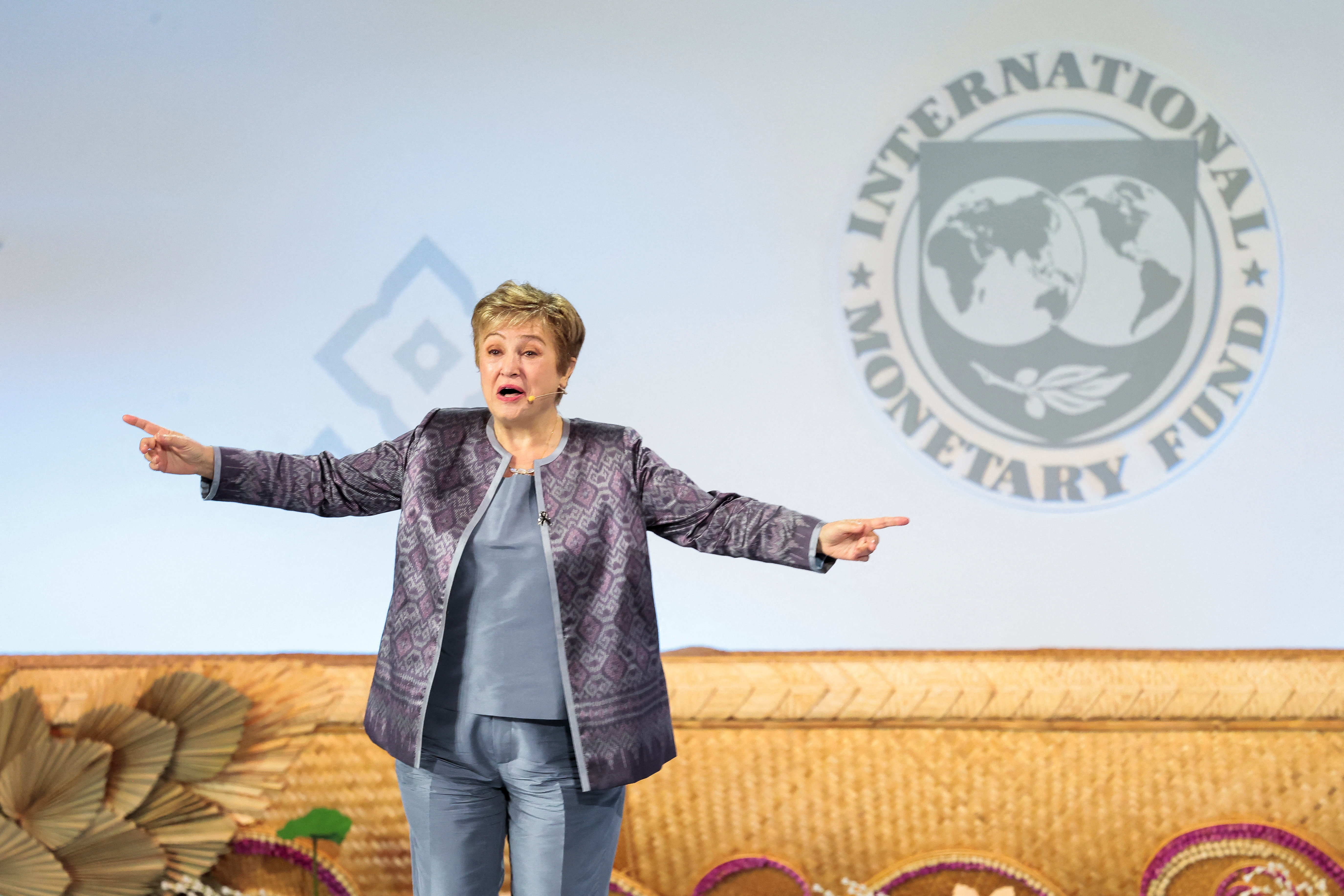
国际货币基金组织总裁格奥尔基耶娃于周五表示,如果不建立充分的保障措施和伦理框架,人工智能的风险可能会超过其机遇。她支持将行业自律与主要政府的参与结合起来。
The risks of artificial intelligence may exceed its opportunities if no adequate safeguards and ethical framework are put in place, IMF chief Kristalina Georgieva said on Friday, backing a blend of industry self-regulation and input from key governments.
这项新兴技术是本周在曼谷举行的国际货币基金组织和世界银行年会上最受关注的话题。国际货币基金组织于周二发出警告称,人工智能投资热潮可能终结、高负债水平以及中东长期战争,构成了重大的增长和金融稳定风险。
The nascent technology was a dominant topic at this week's annual meetings of the IMF and World Bank in Bangkok, where the IMF on Tuesday flagged significant growth and financial stability risks from a potential end of the AI investment boom, high debt levels and a prolonged war in the Middle East.
在包括Anthropic联合创始人杰克·克拉克在内的小组讨论中,格奥尔基耶娃表示,人工智能已经在增强全球经济,但如果它未能像预期那样迅速带来重大的生产力提升,也可能会带来负面冲击。
During a panel discussion that included Anthropic co-founder Jack Clark, Georgieva said AI was already strengthening the global economy, but could also deliver negative shocks if it failed to deliver major productivity gains as quickly as hoped.
她表示:“如果没有保障措施,那么风险可能会超过机遇。最重要的是,我们确实需要一个伦理基础,而作为一个社会,我不确定我们是否已经达到了这一阶段。”
"If there are no safeguards, then the risks may exceed the opportunities. And above all, we do need an ethical foundation, and I'm not sure we are there as a society," she said.
格奥尔基耶娃说,要让各地的人们从这项不断快速发展的新技术中受益,需要具备某些前提条件,包括接入数字基础设施、电力供应以及充足的监管。
Certain preconditions needed to be put in place for people everywhere to benefit from the new and rapidly evolving technology, including access to digital infrastructure, access to electricity and adequate regulation, Georgieva said.
她表示,当前更大的问题是如何为一项发展如此迅速的技术建立护栏,她将人工智能的发展比作一辆在没有保护观众的护栏的情况下疾驰的一级方程式赛车。
The bigger question now was how to create guardrails for a technology that was evolving so rapidly, she said, likening AI developments to Formula One race cars careening around with no barriers to protect the audience.
鉴于政府不适合对这个不断变化的行业进行监管或监督,行业自律是适当的,但也应该让社会参与进来。她在小组讨论中表示,拥有最大人工智能行业的国家(包括美国、中国和印度)以及人工智能供应链中的国家都应该参与其中。
Industry self-regulation was appropriate, given that governments were not well-placed to regulate or oversee the constantly changing sector, but should include engagement with society. The countries with the biggest AI sectors, including the US, China and India, along with countries in the AI supply chain, should be involved, she told the panel.
格奥尔基耶娃表示,国际货币基金组织等机构也应在其职能范围内参与进来,例如生产力增长、劳动力市场以及金融稳定风险。
Institutions like the IMF should also be involved in their areas of competence, such as productivity growth, labour markets and financial stability risks, Georgieva said.
“我认为这就像夜间的方程式一级赛车,只是汽车可能没有刹车,” Anthropic 的 Clark 引用了她的类比并开玩笑说。他主张制定标准是可能的,并且已经通过欧盟的早期政策框架和美国的自愿承诺开始实施。
"I think it's Formula One at night, without maybe brakes in the cars," quipped Anthropic's Clark, picking up her analogy. He argued that setting standards was possible and was already starting through early policy frameworks in the European Union and voluntary commitments in the US.
Clark 表示,他的公司定期测试其系统,公布测试细节并共享信息,但他认为这不应完全自愿。
Clark said his company regularly tested its systems, published details on the tests and shared the information, but he did not believe it should be completely voluntary.
当被问及他是否支持由生产 AI 的国家进行监管时,Clark 说:“是的。我们需要常识性的标准,而这就是最终让人们对技术充满信心并建设经济的方式。” 他补充说,Anthropic 已引入第三方评估员参与其业务,并授予他们审查数据的权限。
Asked if he would favour regulation from the countries that produced AI, Clark said: "Yes. We need common sense standards, and that's how you ultimately give confidence in the technology and build the economy." He added that Anthropic had brought third-party evaluators into its business and given them permissions to review data.
“这就是我们认为许多其他人也需要做的事情,” 他表示,欢迎埃隆·马斯克的表态,即他的公司 SpaceX 可能也会这样做。
"That's ultimately what we think many others need to do," he said, welcoming a statement from Elon Musk that his firm SpaceX might do the same.
美国财政部副部长 Erin Browne 在另一场新闻发布会上表示,国际货币基金组织过于关注全球经济面临的风险,而应更多地关注积极经济冲击的机遇,例如人工智能,而美国政府目前称其为“超级智能”。周四,Browne 告诉路透社,华盛顿正在与其他 IMF 股东进行磋商,讨论在基金会指导委员会正在起草的联合声明中采用这一新称呼。
US Treasury Undersecretary Erin Browne said during a separate news conference that the IMF was too fixated on risks facing the global economy and should give more weight to opportunities for positive economic shocks, such as AI, which the US government is now calling "super intelligence." On Thursday, Browne told Reuters that Washington was in talks with other IMF shareholders about adopting the new moniker in a joint statement being drafted by the fund's steering committee.
英格兰银行行长 Andrew Bailey 在国际金融学会的一次会议上表示,他比一个月前更乐观地认为各国将就人工智能测试标准达成一致。
Bank of England Governor Andrew Bailey told a meeting of the Institute of International Finance that he was more optimistic than a month ago that countries would reach alignment on testing standards for AI.
“我不确定我们现在是不是该谈论人工智能,我们是不是?我前几天曾用过这句话'曾经被称为人工智能的艺术家',” 他说。
"I'm not sure whether we're supposed to talk about AI now, are we? I did use the phrase the other day 'the artist formerly known as AI'," he said.
美联储主席 Kevin Warsh 也发表了看法,在另一场小组讨论中告诉 Georgieva:“克里斯蒂娜,你把它念作 AI。在美国我们现在念作 SI。”
Federal Reserve Chair Kevin Warsh also weighed in, telling Georgieva during a separate panel: "Kristalina, you pronounce it AI. In the US we now pronounce it SI."