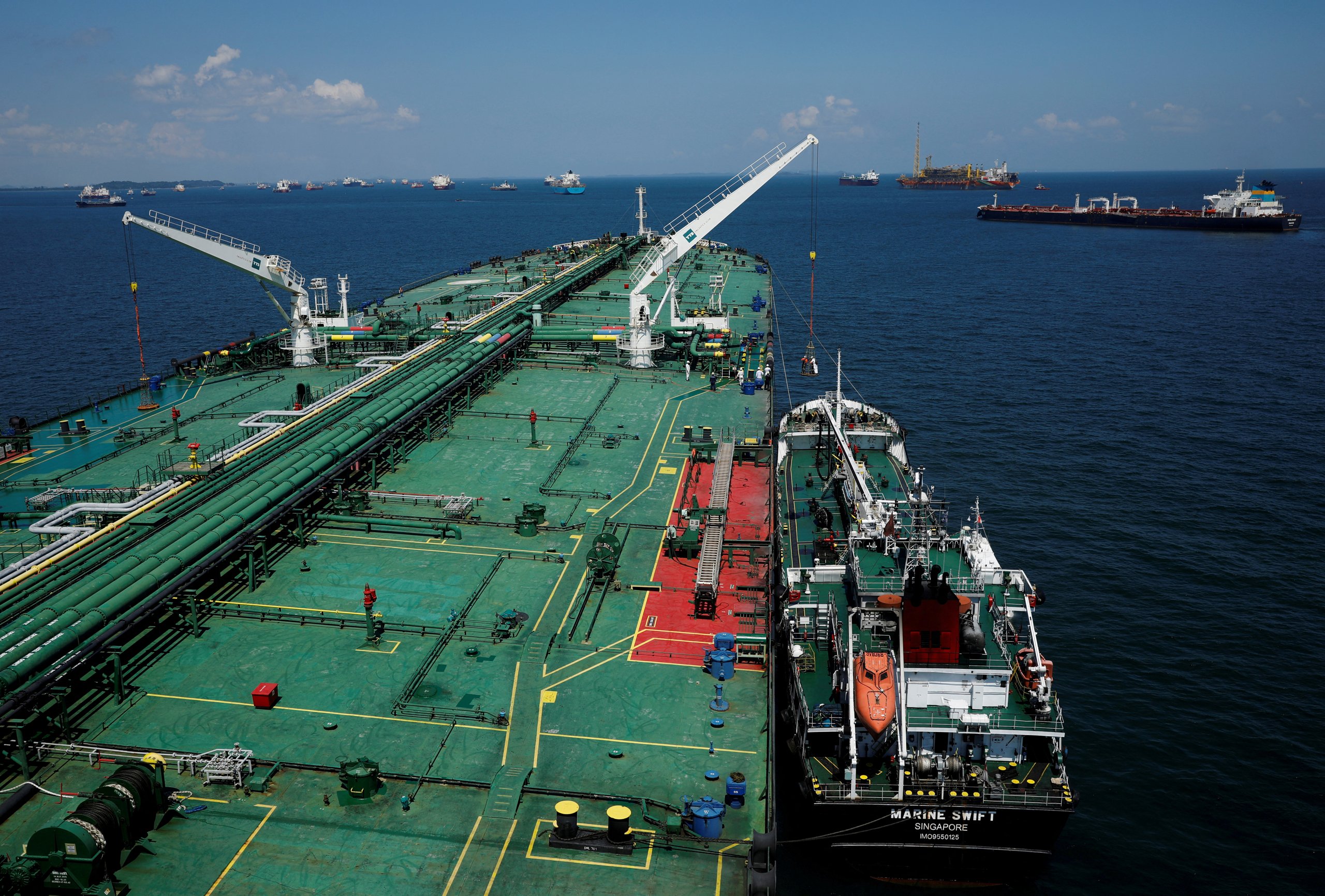
本周,由于中东船只遭遇袭击后需求放缓,以及美国考虑对所谓的暗影舰队放宽制裁,运送原油的最大油轮运费从历史高点回落。
The cost of shipping oil on the largest tankers fell this week from record highs as demand eased following a wave of attacks on vessels in the Middle East and as the US considered easing sanctions on the so-called shadow fleet.
根据波罗的海交易所数据,从阿曼湾向中国运输原油的超级油轮(也称为非常大型原油船,VLCC)运费已降至Worldscale基准的约776点。
Freight rates for supertankers, also known as very large crude carriers (VLCCs), carrying oil from the Gulf of Oman to China fell to about 776 on the Worldscale basis, according to Baltic Exchange data.
这一数值较上周的841点有所下降,为今年该指数推出以来的最高水平,此前因伊朗战争爆发而持续上涨。
That was down from 841 last week, the highest since the rate was launched earlier this year, following gains since the outbreak of the Iran war.
“由于新一轮袭击导致该航线需求软化,加之中东湾地区运费上升随后导致出口量下降,从而减少了该航线的需求,”克普勒分析师马修·赖特表示。“阿曼湾VLCC运费随之下降。”
"Gulf of Oman VLCC rates dropped as demand on that route has softened since the fresh attacks, as higher Middle East Gulf freight rates and subsequently lower export volumes have reduced demand on this route," said Kpler analyst Matthew Wright.
斯巴达商品分析师迈克尔·瑞安表示,特朗普政府关于可能对部分暗影舰队油轮解除制裁的言论推动了运费下降,并补充称,制裁解除将增加可运输原油的船舶数量。
Trump administration comments about potentially removing sanctions on some shadow-fleet tankers drove freight rates lower, Sparta Commodities analyst Michael Ryan said, adding a removal would increase the number of ships that can carry oil.
尽管运费有所下降,但仍接近历史高点。美以对伊朗的战争增加了通过船舶间转运将原油运出霍尔木兹海峡的使用,从而提升了对油轮的需求。若高昂的航运成本持续存在,可能会加剧通胀压力,并增加企业和消费者的成本。
Despite the drop, rates remain close to record highs. The US-Israeli war on Iran has increased the use of ship-to-ship transfers to move oil out of the Strait of Hormuz, boosting demand for tankers. If elevated shipping costs persist, they could add to inflationary pressures and raise costs for businesses and consumers.
本周,其他航线的运费也从历史高点有所回落,例如从西非到亚洲的航线。
Rates have also eased from record highs on other routes this week, such as from West Africa to Asia.