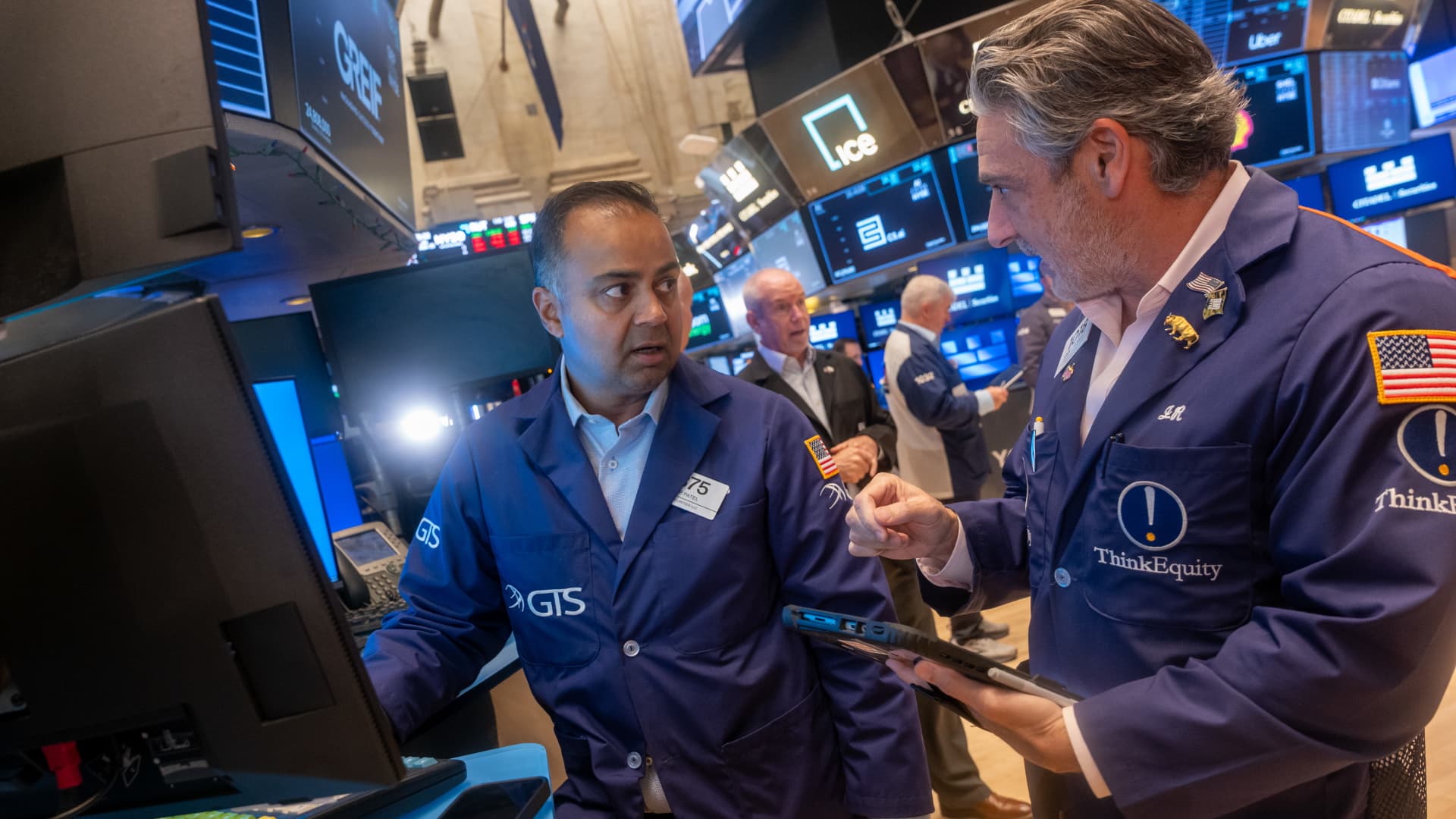
在今年动荡软件公司的“SaaSpocalypse”早期,First Eagle Investments 投资组合经理 Manish Gupta 在梳理残局寻找便宜货时,增持了 Workday。最近几个月,这一押注对这位价值投资者来说已经有了回报。Workday 股价在 2026 年第一季度一度下跌约 40%,期间该企业软件股票在不同时点的交易价甚至低于营收的三倍,随后股价在第三季度飙升超过 55%。
Early in the "SaaSpocalypse" that roiled software companies this year, Manish Gupta, a portfolio manager at First Eagle Investments, added to Workday as he parsed through the wreckage for some bargains. In recent months, that bet has paid off for the value investor. After falling about 40% in the first quarter of 2026, during which the enterprise software stock at various points was trading at not even three times revenue, the stock went on to surge more than 55% in the third.
本周,该股也在表现优异,尽管投资者因转向更安全资产而引发更广泛的科技股抛售,Workday 仍上涨超过 2%。Gupta 本周参加了该公司的分析师日活动,他仍对 Workday 持信心,并表示该公司股票目前在私营市场中相似企业的估值水平之上仍有折价。Workday 是 First Eagle 全球基金(SGENX) 的前十大持仓股之一,Gupta 共同管理该基金,截至 9 月 30 日,该基金的净资产总额接近 750 亿美元。
It's also outperforming this week, rising more than 2% amid a broader tech sell-off as investors exit for safer assets. Gupta, who attended the company's analyst day this week, remains confident in Workday, which he said is trading at a discount to similar businesses in the private markets. Workday is a top 10 holding in the First Eagle Global Fund (SGENX) , which he co-manages and which had nearly $75 billion in total net assets as of Sept. 30.
Gupta 表示:“股价已经上涨,但业务也变得更好了。'SaaSpocalypse' 也出现了转机,但股票仍具吸引力。” Workday 的反弹发生在人们对软件公司进行更广泛的重新评估之际,随着资金从半导体领域流出,转向投资者认为未来将表现更佳的人工智能相关板块,软件公司开始显得更具吸引力。投资者日益担忧,2027 年将是股市充满挑战的一年,原因在于人们担心 AI 资本支出周期即将放缓,预计将有来自主要科技公司 IPO 的新股供应激增,以及美国财政赤字不断扩大。
"The price has moved up, but the business has also become better," Gupta said. "The 'SaaSpocalypse' has also turned around, but the stock's still attractive." Workday's rally comes amid a broader rethink of software companies, which are starting to look more attractive as money rotates out of semiconductors and into parts of the AI trade that investors think will outperform going forward. Investors are growing wary that 2027 will be a challenging year for the stock market, due to fears of an impending deceleration in the AI capex cycle, an anticipated flood of new equity supply from major tech IPOs and a ballooning U.S. fiscal deficit .
这些因素叠加通胀上升和利率上行,可能对市场和经济造成压力。在这种环境下,投资者正在押注,超大型公司和基础设施软件公司是应对即将到来的挑战的最佳选择之一。
These factors, along with higher inflation and rising interest rates, could pressure the market and the economy. In that environment, investors are betting that mega-caps and infrastructure software companies are among the groups best positioned to take on the coming challenges.
“[2027] 年可能是 AI 应用战胜 AI 建设的一年,” 富国银行首席股票策略师 Ohsung Kwon 本月早些时候在接受 CNBC《街头快报》采访时表示。”也就是说,超大规模云服务商、基础设施软件将胜过半导体。” 市场已经开始将这一预期计入价格。过去三个月,Roundhill 魔力七只 ETF(MAGS)涨幅超过 6%,而 iShares 扩张科技-软件板块 ETF(IGV)涨幅超过 13%。
"[2027] could be a year where AI applications win over the AI build-out," Ohsung Kwon, chief equity strategist at Wells Fargo, told CNBC's " Squawk on the Street " earlier this month. "Meaning hyperscalers, infrastructure software, over semis." The market is already moving to price that in. Over the past three months, the Roundhill Magnificent Seven ETF (MAGS) has gained more than 6%, while the iShares Expanded Tech-Software Sector ETF (IGV) has climbed more than 13%.
同期,标普 500 指数上涨 2.7%。与此同时,iShares 半导体 ETF(SOXX)在过去三个月下跌超过 4%。周四,该 ETF 连续第八个交易日下跌,创下自 2006 年 5 月九连跌以来的最长跌幅。 AI 应用的论点 在第一季度,软件股票 ETF IGV 下跌 24%,因为投资者担心 AI 代理可能取代许多公司销售的软件套件。但随着该行业强劲的盈利预期以及新的 AI 产品和合作伙伴关系的出现,这种关于过时的叙事在随后几个月基本消退,投资者信心得以恢复。
The S & P 500 has advanced 2.7% during that same stretch. Meanwhile, the iShares Semiconductor ETF (SOXX) has fallen by more than 4% in the past three months. On Thursday, the ETF was down for an eighth straight session — notching its worst losing streak since a nine-day slide all the way back in May 2006. The case for AI applications In the first quarter, the software stocks ETF, IGV, tumbled 24%, as investors worried that AI agents could replace the software packages that are sold by many companies. But that narrative around obsolescence has largely receded in the intervening months, as strong earnings expectations and new AI products and partnerships out of the sector revived investor confidence.
软件企业仍将面临重大变革,因为它们正从用户之前点击的屏幕转向 AI 聊天机器人。“AI 不仅在改变软件能做什么,还在改变人类与它的互动方式,” 美国银行证券研究分析师 Tal Liani 撰文表示。“如果 AI 1.0 是模型,AI 2.0 是代理,那么 AI 3.0 是界面,它正在推动用户、应用和软件栈之间关系的有意义转变。”
Big changes are still coming for software players, as they shift to AI chatbots from screens users previously clicked through. "AI is changing not only what software can do, but how humans interact with it," Tal Liani, research analyst at Bank of America Securities, wrote. "If AI 1.0 was the model, AI 2.0 was the agent, then AI 3.0 is the interface, driving a meaningful shift in the relationship between users, applications and the software stack."
该分析师表示,这将有助于那些已经拥有用户日常工作平台和生产力中心的公司。例如,微软本周重新夺回了 4 万亿美元的市值。Liani 指出,AI 的赢家“已经拥有知识工作发生的许多场景”,无论是 Word 还是 Teams。
The analyst said that will help those companies that already own the platforms and daily productivity hubs that users work on. Microsoft , for example, reclaimed its $4 trillion market cap this week. Liani noted that the AI winner "already owns many of the surfaces where knowledge work occurs," whether that be Word or Teams.
ServiceNow 也是另一种意义上的赢家。该软件平台可以管理人力资源与 IT 之间的工作流程,即使这些任务涉及外部聊天机器人,例如 Claude。投资者保持防御性 投资者仍然相信,鉴于当前第三季度财报季也预计将确认的基本面的强劲,股市可能会在今年余下时间以及明年继续上涨。但随着挑战的日益增加,投资者变得更加防御性,因为他们担心 AI 资本支出周期的结束可能会使市场上的一些最高估值回落一些,更接近现实。
ServiceNow is another winner in a different way. The software platform can manage workflows between human resources and IT, even if the tasks involve an outside chatbot such as Claude. Getting defensive Investors remain confident that the stock market could continue to climb through the rest of this year and next, given the strength of the underlying fundamentals that the current third-quarter earnings season is also expected to confirm. But the mounting challenges have investors getting more defensive as they worry about the end of the AI capex cycle that could bring some of the highest valuations in the market down a bit closer to earth.
富国银行的权表示,他预计 AI 支出将在 2027 年基本达到峰值,然后在 2028 年趋于平稳。这种放缓可能会使超大规模云服务提供商受益,因为它们会变得更加纪律严明,但也可能使数据中心项目吸引力下降。该策略师表示,他在 9 月份就变得谨慎起来,预计市场将不得不重新设定预期,这甚至可能在年底前引发 5% 至 10% 的回撤。“这将会有个终点,人们开始思考那个终点会是什么样子,” 权说。
Wells Fargo's Kwon said he expects that the AI spend will essentially peak in 2027, and then flatline in 2028. That deceleration could benefit the hyperscalers as they become more disciplined, but potentially make data center projects less attractive. The strategist said he turned cautious in September, anticipating a time when the market will have to reset expectations that could spark a 5% to 10% drawdown even by the end of the year. "There's going to be an end to it, and people are starting to think about what that end looks like," Kwon said.