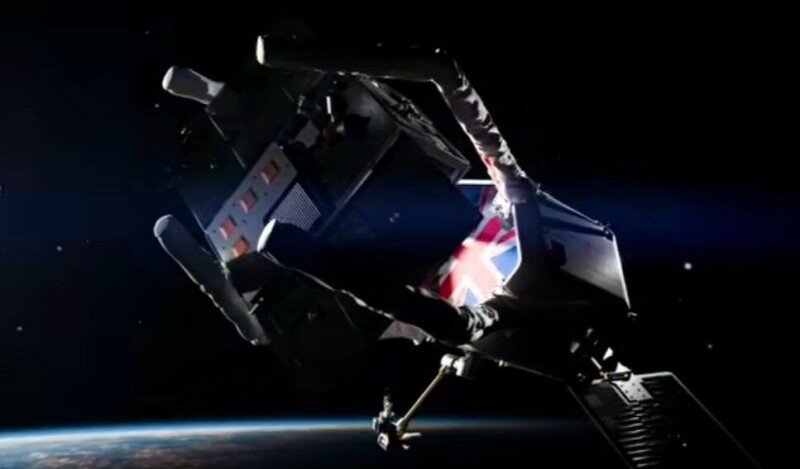
英国航天局需要为其主动碎片清除任务命名,并决定让英国公众来完成这项工作。该机构本周早些时候确认了该行动,并选定ClearSpace UK牵头执行。计划是将两颗英国注册的卫星从低地球轨道上清除,清理工作预计将于2029年开始。英国政府将为此提供超过6000万英镑的支持,并预计处置工作将在2032年完成。航天器将抓住每颗卫星,将其降至较低轨道以便在地球大气层中燃烧销毁,然后再爬升至更高轨道以待下次任务。
The UK Space Agency needs a name for its Active Debris Removal Mission and has decided that the great British public are the people for the job. The agency confirmed the operation earlier this week and selected ClearSpace UK to lead it. The plan is to remove two UK-registered satellites from Low Earth Orbit, with the clean-up due to begin in 2029. The UK government is backing the effort with more than £60 million, and it expects the disposal to be completed by 2032. The spacecraft will grab each satellite, drop it into a lower orbit for disposal by burning up in the Earth's atmosphe, then climb to a higher one to await its next job.
与其说是自杀式俯冲,不如说是宇宙垃圾箱的循环利用。而且由于该航天器可加注燃料,英国政府表示它“可以帮助带来改变,并在未来多年清理太空”。发射计划在位于苏格兰的萨克萨沃德航天港进行。但首先,这项任务需要一个名称。主动碎片清除任务这个名称不够顺口,英国航天局还举出了一些其他项目命名的灵感例子,例如以罗马神祇命名的NASA水星计划,或受艾萨克·牛顿爵士《自然哲学的数学原理》启发的蒂姆·皮克“原理号”任务。
Less suicide dive, more cosmic bin round. And because it’s refuellable, the UK government says it "can help make a difference and sweep space for years to come." Launch is planned from SaxaVord Spaceport in Scotland. But first, the quest needs a name. The Active Debris Removal Mission hardly trips off the tongue, and the UK Space Agency gave inspirational examples of other project names, such as NASA's Mercury program (named after the Roman god) or Tim Peake's Principia mission (inspired by Sir Isaac Newton's Philosophiæ Naturalis Principia Mathematica).
奇怪的是,该机构未提及曾为科研船命名的民意投票,该船最终被命名为“大卫·阿滕伯勒爵士”,而非最受欢迎的“船夫麦克船面”。所需名称必须由两个词组成——因此不能是“Itsy bitsy teeny weeny orbit debris clear machiney”——并且需要用150词来解释名称及其如何体现主题。因此不允许使用首字母缩略词造词,例如Broom(英国机器人轨道物体操纵器)。
Oddly, the agency didn't mention the poll to brand a scientific research ship, which was eventually named Sir David Attenborough rather than Boaty McBoatface, the most popular suggestion. The tag must consist of two words – so no "Itsy bitsy teeny weeny orbit debris clear machiney" – and 150 words to explain the name and how it reflects the theme. So no backronyms, for example Broom (British Robotic Orbital Object Manipulator).
Starry McBinface?显然,禁止使用粗俗语言,也不允许使用任何被视为“可能具有冒犯性”或政治性的内容。使用可能引发版权或知识产权律师介入的内容也被禁止。让公众参与命名虽然比任务本身可能风险更大,但应能带来一定的参与度。
Starry McBinface? Obviously, swear words are not allowed, nor is anything deemed "potentially offensive" or political. Using anything that might attract copyright or intellectual property lawyers is also out. Letting the public suggest a name feels potentially riskier than the mission itself, though it should generate some engagement.
这是一场高风险、高回报的行动;轨道上有大量废弃卫星造成了拥堵,清除它们的能力正变得日益重要。ClearSpace英国公司董事总经理罗布·阿奇森(Rob Atchison)表示:“我们的下一步是设计、建造和测试一艘航天器,它能够安全地接近一个从未被设计为会被捕获的目标,并对其进行控制。”如果你对这次远征感到似曾相识,那你大概是对的。
It's a high-risk, high-reward campaign; there are plenty of dead satellites cluttering orbit, and the ability to remove them is becoming increasingly important. Rob Atchison, Managing Director of ClearSpace UK, said, "Our next step is to design, build and test a spacecraft that can get close, safely, to an object never designed to be caught, and take control of it." If you're getting a sense of déjà vu about this expedition, you're probably right.
欧洲空间局(ESA)在2019年宣布了“清道夫1号”(ClearSpace-1)任务,该机构将其称为“人类历史上首次从轨道上清除一件太空垃圾的空间任务”,计划于2025年发射。当时,ClearSpace创始人兼首席执行官吕克·皮盖(Luc Piguet)表示:“现在是开展此类任务的正确时机。”在最新的公告中,皮盖称英国航天局(UKSA)的选择是“一个重要的里程碑”。
The European Space Agency (ESA) announced ClearSpace-1 in 2019, which the agency called "the first space mission to remove an item of debris from orbit" with a launch set for 2025. At the time, ClearSpace founder and CEO Luc Piguet said: "This is the right time for such a mission." In latest announcement, Piguet called the UKSA's selection "an important milestone."
这绝不是第一次在轨道上抓取物体的任务。最近的一次是,卡塔利斯特太空公司(Katalyst Space)派遣其“林克”(LINK)航天器去救援美国宇航局(NASA)的“斯威夫特”(Swift)天文台。该任务原本旨在捕获“斯威夫特”航天器并提高其高度,但“林克”号出现的故障注定了它的失败。如果当时公众有机会为这艘航天器命名,事情会不会进展得更顺利一些呢?
This is far from the first mission to grapple an object in orbit. Most recently, Katalyst Space sent its LINK spacecraft to rescue NASA's Swift observatory. That was intended to capture the Swift spacecraft and raise its altitude, but failures with LINK doomed it. Perhaps things might have gone better if the public had been given an opportunity to name the spacecraft? ®