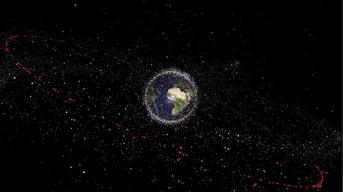
太空正变得越来越拥挤,我说的不是宇航员。成千上万的碎片正以惊人的速度环绕地球飞行。其中一些是失效的卫星,另一些是遗留的火箭部件或以往碰撞产生的碎片。其中任何一块如果撞上正在工作的航天器,都可能造成严重麻烦。
Space is getting crowded, and I'm not talking about astronauts. Thousands of pieces of junk are circling Earth at incredible speeds. Some are dead satellites. Others are leftover rocket parts or fragments from past collisions. Any one of them could cause serious trouble if it hits a working spacecraft.
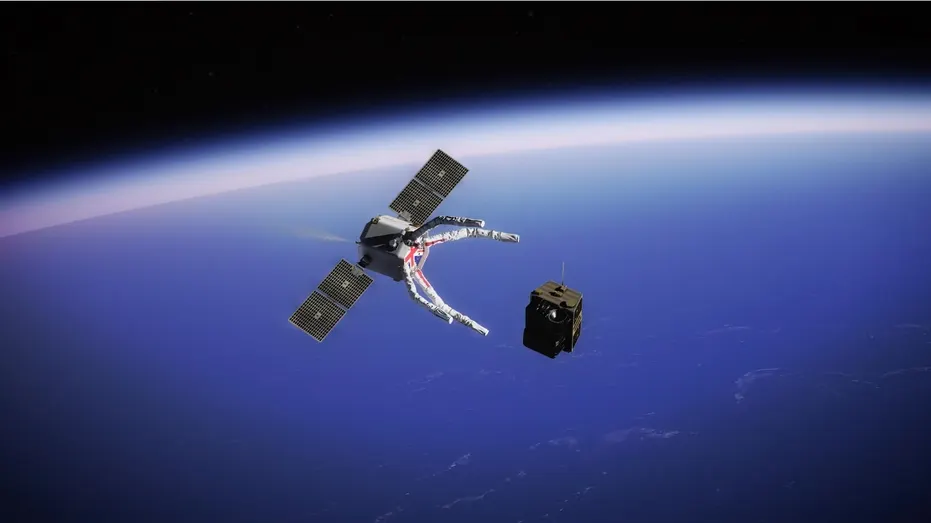
如今英国提出了一个相当大胆的解决方案。该国正在研发一种带有巨型机械爪的机器人航天器,能够抓住失效卫星,并将其推向地球大气层,最终在烈火中焚毁。可以把它想象成轨道上的垃圾车,只不过这辆垃圾车必须在两个物体都以每小时数千英里速度飞行的情况下追踪并捕获它的“垃圾”。
Now Britain has a pretty wild solution. It's developing a robotic spacecraft with giant claws that can grab dead satellites and move them toward a fiery end in Earth's atmosphere. Think of a garbage truck in orbit, except this one has to track down its trash while both objects are traveling thousands of miles per hour.
英国为该项目投入了约8100万美元。如果一切按计划进行,这次任务可能会改变我们应对头顶日益增多的太空垃圾的方式。
The UK is putting roughly $81 million behind the project. And if everything goes according to plan, the mission could change how we deal with the growing mess above our heads.
英国航天局已选定航空航天公司ClearSpace UK开发一种专门用于将失效卫星移出轨道的航天器。该合同价值约8100万美元。该项目是英国“主动碎片清除”任务(简称UK ADR)的一部分。该航天器计划于2029年从苏格兰设得兰群岛的萨克萨沃德航天港发射。
The UK Space Agency has selected aerospace company ClearSpace UK to develop a spacecraft specifically designed to remove dead satellites from orbit. The contract is valued at approximately $81 million. The project is part of Britain's Active Debris Removal mission, known as UK ADR. The spacecraft is targeted for launch in 2029 from SaxaVord Spaceport in Scotland's Shetland Islands.
它的首个任务是清除两颗已失效的英国注册卫星,使其脱离近地轨道。政府希望在2032年前将这两颗卫星清除完毕。如果成功,该任务将证明一艘航天器可以捕获并处置多颗失效卫星,而不必在完成第一次清理后就被牺牲掉。这可能会让未来的操作变得更加切实可行,尤其是在轨道上卫星数量持续增长的情况下。
Its first job will be to remove two defunct UK-registered satellites from low Earth orbit. The government wants both satellites removed by 2032. If successful, the mission would demonstrate that one spacecraft can capture and dispose of multiple dead satellites without being sacrificed after its first cleanup. That could make future operations far more practical, especially as the number of satellites in orbit continues to grow.
捕捉卫星听起来简单,但想想轨道上正在发生什么就不然了。低地球轨道上的物体通常以约每小时17000英里或更快的速度飞行。一些失效卫星还可能翻滚,使其难以安全接近。这正是ClearSpace的机器人技术发挥作用之处。该航天器将使用专门的捕获系统接近并固定一颗不活跃的卫星。首先,它必须仔细协调与目标的运动。然后其机器人捕获机构将抓住该物体。
Catching a satellite sounds straightforward until you consider what's happening in orbit. Objects in low Earth orbit typically travel at roughly 17,000 mph or faster. Some dead satellites may also tumble, making them difficult to approach safely. That's where ClearSpace's robotic technology comes in. The spacecraft will use a specialized capture system to approach and secure an inactive satellite. First, it must carefully coordinate its movements with the target. Then its robotic capture mechanism will take hold of the object.
卫星被固定后,航天器将把它移至更低的轨道并释放。大气阻力最终会将这颗被遗弃的卫星拉下,使其重返地球大气层,预计在那里烧毁。清理航天器本身的设计考虑了潜在的燃料补给和重复使用。这意味着它可以在处置一颗卫星后留在轨道上执行未来任务,而不是结束使命。当然,工程师们仍需证明该技术能够安全地处理这些高要求的操作。
Once the satellite is secured, the spacecraft will move it into a lower orbit and release it. Atmospheric drag will eventually pull the abandoned satellite down, causing it to reenter Earth's atmosphere, where it is expected to burn up. The cleanup spacecraft itself is being designed for potential refueling and reuse. That means it could remain in orbit for future work instead of ending its mission after disposing of one satellite. Of course, engineers still have to prove the technology can handle these demanding operations safely.
你可能会以为太空中有充足的空间容纳几颗损坏的卫星。不幸的是,卫星运行的一些轨道区域正变得越来越拥挤。根据欧洲航天局2026年10月14日更新的太空碎片统计数据,地球轨道上定期跟踪的物体约有47140个。这一数字包括 functioning 卫星、不活跃航天器、火箭体和碎片。
You might assume there's plenty of room in space for a few broken satellites. Unfortunately, some of the orbital regions where satellites operate are becoming increasingly crowded. According to the European Space Agency's space debris statistics, updated October 14, 2026, approximately 47,140 objects are regularly tracked in Earth's orbit. That figure includes functioning satellites, inactive spacecraft, rocket bodies and debris.
而这些只是大到足以可靠跟踪的物体。欧空局估计,地球周围还有数百万个更小的碎片。危险来自它们的极高速度。一块仅一厘米大小的碎片就能携带足以使航天器瘫痪的能量。欧空局还警告说,这种大小的撞击可能穿透国际空间站的防护屏蔽层。
And those are only the objects large enough to track reliably. ESA estimates that millions of smaller pieces also surround Earth. The danger comes from their enormous speeds. A piece of debris measuring just one centimeter can carry enough energy to disable a spacecraft. ESA has also warned that an impact of that size could penetrate the protective shielding of the International Space Station.
现在设想两个大型物体相撞会发生什么。它们可能碎裂开来,产生许多额外的碎片,每一块碎片都可能损坏其他物体。科学家将这种潜在的连锁反应称为凯斯勒综合征。如果发生足够多的碰撞,某些轨道区域可能对未来的任务变得极其危险。欧洲航天局《2026年太空环境报告》警告称,必须进行主动碎片清除,以防止碰撞驱动的碎片长期增长。
Now consider what happens when two large objects collide. They can break apart and produce many additional fragments, each capable of damaging something else. Scientists call this potential chain reaction the Kessler syndrome. If enough collisions occur, certain orbital regions could become extremely hazardous for future missions. ESA's 2026 Space Environment Report warns that active debris removal will be necessary to prevent long-term debris growth driven by collisions.
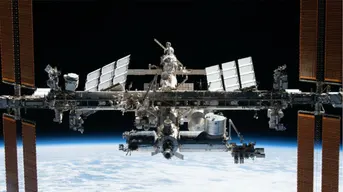
危险不仅限于昂贵的卫星。国际空间站上的宇航员面临着碎片穿越轨道的风险。2021年11月,俄罗斯进行反卫星武器试验,产生了一团危险的碎片云,此后机组人员躲进各自的航天器内避难。美国宇航局证实,宇航员和航天员关闭了舱门,躲进对接的“龙”飞船和“联盟”飞船内,同时团队正在评估威胁。
The danger extends beyond expensive satellites. Astronauts aboard the International Space Station face risks from debris traveling through orbit. In November 2021, crew members took shelter inside their spacecraft after a Russian anti-satellite weapons test created a dangerous cloud of debris. NASA confirmed that astronauts and cosmonauts closed hatches and sheltered inside docked Dragon and Soyuz spacecraft while teams evaluated the threat.
幸运的是,空间站和机组人员安然无恙。这一事件表明,卫星解体产生的碎片能多快地扰乱轨道上的运行。严重的撞击可能损坏关键系统,或刺穿航天器的加压结构。这就是为什么航天机构持续监测碎片,有时还会调整航天器轨道以避免潜在碰撞。清除较大的废弃卫星有助于防止未来发生碰撞、产生更多碎片。
Fortunately, the station and crew remained safe. The incident demonstrated how quickly debris from a satellite breakup can disrupt operations in orbit. A serious impact could damage critical systems or puncture a spacecraft's pressurized structure. That's why space agencies continuously monitor debris and sometimes adjust spacecraft orbits to avoid potential collisions. Removing larger abandoned satellites could help prevent future collisions that create even more fragments.
还有另一个值得关注的担忧。一些太空碎片最终会返回地球,某些部件能够经受住大气层再入的强烈高温。大多数较小的碎片会烧毁。然而,较大的物体以及由耐热材料制成的部件有时能够到达地面。随着火箭发射增多,研究人员正在更加密切地关注这一危险。
Here's another concern that deserves attention. Some space debris eventually returns to Earth, and certain components can survive the intense heat of atmospheric reentry. Most smaller debris burns up. However, larger objects and components made from heat-resistant materials can sometimes reach the ground. As rocket launches increase, researchers are paying closer attention to this danger.
太空环境专家、来自不列颠哥伦比亚大学的伊万·赖特告诉Space.com,2024年约有124个火箭级不受控地重返地球大气层。他估计,如果这一年度水平持续十年,全球某处至少有一个人被坠落火箭残骸砸死的概率为33%。这一估计描述的是火箭级带来的全球累积风险,而非英国两颗卫星清除目标所构成的危险。
Space environmentalist Ewan Wright, from the University of British Columbia, told Space.com that approximately 124 rocket stages reentered Earth's atmosphere uncontrolled in 2024. He estimated that if that annual level continued for a decade, there would be a 33% probability of at least one person somewhere in the world being killed by falling rocket debris. That estimate describes a cumulative global risk from rocket stages, rather than the danger posed by Britain's two satellite-removal targets.
欧洲航天局还报告称,近年来不受控重返大气层造成人员伤亡的风险有所增加,尽管与许多日常风险相比,总体概率仍然较低。这里的要点是,从轨道上清除碎片需要周密规划。运营方必须考虑这些物质最终返回地球时会发生什么。
ESA also reports that the risk of casualties from uncontrolled reentries has increased in recent years, although the overall probability remains low compared with many everyday risks. The takeaway here is that removing debris from orbit requires careful planning. Operators must consider what happens when that material eventually returns to Earth.
英国的这项任务可能产生的影响远不止其计划清除的两颗卫星。多年来,许多卫星的设计主要目的是完成任务然后退役。有些卫星在停止运作后很久仍留在轨道上。如今,各公司正在开发能够接近其他卫星并执行曾经看似极其困难任务的航天器。
Britain's mission could have implications well beyond the two satellites it plans to remove. For years, many satellites were designed primarily to complete their missions and then be retired. Some remain in orbit long after they stop functioning. Now companies are developing spacecraft capable of approaching other satellites and performing tasks that once seemed incredibly difficult.
ClearSpace的任务可能有助于证明,机器人航天器能够安全捕获那些从未为在轨服务而设计的物体。其计划中的燃料加注能力尤其引人关注。运营方最终不必为每一项任务都发射新的清理飞行器,而是可以对现有航天器进行维护,再将其派去追踪更多碎片。
ClearSpace's mission could help prove that robotic spacecraft can safely capture objects that were never designed for servicing. Its planned refueling capability is particularly interesting. Instead of launching a new cleanup vehicle for every job, operators could eventually service an existing spacecraft and send it after more debris.
这可能开启一个新的商业产业。卫星运营方最终可能会付费给专业公司,让其清除老化设备或延长仍在工作的航天器的使用寿命。然而,英国这项任务仍处于开发阶段。其长期商业潜力将取决于该技术能否按预期表现。
That could open the door to a new commercial industry. Satellite operators might eventually pay specialized companies to remove aging equipment or extend the useful lives of working spacecraft. However, the UK mission remains in development. Its long-term commercial potential will depend on whether the technology performs as expected.
在查看天气预报或使用GPS导航时,你大概不会花太多时间去想那些被遗弃的卫星。但在地球上空运行的技术在日常生活中发挥着巨大作用。卫星支撑着通信网络,提供导航信号,并传递用于天气预报的信息。它们还帮助科学家监测地球上的变化,并为应急响应行动提供支持。
You probably don't spend much time thinking about abandoned satellites while checking the weather or following GPS directions. But the technology operating above Earth plays an enormous role in everyday life. Satellites support communication networks, provide navigation signals and deliver information used for weather forecasting. They also help scientists monitor changes on Earth and support emergency response operations.
GPS卫星运行在中地球轨道,其高度远高于英国这项任务所针对的低地球轨道碎片。尽管如此,为让轨道区域更安全而付出的更广泛努力,有助于保护支撑卫星服务的基础设施。一次碰撞若使一颗重要航天器瘫痪,就可能扰乱相关运行,迫使企业或政府机构依赖备用系统。更换一颗受损卫星也可能代价高昂。
GPS satellites operate in medium Earth orbit, much higher than the low Earth orbit debris targeted by Britain's mission. Still, the broader effort to keep orbital regions safer helps protect the infrastructure that supports satellite-based services. A collision that disables an important spacecraft could disrupt operations and force companies or government agencies to rely on backup systems. Replacing a damaged satellite can also be expensive.
英国的机器人清理任务不会在一夜之间消除太空垃圾问题。但成功移除两颗废弃卫星,可能有助于建立一种处理已在轨危险物体的切实可行方式。而随着数以千计的更多卫星被发射升空,找到一种可靠的方式让它们安全退役,可能会变得越来越重要。
Britain's robotic cleanup mission won't eliminate the space junk problem overnight. But successfully removing two abandoned satellites could help establish a practical way to deal with dangerous objects already in orbit. And with thousands of additional satellites being launched, finding a reliable way to retire them safely could become increasingly important.
我得承认,航天器用巨大的机械爪追捕失效卫星的想法,听起来像是好莱坞编造出来的。但我觉得这项技术很吸引人,尤其是当你想到我们多么依赖卫星,却从不把它们当回事。真正引起我注意的是重复使用清理航天器的可能性。这或许能让清除太空垃圾成为一项常规服务,而不是偶尔的实验。不过,我怀疑我们的进展是否足够快。
I have to admit, the idea of a spacecraft chasing down dead satellites with giant robotic claws sounds like something Hollywood dreamed up. But I find the technology fascinating, especially when you consider how much we depend on satellites without giving them a second thought. What really caught my attention is the possibility of reusing the cleanup spacecraft. That could make removing space junk a routine service rather than an occasional experiment. Still, I wonder whether we're moving fast enough.
随着企业每年发射更多卫星,清理两个废弃航天器感觉只是个小小的开端。我希望卫星运营商对自己留下的东西承担更大的责任。毕竟,我们不会容忍企业在我们的高速公路上丢弃损坏的设备。地球轨道凭什么要有所不同呢?
With companies launching more satellites every year, cleaning up two abandoned spacecraft feels like a small start. I'd like to see satellite operators take greater responsibility for what they leave behind. After all, we wouldn't tolerate companies abandoning broken equipment on our highways. Why should Earth's orbit be any different?
发射卫星进入太空的公司,是否应该在其停止工作后为移除它们付费?还是说,政府应该承担起清理日益增多的垃圾的责任?
Should companies launching satellites into space be required to pay for removing them when they stop working, or should governments take responsibility for cleaning up the growing mess?