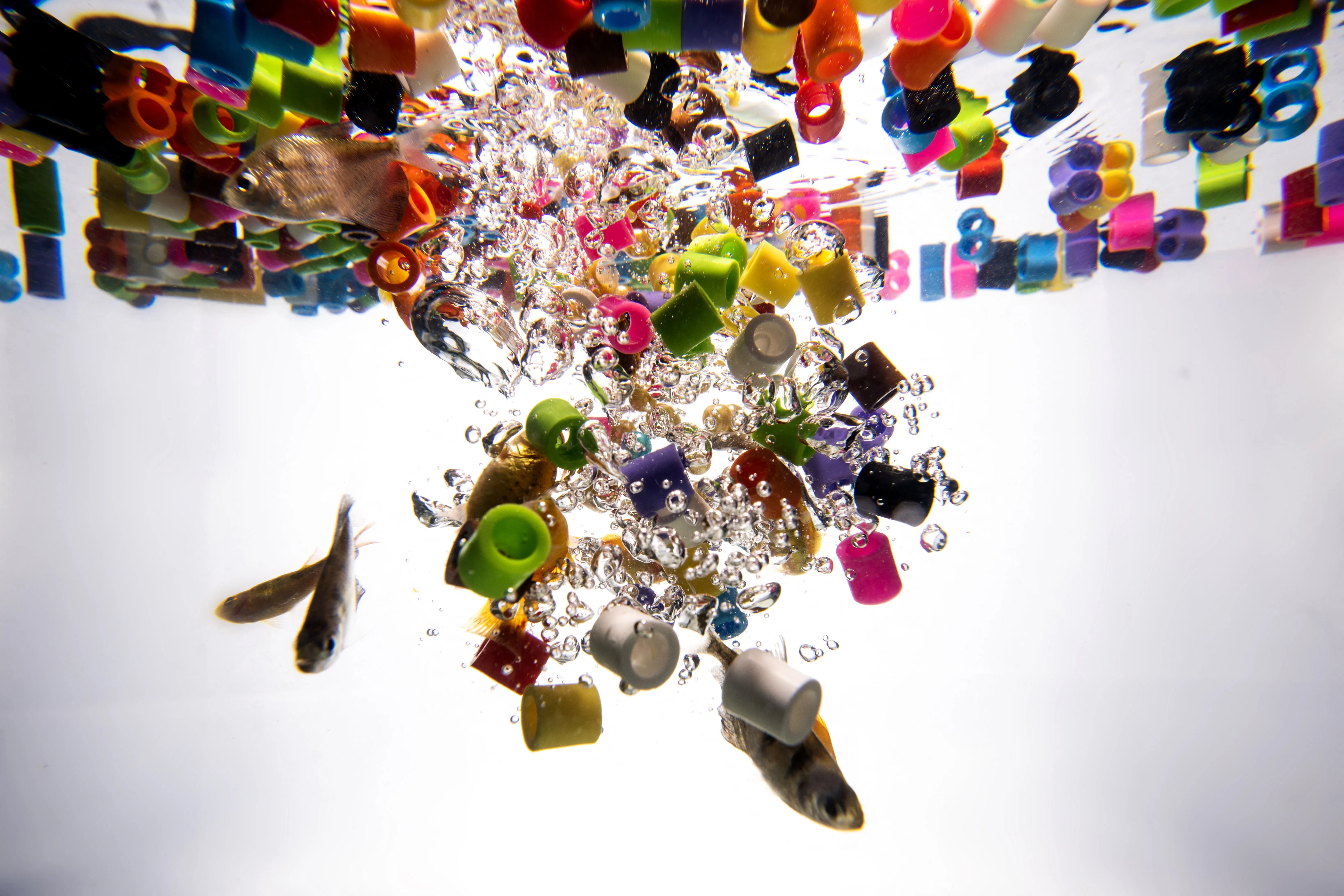
人们曾认为微塑料也是如此——这些从较大的塑料物品上脱落下来的微小碎屑,根据大量研究,已经蔓延到地球上的几乎每一个生态系统。但哥伦比亚大学和加州大学伯克利分校的科学家刚刚发现,水可以使微塑料表面具有化学活性,并将其变成潜在的危害。
The same was thought to be true of microplastics—those tiny pieces of debris that break off from larger plastic objects and which, according to numerous studies, have spread to virtually every ecosystem on the planet. But scientists at Columbia University and UC Berkeley have just discovered that water can make the surfaces of microplastics chemically active and turn them into a potential hazard.
根据发表在《自然》杂志上的文章的研究结果,这种活性可以触发化学物质的自发形成,这些化学物质能够改变其他分子,比如那些对生物体至关重要的分子。作者指出,这种现象甚至在正常的自然环境下也会发生,不需要阳光或其他导致塑料降解的因素。
According to the findings of the article published in Nature, this activity can trigger the spontaneous formation of chemicals capable of altering other molecules, like those that are essential for living organisms. The phenomenon, the authors note, occurs even under normal environmental conditions, without the need for sunlight or other agents that cause plastic degradation.
那么,为什么较大的塑料通常不具反应性,而微塑料却能如此具有反应性呢?科学家认为,这与发生这些反应时可利用的更大表面积有关。
So how can microplastics be so reactive when bigger plastics generally aren’t? The scientists suggest this has to do with the greater available surface area for these reactions to occur.
“随着塑料碎裂成越来越小的颗粒,其表面积会成倍增加,”哥伦比亚大学化学和生物医学工程教授魏敏(音)在一份新闻稿中说,“接着,微塑料会改变它们周围的水,产生高能、具反应性的自由基,这极有可能是微塑料暴露导致动物以及潜在人类生物损伤的原因。”在这些被称为活性氧的潜在危险化学产物中,一种被称为羟基自由基的物质尤为突出。
“As plastic fragments into smaller and smaller particles, its surface area increases enormously,” Wei Min, a professor of chemistry and biomedical engineering at Columbia University, said in a press release. “Then microplastics change the water that surrounds them, generating high-energy, reactive radicals that very likely contribute to biological damage that we see in animals and potentially in humans as a result of microplastic exposure.”Among these potentially dangerous chemical products—called reactive oxygen species—a variety known as hydroxyl radicals stands out.
它们之所以特别危险,是因为它们可以从构成细胞膜的蛋白质和脂肪中夺走电子,从而破坏其结构和功能。魏敏实验室的博士后研究员、该研究的共同负责人钱乃欣(音)补充说,这些“堪称能够破坏动物和人类组织分子的教科书级范例”。
They are particularly dangerous because they can snatch electrons from the proteins and fats that make up cell membranes, disrupting their structure and function. These “are textbook examples of the kinds of molecules that can damage animal and human tissue,” added Naixin Qian, a postdoctoral researcher in Min’s lab who helped lead the research.
我们的身体对这种损伤有一些防御机制。这就是那些备受关注的被称为抗氧化剂的分子的生物功能。它们可以中和具有反应性的化学物质,但如果反应性化合物的数量远远超过抗氧化剂,这条防线就会被压垮。
Our body has some defenses against this kind of damage. This is the biological function of the buzzy molecules known as antioxidants. These neutralize the reactive chemicals, but if the reactive compounds greatly outnumber antioxidants, this line of defense can be overwhelmed.
这种情况可能会发展成为一种被称为氧化应激的场景,从而导致细胞受损。先前的研究已经确定氧化应激是与微塑料暴露相关的细胞反应之一,尽管导致这种损伤的机制尚未完全弄清楚。
This can develop into a scenario called oxidative stress, leading to the damage of cells. Previous research had already identified oxidative stress among the cellular responses associated with exposure to microplastics, although the mechanisms responsible for this damage are not yet fully understood.
*微塑料渗透到我们体内的程度仍然是一个悬而未决的争议,一些更为轰动的发现受到了质疑。但即使我们的组织中存在少量的微塑料,它们也可能正在与我们体内的水发生反应。
The extent to which microplastics have pervaded our bodies remains an open debate, with some of the more sensational findings having been called into question. But if even a small amount of microplastics are present in our tissues, they could be reacting with the water in our bodies.
研究人员特别关注对血液的潜在影响,血液主要由水组成。如果与这种液体的接触能够在化学上激活微塑料的表面,那么它们在体内的存在可能会带来额外的危险,超越它们所携带或释放的污染物的危害。
The researchers were particularly concerned with the potential effects on blood, which is largely composed of water. If contact with this fluid can chemically activate the surfaces of microplastics, their presence inside the body could pose an additional danger beyond that of the pollutants they carry or release.
当研究人员将从小鼠身上提取的红细胞暴露于不同类型的微塑料时,细胞发生了变形和破裂——这种现象被称为溶血。塑料与水的反应性越强,其影响就越大,这表明这种活性是细胞受损的原因。
When the researchers exposed red blood cells extracted from mice to different types of microplastics, the cells became deformed and ruptured—a phenomenon known as hemolysis. The effects were greater with plastics that were more reactive with water, indicating that this activity was the cause of cellular damage.
长期以来,对微塑料影响的研究一直集中在从颗粒中浸出的其他化学物质或它们的物理影响上,通常认为塑料本身在化学上是惰性的。较大的塑料通常如此,但这些发现挑战了一种假设,即宏观塑料的特性同样适用于它分解出来的微观碎屑。
Research into the effects of microplastics has long focused on other chemicals leaching from the particles or on their physical effects, often considering the plastic itself chemically inert. The larger pieces generally are, but these findings challenge the assumption that what is true of plastic on a grand scale is also true of the microscopic pieces it breaks down into.
这篇报道最初发表在《连线》杂志西班牙语版(WIRED en Español),本文翻译自西班牙语。
This story originally appeared on WIRED en Español and has been translated from Spanish.