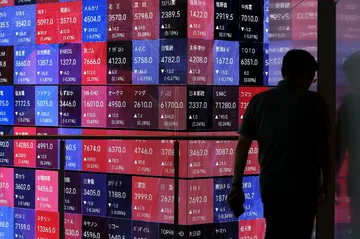
美国科技股的深度抛售正在暴露亚洲人工智能贸易中的一个新脆弱性:融资成本的上升可能会扼杀维持繁荣所需的支出,威胁到推动该地区股市上涨的供应链的盈利能力。
A deepening selloff in US technology stocks is exposing a new vulnerability in Asia’s artificial intelligence trade: mounting financing costs could choke off the spending needed to sustain the boom, threatening earnings across a supply chain that has powered the region’s stock-market rally.
作者:Abhishek Vishnoi、Charlotte Yang 和 Faseeh Mangi上周,随着油价自5月以来首次升至每桶110美元,引发通胀担忧,投资者将注意力转向用于建设人工智能基础设施的数万亿美元借款,压力进一步加剧。美国半导体股票连续八个交易日下跌——这是自2008年以来最长的一次下跌——使该行业基准指数下跌了大约16%,而纳斯达克100指数则遭遇了自2025年4月以来最糟糕的一周。
By Abhishek Vishnoi, Charlotte Yang and Faseeh Mangi The pressure intensified last week as oil surged to $110 a barrel for the first time since May, stoking inflation concerns, and investors turned their attention to the trillions of dollars being borrowed to build AI infrastructure. An eight-session rout in US semiconductor shares — the longest since 2008 — wiped roughly 16% off the sector’s benchmark, while the Nasdaq 100 suffered its worst week since April 2025.
对于亚洲而言,芯片制造商以及生产印刷电路板、精密部件和制造设备的硬件供应商一直是人工智能热潮的最大受益者之一,随着周一开盘的临近,其影响可能是重大的。
For Asia, where chipmakers and the hardware suppliers that make printed-circuit boards, precision components and manufacturing equipment have been among the biggest beneficiaries of the AI frenzy, the implications could be significant heading into Monday’s open.
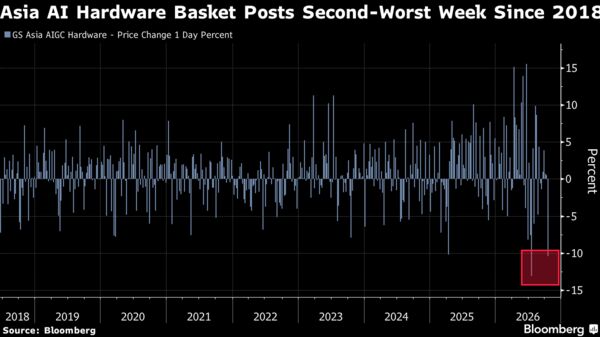
高盛集团旗下的一篮子地区人工智能硬件股票上周暴跌11%,为自7月中旬以来的最大跌幅。尽管台积电发布了乐观的收入展望,但抛售几乎没有减缓的迹象,这凸显了对人工智能支出的担忧正在硬件供应链中蔓延。
A Goldman Sachs Group Inc. basket of regional AI hardware stocks tumbled 11% last week, its steepest decline since mid-July. The selloff showed little sign of abating despite an upbeat revenue outlook from Taiwan Semiconductor Manufacturing Co., underscoring how concerns over AI spending are spreading across the hardware supply chain.
亚洲的一些表现突出的股票在这场风暴中受到的打击尤为严重。南亚塑料公司(Nan Ya Plastics Corp.)是印刷电路板材料的制造商,也是今年MSCI亚太指数表现最好的股票,其股价从历史高点下跌了12%。竞争对手联茂电子(Unimicron Technology Corp.)是该指数表现第二好的股票,一周内下跌了14%。而三星电机(Samsung Electro-Mechanics Co., Ltd.)生产各种电子元件,其股价暴跌了23%。
Some of Asia’s standout performers were hit particularly hard in the maelstrom. Nan Ya Plastics Corp., a maker of printed circuit board materials and the best-performing stock on the MSCI Asia-Pacific Index this year, tumbled 12% from a record high. Rival Unimicron Technology Corp., the index’s second-best performer, fell 14% in a week, while Samsung Electro-Mechanics Co., which makes an array of electronic components, plunged 23%.
“融资成本就像AI热潮的重力,”苏黎世GAM投资管理公司基金经理Jian Shi Cortesi表示。“借贷成本上升可能使基础设施项目更难以融资并推迟支出。即使只是延迟,也可能触发亚洲供应商盈利预期和估值的重新调整。”人们的担忧不再仅仅是AI芯片需求能否保持稳固,而是超大规模云服务商和新兴云运营商是否能继续为部署这些芯片所需的基础设施提供融资——以及预期回报是否能证明如此规模的投资是合理的。
“Financing costs are like gravity for the AI boom,” said Jian Shi Cortesi, a fund manager at GAM Investment Management in Zurich. “Rising borrowing costs could make infrastructure projects harder to finance and delay spending. Even a delay could trigger a reset in Asian suppliers’ earnings expectations and valuations.”The concern is no longer just whether demand for AI chips will hold up. It’s whether hyperscalers and neocloud operators can keep financing the infrastructure needed to deploy them — and whether the expected returns will justify the scale of investment.
上周,新兴云服务提供商CoreWeave Inc.的债券跌至暗示财务困境的水平,因为投资者开始质疑其AI需求和收入是否能够支撑其扩张背后的借贷。其股价周五下跌12%,导致该股票自11月以来表现最差的一周,累计下跌25%。此事使AI热潮的融资风险更加凸显,而油价飙升又加剧了人们对通胀可能维持高位借贷成本的担忧。
Bonds of neocloud provider CoreWeave Inc. sank to levels signaling distress last week as investors questioned whether AI demand and revenue could support the borrowing behind its expansion. Its shares slumped 12% on Friday, resulting in the stock’s worst week since November with a 25% drop. The episode brought the financing risks of the boom into sharper focus, with surging oil prices adding to worries that inflation could keep borrowing costs elevated.
虽然台积电、SK海力士公司和三星电子公司提供AI计算所需的芯片和内存,但它们的盈利最终仍取决于对使用这些产品的基础设施的持续投资。零部件制造商和设备供应商面临着相同的根本风险,尽管他们可能对各个项目的时间安排了解较少。
While TSMC, SK Hynix Inc. and Samsung Electronics Co. supply the chips and memory needed for AI computing, their earnings ultimately depend on continued investment in the infrastructure that uses those products. Component makers and equipment suppliers face the same underlying risk, potentially with less visibility into the timing of individual projects.
“AI融资压力对下游受益者来说比对核心计算生态系统构成更大的挑战,”巴黎富达凯雷投资公司投资组合经理Kevin Net表示。“基本上,你离实际芯片越远,看到时间延迟的风险就越大。”关于融资风险的警告已经来自行业高管,包括博通公司首席执行官黄宏扬(Hock Tan),他表示资本,而非内存芯片短缺或制造产能不足,将成为AI增长的最大限制因素。
“AI funding stress is a bigger challenge for downstream beneficiaries than for the core compute ecosystem,” said Kevin Net, portfolio manager at Financiere de l’Echiquier in Paris. “Basically, the further away you get from the actual chip, the greater the risk you might see timing delays.”Warnings about funding risks have come from industry executives, including Broadcom Inc. Chief Executive Officer Hock Tan, who said capital, rather than shortages of memory chips or manufacturing capacity, would become the biggest constraint on AI growth.
高盛公司警告称,到2030年,超过3.5万亿美元的人工智能基础设施支出可能面临减值风险,因为投资可能超过为其提供正当性所需的收入。
Gartner Inc. has warned that more than $3.5 trillion of AI infrastructure spending could be at risk of impairment by 2030 as investment threatens to outpace the revenue needed to justify it.
“如果超大规模云服务商和新兴云服务提供商无法为其数据中心投资提供资金,这将转化为对台积电、三星和SK海力士等亚洲使能者订单的减少,”瑞士私人银行联合银行(Union Bancaire Privee)董事总经理Vey-Sern Ling表示。“鉴于市场如此紧张,这种传导效应对半导体‘铲子和镐’类股将非常负面。”亚洲股票面临的风险尤为突出,因为人工智能基础设施建设已成为该地区的主导投资主题。
“If hyperscalers and neoclouds cannot fund their datacenter investments, that would translate into lower orders for Asia enablers like TSMC, Samsung and SK Hynix,” said Vey-Sern Ling, managing director at Union Bancaire Privee. “Given how jittery the market is, the read-through would be very negative for the semi picks and shovels.”The stakes are particularly high for Asian equities, where the AI buildout has become a dominant investment theme.
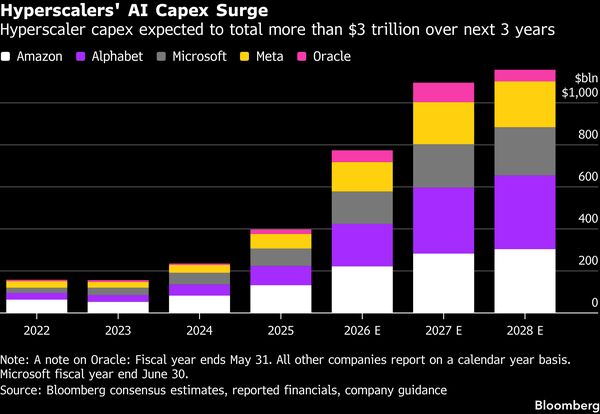
根据彭博社编制的数据,台积电、三星和SK海力士三家公司合计占MSCI亚洲除日本指数的近三分之一,以及该指数提供商更广泛的亚洲指数的约五分之一,而它们的供应商进一步增加了该地区对同一支出周期的敞口。
TSMC, Samsung and SK Hynix together account for nearly a third of the MSCI Asia ex-Japan Index and about a fifth of the index provider’s broader Asian gauge, with their suppliers adding to the region’s exposure to the same spending cycle, according to data compiled by Bloomberg.
今年MSCI亚太指数表现最好的10家公司中有8家是零部件制造商,每家的涨幅均达到至少236%。这些涨幅使得盈利预期和估值在支出增长放缓或项目被推迟时变得脆弱。
Eight of the 10 best-performing companies in the MSCI Asia-Pacific Index this year are component makers, each having gained at least 236%. Those gains leave earnings expectations and valuations vulnerable if spending growth slows or projects are pushed back.
然而,目前几乎没有证据表明融资压力已经转化为订单疲软,且一些投资者仍然相信强劲的需求将支撑该行业。
Still, there is little evidence so far that financing strains have translated into weaker orders, and some investors remain confident that robust demand will sustain the sector.
“我们不担心正在进行的芯片抛售,”伦敦联合赫尔墨斯有限公司(Federated Hermes Ltd.)全球新兴市场主管Kunjal Gala表示,“因为人工智能的需求仍然强劲。”Gala管理的基金对韩国持超配仓位,并持有台积电股份。
“We are not worried about the ongoing chip selloff,” as demand for AI remains strong, said Kunjal Gala, head of global emerging markets at Federated Hermes Ltd. in London. Gala’s fund is overweight on Korea and owns TSMC shares.