上海:随着中国经济仍在努力从疫情中复苏,即使是全球时尚偶像也开始感受到压力,因为消费者转而选择二手市场或购买新兴的国产品牌。
SHANGHAI: With China's economy still struggling to recover from the pandemic, even global fashion icons are beginning to feel the pinch as consumers turn instead to the secondhand market or buy upstart new homegrown brands.
中国曾是西方奢侈品牌的大买家,占全球奢侈品消费的约三分之一,为LVMH和爱马仕等公司带来数十亿美元的收入。
Chinese were once massive buyers of luxury Western brands, accounting for around a third of worldwide spending and earning firms such as LVMH and Hermes billions of dollars.
但消费者的紧缩开支迫使他们重新思考策略,路易威登在过去两年内在中国大陆关闭了五家门店——包括上海的一家巧克力精品店——而百货公司Galeries Lafayette则在5月关闭了其北京旗舰店。
But consumers' belt-tightening has forced them to rethink their strategies, with Louis Vuitton closing five stores in mainland China in the past two years - including a chocolate boutique in Shanghai - while Galeries Lafayette shut its Beijing flagship in May.
“以前人们总是比较谁花得更多,”舞蹈老师袁在接受法新社采访时说,她位于上海市中心的一个新零售空间内,陈列着各种二手奢侈手袋、皮带和珠宝。
"People used to compare who had spent more," dance teacher Yuan told AFP at a new retail space in central Shanghai filled with luxury handbags, belts and jewellery items - all second hand.
“现在大家比较的是谁买得更划算、花得更少,”这位24岁的袁在上海金融中心的一家两层仓库风格的店铺里说道。
"But now everyone compares who got a better deal and spent less," the 24-year-old said at the two-storey warehouse-style store in the centre of the Chinese financial hub.
据咨询公司贝恩公司(Bain & Company)报告,2024年中国内陆个人奢侈品市场曾下跌多达19%,2025年进一步收缩了3%至5%。
After plunging as much as 19 per cent in 2024, mainland China's personal luxury market contracted another 3 per cent to 5 per cent in 2025, according to consultancy Bain & Company.
LVMH最近将其时尚和皮革制品部门第三季度有机销售下滑归因于“中国需求放缓”,这一趋势预计将在其竞争对手的业绩中得到呼应。
LVMH recently blamed a "slowdown in demand in China" for a drop in organic sales in the third quarter in its fashion and leather goods unit, a slump expected to be mirrored in its peers' results.
与此同时,贝恩公司报告称,中国二手奢侈品市场在2025年增长了15%至20%。
China's secondhand luxury market meanwhile exploded 15 per cent to 20 per cent in 2025, according to Bain & Company.
国内行业咨询机构洞察与信息咨询(Insight & Info Consulting)估计,2025年该市场总销售额达到384亿元人民币(约57亿美元),并预测到2030年有望突破1000亿元人民币。
And domestic industry consultancy Insight & Info Consulting estimates total sales reached 38.4 billion yuan ($US5.7 billion) in 2025, while forecasting it could top 100 billion yuan by 2030.
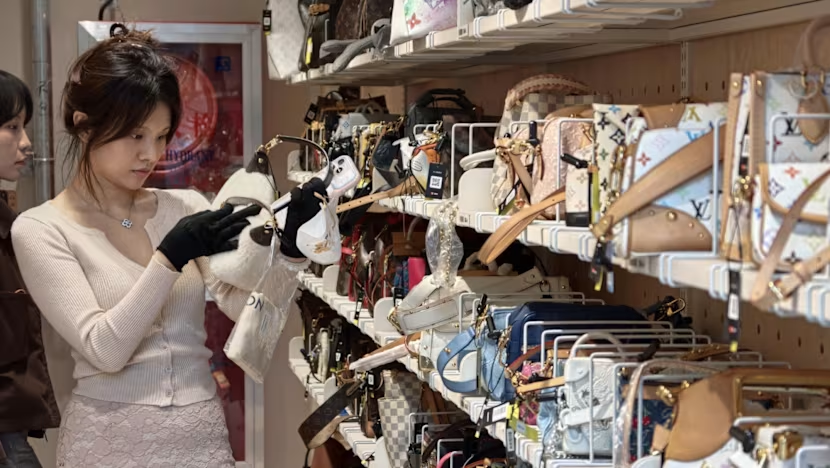
在上海的新店“超级转转”,购物者需要佩戴黑色手套,以避免油腻的手指直接接触商品。
At the new Shanghai store Super Zhuanzhuan, shoppers have to wear black gloves to avoid their greasy fingers touching the products.
客户 Phoebe Ma,24岁,表示,当她母亲那一代人年轻时,中国“还不够发达”,人们最初只熟悉少数几个奢侈品牌。
Customer Phoebe Ma, 24, said that when her mother's generation was young, China "wasn't so developed" and people were initially familiar with only a handful of luxury brands.
“因此,他们形成了根深蒂固的印象,认为路易威登就是绝对最好的、最有声望的品牌,”这位自由职业者对法新社表示。
"Consequently, they formed a deep-seated impression that, okay, Louis Vuitton was the absolute best and most prestigious," the freelancer told AFP.
“我只是觉得路易威登的Logo有点过时了。它适合我母亲那一代人,但Z世代更倾向于购买时尚的韩国品牌,”她说。“努力工作以保持相关性”美国银行中国消费者研究主管陈洛表示,消费者正在摆脱将奢侈品仅仅与社会地位挂钩的观念,转向“自我身份、区分度、体验、质量、情感价值(以及)文化相关性”。
"I just feel that the (LV) monogram is dated. It suits my mother's generation, but Gen Z would rather buy trendy Korean brands," she said. "WORK HARD TO STAY RELEVANT" Chen Luo, head of China consumer research at Bank of America, said shoppers were moving away from associating luxury solely with social status and towards "self-identity, distinction, experience, quality, emotional value (and) cultural relevance".
“除此之外,中国的零售格局高度依赖数字化和社交媒体,而且中国的数字生态系统也非常独特,”洛对法新社表示。“外国品牌在这种情况下应该非常努力地保持相关性。”西方品牌面临的逆风还因文化和法律摩擦的加剧而雪上加霜。
"Apart from that, China's retail landscape is very digital/social media driven, and China's digital ecosystem is also very unique," Luo told AFP. "Foreign brands should work very hard to stay relevant in this context." Adding to the headwinds for Western brands is growing cultural and legal friction.
LVMH最近成功起诉中国饮品连锁店茶颜悦色(Molly Tea)侵犯商标权,原因是其四瓣花卉图案与法国公司的Logo相似。
LVMH recently successfully sued Chinese beverage chain Molly Tea for trademark infringement over a four-petal floral pattern resembling the French firm's monogram.
但该诉讼引发了网络反弹,因为中国网民和官方媒体指出,该图案与中国古代传统纹样有渊源。
But the lawsuit sparked an online backlash after Chinese internet users and state media pointed out that the motif shares roots with ancient Chinese traditional patterns.
“这有点荒唐,”31岁、从事市场营销工作的购物者Echo Wang说。
"It feels a bit absurd," said shopper Echo Wang, 31, who works in marketing.
“茶颜悦色在中国可能经营得不错,但它离路易威登的全球影响力还很远……我认为有些人觉得这起诉讼不合适,”她对法新社表示。
"Molly Tea may be doing well in China, but it's nowhere near Louis Vuitton's global profile ... I think some people feel the lawsuit was inappropriate," she told AFP.
LVMH管理层称其知识产权是“绝对关键资产”,但承认此次争议“产生了负面影响”。分析人士强调,中国对全球奢侈品行业仍然至关重要。
LVMH management called its intellectual property "an absolute key asset", but admitted the furore had "had a negative impact". Analysts emphasise that China remains vital for the global luxury industry.
“我们认为,中国仍将是一个重要市场,尽管它可能在两到三年内不再是增长引擎,”洛说。
"In our view, China will still be an important market, although it may not be a growth engine in two to three years," said Luo.
奢侈品消费通常会随着经济复苏而同步回暖,因为富裕阶层往往是最早从经济复苏中受益的群体。
"Luxury spending is normally rebounding in sync with the economy, as usually the wealthy class will be among the first to benefit from economic recovery."