拉比埃利·阿巴迪(Elie Abadie)在50多年前离开黎巴嫩,但仍与黎巴嫩根源保持着深厚的联系。
Rabbi Elie Abadie, who left Lebanon over 50 years ago, remains deeply connected to his Lebanese roots.
巴塞姆·穆鲁埃(Bassem Mroué)西顿,黎巴嫩 — — 拉比埃利·阿巴迪在五十多年前离开了他的祖国黎巴嫩,此后甚至没有回访过,但他的黎巴嫩根源仍然是他身份的重要组成部分。
BASSEM MROUE SIDON, Lebanon — Rabbi Elie Abadie left his native Lebanon more than five decades ago and has not even visited since, but his Lebanese roots remain an integral part of his identity.
他的智能手机里存有3000首阿拉伯歌曲。他的妻子是美国人,曾向他的母亲学习如何烹饪他喜爱的黎巴嫩菜肴。当他与兄弟姐妹交谈时,他使用阿拉伯语和法语的混合语言,就像黎巴嫩许多公民一样,黎巴嫩曾是法国的保护国。
He has 3,000 Arabic songs on his smart phone. His wife, an American, learned from his mother how to cook the Lebanese dishes he loves. When he speaks with his siblings, he uses a mixture of Arabic and French, like many citizens of Lebanon, a former French protectorate.
曾经繁荣的黎巴嫩犹太社区在大多数成员离开该国后的数十年里被 largely 被遗忘。但最新的以色列-真主党战争 — — 迫使黎巴嫩和以色列进入直接谈判 — — 又把他们推回了聚光灯下。
The once-thriving Lebanese Jewish community has been largely forgotten in the decades since most of them left the country. But the latest Israel-Hezbollah war — which pushed Lebanon and Israel into direct negotiations — has brought them under the spotlight again.
上个月,以色列同意释放被以色列军队在黎巴嫩南部拘留的五名平民,以换取黎巴嫩协助寻找在1980年代黎巴嫩内战期间被绑架并杀害的黎巴嫩犹太领袖的遗体。
Last month, Israel agreed to release five civilians detained by Israeli forces in southern Lebanon in exchange for Lebanon’s help in searching for the bodies of Lebanese Jewish leaders abducted and killed in the 1980s, during Lebanon’s civil war.
这一消息唤起了像阿巴迪这样黎巴嫩犹太人的痛苦回忆,他今年65岁,出生并成长于贝鲁特,父母是从叙利亚迁移到黎巴嫩的。阿巴迪在10岁时离开了出生的国家,在墨西哥定居了一些年。如今他居住在迪拜,担任阿拉伯联合酋长国和海湾国家的拉比荣誉长老。
The news stirred painful memories for Lebanese Jews like Abadie, 65, who was born and raised in Beirut to parents who moved to Lebanon from Syria Abadie left his country of birth at 10 and settled for some years in Mexico. He is now based in Dubai, serving as the senior rabbi emeritus of the United Arab Emirates and the Gulf states.
他记得自己在1960年代童年时期的黎巴嫩是“最美好的日子”,有“美丽的海滩和里维埃拉、山地度假胜地、滑雪胜地”。他的家庭,就像许多黎巴嫩犹太人一样,在1967年以色列与阿拉伯国家战争后,由于反犹太情绪上升而离开了黎巴嫩。安全顾虑一直让他无法返回,但阿巴迪希望有一天能够回来,重新开放贝鲁特长期关闭的中央犹太会堂。
He remembers the Lebanon of his childhood in the 1960s in its “best days” with “beautiful beaches and rivieras, mountain resorts, skiing resorts.”His family, like many Lebanese Jews, left as anti-Jewish sentiment rose after the 1967 war between Israel and Arab countries. Security fears have kept him away since, but Abadie hopes to come back one day to reopen Beirut’s long-shuttered central synagogue.
“遗憾的是,自黎巴嫩与犹太人建立友好关系(这一历史可追溯到所罗门王和推罗国王希兰的时代,距今已有3000多年)以来,过去50年里黎巴嫩的犹太人口及犹太人的生活状况急剧恶化,”他说。
“It is unfortunately a sad reality that, since Lebanon and the Jews go back over 3,000 years from the time of King Solomon and King Hiram of Tyre and their peaceful and friendly relations, the situation in the last 50 years marked such a decline in Jewish population and life in Lebanon,” he said.
纳达·阿卜杜勒-萨马德(Nada Abdelsamad)是一位黎巴嫩记者,她曾撰写过两本关于黎巴嫩犹太社区的书籍。她指出,该国曾经有1.8万至2万名犹太人,其中许多人居住在贝鲁特中部的瓦迪阿布杰米尔(Wadi Abu Jmil)地区,该地区因此被称为“犹太人的山谷”。
A once-thriving community has scattered Nada Abdelsamad, a Lebanese journalist who wrote two books about Lebanon’s Jewish community, said the country once had between 18,000 and 20,000 Jews, many of them living in the central Beirut district of Wadi Abu Jmil, which was nicknamed the Valley of the Jews.
1948年以色列建国前夕的战争结束后,许多犹太人从叙利亚和伊拉克等阿拉伯国家逃离,因为他们在这些国家面临日益严重的歧视甚至暴力威胁,转而来到黎巴嫩这个宗教多元化的国家寻求庇护。其中一些人后来被偷运到了以色列,但仍有许多人选择留在黎巴嫩。
After the war surrounding the creation of Israel in 1948, many Jews fled other Arab countries like Syria and Iraq, where they faced increasing discrimination and sometimes violence, and came to Lebanon, a religiously diverse country where they felt safer. Some were then smuggled into Israel, but many stayed in Lebanon.
然而,1967年的战争改变了这一切:以色列从埃及手中夺取了西奈半岛,从叙利亚手中夺取了戈兰高地以及东耶路撒冷、约旦河西岸和加沙地带。这场战争使黎巴嫩社会出现了严重的分裂——一方支持西方,另一方则支持巴勒斯坦武装组织以及埃及领导人贾迈勒·阿卜杜勒-纳赛尔(Gamal Abdul-Nasser)。
That changed after the 1967 war in which Israel captured the Sinai Peninsula from Egypt and the Golan Heights from Syria in addition to east Jerusalem, the West Bank and the Gaza Strip. Lebanon was polarized between pro-West groups and others that supported Palestinian factions and Egyptian leader Gamal Abdul-Nasser.
1969年,黎巴嫩与巴勒斯坦武装组织签署了《开罗协议》,允许巴勒斯坦武装组织在黎巴嫩自由活动。阿卜杜勒-萨马德回忆道:“从那天起,黎巴嫩的犹太社区感到极度不安和恐惧。我们开始在街头看到游行和抗议活动,人们高喊‘以色列和犹太人该死!’”他的家人最终选择了离开黎巴嫩。
In 1969, Lebanon and Palestinian factions signed the Cairo Agreement, allowing the Palestinian groups to operate freely in Lebanon. “From that day on, the Jewish community in Lebanon felt very insecure and threatened,” recalls Abadie. “We started seeing marches and protests in the streets of Lebanon, chanting, ‘Death to Israel and to the Jews.’”
1975年黎巴嫩内战爆发后,局势进一步恶化。武装组织频繁实施绑架行为,黎巴嫩日益萎缩的犹太社区中的知名人士纷纷遭到绑架。一个自称“地球上的受压迫者组织”(Organization of the Oppressed on Earth)的团体被指幕后策划了这些绑架事件,据信该组织与真主党(Hezbollah)有关联。
His family left. The situation deteriorated further after the outbreak of the Lebanese civil war in 1975 With kidnappings by armed groups rampant, prominent figures from Lebanon’s dwindling Jewish community were taken by force from their homes, work or the streets.
自内战结束以来,仍有17,000人下落不明,其中包括一些前犹太领导人。据《犹太电讯社》报道,在这17,000名失踪的黎巴嫩人中,至少有7名是犹太人;他们的下落至今仍未查明,尽管内战已经结束了几十年。
An organization calling itself the Organization of the Oppressed on Earth — believed to be linked to Hezbollah — was blamed. Former Jewish leaders are among 17,000 missing since the civil war ended At least seven Jews are among the 17,000 missing Lebanese people whose fate remains unknown decades after the 15-year war ended, according to the Jewish Telegraphic Agency.
《犹太电讯社》指出,这些失踪的犹太人包括:时任黎巴嫩犹太社区主席的伊萨克·萨松(Isaac Sasson)、在贝鲁特诊所为各宗教信仰的人提供医疗服务的埃利·哈拉克(Elie Hallak)医生,以及犹太社区的前秘书长萨利姆·贾穆斯(Salim Jamous)。另有几名失踪者的死亡已被确认,他们的遗体也在当时被找到。
The Jewish news agency says they include Isac Sasson, then-president of Lebanon’s Jewish community; doctor Elie Hallak, known for treating people from all religious sects at his Beirut clinic; and Salim Jamous, the Jewish community’s former secretary general. Several others were confirmed killed and their bodies recovered at the time.
黎巴嫩官方尚未宣布在寻找这些失踪犹太人下落方面有任何进展。如果他们的遗体被找到,目前尚不清楚该如何处理。
Lebanese officials have not announced any breakthrough in discovering the fate of the missing Jews. It’s not clear what will be done with their remains if they are found.
“归根结底,这些人都是黎巴嫩公民;如果他们希望将遗体移出国外,必须遵循相关法律程序,”代表黎巴嫩犹太社区的律师巴塞姆·埃尔·胡特(Bassem El Hout)表示。
“In the end these are Lebanese citizens, and there is a legal process if they want to move them outside the country,” said Bassem El Hout, an attorney representing Lebanon’s Jewish community.
当被问及以色列对这批失踪的黎巴嫩犹太人的态度时,本雅明·内塔尼亚胡总理办公室的发言人多伦·斯皮尔曼(Doron Spielman)回答说:“作为犹太民族的民族国家,以色列对全世界犹太人负有深远而持久的责任——这种责任不仅限于以色列境内,也不会因他们的死亡而终止。”尽管犹太教仍是黎巴嫩官方承认的18个宗教派别之一,但如今只剩下极少数犹太人。埃尔·胡特表示,目前没有人知道确切的犹太人口数量;阿巴迪(Abadie)估计全国仅剩下约20名犹太人。
Asked about Israel’s interest in the disappeared Lebanese Jews, Doron Spielman, a spokesperson for Prime Minister Benjamin Netanyahu’s office, said, “Israel, as the nation-state of the Jewish people, has a profound and enduring responsibility to Jews throughout the world” which “does not end at Israel’s borders, nor does it end with death.”A small community remains Judaism is still one of Lebanon’s 18 officially-recognized religious sects, but only a handful of Jews remain. El Hout said no one knows the exact number. Abadie estimated that about 20 Jews are scattered across the country.
“他们中没有人公开表明自己的犹太身份,除非是对亲密的朋友或邻居。”他说。
“Not all of them profess publicly about their Jewish religion, except for maybe to close friends and neighbors,” he said.
在黎巴嫩公民的选民名单中,贝鲁特仍有约4,000名犹太人登记在册,南部港口城市西顿约有1,000名犹太人,但许多人可能已经移居国外。
On voting lists of Lebanese citizens, about 4,000 Jews are still listed in Beirut and about 1,000 in the southern port city of Sidon, but many are likely living abroad.
埃尔·胡特指出,黎巴嫩目前还剩下5座犹太教堂,其中最古老的一座位于西顿。
El Hout said there are five remaining synagogues in Lebanon, the oldest of which is in Sidon.
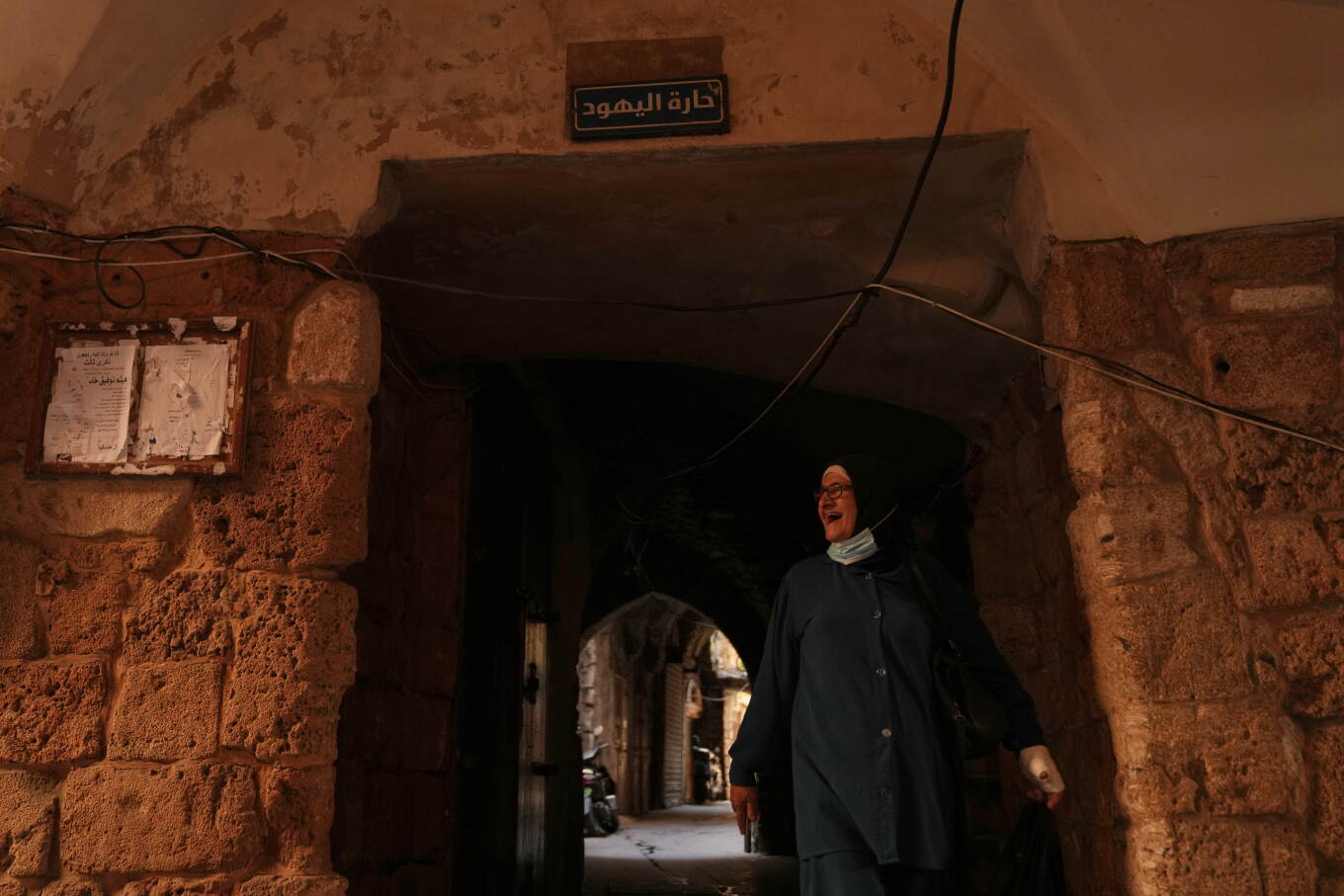
在西顿老城的狭窄小巷中,仍然矗立着一块写着“犹太区”的标志;不过当地的犹太会堂以及一些犹太人拥有的房屋早已关闭、无人居住。
A sign reading “the Jewish quarter” still stands in the narrow alleyways of Sidon’s old quarter, where the synagogue and some Jewish-owned homes are shuttered.
塔莱布·卡拉·艾哈迈德(Taleb Kara Ahmed)撰写过多本关于该市犹太社区的书籍,他提到:在1982年以色列入侵黎巴嫩之前,许多犹太人离开了西顿。他补充说,当以色列军队于1985年从西顿撤出时,最后的犹太人也离开了这座城市,并带走了犹太会堂里的《托拉》经文副本。
Taleb Kara Ahmed, who wrote several books about the city’s Jewish community, said many left to Latin America before Israel’s 1982 invasion of Lebanon. When Israeli troops withdrew from Sidon in 1985, the last Jews left with them, taking copies of the Torah from the city’s synagogue, he said.
目前黎巴嫩犹太社区的领袖萨莫·贝哈尔(Samo Behar)拒绝接受采访,也不允许美联社进入那座已有百年历史的马根·亚伯拉罕犹太会堂(Maghen Abraham Synagogue)进行拍摄。这座会堂在内战期间遭到破坏,大约二十年前才得以修复。
The current head of Lebanon’s Jewish community, Samo Behar, declined to be interviewed or to give The Associated Press permission to film inside the shuttered century-old Maghen Abraham Synagogue in Beirut, which was damaged during the civil war and renovated nearly two decades ago. History left people with complicated identities Dany Liniado left months after the outbreak of the civil war in 1975.
1975年内战爆发后,丹妮·利尼亚多(Dany Liniado)的身份变得十分复杂:她辗转生活在多个国家,最终定居在墨西哥(那里有大量的黎巴嫩犹太人)。许多黎巴嫩犹太人也移民到了美国、法国和巴西,当然还有以色列。
She moved through several countries, including Israel, eventually settling in Mexico, which has a significant Lebanese Jewish diaspora. Many Lebanese Jews settled in the U.S., France and Brazil, as well as in Israel.
她离开黎巴嫩两个月后,她的父亲在贝鲁特被武装分子拘留并遭到殴打;那些武装分子称他为“以色列特工”。后来,一位黎巴嫩政界要人出面干预,才使她的父亲获释,并建议他离开该国。
Two months after she left Lebanon, her father was detained in Beirut and beaten by gunmen who referred to him as “an Israeli agent,” before a prominent Lebanese politician secured his release and advised him to leave the country.
“当他来到米兰与我团聚时,他已经完全变了一个人,”利尼亚多说道。
“When he reached me in Milan, he was not the same person,” Liniado said.
她没有回国的打算,甚至连探望的念头也没有。“对我来说,一切都太晚了,”她说。
She has no plans to return, even to visit. “For me, it’s too late,” she said.
她仍然会烹饪黎巴嫩菜肴、聆听黎巴嫩音乐,并为自己的“黎巴嫩血统”感到自豪。然而如今,她的身份变得十分复杂:她曾在以色列生活过六年,也认同自己是以色列人。尽管两国政府最近进行了谈判,但两国之间仍处于正式的战争状态。
She cooks Lebanese dishes, listens to Lebanese songs and is proud of her “Lebanese DNA.”But now her identity is complicated. She lived in Israel for six years and also identifies as Israeli. Despite recent negotiations between their governments, the two countries remain officially at war.
“我是一名黎巴嫩犹太人,但如今我可以是任何人——以色列人、法国人,甚至是墨西哥人。你知道吗?我是一个‘世界公民’,”利尼亚多从墨西哥城通过电话说道,“我是一个‘世界范围内的犹太公民’。”
“I am a Lebanese Jew but now I am everything. I can be Israeli, I can be French, I can be Mexican. You know what, I am a citizen of the world,” Liniado said by telephone from Mexico City. “I’m a Jewish citizen of the world.”