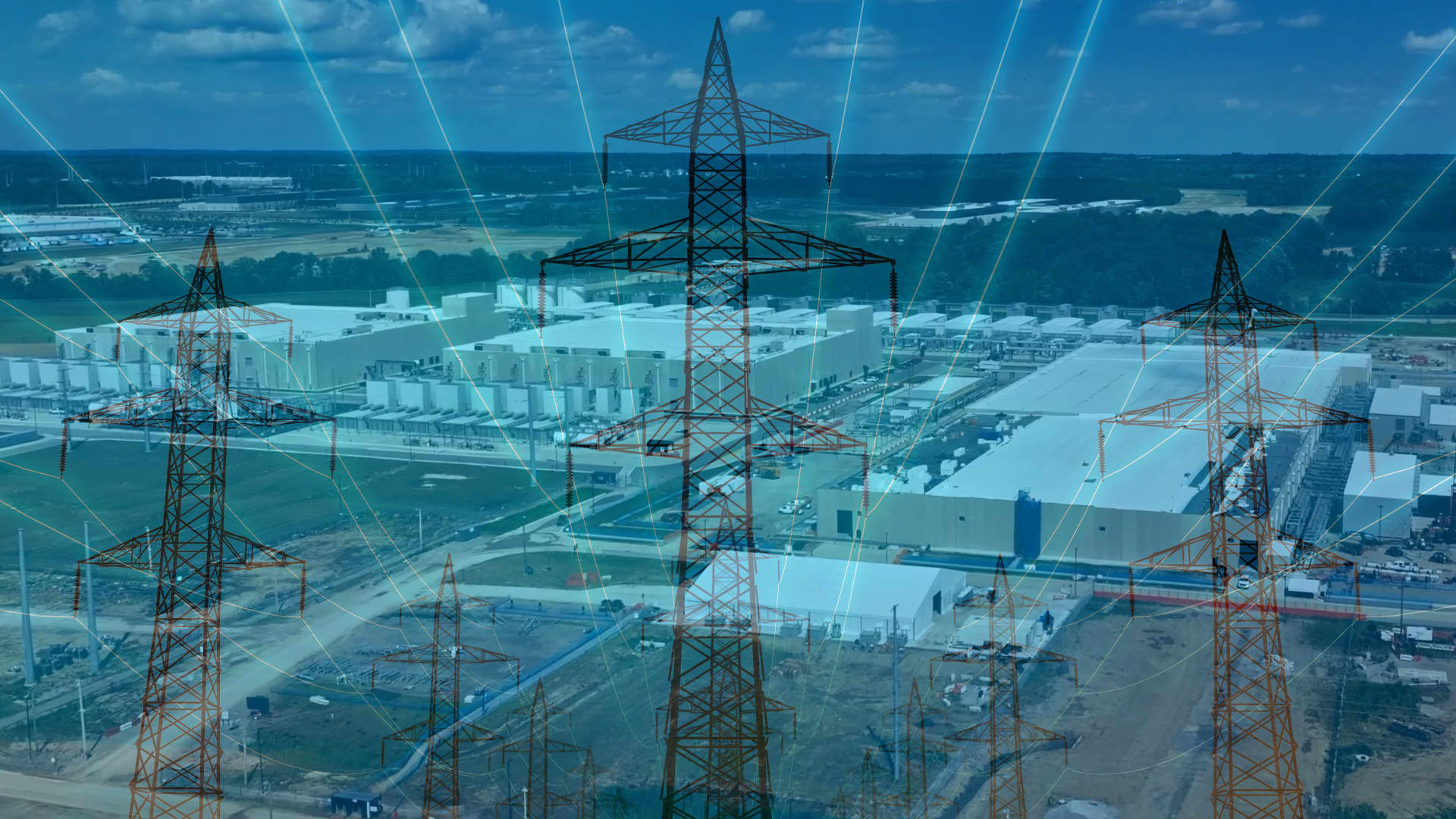
如果有一件事大多数美国人能够达成一致,那就是他们不希望在自家后院建设数据中心。
If there's one thing most Americans can agree on, it's that they don't want a data center in their backyard.
盖洛普公司在3月进行的一项调查显示,71%的美国人反对在其所在地区建设数据中心。他们最主要的担忧是能源使用。
A Gallup survey conducted in March found that 71% of Americans opposed the construction of a data center in their local area. Chief among their concerns: energy usage.
皮尤研究中心在7月和8月进行的调查显示,受访的一半美国人认为数据中心对环境和家庭能源成本主要是不利的。
Half of Americans surveyed by Pew Research Center in July and August said data centers would be mostly bad for the environment and for household energy costs.
如今,谷歌正押注:一个规模庞大的人工智能数据中心可以帮助为更清洁、更可靠的电网融资。其与Xcel能源公司提出的协议将增加比数据中心预计使用量更多的风能、太阳能和储能容量。
Now Google is betting that a massive AI data center can help finance a cleaner, more reliable power grid. Its proposed deal with Xcel Energy would add more wind, solar and battery capacity than the data center is expected to use.
根据该协议,谷歌将帮助支付新增容量的费用,并且即使未使用全部电力也将继续付款。
Under the agreement, Google would help pay for the added capacity and continue paying, even if it doesn't use all of the power.
谷歌押注人工智能可以为更清洁的电网融资。明尼苏达州的派恩岛是一个位于明尼阿波利斯东南约一小时车程、人口约4000人的小镇。谷歌希望其新建的780兆瓦数据中心计划能够赢得派恩岛社区的好感,并使公司保持在实现其目标的轨道上——即到2030年实现每天24小时、每周7天全天候使用无碳能源运营。谷歌——其云业务为其自身的Gemini人工智能提供动力,并在第二季度实现近250亿美元的收入,较去年同期增长82%——表示,它已经找到了以正确方式实现这一目标的模式。该公司计划为Xcel的电网融资,新增1400兆瓦风能、200兆瓦太阳能和300兆瓦储能容量。
Google's bet that AI can finance a cleaner grid Pine Island, Minnesota, is a small town of about 4,000 residents an hour southeast of Minneapolis. Google hopes that its new 780-megawatt data center plan will build goodwill with the Pine Island community and keep the company on track to meet its goal of operating on carbon-free energy, 24 hours a day, seven days a week by 2030 Google — whose cloud business powers its own Gemini AI and brought in nearly $25 billion in second-quarter revenue, an 82% increase from a year earlier — says it has found a model for doing this the right way. The company plans to finance the addition of 1,400 megawatts of wind, 200 megawatts of solar and 300 megawatts of battery storage to Xcel's grid.
这些新增容量总和超过数据中心自身的容量,谷歌表示这是因为风能和太阳能并非始终都能发电。Xcel能源公司表示,新增电力将服务于当地所有客户,而不仅仅是谷歌。Xcel还表示,这些升级将有助于推动当地电网的无碳能源供应。
Those additions amount to more than the capacity of the data center itself, which Google said is because wind and solar do not generate energy at all times. Xcel Energy said the new power will serve all customers in the local area, not just Google. Xcel also said the upgrades will help advance the local grid's carbon-free energy supply.
谷歌与Xcel能源公司的拟议协议包括最低需求费用和退出费用,谷歌表示,即使人工智能热潮降温,这些费用也将使公司对其代表所建设的基础设施承担责任。即使谷歌实际使用的容量较少,它仍需为其合同容量的至少75%付费,若提前终止协议,可能需要支付相当于八年最低需求费用的费用。
The proposed agreement between Google and Xcel includes minimum demand charges and exit fees, which Google says will keep the company on the hook for the infrastructure being built on its behalf, even if the AI boom cools. Google will pay for at least 75% of its contracted capacity, even if it uses less, and would owe up to eight years' worth of those minimum demand charges if it terminates the agreement early.
“没人希望看到大规模建设之后,却没有地方用这些电力,也没有人为这些电力买单,”Xcel能源公司执行副总裁兼首席客户官阿曼达·罗姆说。“这就是这些保障措施发挥作用的地方。”谷歌与Xcel能源公司的协议尚待明尼苏达州公共事业委员会批准。
"Nobody wants to have a big buildout and then have nowhere for that power to go and nobody to pay for that power," said Amanda Rome, executive vice president and chief customer officer at Xcel Energy. "That's where these protections come in." The agreement between Google and Xcel Energy is pending approval by the Minnesota Public Utilities Commission.
数据中心正推动历史性的电力建设。根据北美电力可靠性公司(一家非营利性监管机构)的报告,未来十年电力需求的预计增长中,“大部分”将由新建数据中心贡献。
Data centers are driving a historic power buildout New data centers will account for "most" of the projected increase in electricity demand over the next decade, according to the North American Electric Reliability Corporation, a nonprofit regulator.
乔·拜登总统领导下的美国能源部报告称,美国超过70%的输电线路和电力变压器使用年限已达25年或以上,并指出,满足未来需求的最经济方式要求到2050年,全国输电系统规模须超过目前的两倍。但超大规模云服务提供商认为,他们可以为急需的电网升级提供融资,同时使电网更清洁、更可靠。
The Department of Energy under President Joe Biden reported that more than 70% of U.S. transmission lines and power transformers were at least 25 years old and found that the cheapest ways of meeting future demand would require the nation's transmission system to more than double in size by 2050 But hyperscalers argue that they can finance badly needed grid upgrades while also making the grid cleaner and more reliable.
“这场工业革命的时机再完美不过了,”谷歌全球能源与电力负责人阿曼达·彼得森·科里奥说。“正值我们需要资本来修复美国老化基础设施的时候。”数据中心能否直接利用现有电网?
"The timing of this industrial revolution couldn't be more perfect," said Amanda Peterson Corio, Google's global head of energy and power. "It's right at the time when we needed capital to fix aging infrastructure in the United States." Could data centers use the grid as is?
作为一家致力于协助清洁能源初创企业上市的咨询公司,Multiplier的合伙人吉加尔·沙赫指出,数据中心运营商其实可以在电网尚有闲置容量的地区建设规模较小的数据中心。这样一来,便能大幅减少新建发电或输电设施的需求及相关成本。
Jigar Shah, a partner at Multiplier, a consulting firm that helps clean energy startups go public, said data center operators could be constructing smaller facilities in places where the grid already has unused capacity. That would minimize the need to build — and pay for — new generation or transmission equipment.
“只要将数据中心所需的用电增长量纳入现有电网的承载范围,所有用户的电费都能大幅下降,”沙赫说道。
"If you fit the load growth that the data centers want into the existing grid, everybody's rates go down by a lot," said Shah.
之所以如此,是因为现有电网早已投入了大量固定成本用于建设发电厂、输电线路及变电站等基础设施。一旦有新客户接入电网并承担其中相当大一部分成本,其他用户的电费自然也会随之降低。
That's because the existing grid has enormous fixed costs from the infrastructure already in place: power plants, transmission lines, substations. If one new customer comes onto the grid and pays a large slice of that, everyone else's bills go down.
“因此问题就在于:为何人们不建设那些25兆瓦规模的数据中心,反而热衷于打造1000兆瓦级别的大型数据中心呢?答案其实很简单——人们图省事罢了,”沙赫解释道,“对他们而言,直接签约建设一座1吉瓦规模的数据中心,远比规划建设40座各25兆瓦规模的数据中心要轻松得多。”此外,行业监督机构还指出了公用事业公司倾向于新建基础设施、而非充分利用现有电网的另一原因。
"And so the question really is, why are people not doing these 25-megawatt data centers? Why are they doing 1,000-megawatt data centers? And it turns out people are just lazy," Shah said. "They're like, well, it's easier for me to contract one data center that's one gigawatt in size than figuring out how to do something on the order of 40 data centers that are 25 megawatts each." Industry watchdogs also warn of another reason that utilities often prefer to build new infrastructure, rather than make more use out of their existing grid.
“公用事业公司在新建项目时,可借助华尔街投资者的资金来支付部分投资成本,并能获得极为丰厚的回报——通常能达到10%左右,”公用事业行业监督机构“能源与政策研究所”的执行主任大卫·波梅兰茨说道。
"When [utilities] build something new, they fund part of that investment with dollars from their investors on Wall Street, and they enjoy incredibly high, exorbitant returns on those investments, typically around 10%," said David Pomerantz, executive director at the Energy and Policy Institute, a utility watchdog agency.
建设规模适中、能顺利融入现有电网的数据中心,对公用事业公司而言几乎无法带来新的盈利机会。
Building a data center that fits neatly into an existing grid provides little opportunity for a utility to make new money.
那么,如果大型云服务商主动提出承担这些电网建设费用,情况又会如何呢?
What if a hyperscaler offers to pay for those grid investments?
“利用数据中心降低人们电费的一种方式是让数据中心以比公用事业公司更低的成本提供资本,” Pomerantz 说。”但这对公用事业公司来说是个大问题。而这场争斗实际上已经在出现了。” 然而 Shah 表示,谷歌/Xcel 在明尼苏达州的项目是数据中心项目如何成为更新、更绿色技术催化剂的一个很好的例子。
"One way to leverage data centers to lower people's bills is for data centers to provide that capital at much cheaper rates than the utility," said Pomerantz. "But that's a big problem for the utility. And this fight is actually already emerging." Still, Shah said, the Google/Xcel project in Minnesota is a good example of a data center project acting as a catalyst for newer, greener technology.
“谷歌进来说,嗯,这是一种全新的做事方式,利用新技术。我们不如就这样做?这样做有助于降低用电成本。而公用事业公司则说,是啊,这确实很有道理。” 包含对谷歌全球能源与电力负责人的采访。
"Google came in and said, well, here's a new way of doing things, using new technologies. How about we do it that way? And then that helps ratepayers. And the utility was like, yeah, that makes a lot of sense." including an interview with Google's global head of energy and power.