
芯片制造商推动了韩国股市周二的下跌,因为外国投资者因美国国债收益率上升和数据中心公司股市首次亮相疲软而减少了敞口。
Chipmakers drove losses in South Korean equities Tuesday, as foreign investors reduced exposure on a rise in Treasury yields and a weak stock market debut by a data center firm.
基准Kospi指数一度下跌4.8%,其中存储器制造商SK海力士和三星电子成为最大的拖累。损失在指数中广泛分布,除一个板块外,所有板块当天均下跌。
The benchmark Kospi sank as much as 4.8%, with memory makers SK Hynix Inc. and Samsung Electronics Co. among the biggest drags. Losses were broad across the index, with all but one sector trading lower on the day.
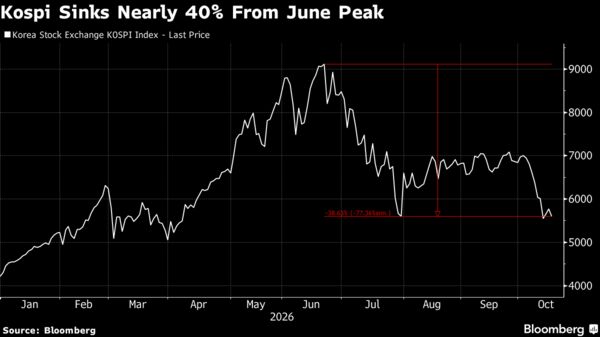
此次下跌是在上一次会议反弹之后出现的,表明投资者仍对人工智能热潮的过热感到担忧,尤其是随着融资变得更加困难。Kospi指数目前较其6月的历史高点下跌了近40%。
The renewed decline after the previous session’s rebound shows investors remain wary of overheating in the artificial intelligence boom, especially as financing grows more difficult. The Kospi is now down nearly 40% from its June record high.
“此次抛售是无差别的,几乎所有股票都在下跌,”尤金投资与证券分析师许宰焕表示。“市场似乎非常脆弱,”即使是带领周一反弹的电池制造商现在也在撤退。
“The selloff is indiscriminate, with nearly all stocks falling,” said Huh Jae-Hwan, an analyst at Eugene Investment & Securities. “The market seems very vulnerable,” with even the battery makers that led Monday’s bounce now retreating.
海外交易者在两小时的交易期间净卖出价值4.8亿美元的Kospi股票。这发生在基准10年期美国国债收益率上升七个基点至近5.14%之后。
Overseas traders sold $480 million worth of Kospi equities during the two hours of trading, on a net basis. That came after the benchmark 10-year US note climbed seven basis points to nearly 5.14%.
此外,数据中心基础设施公司Elice Inc.在小盘Kosdaq市场首日交易中暴跌超过30%,进一步压制了对科技股的需求。对AI融资的担忧最近笼罩了多家全球上市公司的前景,例如美国的Nscale Ltd.。
Further weighing on appetite for tech stocks, data-center infrastructure company Elice Inc. plunged more than 30% in its first day of trading on the small-cap Kosdaq market. Worries over AI funding have clouded the outlook for a number of global listings recently, such as of Nscale Ltd. in the US.
与此同时,SK海力士因其Solidigm部门可能在美国进行首次公开募股(IPO)而面临反对。韩国监管机构表示,正在审查此类交易是否应被视为“重复上市”,这是少数股东反对的做法,因为他们担心这可能导致价值侵蚀。
Meanwhile, SK Hynix has faced backlash against the potential US initial public offering of its Solidigm unit. A Korean regulator said it is examining whether such a deal would count as a “duplicate listing,” a practice minority shareholders oppose due to potential value erosion.