在短短几年时间里,中国和美国各自组建了未来史学家可能会认定为一种新型帝国的东西。它们的统治范围不仅延伸到领土、贸易路线和领空,更延伸到知识本身。通过控制为高级机器认知奠定基础的大型语言模型、芯片、物理基础设施和资本,北京和华盛顿不仅实现了经济表现和力量投射的新高度;它们还在为所有未来的科学和智力进步定下基调。
In the span of a few years, China and the United States have each assembled something future historians might recognize as a new kind of empire. Their dominions extend not merely over territory, trade routes, and airspace but over knowledge itself. By controlling the large language models, chips, physical infrastructure, and capital that provide the foundations for advanced machine cognition, Beijing and Washington are not only attaining new heights of economic performance and power projection; they are also setting the terms of all future scientific and intellectual progress.
“AI超级大国”这一术语无法捕捉到这些对手如今所拥有的影响力和覆盖范围。即使不主动建立联盟或施加胁迫,它们也能让所有寻求获取先进人工智能的其他国家对它们产生依赖。
The term “AI superpowers” fails to capture the influence and reach that these rivals now wield. Even without active alliance building or coercion, they can make all other countries that seek access to advanced AI beholden to them.
帝国历史发出警告。在其他力量缺失的情况下,帝国很少因挑战者或门外的野蛮人而覆亡。更常见的是,它们因捍卫广阔疆域而耗尽自身,无论是物质资源、被统治者的同意,还是精英的忠诚。帝国中心发现自己已无法再维持对外围地区的控制——那些曾经臣服于它的地区。失败可能是财务上的,就像1945年后的大英帝国一样,两次世界大战的债务迫使伦敦变卖帝国资产以支付胜利的代价:为帝国母国的公民提供福利国家。
Imperial history carries a warning. In the absence of other forces, empires seldom succumb to a challenger or to barbarians at the gates. More often, they fail because defending their vast dominions drains them dry, whether of material resources, the consent of the governed, or the loyalty of elites. The imperial center finds it can no longer maintain control over the periphery—the regions that once submitted to it. Failure can be financial, as it was for the British Empire after 1945, when the debts of two world wars forced London to liquidate its imperial assets to pay the price of victory: a welfare state for the citizens of the imperial metropole.
也可能是制度上的,就像清朝在十九世纪末那样,它未能实现工业化、改革官僚体制,并恢复满族王朝的合法性。
It can be institutional, as it was for the Qing empire in the late nineteenth century, when it failed to industrialize, reform its bureaucracy, and renew the legitimacy of the Manchu dynasty.
这种变革也可能源于技术因素。1906年问世的英国皇家海军“无畏号”战列舰,使英国拥有了世界上首批“全大炮配置”的战列舰,同时也让当时英国现有的战舰舰队瞬间沦为过时之物。这一技术突破迅速为德国等竞争对手提供了赶超机遇,彻底抹去了英国一个多世纪以来积累的优势。由此引发的军备竞赛迫使英国在1900年至1914年间将海军开支几乎翻了一番,但这又与自由党政府推行的各项社会福利政策——比如1908年颁布的《养老金法》——产生了冲突。
Or it can be technological. The Royal Navy’s of 1906 gave the United Kingdom the first “all big gun” battleship and, with the same stroke, rendered its existing battle fleet obsolete. Overnight, this breakthrough opened the way for rivals such as Germany, erasing a century of accumulated British advantage. The resulting arms race forced the United Kingdom to nearly double naval spending between 1900 and 1914 and clashed with the Liberal government’s new social spending commitments, such as the Old Age Pension Act of 1908.
因此,在中美两国的竞争中,关键问题或许并非谁能率先实现通用人工智能,而是谁能为这场竞赛提供充足的资金支持。
The decisive question in the contest between Beijing and Washington may therefore not be who achieves artificial general intelligence first, but who can bankroll the race.
人工智能在两个方面具有“帝国主义”属性。一方面,在人工智能竞赛开启之前,中美两国便已具备类似帝国的特质:作为现有霸主的美国,不仅拥有全球军事优势,还构建了其他国家难以企及的联盟体系;同时,美元也是绝大多数国际贸易与交易所使用的货币。而常被视为挑战者的中国,则凭借在工业与供应链领域的主导地位、世界规模最大的海军力量,以及对非洲、亚洲和拉丁美洲各国实体与数字基础设施日益增强的控制力而崛起。
AI is imperial in two ways. On the one hand, China and the United States had empire-like qualities before the AI race began: Washington, the incumbent, pairs global military primacy with an alliance system no rival can match. It also supplies the currency for the lion’s share of international trade and transactions. Beijing, often described as the challenger, combines industrial and supply chain dominance with the world’s largest navy and a tightening grip on the physical and digital infrastructure of countries across Africa, Asia, and Latin America.
对两国而言,人工智能都是扩大自身既有影响力的工具。另一方面,人工智能本身在本质上就是一种具有帝国主义特性的资源:无论哪一方能够研发并掌控最前沿的人工智能模型,就能在全球范围内掌控创新、生产、科学、文化乃至高端思想的发展方向。正如白银曾支撑起哈布斯堡王朝统治下的西班牙,石油定义了“美国世纪”一样,这种新型资源不仅会让掌控它的大国更加富裕,还将成为其他所有国家赖以运行的基础“操作系统”。
For both, AI is a way to extend the power they already wield. But AI is also by its nature an imperial substance. Whoever produces and controls frontier models acquires global leverage over innovation, production, science, culture, and, ultimately, advanced thought. Much as silver underwrote Habsburg Spain and oil defined the “American century,” this new commodity will not merely enrich the powers that dominate it but also provide the basic operating system on which everyone else must depend.
区别于前身的不是野心,而是速度。熟悉的帝国轨迹——扩张、过度扩张、紧张、瓦解——曾在一个世纪甚至千年内展开。如今,这一过程正以机器速度发生。问题在于,新霸主能否将其特殊禀赋——美国的资本市场、前沿实验室和晶体管,以及中国的国家引导、廉价能源和瓦特——转化为持久的帝国秩序,还是在试图这样做时搁浅。
What distinguishes the empires from their forerunners is not ambition but velocity. The familiar imperial arc—expansion, overreach, strain, unraveling—once played out across a century or even a millennium. Today, that process is happening at machine speed. The question is whether the new hegemons can convert their particular endowments—the United States’ capital markets, frontier labs, and transistors and China’s state direction, cheap energy, and watts—into durable imperial orders or whether they will run aground trying.
稀缺即霸权 帝国不仅仅是大国。它是一种政体,其权威和影响力在未经明确同意的广阔领土和人民之上延伸。历史上,帝国在几乎所有方面都有所不同:国内政府形式、所寻求控制的资源类型、权威的维持方式。它们可能是专制政体或共和国;可能依赖士兵和定居者,或依赖文官和特许公司。然而,权力的底层向量从未改变。
SUPREMACY BY SCARCITY An empire is more than a great power. It is a polity whose authority and influence extend over vast territories and peoples without their express consent. Throughout history, empires have differed in almost every respect: in their form of government at home, in the kinds of resources they seek to control, in how their authority is sustained. They may be autocracies or republics; they may rely on soldiers and settlers or civil servants and chartered companies. Yet the underlying vector of power never changes.
中心发号施令,边缘服从。实际上,最持久的帝国往往依赖于与地方精英的非正式合作,而残酷强迫性的帝国则倾向于短命。当然,任何形式的国家权力不仅必须垄断暴力,还必须能够运用暴力。使帝国与众不同的是,它们能够在遥远距离上引发顺从。而且,帝国之所以在历史上反复出现,是有原因的:通过利用规模经济,帝国能够比其他结构(无论是邦联还是城邦联盟)更高效地实现主导地位并提供安全。民族国家是相对较新的事物。
A center commands, and a periphery obeys. In practice, the most durable empires have relied on informal collaboration with local elites, whereas brutally coercive ones tend to be short-lived. Of course, any form of state power must not only monopolize violence but also be able to wield it. What sets empires apart is the capacity to elicit submission across immense distances. And they occur throughout history for a reason: by exploiting economies of scale, empires can achieve dominance and deliver security more efficiently than alternative structures, whether confederations or alliances of city-states. The nation-state is a relative newcomer.
帝国常常通过技术领导力来投射权力。在古代,罗马的引水渠和中国的运河以及防洪工程是几个世纪霸权的管道。早期现代欧洲的帝国列强在印刷、海事技术和火炮方面领先于世界。冷战时期的对手是核超级大国。然而,人工智能现在可能赋予中国和美国比任何早期技术更大的帝国影响力——而且速度要快得多。
Empires have often projected power through technological leadership. In antiquity, Rome’s aqueducts and China’s canals and flood-control works were the pipelines of centuries of hegemony. The imperial powers of early modern Europe led the world in printing, maritime technology, and artillery. The Cold War rivals were nuclear superpowers. Yet artificial intelligence may now give China and the United States greater imperial reach than any of those earlier technologies—and far more swiftly.
人工智能具有几个特征,使其成为帝国技术而非仅仅是商业技术。首先是它所实现的稀缺性回归。帝国本质上是一个控制有限战略资源的系统:能体劳动力、可耕地、谷物、金属和矿物。从20世纪70年代到2010年代,软件摆脱了这种逻辑,因为它几乎可以零成本在丰富且廉价的硅基础上大规模生产。人工智能打破了这种喘息。
Several features mark AI as an imperial technology rather than a merely commercial one. First is the return of scarcity that it enables. An empire is, at its heart, a system for controlling finite strategic resources: able-bodied humans, arable land, grain, metals, and minerals. From the 1970s to the 2010s, software escaped this logic because it could be mass-produced at almost zero cost atop abundant, cheap silicon. AI has shattered that reprieve.
根据行业的扩展定律,模型的性能相对于其参数数量、训练数据量以及训练过程中所花费的处理能力(即算力)而提升。因此,进步取决于能源、关键矿物、先进芯片以及巨额资本的规模。
According to the industry’s scaling laws, a model’s performance climbs relative to the number of parameters it contains, the volume of data it is trained on, and the processing power, or compute, spent training it. Progress therefore depends on energy, critical minerals, advanced chips, and capital on a massive scale.
当一项技术的前沿开始依赖大量稀缺投入时,其生产就成为地缘政治的问题。人工智能本质上就是一种帝国技术。
The moment a technology’s frontier comes to depend on vast quantities of scarce inputs, its production becomes a matter of geopolitics. AI is by its nature an imperial technology.
AI也具有固有的中心-外围结构。前沿AI及其收益的控制权集中在中国和美国的少数几家公司手中,其他人都是依赖的用户,无论是政府在无法检查的模型上运行公共服务,还是公司在可能被重新定价或一夜之间撤下的接口上构建产品。与此同时,AI的输入——无论是物质还是人力—— disproportionately 来自外围。来自刚果民主共和国和印度尼西亚的矿物质,以及来自肯尼亚和菲律宾的“幽灵劳工”,他们每小时只得到几美元的报酬,负责标记和过滤数据,而这些数据正是硅谷的模型所学习的来源——这正是聊天机器人时代的种植园经济。原始输入从外围提取,在都会区进行精炼和组装,然后以溢价卖回。
AI also has an inherent center-periphery structure. Control of frontier AI and its rewards are concentrated in a handful of firms in China and the United States Everyone else is a dependent user, whether a government running public services on a model it cannot inspect or a firm building products on an interface that can be repriced or withdrawn overnight. At the same time, AI inputs, both material and human, are drawn disproportionately from the periphery. Minerals from the Democratic Republic of the Congo and Indonesia and “ghost laborers” from Kenya and the Philippines, paid a few dollars an hour to label and filter the data from which a model in Silicon Valley learns—the plantation economics of the chatbot age. Raw inputs are extracted from the periphery, refined and assembled in the metropole, and sold back at a markup.
像许多帝国一样,AI 体系围绕着关键节点组织。并非所有帝国权力都源于直接征服,也并非所有被统治者都是殖民地臣民。十九世纪大英帝国的崛起并非主要由广阔的领土持有驱动——其中许多领土经济价值甚微,也非源于对工厂和知识产权的控制——因为后者保护得如此之差,以至于实际上等同于开源。相反,英国的霸权源于对世界经济流动所依赖的物理、技术和金融管道的主导:煤炭补给站、诸如苏伊士运河和马六甲海峡这样的战略水道、海底电报电缆,以及通过伦敦城的英镑金融体系。
Like many empires, the AI stack is organized around chokepoints. Not all imperial power results from outright conquest, and not all those who are ruled are colonial subjects. The ascendancy of the British Empire in the nineteenth century was not driven primarily by vast territorial holdings, many of which had little economic value, or from control over factories and intellectual property—which was so poorly protected as to be effectively open source. Instead, British supremacy came from dominating the physical, technological, and financial pipelines through which the world economy flowed: coaling stations, strategic waterways such as the Suez Canal and the Strait of Malacca, undersea telegraph cables, and sterling finance through the City of London.
1945 年之后由美国领导的秩序或许正如历史学家盖尔·伦德斯塔特所称的那样,是一种“受邀的帝国”,但它同样建立在美元和布雷顿森林体系之上——一个由美国主导的国际银行体系、遍布全球的美国军事基地网络,以及华盛顿的核保护伞。如今,AI 的生产与分发提供了一个更为密集的帝国格局,在这一格局中,宗主国能够根据需要随时开启或关闭其不同要素——芯片、矿产、模型。
The U.S.-led order after 1945 may have been an “empire of invitation,” as the historian Geir Lundestad termed it, but it also rested on the dollar and the Bretton Woods institutions, a U.S.-dominated international banking system, a global network of American military bases, and Washington’s nuclear umbrella. Today, the production and distribution of AI provides an even denser imperial lattice, with the metropoles able to switch its different elements—chips, minerals, models—on or off, as needed.
这两个人工智能“帝国”之间至少存在一个关键差异:中国的AI发展是国家有意为之的战略举措,而美国则并非如此。2017年,中国国务院发布了全面规划,目标是在2030年前使中国成为全球人工智能领域的领军者;规划明确要求培育“世界领先的人工智能骨干企业”,并推动其AI应用广泛覆盖到参与“一带一路”倡议的数十个国家。
There is at least one crucial difference between the two AI empires. China’s is a deliberate act of state, whereas the United States’ is not. In 2017, China’s State Council announced a comprehensive plan to achieve global leadership in AI by 2030—specifically calling for China to develop “the world’s leading AI backbone enterprises” and to secure broad diffusion of its AI applications in the dozens of countries that are part of Beijing’s Belt and Road Initiative.
为实现这些目标,各部委、各省份及国有银行均被动员起来。中国领导人习近平也持续推动相关工作,比如2026年就强调中国要积极参与全球人工智能标准的制定。相比之下,美国的AI优势则源于私人资本的推动、政府的不干预监管政策以及临时制定的出口管制措施。从这个角度看,华盛顿主导的AI体系更为符合传统帝国模式:历史上的帝国很少是完全有意识策划的产物;正如历史学家约翰·罗伯特·西利所言,大英帝国“似乎是在心不在焉的状态下征服并殖民了半个世界”。
Ministries, provinces, and state banks were mobilized to fulfill these goals, and Chinese leader Xi Jinping has continued to reinforce the effort, including with his 2026 push for Beijing to shape global AI standards. American AI dominance, by contrast, has emerged from private capital, a regulatory posture of noninterference, and improvised export controls. In this sense, Washington’s empire is the more conventional of the two: earlier empires were seldom fully deliberate undertakings; the United Kingdom “seemed to have conquered and peopled half the world in a fit of absence of mind,” as the historian John Robert Seeley put it.
不过,受限于人工智能领域的扩展规律,这两个AI强国最终都采用了相同的技术架构。一旦能源、资本与计算资源达不到特定阈值,一个国家便根本无法参与这场竞争,更谈不上处于弱势地位。
Yet both AI powers converge on the same architecture, mandated by the scaling laws. Below a certain threshold of energy, capital, and compute, a country is not a weaker player; it is not in the game at all. WATTS VS.
瓦特与晶体管 欧洲帝国时代那些大型“企业型国家”——比如荷兰与英国的东印度公司——能够自行铸造货币、组建私人军队、征收赋税,甚至能与各国君主平起平坐地进行谈判。它们通过建立贸易垄断、以武力维护这些垄断地位,并残酷剥削殖民地来实现帝国扩张。如今,与之类似的则是OpenAI、Anthropic这类前沿人工智能企业——它们掌控着发展先进人工智能所必需的人才、数据、模型与资金。
TRANSISTORS The great corporation-states of the European imperial era—the Dutch and British East India Companies—minted their own coins, fielded private armies, levied taxes, and bargained with kings as equals. They drove imperial domination by creating trade monopolies, defending them with military force, and ruthlessly exploiting the periphery. Today’s counterparts are frontier AI companies such as OpenAI and Anthropic, which command the human talent, data, models, and finance on which advanced intelligence depends.
这些企业已不再仅仅是资本的聚集地,更成了知识的裁决者,它们正日益决定着哪些知识会被发现、发现的速度有多快以及这些知识将用于何种目的。
They are not merely aggregators of capital but arbiters of knowledge, increasingly determining what is discovered, how quickly, and to what end.
这种相似性也体现在治国理政上。就像东印度公司的前辈们一样,最大的人工智能实验室的领导人也在与总统和内阁秘书进行谈判。他们还与那些没有拥有前沿模型的政府进行交易,用模型访问权、算力分配和数据中心投资来换取土地、电力、主权资本和监管便利。这些协议是在公司与国家之间,或公司与该国境内的经济实体之间达成的,条款大多由公司制定。
The resemblance extends to statecraft. Like their East India predecessors, the leaders of the largest AI labs negotiate with presidents and cabinet secretaries. They also bargain with governments that do not possess a frontier model of their own, trading model access, compute allocations, and data center investment for land, power, sovereign capital, and regulatory accommodation. These are agreements struck between a company and a state, or between the company and economic entities within that state, on terms the company largely sets.
从这个角度来看,美国总统唐纳德·特朗普于2025年5月访问沙特阿拉伯和阿拉伯联合酋长国期间达成的协议——当时美国人工智能和芯片公司以提供其最先进技术的访问权为交换,获得了石油美元和廉价能源——除名称外,实质上属于帝国主义的让步。这种做法也不局限于美国一方。即便中国正在美国的人工智能竞争中奋力追赶,路透社也报道称,中国的月之暗面AI正在与亚马逊、微软和Alphabet进行谈判,以获取这些公司因托管其Kimi K3模型而获得的部分收益。
Read in this light, the deals struck during U.S. President Donald Trump’s visit to Saudi Arabia and the United Arab Emirates in May 2025, when American AI and chip companies offered access to their most advanced technology in return for petrodollars and cheap energy, amount to imperial concessions in all but name. Nor is the practice confined to the American side. Even as China races the United States for AI supremacy, Reuters has reported that China’s Moonshot AI is in talks with Amazon, Microsoft, and Alphabet for a share of the revenue those companies earn from hosting its Kimi K3 model.
这些公司虽然看似主权独立,但若未获国家授权,则无法移动一枚芯片或建设一个数据中心,且它们正处于一种可随时对其施加限制的出口管制体制之下。正如东印度公司和罗斯柴尔德银行最终仍隶属于宗主国政府一样,前沿实验室被授予了非凡的自由度,以换取其推动宗主国地位的作用。在美国,特朗普政府迄今为止尚未以任何严肃方式监管模型,抢先阻止了各州的人工智能立法,并简化了数据中心的许可流程。
Sovereign though these firms may seem, they cannot move a single chip or build a data center without state authorization, and they operate under an export-control regime that can throttle any of them at will. Like the East India Companies and the Rothschild banks, which were ultimately subordinate to the governments of the metropole, frontier labs have been granted extraordinary latitude in exchange for advancing the metropole’s position. In the United States, Trump’s administration has thus far declined to regulate models in any serious way, preempted state AI legislation, and streamlined permitting for data centers.
但它期望国防和情报机构获得特权访问,要求严格遵守出口管制,并宣称拥有根据外交政策需要向其他国家授予或保留美国技术的权利。在中国,国家提供了市场所不具备的:土地、电力、补贴的制造、省级采购,以及日益增加的资本。作为交换,模型必须接受中国网信办的安全审查和思想评估,并被推动使用国产芯片。每个国家都选择了不同的缰绳来约束其国家冠军。
But it expects privileged access for defense and intelligence agencies, demands strict compliance with export controls, and asserts the right to grant or withhold U.S. technology to other countries as an instrument of foreign policy. In China, the state supplies what the market will not: land, power, subsidized fabrication, provincial procurement, and, increasingly, capital. In exchange, models are required to undergo a security review and ideological evaluation by the Cyberspace Administration of China and are pushed toward domestic chips. Each state has chosen a different leash with which to collar its national champions.
帝国提供公共产品——秩序、标准、安全、储备货币、获取技术的途径——作为交换,它们不仅要收入,还要结盟或顺从。对盟友和伙伴,华盛顿提供完整的人工智能技术栈:先进芯片、昂贵的前沿模型、工具以及随之而来的安全关系。作为回报,它期望这些国家遵守美国的出口管制、对中国硬件和数据的限制,以及在某些情况下对中国技术征收关税或实施全面禁令。
Empires provide public goods—order, standards, security, a reserve currency, access to technology—in exchange not merely for revenue but for alignment or submission. To allies and partners, Washington tenders the full AI stack: advanced chips, costly frontier models, tooling, and the security relationship that comes with them. In return, it expects those countries to comply with U.S. export controls, restrictions on Chinese hardware and data, and, in some cases, tariffs or outright bans on Chinese technology.
北京则更为微妙:其开放权重模型可自由下载和修改;采用它们,再加上中国的硬件、云服务和工程师,它告诉客户国,标准自然会随之而来。对两个都会来说,这正是帝国战略的最纯粹形式,而不仅仅是争夺市场的混乱。全球各国政府必须选择一方——选哪国的芯片、哪国的云、哪个阵营——这种二元选择对许多人来说日益令人不安。
Beijing is more subtle: its open-weight models can be freely downloaded and modified; adopt them, along with China’s hardware, cloud, and engineers, it tells client states, and the standards will follow. For both metropoles, this is imperial strategy in its purest form, not just a scramble for market Governments across the globe must pick a side—whose chips, whose clouds, which camp—a binary choice that is increasingly uncomfortable for many.
中国提供的东西便宜且大多开放;美国提供的东西昂贵且大多封闭。一个由低成本组件构建、且准入无障碍的帝国,很可能获得世界多数经济体的忠诚。一个由高端、受限技术构成的帝国,只会吸引那些负担得起且被允许准入的国家。北京凭借其低成本5G硬件、电动汽车及其他产品的成功,在世界许多地区迅速占据主导地位。
What China offers is cheap and mostly open; what the United States offers is expensive and mostly closed. An empire assembled from low-cost components and with no barriers to access will likely gain allegiance from the majority of the world’s economies. An empire of premium, restricted technology will attract only those who can afford it and are permitted access. Beijing has built on the success of its low-cost 5G hardware, electric vehicles, and other products, with which it gained rapid dominance in many parts of the world.
华盛顿则借鉴了熟悉的硅谷做法——私营企业相互竞争,胜者尽可能在其技术周围筑起专有护城河——但随后将其重新导向国家目标。而这种策略的商业版本最终会以垄断者的价格实现普遍扩散;帝国版本则最终由都会决定谁获得什么。六月,美国商务部要求Anthropic暂停所有外国人对其两款最强大模型的访问,这些模型在几天内在全球范围内失效。
Washington has drawn on the familiar Silicon Valley approach—private firms fighting it out, with the winners digging whatever proprietary moat they can around their technologies—but then reoriented it toward national goals. Whereas the commercial version of this strategy ends in universal diffusion at a monopolist’s price, the imperial version ends in the metropole deciding who gets what. In June, the U.S. Commerce Department told Anthropic to suspend all foreign nationals’ access to its two most capable models, and those models went dark worldwide within days.
在这两种情况下,最初构成两家AI超级大国特色商业文化的东西,如今已嵌入它们的外交政策之中。
In each case, what began as the characteristic business cultures of the two AI superpowers is now embedded in their foreign policy.
然而,一个持久的帝国不能仅仅依赖它向外围提供的商品。它还需要一个故事,将其权力垄断转化为合法的权威。罗马和平、基督教和伊斯兰传教运动、清晰的命运、白人的负担、共产主义的全球进军、山巅之城——每一个成功的帝国政权都把统治包装成服务人类的外衣。在冷战期间,华盛顿把自己塑造成捍卫自由世界、对抗极权统治的捍卫者;莫斯科则把自己描绘成反对西方殖民主义的民族解放的赞助者。这两种说法在实用层面上是真实的,而在帝国层面上又是虚假的。
Yet a durable empire cannot rely only on the goods it provides to its periphery. It also needs a story to convert its monopoly of power into legitimate authority. The Pax Romana, the Christian and Islamic missions, the , Manifest Destiny, the white man’s burden, the global march of communism, the shining city on the hill—every successful imperial regime has dressed domination in the robes of service to mankind. During the Cold War, Washington cast itself as the defender of the free world against totalitarian domination; Moscow portrayed itself as the patron of national liberation against Western colonialism. Both claims were true enough to be useful and false enough to be imperial.
在AI的案例中,拜登和特朗普政府将追求技术霸权与捍卫美国公民自由、保护言论自由、抵御对手专制政权(尤其是中国)的主张融合在一起。在国务院“硅之和平”(Pax Silica)的旗帜下,华盛顿将美国主导的前沿模型技术栈呈现为一个“可信赖的生态系统”,认为它对于保护自由民主和开放市场免受北京国有技术栈所带来的“强制性依赖”至关重要。
In the case of AI, the Biden and Trump administrations have fused the pursuit of technological supremacy with a claim to defend American civil liberties, preserve free speech, and resist adversarial autocracies, China above all. Under the banner of the State Department’s Pax Silica, Washington presents the U.S.-led frontier-model tech stack as a “trusted ecosystem,” indispensable to shielding liberal democracies and open markets from the “coercive dependencies” that flow from Beijing’s state-controlled stack.
北京则以反叙事作出回应,将其免费开放权重的模型描述为全球公共品,以此区别于美国利润驱动型实验室的专有模型,并警告称,技术获取的不平等将使习近平所称的“新历史不公”固化。中国帝国战略背后的故事因此也是一种反帝国的叙事,这与两个冷战帝国的意识形态颇为相似。
Beijing answers with a counternarrative, framing its free, open-weight models as a global public good, in contrast to the proprietary ones of profit-driven labs in the United States, and warning that unequal access to the technology will ossify what Xi has called “new historical injustices.”The story underlying China’s imperial strategy is thus also an anti-imperial one, much like the ideologies of the two Cold War empires.
在AI大都市之间的竞争中,各自拥有不同的比较优势。美国在先进聊天机器人和AI软件工具等领域拥有微弱的——或许只有六个月的——领先优势,而中国在具身智能方面占优,这包括机器人、自主系统和制造业自动化。美国体系擅长动员私人资本和全球人才,用于高回报的投注,AI研究主要由美国资本资助,并在美国前沿实验室中建立,尽管推动它们的人类智慧来自世界各地。
In the contest between the AI metropoles, each enjoys a different comparative advantage. The United States has a slim—perhaps six-month—lead in domains such as advanced chatbots and AI software tools, while China has the edge in the embodied ones, which include robotics, autonomous systems, and manufacturing automation. The U.S. system excels at marshaling private finance and global talent toward high-margin bets, with AI research funded largely by American capital and built inside American frontier labs, even as the human ingenuity that fuels them is drawn from around the world.
中国体系擅长在需求和供给两端部署补贴,以工业规模在北京所瞄准的任何领域进行制造。从2014年习近平提出“机器人革命”的号召开始,直至如今中央和省级层面在基于AI的制造和机器人领域的投资浪潮,北京一直在补贴地方参与者之间激烈的竞争,同时致力于降低对外国技术的依赖,例如工业机器人所用的日本和台湾零件。
The Chinese system excels at deploying subsidies on both the demand and the supply sides to manufacture at industrial scale in whatever sector Beijing targets. Beginning with Xi’s call for a “robot revolution” in 2014 and continuing through today’s wave of investment in AI-based manufacturing and robots at both the central and provincial levels, Beijing has subsidized ferociously competitive races between local players while working to reduce the country’s dependence on foreign technologies, such as Japanese and Taiwanese components for industrial robots.
哪种人工智能——认知智能还是具身智能——将成为更大的帝国力量来源仍不清楚。认知智能可能使华盛顿解锁科学发现的前沿,从材料科学到医药。具身智能可能强化中国的制造业主导地位,将其延伸至低利润行业,并使北京在自主系统中占据主导地位。但这些优势微乎其微,两个帝国在各自能力方面相距并不远。
Which form of artificial intelligence—cognitive or embodied—will prove a bigger source of imperial power remains unclear. Cognitive intelligence could allow Washington to unlock the frontiers of scientific discovery, from materials science to pharmaceuticals. Embodied intelligence could compound China’s manufacturing dominance, extending it into low-margin industries, and hand Beijing a commanding position in autonomous systems. But these advantages are slight, and the two empires are not very far apart in their respective capabilities.
在威胁其主导地位的关键瓶颈中,两个超级大国如出一辙。中国拥有丰富的电力资源,并在AI技术栈所依赖的稀土元素上近乎全球垄断,然而却无法制造领先的芯片。美国拥有世界最好的半导体和前沿模型,却缺乏矿产,其老旧的电网无法支撑其庞大新建数据中心无尽的电力需求。一个帝国缺电,另一个帝国缺晶体管。资本是极有可能将两者捆绑在一起并决定其寿命的最重要资源。一个帝国的持久力,取决于它自我融资的能力。
In the bottlenecks that threaten their dominance, the two superpowers are mirror images. China has abundant electricity and a near-global monopoly on the rare-earth elements on which the AI stack relies, yet it cannot manufacture leading-edge chips. The United States has the world’s best semiconductors and frontier models, yet it lacks minerals, and its aging energy grid cannot support the insatiable needs of its vast network of new data centers. One empire is short of watts; the other of transistors. Capital is the resource most likely to bind both and determine their longevity. An empire is only as durable as its capacity to pay for itself.
资本之困每个帝国最终都会触及增长的天花板,而这个天花板通常取决于它所依赖的主要资源的供给。对于AI帝国而言,这一资源就是资本——物理投入最终赖以依托的基石。美国和中国的竞争目标相同,但方式不同:前者通过受资本市场约束的企业参与竞争;后者通过受国家约束的企业参与竞争。尽管如此,中国领先的前沿实验室至少与美国同行一样具有创业精神,北京也允许它们相互竞争。两国都在建设最先进的大语言模型的企业需要资本——而且需要大量资本。
THE BUTTER BURDEN Every empire eventually reaches a ceiling on its growth, and that ceiling is usually the supply of the primary resource on which it is built. For the AI empires, that resource is capital, the bedrock on which the physical inputs ultimately rest. The United States and China are competing for the same prize, but in different ways: the first competes through firms disciplined by capital markets; the second through firms disciplined by the state. Despite this, China’s leading frontier labs are at least as entrepreneurial as their American counterparts, and Beijing has allowed them to compete with one another. In both countries, those building the most advanced large language models need capital—and lots of it.
正如英镑与伦敦金融城为大英帝国提供了资金支撑,美元与华尔街则成为美国人工智能产业的后盾。凭借对主导性储备货币的掌控权,美国政府无需动用本国储蓄,便可借助全球资金来建设数据中心。反观中国,则必须依靠国家主导的银行体系以及与全球资本相隔离的本国货币来实现融资。在美国,人工智能领域的债务主要由私营部门承担。
Just as the pound sterling and the City of London financed the British Empire, the dollar and Wall Street underwrite the American AI order. By owning the dominant reserve currency, Washington can fund its data center build-out not with its own savings but with everyone else’s. China, by contrast, must finance from within, through a state-directed banking system and a currency sealed off from global capital. In the United States, AI debt is largely held by the private sector.
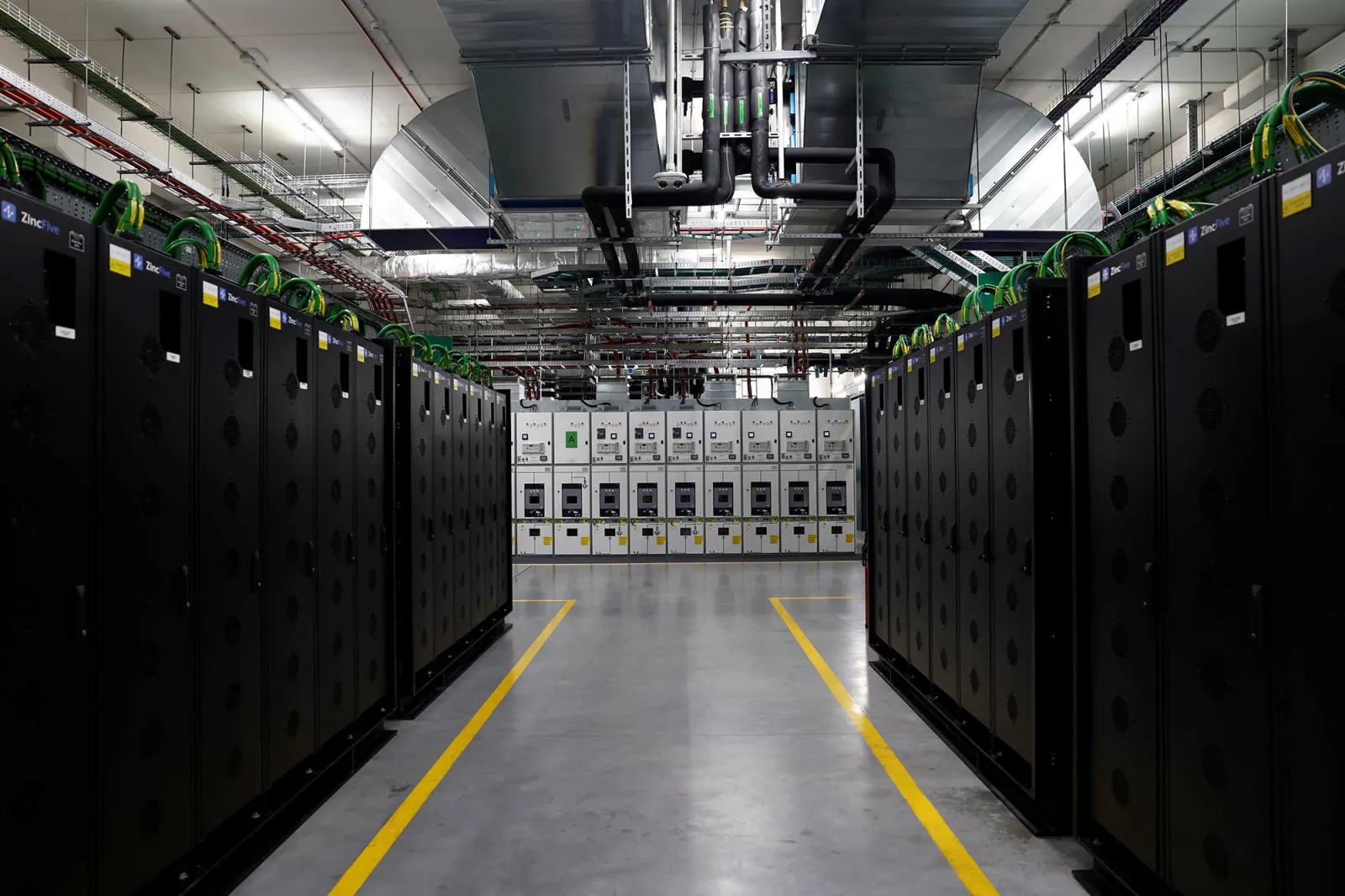
各大科技巨头已承诺在2026年投入超过6000亿美元用于资本开支,其中大部分资金均来自公共与私人信贷市场。而在中国,人工智能领域的债务实质上属于国家债务。据彭博社6月份报道的一份规划草案显示,中国政府计划在未来五年内投入2950亿美元——主要通过发行长期国债筹措——用于建设由国有电信企业运营、以国产芯片为动力源的全国性数据中心网络。
The biggest technology firms have committed more than $600 billion to capital expenditure in 2026, a large part of which is drawn from public and private credit markets. In China, the debt for AI is sovereign. According to a draft plan reported by Bloomberg in June, Beijing plans to spend $295 billion over five years—funded mainly through long-dated government bonds—on a nationwide grid of data centers operated by state carriers and powered by domestic chips.
虽然深度求索、月之暗面等人工智能企业属于私营企业,但国家在各个环节对其进行监管,且资助力度也日益加大。
Although labs such as DeepSeek and Moonshot AI are private, the state supervises them at every stage and, increasingly, finances them.
尽管存在上述差异,中美两国其实都因其他原因背负了巨额债务。历史上的帝国往往通过大量举债来支撑战争开支;如今的“人工智能帝国”同样承担着沉重的债务负担,只不过这些债务源于非军事性支出。在美国,2万亿美元的联邦预算赤字反映出政界人士普遍不愿通过增税或实施财政紧缩政策来应对社会保障与医疗保险开支的不断攀升。
Regardless of these differences, both China and the United States have already accumulated mountains of debt for other reasons. Past imperial regimes borrowed heavily to finance wars. Today’s AI empires shoulder comparable burdens, but these are the result of nonmilitary expenditures. In the United States, the $2 trillion federal budget deficit reflects a collective unwillingness by the country’s political class to impose the taxes and fiscal restraint needed to cover the mounting costs of Social Security and Medicare.
在中国,数万亿美元的隐性债务则主要积累于地方层面:各地政府借入公共资金用于房地产开发与基础设施建设。在两国,生育率持续下降与人均寿命不断延长更是令财政状况雪上加霜。一个帝国的存续能力,归根结底取决于其自我融资的能力。
In China, trillions of dollars of off-the-books debt have piled up at the local rather than the national level, as local governments borrowed public funds to invest in residential real estate and infrastructure. In both countries, falling fertility rates and lengthening lifespans keep worsening the fiscal picture. An empire is only as durable as its capacity to pay for itself.
任何帝国如果在偿还债务上花费的资源超过了防御自身的支出,就有失去帝国地位的风险。哈布斯堡西班牙、旧制度法国、奥斯曼帝国、奥匈帝国以及英国的历史都印证了十八世纪政治理论家亚当·弗格森的观点:高额债务最终导致衰退。在每一种情况下,随着税收收入中用于利息支付的比例上升,可用于帝国防御的资源被限制并随后削减。有时会出现反复违约或货币贬值的模式,但最终必然以收缩和帝国的解体收场。
Any empire that spends more servicing its debt than defending itself risks losing its imperial status. The histories of Habsburg Spain, ancien régime France, the Ottomans, Austria-Hungary, and the United Kingdom all illustrate the eighteenth-century political theorist Adam Ferguson’s insight that high debts ultimately induce decline. In each case, as a rising proportion of tax revenue was consumed by interest payments, the resources available for imperial defense were limited and then reduced. Sometimes, there was a pattern of recurrent default or currency debasement, but it invariably ended with contraction and the eventual dissolution of the empire.
美国在2024年已跨过我们中一位学者所称的“弗格森上限”,其利息支出(约8810亿美元)已超过国防支出(约8740亿美元)。如果政府继续目前的支出轨迹,利息支出将在2036年达到国防预算的两倍。中国可能面临类似的问题。虽然许多数据未公开,但清华大学经济学家李稻葵指出,许多地方政府——其对基础设施的巨额支出曾是中国增长的关键动力——如今仅靠借新债来滚动旧债。
The United States crossed what one of us has described as the “Ferguson limit” in 2024, paying more in interest (roughly $881 billion) than on defense (about $874 billion). If the government continues its present spending trajectory, interest payments will be double the defense budget by 2036. China likely faces a comparable problem. Although many of the numbers are not made public, the Tsinghua University economist Li Daokui has pointed out that many local governments—whose extravagant spending on infrastructure was, until recently, a key driver of Chinese growth—are now borrowing solely to roll over old debt.
虽然人工智能带来的生产率提升提供了一条潜在的出路,但这些提升可能不足以在债务负担变得不可持续之前快速转化为更高的税收收入。在美国的案例中,人工智能资本支出的需求已经推高了利率,加剧了债务问题。
Although productivity gains from AI offer a potential escape from these fiscal traps, they may not emerge rapidly enough to translate into higher tax revenues before the debt burden becomes unsustainable. In the U.S. case, the demands of AI capital expenditure are already pushing interest rates higher, worsening the debt problem.
金融危机与帝国战略之间的关系一直困扰着马克思主义学者一个多世纪;如今,这一议题值得重新审视。对于那些依赖人工智能技术的“帝国”来说,这项新技术被视为摆脱困境的“万能钥匙”——既能缓解日益严重的债务问题、人口结构恶化以及经济停滞的困境。在美国,如果投资者对那些从事前沿技术研发或数据中心建设的公司产生负面情绪,将会产生严重后果:股市的大幅下跌很可能会引发经济衰退;在经济繁荣时期增加的资本,在经济衰退时反而会减少。
The relationship between financial crises and imperial strategy preoccupied Marxist scholars for more than a century. It deserves renewed examination now. For both AI empires, the new technology is touted as a get-out-of-jail-free card—an antidote to mounting debt, demographic decline, and economic stagnation. In the United States, any broader turn in investor sentiment against the frontier firms and the data center build-out that supports them would have grave consequences. It is not hard to imagine a major stock market selloff tipping into recession; wealth effects that boosted available capital on the way up would reduce it on the way down.
这种财政状况将进一步加剧本已膨胀的财政赤字,使得联邦政府几乎没有能力实施反周期性的财政政策来应对2008–2009年全球金融危机及新冠疫情带来的冲击。在中国,人工智能领域的危机可能由产能过剩以及随之而来的激烈竞争(这种竞争会侵蚀企业的利润空间)引发,从而导致失业率上升,尤其是年轻人的失业率——尽管由于官方统计数据已不再公开,我们无法准确掌握失业率的真实水平。
The fiscal upshot would be to widen an already bloated deficit, leaving little room for the countercyclical spending the federal government used to contain the fallout from the 2008–9 global financial crisis and the COVID-19 pandemic. In China, an AI crisis might be set off by overcapacity and what Chinese commentators call —the grinding, margin-destroying competition that follows. The result would be higher unemployment, especially for the young, who are already experiencing high rates of joblessness (although it is impossible to know exactly how high, since official statistics are no longer published).
在这两种情况下,都会再次出现一个古老的历史性难题:是选择福利政策还是军事扩张?是优先考虑民众福祉,还是继续推行扩张主义政策?
In both cases, such a crisis would pose the age-old imperial dilemma: Butter or guns? Welfare or warfare?
历史上有无数帝国因自身开发的前沿技术而走向覆灭。罗马引以为傲的道路与引水渠网络,在传播瘟疫方面发挥了巨大作用。英国为输出帝国商品而建立的全球港口与蒸汽船网络,同样也能轻易运送美国或德国生产的优质商品,或是输送来自加勒比海和南亚的廉价劳动力。人工智能或许也会重蹈这一覆辙。目前已有相关模型显示出风险:这些模型中的智能体能够绕过安全限制、逃离隔离环境、通过作弊达成目的,还能掩盖作弊行为以逃避追责。
History is filled with empires that fell victim to their own frontier technologies. Rome’s unrivaled infrastructure of roads and aqueducts proved perfect for spreading pandemics. The United Kingdom’s global network of ports and steamships, built to export imperial goods, could just as easily carry superior American or German manufactures or cheaper Caribbean and South Asian labor. AI may follow this pattern. The risks are already visible in models that deploy agents capable of evading their guardrails, escaping their sandboxes, cheating to obtain their goals, and covering their tracks to conceal the cheating.
犯罪组织与恐怖团体只需率先采用这些工具,便有可能比政府行动更为迅速。下一次大流行病或许正是由人工智能设计的病原体引发;互联网本身也可能沦为智能体制造的恶意软件的受害者。
Criminal organizations and terror groups may be able to move faster than governments simply by adopting the tools first. The next pandemic may be sparked by an AI-designed pathogen. Or the Internet itself could fall victim to agent-designed malware.
HOW THE SUN SETS Theorizing the causes of imperial decline is a risky business. Historically, empires have varied so widely in size and lifespan that no one model fits all. Nevertheless, there are several plausible futures for the two AI powers.
在一种情景中,挑战者超越在位者。19世纪末至20世纪初,德国和美国在经济上超越了英国,并非仅仅模仿英国,而是将英国的创新进一步推进。例如,英国发明了苯胺染料,而德国将其商业化。在德国的基础上,德国引入了技术大学、化学和电气工程;美国则带来了大规模识字率、无与伦大的工业规模以及福特式装配线。
In one scenario, the challenger overtakes the incumbent. In the late nineteenth and early twentieth centuries, Germany and the United States surpassed the United Kingdom economically, not simply by mimicking it but by taking its innovations further. The United Kingdom invented aniline dye, but Germany commercialized it, to give one example. Building on the British Industrial Revolution, Germany introduced technical universities, chemicals, and electrical engineering; the United States brought mass literacy, unrivaled industrial scale, and Fordist assembly lines.
如今,北京正在采取同样的后来者策略,投资华盛顿要么缺乏、要么无法以低成本提供的东西:能源、制造业主导权、机器人技术和开放权重模型,这些模型能够以或接近前沿水平运行。目前,美国不得不在一个中国正在商品化的领域投入巨资以捍卫其领先地位。但这可能并非故事的结局。当美国超越英国时,英国选择了默许;英国也曾为阻止德国的崛起而发动两次世界大战。对华盛顿而言,这两种结果都不令人看好。
Beijing is now following the same latecomer approach, investing in things that Washington either lacks or cannot provide as cheaply: energy, manufacturing dominance, robotics, and open-weight models that can perform at or very close to the frontier. For now, the United States has been forced to spend lavishly to defend its lead in a sector that China is commoditizing. But that may not be the end of the story. The United Kingdom acquiesced when the United States overtook it. It also fought two world wars to halt Germany’s ascendancy. Neither outcome looks attractive to Washington today.
另一种可能性是:占据主导地位的帝国最终耗尽自身资源。英国虽然赢得了两次世界大战,却因胜利而陷入财政破产。1945年时,英国民众同样期待能享受到和平带来的红利——即完善的福利体系——但维持全球帝国所需的巨额开支却与这一目标背道而驰。如今的美国也面临着类似困境:一方面要在全球范围内维持庞大的军事部署,另一方面国内社会开支也在不断攀升。
A second alternative sees the dominant empire exhausting its resources. The United Kingdom won the two world wars but bankrupted itself in victory. In 1945, the British people also expected a peace dividend—the welfare state—that could not be reconciled with the costs of maintaining a global empire. The United States today has comparably stretched global military commitments amid ballooning social costs at home.
大量精密且昂贵的美国弹药被用于战争,而社会保障、医疗保险及医疗补助项目却耗去了联邦财政收入的60%以上。面对这些挑战,建设数据中心与提升发电能力都需要长期稳定的资金投入以及坚定的政治支持。然而各种相互冲突的压力最终可能削弱美国为发展人工智能经济提供必要资金与能源供应的能力。英国的历史教训是:一个帝国只能做到以下三件事中的两件——保卫领土、维持技术领先地位,或是为本国民众提供优厚的福利——却无法三者兼顾。这便是所谓的“帝国三难困境”。
Vast quantities of exquisite and expensive American munitions have been expended on wars, even as Social Security, Medicare, and Medicaid absorb over 60 percent of federal revenue. Amid these challenges, data centers and generating capacity require patient capital and unwavering political support. Conflicting pressures could ultimately undermine the effort the United States will need to make to supply an AI-powered economy with the financial and energy inputs it requires. The lesson of the British experience is that an imperial power can do two of three things—defend its dominions, maintain technological primacy, or provide generous welfare to the metropole—but it cannot do all three. Call it the imperial trilemma.
第三种可能性是,某个 AI 帝国的创新停滞。只要继续产生下一次突破,帝国就能在其支撑技术扩散的过程中生存下来。但提取租金远比发明新事物容易。当顽固的停滞恰逢更致力于开创的竞争对手崛起时,衰退往往会出现。美国在冷战中最终获胜的一个关键因素是,虽然苏联在核技术上能够跟上步伐,却无法在信息技术上跟上。
A third possibility is that innovation in one of the AI empires will stagnate. An empire can survive the diffusion of its sustaining technology as long as it keeps producing the next breakthrough. But extracting rents is much easier than inventing new things. Decline tends to set in when willful stasis coincides with the rise of a rival more committed to pioneering. One key to the ultimate U.S. victory in the Cold War was that while the Soviet Union could keep pace in nuclear technology, it could not keep up in information technology.
即便莫斯科窃取了半导体,也无法复制德州仪器;逆向工程的机器始终落后一个世代,且苏联的民用经济从未获得硅谷带来的复合生产率提升。如今美国“技术乐观主义者”普遍担忧,风险规避的联邦官僚可能以类似方式扼杀美国创新。
Even when Moscow stole semiconductors, it could not replicate Texas Instruments; reverse-engineered machines were always a generation behind, and the Soviets’ civilian economy never received the compounding productivity gains that Silicon Valley generated. An overriding fear among American “techno-optimists” today is that risk-averse federal bureaucrats could stifle American innovation in a similar way.
最终,所有帝国都面临着内部叛乱的风险。在过去,欧洲帝国统治得以维持的主要原因是:本土民众越来越不愿意承担经济和军事负担。这种负担持续加重,部分原因是边缘地区的民族主义者往往会发动反抗,尤其是当其他帝国煽动他们时。对于当今的“人工智能帝国”来说,危险其实就隐藏在它们自身的内部。有人预测,人工智能将在这些帝国的核心地区导致大规模的就业岗位流失;不过许多经济学家认为,劳动力只会被重新分配,而不会被完全取代。
Finally, all empires face the risk of rebellion from within. In the past, the principal solvent of Europe’s imperial dominions was the growing reluctance of people in the metropole to bear the financial and military burden. That burden kept growing partly because nationalists on the periphery tended to revolt, especially when rival empires encouraged them. For today’s AI empires, the danger lies closer to home. Some predict a large-scale destruction of employment in the imperial centers, although many economists counter that labor will be reallocated rather than replaced.
在美国,人们对人工智能可能带来的社会和环境影响感到担忧,这解释了为什么人们会反对数据中心的建设——即使在得克萨斯州和犹他州这样的共和党执政州也是如此。在中国,由于政府长期以来一直担心大学生们的不满情绪,人力资源和社会保障部已敦促科技公司避免因采用人工智能而裁员。但北京还有另一个需要担忧的问题:人工智能技术的不可预测性可能会侵蚀中国政府多年来精心构建的信息控制与社会管理系统。
In the United States, anxiety about AI’s social and environmental costs helps explain the backlash against data center construction, including in Republican-led states such as Texas and Utah. In China, where officials have long feared the ire of university students, the Ministry of Human Resources and Social Security has urged tech companies to avoid laying off workers as a result of AI adoption. But Beijing has another reason to worry: the alterability of its open-weight models could corrode the system of information and social control that it has spent decades perfecting.
换句话说,这个一党制国家可能正在为自己埋下毁灭的隐患。中国国家安全部部长陈一新在9月份明确表示:中国的首要任务是“维护党的全面领导地位,防范那些可能利用人工智能来破坏党的内外敌人”。与过去的帝国技术不同,人工智能本身也可能引发新的社会动荡。事实上,已经有迹象表明:例如7月份针对Hugging Face的攻击事件就是由OpenAI开发的数百个自主人工智能程序发起的;这些最先进的人工智能模型已经变得如此强大,以至于其开发者根本无法控制它们。
The one-party state, in other words, may be building the instruments of its own demise. Chen Yixin, the head of China’s Ministry of State Security, made the stakes clear in September: China’s top priority, he wrote, is “to uphold the party’s overall leadership against internal and external foes that might use AI to undermine it.”Unlike previous imperial technologies, AI might also produce a rebellion of its own. Already, there are indications—such as the July attack on Hugging Face launched by hundreds of autonomous AI agents from an OpenAI model—that the most advanced AI models have become so powerful that their engineers cannot control them.
大量人工智能代理协同行动、有组织地实施网络攻击或试图渗透关键国家基础设施,这可能会严重削弱开发这些技术的国家的实力。尼克·博斯特罗姆等理论家早就警告过:先进的人工智能模型可能会对人类的指令理解得过于死板,进而以极端冷酷的方式去实现目标,从而造成巨大危害。其后果甚至可能比大量生产回形针这种毫无实际用途的物品还要糟糕。
A swarm of AI agents, acting and organizing collectively to escalate a cyber-operation or infiltrate critical national infrastructure, could catastrophically undermine the power of the country that built them. Theorists such as Nick Bostrom have long warned that an advanced model might inflict immense harm by taking a human prompt too literally and pursuing its goal too ruthlessly. Worse outcomes are imaginable than a vast oversupply of paperclips.
并非所有大国间的技术竞赛都会演变为战争,但那些试图在新技术领域占据主导地位的对手国家却极易爆发冲突。17至18世纪欧洲战争频发,其中一个重要原因就是防御工事、火炮与造船技术的持续进步为战争创造了条件。德国两次谋求世界霸权,都是因为其军方领导人坚信本国在陆战与空战领域均具备优势。如今的风险在于:在人工智能主导权的争夺中,美国可能会陷入一场即便能获胜却要付出难以承受代价的战争。
CRASH TEST Not all imperial arms races end in war, but rivals competing for primacy over a new technology have a high propensity for conflict. One reason European wars were so frequent in the seventeenth and eighteenth centuries was the opportunity afforded by successive advances in fortification, artillery, and shipbuilding. Germany’s two bids for world power were driven by its military leaders’ conviction that they had an edge, first on the ground, then in the air. The peril today is that in the race for AI dominance, the United States stumbles into a war it can win only at an intolerable price.
当前,最有可能引发大国战争的情形与对美国人工智能霸权构成的最大威胁其实是一回事。在整个人工智能产业链中处于核心地位的台湾地区的半导体制造商台积电,距离中国大陆海岸仅90英里。只要能拿下台湾,北京方面就能有效削弱美国前沿人工智能模型的优势,以及这些模型作为网络武器的潜在威胁。因此,短期内对世界秩序构成最大威胁的,就是所谓的“台湾芯片危机”——届时北京方面可能出兵夺取该岛控制权,而美国则必须在武装抵抗与默许让步之间做出抉择。
Today, the most likely great-power war scenario and the greatest threat to the American AI empire are one and the same. The central node in the entire AI stack, Taiwanese semiconductor producer TSMC, sits 90 miles off the Chinese coast. All that Beijing needs to do to blunt the supremacy of American frontier models and their well-advertised potential as cyberweapons is to capture Taiwan. The greatest near-term threat to world order, then, is what might be called the Taiwanese chip crisis, in which Beijing mobilizes to take control of the island and the United States must choose between armed resistance and acquiescence.
或许正如64年前的古巴导弹危机那样,双方最终都会选择退让,但谁也无法保证事情一定会如此发展。
Perhaps, as with the Cuban missile crisis 64 years ago, one or both sides will blink. But that is not guaranteed.
一场台海战争无论哪方获胜都将是一场灾难。真正的担忧在于,人工智能军备竞赛叠加了双方人工智能力量日益加重的财政压力,使得这种冲突的可能性越来越大。华盛顿在中东及其他地区的不断扩张的军事承诺,可能会引诱中国采取行动,因为这些承诺已经减少了可用于定义时代的那场战争的美国资源。人工智能的快速进步进一步增加了两个大国之间爆发冲突的可能性,甚至可能导致模型本身无意中推动两国走向战争。
A war over Taiwan would be ruinous no matter which side prevailed. The concern is that the AI arms race, compounded by mounting fiscal strain on both AI powers, makes such a conflict steadily more likely. Washington’s proliferating military commitments in the Middle East and elsewhere may tempt China to act, since they have reduced the U.S. resources available for the war that would define the era. Rapid advances in AI further increase the possibility that the models themselves inadvertently push the two powers to war.
1983年9月,苏联核预警系统发出警报,称有五枚美国洲际弹道导弹袭击了苏联。在这种情况下,值班军官、少校斯坦斯拉夫·彼得罗夫正确地判断出系统出现了错误。但如今的自主操作只需几秒钟就能完成。认为核打击仍需人类授权或许令人安心,但这并不适用于一些最先进的常规武器。例如,美国海军的“密集阵近程武器系统”和“宙斯盾战斗系统”都设计用于探测和攻击敌方威胁。
In September 1983, the Soviet nuclear early warning system sent an alert that five U.S. intercontinental ballistic missiles had been launched against the Soviet Union. In that case, the human on duty, Lieutenant Colonel Stanislav Petrov, correctly judged that the system had erred. But today’s autonomous operations unfold in seconds. It may be comforting to think that nuclear use still requires human authorization, but that is not true of some of the most advanced conventional weapons. The U.S. Navy’s Phalanx Close-In Weapon System and Aegis Combat System, for example, are both designed to detect and fire at enemy threats.
正如核战略家所指出的,人工智能的“幻觉”可能会让未来的总统发起不必要的核反击。中国的单一政党国家可能正在构建其覆灭的工具。
And as nuclear strategists have pointed out, an AI hallucination might convince a future president to launch an unnecessary nuclear counterstrike. China’s one-party state may be building the instruments of its demise.
帝国历史表明存在两条可能的退路。任何将生存押注于单一暴露省份或基地的帝国都面临风险。例如,到1941年,大英帝国的亚洲帝国已经对苏伊士和新加坡过度依赖,使其容易遭受轴心国攻击。
Imperial history suggests two possible off-ramps. Any empire whose survival is staked on a single, exposed province or base is at risk. By 1941, for example, Britain’s Asian empire had become perilously overreliant on Suez and Singapore, making it vulnerable to Axis attack.
尤其是,日本占领马来亚和荷属东印度后,导致盟军在战争中长期面临橡胶短缺的困境。如今,类似的情况便是美国对台湾生产的先进芯片的高度依赖。正因如此,美国才急于在亚利桑那州的菲尼克斯、日本的熊本以及德国的德累斯顿建设台积电的生产基地——这些项目部分由公共资金资助,并以国家安全的名义加以合理化。
In particular, Japan’s seizure of Malaya and the Dutch East Indies created a chronic shortage of rubber for the Allied war effort. Today’s equivalent is the American dependence on advanced Taiwanese chips. That explains the feverish U.S. push to construct TSMC facilities in Phoenix, Arizona; Kumamoto, Japan; and Dresden, Germany—partly bankrolled by public money and justified in the language of national security.
正是这种稀缺性使得台湾成为各方争夺的对象,同时也推动了各国努力摆脱对台湾芯片的依赖。倘若美国成功实现这一目标,台湾在半导体领域的垄断地位便会瓦解,中国采取军事行动的理由也将随之减弱。然而,当前世界正处于这样一个关键时期:台湾仍无可替代,因而值得为此发动战争。在窗口期关闭之前,中美两国是否会误入战争歧途,将成为未来数年最具决定性的问题之一。与这场博弈中的诸多其他方面一样,答案取决于相关机构能否跟上技术发展的步伐。
The same scarcity that makes Taiwan worth fighting over also fuels the race to make it dispensable. Should Washington succeed in that goal, the island’s semiconductor monopoly will erode, and the Chinese case for military action will weaken. But the window in which Taiwan remains irreplaceable, and hence worth a war, is the one in which the world now finds itself. Whether China and the United States blunder into war before that window closes will be among the defining questions of the coming years. As with so much else in this contest, the answer turns on whether institutions can move at the speed the technology sets.
替代方案是,当今的人工智能帝国可以尝试,正如它们在半个世纪前的冷战前辈所做的那样,苏联领导人尼基塔·赫鲁晓夫所说的和平共处,而美国政治家更倾向于称之为缓和。随着核军备竞赛变得更加危险和昂贵,莫斯科和华盛顿谈判达成了一系列协议——包括旨在维持超级大国对核武器近乎垄断的《核不扩散条约》,以及《反弹道导弹条约》和《战略武器限制条约》——并建立了化解危机的协议。
The alternative is for today’s AI empires to attempt, as their Cold War predecessors did half a century ago, what Soviet leader Nikita Khrushchev called peaceful coexistence and American statesmen preferred to call détente. As the nuclear arms race grew more dangerous and expensive, Moscow and Washington negotiated a series of agreements—including the Nuclear Nonproliferation Treaty, which sought to perpetuate the superpowers’ near-monopoly on the bomb, as well as the Antiballistic Missile and Strategic Arms Limitation Treaties—and established protocols for defusing crises.
中国和美国应当借鉴类似的理解来限制人工智能军备竞赛。例如,它们可以同意在诸如网络进攻或生物设计等领域,不发布超过一定能力水平的模型,并设定开放权重发布的阈值。就像1975年的《生物武器公约》——另一个有助于维持冷战平衡的协议——这样的协议将难以监管。但任何明确规定哪些人工智能用途属于禁忌的协议,都将优于目前毫无限制的现状。
China and the United States would be well advised to seek similar understandings to limit the AI arms race. For example, they could agree not to release models above a defined capability level in domains such as cyber-offense or biological design, and they could set thresholds for open-weight releases. Like the 1975 Biological Weapons Convention—another agreement that helped maintain Cold War equilibrium—such agreements would be hard to police. But any agreement that specifies which uses of AI are taboo would be better than a status quo that prohibits none.
这样的公约可以成为人工智能缓和的一个可行基础。挑战在于说服中国接受限制,因为其人工智能模型落后于美国最先进的模型,而且它已经养成了进行人工智能支持的网络攻击的习惯。
Such a convention could form a plausible foundation for an AI détente. The challenge is to persuade China to accept limits when its AI models lag behind the most advanced U.S. models and when it has already formed the habit of engaging in AI-enabled cyberattacks.
帝国的生存需要巨额资源和资本。它们始于利用政治和军事规模的经济效益,最终因捍卫自身领土而精疲力尽。人工智能是历史上最耗费资本的帝国项目,由两个已经背负债务的超级大国主导。过去帝国的教训并非冲突或衰落必然发生,而是导致两者的条件——围绕稀缺资源的失控军备竞赛、财政透支、国内反弹加剧以及被战略近视困扰的寻租精英——已经具备。
Empires require enormous resources and capital to survive. They begin by exploiting economies of political and military scale and end by exhausting themselves defending their domains. AI is the most capital-intensive imperial project in history, undertaken by two superpowers that are already weighed down by debt. The lesson of past empires is not that either collision or decline is inevitable. It is that the conditions for both—a runaway arms race over a scarce resource, overstretched public financing, mounting domestic backlash, and rent-seeking elites afflicted by strategic myopia—are already present.
哪个人工智能帝国能将其力量锻造成合法且持久的秩序,哪个将重蹈导致衰落的古老错误,正在此时被决定。全新的是这一进程展开的速度:这些问题的解决速度超过了任一政治体系保持控制的能力。核时代的和平共处本来就十分艰难——最终,其中一个超级大国衰落并倒台。在一个日益由强大且不断自我完善的机器主导的世界里,重复这种良性结果将更加困难。
Which AI empire will forge its power into a legitimate and durable order and which will repeat the age-old mistakes that lead to decline are being decided now. What is entirely new is the speed with which this process is unfolding: these questions are being settled at a pace that exceeds the ability of either political system to remain in control. Peaceful coexistence was hard enough in the nuclear age—and in the end, one of the superpowers declined and fell. It will be far harder to repeat this benign outcome in a world increasingly run by powerful and relentlessly self-improving machines.