据彭博新能源财经估算,为避免未来出现铜供应短缺,全球铜矿行业需要新增约3320亿美元的投资。
Copper mines need about $332 billion of new investment to avert a future supply shock, according to Bloomberg New Energy Finance estimates.
周二发布的一份报告指出,若缺乏大量资金投入,到2050年全球铜市场或将出现2000万吨的供应缺口,进而引发严重的供应紧张局面,阻碍电气化进程。
Without significant capital outlays, the copper market faces a projected supply shortfall of 20 million metric tons by 2050, and is at risk of a painful squeeze that will slow the shift toward electrification, according to a report released Tuesday.
彭博新能源财经的分析师指出,随着需求持续增长,而各生产商又难以弥补产量下滑的影响,预计从2028年起铜市场就将陷入供应不足的状态。
The market is expected to slip into deficit by 2028 as demand rises and producers struggle to replace declining output, BNEF analysts said.
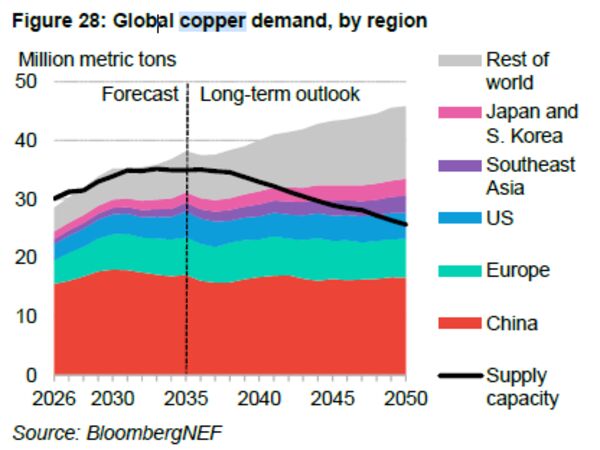
由于全球正大力推进从化石燃料向电气化的转型,各类汽车、数据中心等设施均需大量使用铜,这使得铜成为彭博新能源财经《过渡金属展望报告》中所列金属中供应最为紧张的品种。预计到2050年,与电气化相关的铜需求将大幅增长89%,达到2330万吨,占全球铜消费总量的半数以上。
The shift away from fossil fuels and toward electrifying everything from cars to data centers has made copper by far the most supply-constrained metal covered in BloombergNEF’s Transition Metals Outlook report. Demand linked to electrification is projected to spike 89% to 23.3 million tons in 2050, accounting for more than half of total copper consumption.
分析师们写道:“电气化交通是铜需求增长最快的应用领域。2026年至2050年间,电动汽车、电动卡车及巴士的普及率将飞速提升,这些交通工具的电动机、逆变器、电池组、高压电缆及充电设备均需大量使用铜。”此外,建筑、工业生产及各类消费品领域对铜的需求也将持续存在;虽然数据中心也会消耗部分铜,但其需求量在整个铜市场中仍微不足道。
“Electrified transport is the fastest-growing copper application,” the analysts wrote. “Electric cars, trucks and buses, whose adoption skyrockets over 2026-2050, require copper in motors, inverters, battery packs, high-voltage wiring and charging.”
目前地下确实蕴藏着充足的铜资源,但新矿及扩产项目的投产速度远远赶不上现有矿山产量下滑的速度。若缺乏额外投资,到2050年全球铜总产量可能从2026年的3000万吨降至2570万吨,降幅达14.5%。矿石品位的下降还会推高生产成本,而回收利用也难以弥补原生铜产量的减少。
The red metal will also continue to be in demand for construction, industrial production and consumer products, while data centers are just “a drop in the ocean for copper demand.”Enough copper may exist underground, but new and expanded mines are not coming online fast enough to offset declining output from existing operations. Without additional investment, total supply could fall 14.5% to 25.7 million tons by 2050, from 30 million tons in 2026. Falling ore grades will raise production costs, while recycling won’t be enough to offset lower primary output.
即便能筹集到所需的3320亿美元用于开发新矿,由于建设一座新铜矿平均需要17年时间,这一供应缺口预计至少要到2043年才能填补。
Even if the required $332 billion is invested in new mines, the gap is likely to remain open until at least 2043 because a new copper mine takes an average of 17 years to develop.
彭博新能源财经(BNEF)估计,智利预计将继续保持最大初级生产国的地位,尽管其产量预计将从2026年的580万吨降至2050年的480万吨。由于其他地区的产量下降速度更快,智利在开采供应中的份额仍将从24%上升至28%。
Chile is expected to remain the largest primary producer, although its output is forecast to fall to 4.8 million tons in 2050, from 5.8 million tons in 2026, BNEF estimates. The nation’s share of mined supply would nevertheless rise to 28% from 24% as production declines more rapidly elsewhere.