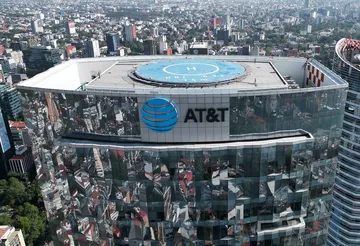
AT&T公司最终在墨西哥认输了。在试图拓展墨西哥市场十多年后,这家总部位于达拉斯的电信运营商上周宣布剥离其当地业务,实际上彻底退出了拉丁美洲市场。10月13日,该公司表示已同意以20亿美元现金将AT&T墨西哥公司出售给Grupo Televisa SAB(Televisa集团)和Fintech Holdings Inc.(Fintech控股公司),以便专注于其在美国的光纤和5G业务。
AT&T Inc. finally capitulated in Mexico. After a dozen years trying to expand in the country, the Dallas-based telecom provider announced last week the divestment of its local operations, effectively exiting the Latin American market altogether. On Oct. 13, the company said it had agreed to sell AT&T Mexico to Grupo Televisa SAB and Fintech Holdings Inc. for $2 billion in cash as it focuses on its fiber and 5G businesses in the US.
此举为对该地区感兴趣的企业高管、决策者和监管者提供了两大教训。首先,身为顶尖美国企业并不保证能在墨西哥这种复杂且独特的发展中市场取得成功。假设在美国的优势会延伸至拉美最大的几个国家是短视的。这些是艰难的市场,本地企业在第一手了解客户、理解——有时甚至帮助塑造——法规以及至关重要的政治环境方面拥有关键优势。AT&T本应从一开始就意识到,它是在劣势中竞争。
The move offers two big lessons for corporate executives, policymakers and regulators interested in the region. First, being a top American company doesn’t guarantee success in complex and idiosyncratic developing markets like Mexico’s. Assuming that strength in the US will carry over to Latin America’s biggest countries is short-sighted. These are tough markets, where locals hold key advantages in knowing their clients firsthand, understanding — and sometimes helping to shape — regulations and the all-important political environment. AT&T should have realized from the start that it was racing at a disadvantage.
其次,全球最大电信公司之一的退出无疑是墨西哥的损失。Televisa和由亿万富翁David Martínez(大卫·马丁内斯)掌舵的Fintech Holdings或许能成为为墨西哥客户提供更好服务的供应商,并最终对Carlos Slim(卡洛斯·斯利姆)的移动电话帝国构成挑战。但无论结果如何,没有任何其他大型国际集团提出竞购报价,这表明在某些领域,监管环境对外国公司已变得多么缺乏吸引力。
Second, the exit of one of the world’s biggest telecom companies is undoubtedly a loss for Mexico. Televisa and Fintech Holdings, headed by billionaire David Martínez, may well turn out to be better service providers to Mexican customers and finally mount a challenge to Carlos Slim’s mobile-phone empire. But regardless of that, the absence of any rival offer from another big international group shows how unattractive the regulatory environment has become for foreign companies in certain sectors.
这应令所有关心让顶级企业在大多数市场参与竞争的人感到担忧。别忘了,西班牙的Telefonica SA(西班牙电信)今年早些时候也将其墨西哥子公司出售给了一个私人财团,交易金额为4.5亿美元。
That should worry anyone who cares about having top players competing in most markets. Let’s not forget that Spain’s Telefonica SA also sold its Mexican unit earlier this year, in that case to a private consortium for $450 million.
AT&T的撤退在某种程度上是墨西哥未能建立竞争性电信市场的后果。前总统恩里克·培尼亚·涅托自2012年起推出的具体改革旨在迫使斯利姆的美洲电信与竞争对手共享基础设施并降低其市场份额。这些改革在安德烈斯·曼努埃尔·洛佩斯·奥夫拉多尔(2018年就任)及其继任者克劳迪娅·辛鲍姆的民族主义政府执政下陷入停滞。
The AT&T retreat is, in a way, the consequence of Mexico’s failure to create a competitive telecommunication market. The concrete reforms launched under President Enrique Peña Nieto from 2012 were meant to force Slim’s América Móvil to share infrastructure with rivals and reduce its market share. They stalled under the nationalist governments of Andrés Manuel López Obrador, who took office in 2018, and his successor Claudia Sheinbaum.
这些倒行逆施的改革中最具标志性的是去年联邦电信研究所被撤销,该自主机构成立于2013年,旨在打击反竞争行为。政府用一个最终对总统负责的机构取而代之。无论公平与否,这向投资者发出了信号,表明该行业将更多地基于政治而非技术考量进行监管,这往往会吓退外国企业。那些相信墨西哥长期以来关于寻求更具竞争性环境承诺的人,理应感到失望。
The most emblematic of these counter-reforms was last year’s elimination of the Federal Telecommunications Institute, the autonomous body created in 2013 to crack down on anticompetitive behavior. The government replaced it with an agency that ultimately answers to the presidency. Fair or not, that signaled to investors that the industry would be regulated with more political than technical bias, something that tends to scare foreign firms. Those who believed Mexico’s longstanding pledges of seeking a more competitive environment were right to be disappointed.
这并非要否认AT&T在墨西哥犯下了若干战略错误。首先,该公司于2015年空降其首任首席执行官赴墨西哥,而该高管既不会说西班牙语,也缺乏在墨西哥的重要经验。他的首要举措之一便是在一次采访中大肆宣称,公司将在10年内引领市场。不难想象,这并未让斯利姆感到愉快,因为美洲电信多年来作为股权投资的一部分,曾向AT&T支付丰厚股息,而该投资仅在美企决定自行重返墨西哥前几个月才结束。
None of this is to deny that AT&T made several strategic mistakes in Mexico. For a start, it parachuted its first CEO into the country in 2015 without him speaking Spanish or having significant experience in Mexico. One of his first moves was to brashly claim in an interview that the company would be leading the market within 10 years. It’s easy to imagine that didn’t sit very well with Slim, whose América Móvil had paid AT&T hefty dividends for years as part of an equity investment that only ended months before the US company decided to re-enter Mexico by itself.
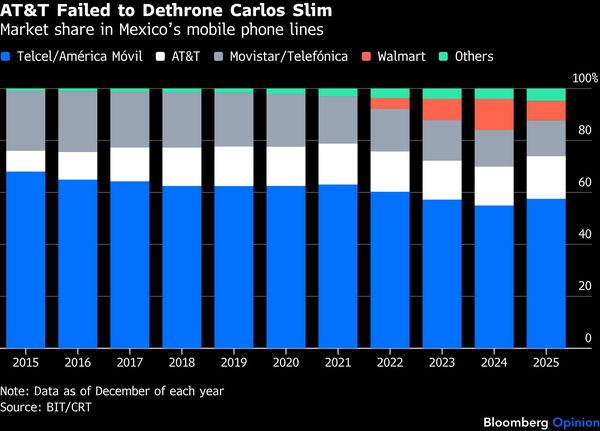
AT&T 在 2020 年才找到一位既深谙当地情况又拥有政治影响力的本地高管担任 CEO,此前该公司已更换了两任 CEO。到那时,亏损不断累积,AT&T 在墨西哥移动市场的份额仍远无法对 América Móvil 旗下的 Telcel 构成挑战,国际扩张也不再是公司的优先事项。尽管累计投资超过 100 亿美元,并建设了一个有助于降低资费的创新网络,该公司直到 2024 年才实现首个全年经营性盈利,无线用户占比仅为 16%,而 América Móvil 占据 58% 的市场份额。
AT&T went through two more CEOs before finding, in 2020, a local executive with both deep local understanding and political clout. By then, losses were piling up, AT&T’s share of Mexico’s mobile market was still nowhere near challenging América Móvil’s Telcel and the company’s international expansion stopped being a priority. Despite more than $10 billion of accumulated investment and building an innovative network that helped bring prices down, the company managed to post its first full-year operating profit only in 2024 and capture just 16% of wireless subscribers, compared with América Móvil’s 58% market No doubt, this is also testimony to the fantastic execution capacity of Slim & Co., who knew how to face the AT&T challenge and navigate the changing regulatory waters from a position of strength.
毫无疑问,这也证明了斯利姆及其团队极强的执行力,他们知道如何应对 AT&T 的挑战,并从优势地位出发驾驭不断变化的监管环境。他们给 AT&T 上了一堂在该国如何做生意的课,以及另一堂关于 的课。
They taught AT&T a lesson in how to do business in the country and another in .
但核心问题依然存在:墨西哥显然在受监管程度较高的行业(从能源、电信到交通)培育公平竞争方面存在问题,这对本已充满热情的外国企业构成了明显的抑制。伊berdrola SA 今年在与洛佩斯·奥夫拉多尔多次交锋后退出墨西哥,以及 Citigroup Inc. 缓慢剥离 Banamex,都是这些短板的例证。据传去年宣布的两家低成本航空公司合并案获批,合并后将占据墨西哥客运航空市场约 70% 的份额,这将是另一个朝错误方向迈出的步伐。
But the bottom line remains: Mexico clearly has a problem fostering competition on equal terms in more regulated industries, from energy to telecoms and transportation — a clear disincentive for otherwise enthusiastic foreign firms. The exit of Iberdrola SA this year after several clashes with López Obrador and Citigroup Inc.’s slow divestment of Banamex are examples of those shortcomings. The rumored approval of the merger of two low-cost airlines announced last year, which would give them roughly 70% of Mexico’s passenger airline market, would be another step in the wrong direction.
尽管 AT&T 自身也犯了不少错误,但它在一定程度上也是最新政治风向的受害者。一个更倾向于国家干预的政府似乎不太有兴趣在一个正经历剧烈变革的行业中推动更具竞争力、更面向消费者的市场。这实在遗憾。墨西哥需要更多像 AT&T 这样押注该国的企业,而不是更少。
For all its mistakes, AT&T was also partly a victim of the latest political winds. A more dirigiste government doesn’t seem very interested in promoting more competitive, customer-facing markets in an industry that's changing dramatically. That’s a shame. Mexico needs more AT&Ts betting on the country, not fewer.