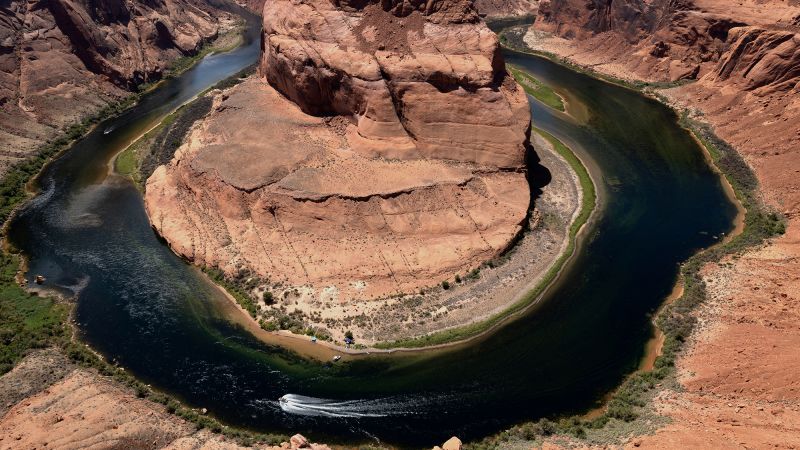
美国两大水库水位今年跌至前所未有的低点,干旱紧紧攥住西南部,但地下还在上演另一场水资源危机——它的能见度低得多,却同样令人担忧。
The United States’ two largest reservoirs have dropped to unprecedented lows this year as drought grips the Southwest, but below the ground there’s another water crisis playing out — one that’s much less visible, but no less alarming.
弗吉尼亚理工大学科学家在《水资源研究》期刊上发表的一项新研究显示,科罗拉多河流域的地下水量正在急剧下降,且呈现出意想不到的方式。
The amount of groundwater in the Colorado River Basin is declining rapidly, and it’s doing so in unexpected ways, according to a new study from scientists at Virginia Tech, published in the journal Water Resources Research.
米德湖和鲍威尔湖是西南部关键水资源问题的可见面孔,科罗拉多河——为近4000万人供水——因气候变化与人类需求的共同作用而萎缩。
Lake Mead and Lake Powell are the visible faces of the Southwest’s critical water problem, as the Colorado River — which supplies water to nearly 40 million people — shrinks due to a combination of climate change and human demand.
“然而,它们仅代表该地区水资源的一部分,”研究作者、弗吉尼亚理工大学地球科学研究生埃丝特·奥耶德莱说。“地下水是另一个必不可少的组成部分。”它是科罗拉多河流域至关重要的替代水源,尤其是在河流、湖泊和水库的地表水枯竭时。
“However, they represent only part of the region’s water resources,” said Esther Oyedele, a study author and a geosciences graduate student at Virginia Tech. “Groundwater is another essential component.”It is a vital alternative source in the Colorado River Basin, especially when surface water in rivers, lakes and reservoirs dries up.
为了描绘该地区地下水状况,科学家们将美国国家航空航天局(NASA)卫星的测量数据与2004年至2023年间的地表水、土壤湿度和积雪水量储存估算值进行了对比。
To build a picture of what’s happening to the region’s groundwater, the scientists compared measurements from NASA satellites with estimates of surface water, soil moisture and snow-water storage between 2004 and 2023.
他们发现,在这二十年间,整个流域的地下水均呈下降趋势,且2019年后损失加速。2020年至2022年的一场严重干旱导致了特别显著的下降——研究人员还发现了一个令人惊讶的转折。
They found declines across the basin during those two decades, with losses accelerating after 2019. A severe drought between 2020 and 2022 led to particularly significant falls — and the researchers found a surprising twist.
历史上,地下水下降通常更多发生在下科罗拉多河流域,该流域涵盖加利福尼亚州、亚利桑那州和内华达州。上流域包括科罗拉多州、新墨西哥州、犹他州和怀俄明州,因其地下水受益于落基山脉融雪汇流而下,往往表现出更强的韧性。
Historically, groundwater has typically declined more in the Lower Colorado River Basin, which encompasses California, Arizona and Nevada. The Upper Basin, which includes Colorado, New Mexico, Utah and Wyoming, has tended to be more resilient as its groundwater benefits from melting snow coursing down the Rocky Mountains.
然而,从2020年到2022年,上流域地下水下降了约618立方英尺,速度几乎是下流域的两倍,后者下降估计为332立方英尺。
However, from 2020 to 2022, groundwater in the Upper Basin declined by about 618 cubic feet, nearly twice the rate of the Lower Basin, which fell by an estimated 332 cubic feet.
“系统已达转折点:上游流域正经历快速地下水损失,”报告作者写道。
“The system has hit a turning point: The Upper Basin is now experiencing rapid groundwater losses,” the report authors wrote.
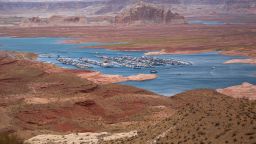
地表水与地下水在微妙的平衡中相互关联:雨水和融雪渗入地下补给含水层,同时地下水也能流入河流和湖泊,例如通过泉水。
Surface water and groundwater are linked in a delicate dance: Rain and melting snow seep into the ground and recharge aquifers, meanwhile groundwater can also make its way into rivers and lakes, for example through springs.
研究发现,上游流域与下游流域在这些关系的表现上存在巨大差异。融雪在上游流域发挥着重要得多的作用,该流域获得的降水多于总体更热、更干燥的下游流域。长期干旱、气温升高和积雪减少似乎正给上游流域地区带来额外压力。
There are big differences in how these relationships play out between the Upper and Lower Basins, the study found. Snowmelt plays a much more important role in the Upper Basin, which receives more precipitation than the generally hotter, drier Lower Basin. Prolonged drought, higher temperatures and reduced snow appear to be placing the Upper Basin region under additional pressure.
这项研究紧随去年发表的另一项研究,后者发现,在过去二十年间从科罗拉多河流域抽取的地下水量足以注满米德湖。
The research follows another study published last year, which found that the amount of groundwater pumped out of the Colorado River Basin over the previous two decades was enough to fill Lake Mead.
亚利桑那州立大学教授杰伊·法米利耶蒂是去年那项研究的作者之一,他当时表示,这些含水层需要数千年才能补满,“而我们人类在过去一个世纪里或多或少一直在耗尽它。”
It takes thousands of years to refill these aquifers, “and we as humans have more or less been burning through it over the last century,” Jay Famiglietti, an Arizona State University professor who was an author on last year’s study, said at the time.
法米利耶蒂最近告诉CNN,这篇论文和新研究的信息“都是:地表水获得了所有的政策(和)管理关注,但地下水主导了整个流域的损失。”
The messages of this paper and the new study “have been that while surface water gets all the policy (and) management attention, groundwater dominates the losses from the entire basin,” Famiglietti told CNN recently.
法米利耶蒂表示,地下水萎缩将成为一个问题,因为亚利桑那州、加利福尼亚州和内华达州被迫削减从科罗拉多河取水的量,他指的是8月发布的流域新运营计划。
Shrinking groundwater is going to be a problem as Arizona, California and Nevada are being forced to make cuts to the water they draw from the Colorado River, Famiglietti said, referring to a new operating plan for the basin published in August.
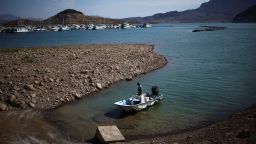
该研究未给出流域地下水剩余总量的细节,只说明了其随时间的变化情况。它也没有量化气候变化对水位下降的确切影响,与其他因素(包括人类用水需求和地下水开采)相比究竟如何。
The study does not give details on the total amount of groundwater remaining in the basin, only how it has changed over time. It also doesn’t quantify the exact impact of climate change on the falling water levels compared to other factors at play, including human water demand and groundwater extraction.
Oyedele 补充道:“该研究确实表明,‘地下水储量经历了大幅且持续的下降’。”
What the study does show is that “groundwater storage has experienced substantial and persistent declines,” Oyedele added.
她说:“仅关注水库可能会忽视该地区整体水资源挑战的一个重要组成部分”,并补充说,地下水不应被视为“无限的储备”。
“Focusing only on reservoirs could therefore overlook an important part of the region’s overall water challenges,” she said, adding that groundwater should not be seen as an “unlimited reserve.”