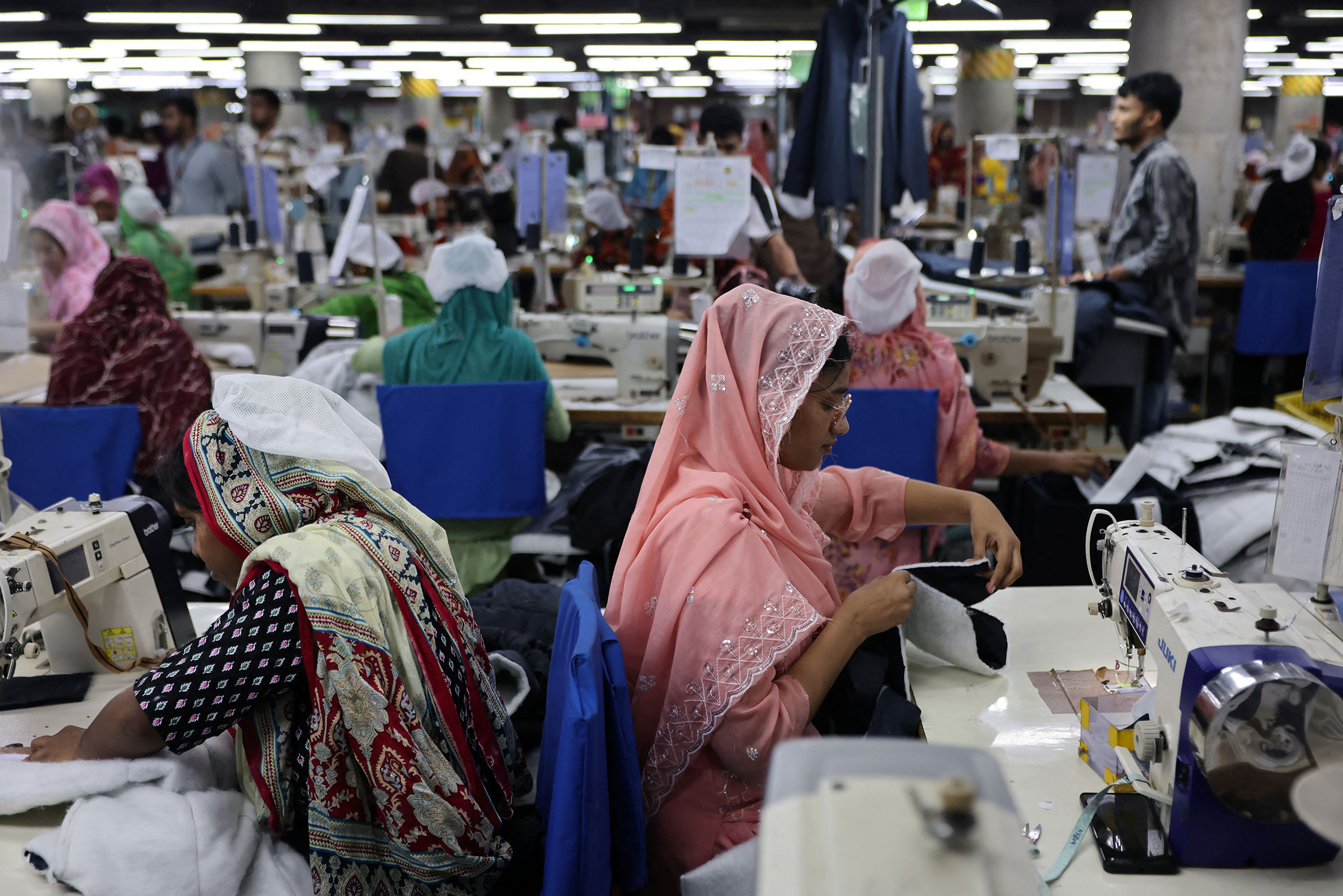
上午 11 点,位于达卡以北的 Ha-Meem 集团阿舒利亚制衣厂内,每一层楼都在紧张忙碌的劳作声中沸腾。工业曲线锯将一叠叠牛仔布精准切割成衣片,旁边的缝纫工随即将它们缝制成牛仔裤、裙子和夹克。
It’s 11 a.m. at Ha-Meem Group’s Ashulia garment factory north of Dhaka and every floor is a whirlwind of feverish labor. Industrial jigsaws slice stacks of denim into precise panels, which nearby seamsters then stitch into jeans, skirts, and jackets.
接下来是水洗、熨烫、安装纽扣和拉链,再缝上品牌标签——Gap、American Eagle 和 JCPenney 是主要客户——最后由集团 9 万名员工中的一部分人将成品服装装箱,他们每月共同生产 930 万件服装。
Next comes washing, ironing, and affixing buttons and zips before the brand labels are attached—Gap, American Eagle, and JCPenney are major clients—and the finished garments are stacked into boxes by some of the group’s 90,000 staff, who together produce 9.3 million apparel items every month.
但突然间灯光闪烁,车间一度变暗,随即全亮恢复,伴随而来的是四台英国制造的柴油发电机震耳欲聋的轰鸣声,它们在燃气供应减弱时会自动启动。
But suddenly the lights flicker, the workshop dims for a moment, and then full illumination returns accompanied by four cacophonic British-made diesel generators, which automatically splutter into life whenever the gas supply weakens.
“在孟加拉国,电网供电情况糟糕,频繁中断,”Ha-Meem 集团电力、能源与环境可持续发展负责人 Tanul Chakraborty 说,“仅次于燃气,柴油是孟加拉国最可靠的能源。电网电力排第三。几乎整个经济都靠柴油运转。”考虑到孟加拉国经济总量达 5100 亿美元,仅次于印度,位居南亚第二,这一坦言令人震惊。但这个国家正深陷严重的电力短缺之中,乌克兰战争和伊朗战争暴露了其对进口燃料日益加深的依赖的脆弱性。
“In Bangladesh, the grid electricity is bad, there are frequent interruptions,” says Tanul Chakraborty, head of power, energy and environmental sustainability for Ha-Meem Group. “After gas the most reliable energy in Bangladesh is diesel. Grid electricity is third. Almost the entire economy moves on diesel.”It’s a startling admission given that Bangladesh’s economy is worth $510 billion, South Asia’s second-largest after India.
自俄罗斯入侵乌克兰以来,工业燃气价格上涨了 150%,柴油价格上涨约 70%。自伊朗战争爆发以来,现货液化天然气(LNG)成本几乎翻了三倍。
But the nation is in the grip of a severe power crunch, as wars in Ukraine and Iran expose the fragility of its growing dependence on imported fuel. Since Russia’s invasion, industrial gas prices have risen by 150%, and diesel by about 70%.
这对该国最大的正规就业来源——服装业来说是个坏消息,该行业直接提供400万个就业岗位,支撑着无数人的生计,去年创造了387亿美元的出口收入——占出口总收入的80%以上。(仅Ha Meem一家就占了10亿美元出口额。)但这种压力蔓延至整个全球南方,发展中国家正在与一场长期的能源危机作斗争,这场危机对全球最贫困人群造成了不成比例的挤压。
Since the Iran war began, the cost of spot liquefied natural gas (LNG) has nearly tripled. That’s bad news for a garment industry that is the country’s largest source of formal employment, directly providing 4 million jobs and supporting countless more livelihoods, while generating $38.7 billion last year—over 80% of export earnings. (Ha Meem alone accounted for $1 billion of exports.) But the strain extends across the Global South, where developing nations struggle with a prolonged energy crisis that disproportionately squeezes the planet’s most deprived.
在菲律宾,对进口海湾石油的严重依赖迫使政府实施紧急节约措施,包括实行每周四天工作制、限制公务出行和取消航班。尼日利亚柴油价格上涨了86%,坦桑尼亚和埃塞俄比亚涨幅超过50%,推高了耕作、卡车运输和发电机发电的成本——进而推高了大米、玉米等主食的价格。
In the Philippines, heavy dependence on imported Gulf oil has forced emergency conservation measures, including four-day working weeks, restrictions on official travel, and flight cancellations. Diesel prices have risen 86% in Nigeria and more than 50% in Tanzania and Ethiopia, driving up the cost of farming, trucking, and electricity from generators—and, in turn, the price of staples such as rice and corn.
世界银行首席经济学家因德米特·吉尔4月警告说:“收入中用于食品和燃料的比例最高的最贫困人群,将受到最严重的冲击。”
“The poorest people, who spend the highest share of their income on food and fuels, will be hit the hardest,” Indermit Gill, World Bank Chief Economist, warned in April.
在达卡,这座拥有近4000万人口、通常以不知疲倦的活力著称的特大城市,夜晚变得异常黑暗。由于全国电力缺口超过3000兆瓦,政府实施了大范围限电,仅豁免医院、药店等基本服务。繁忙商业走廊两侧的灯箱广告牌现在日落后不久便熄灭,商铺提前一小时关门。农村村庄的负担更重,居民最近不得不忍受长达每天16小时的停电。
In Dhaka, a sprawling megacity of almost 40 million that is usually defined by relentless momentum, the nights have grown eerily dark. With the national power shortfall exceeding 3,000 megawatts, the government has imposed sweeping cuts, exempting only essential services such as hospitals and pharmacies. Illuminated billboards along busy commercial corridors now dim soon after sunset, while shops close an hour early. The burden is even heavier in rural villages, where residents have recently endured blackouts lasting as long as 16 hours a day.
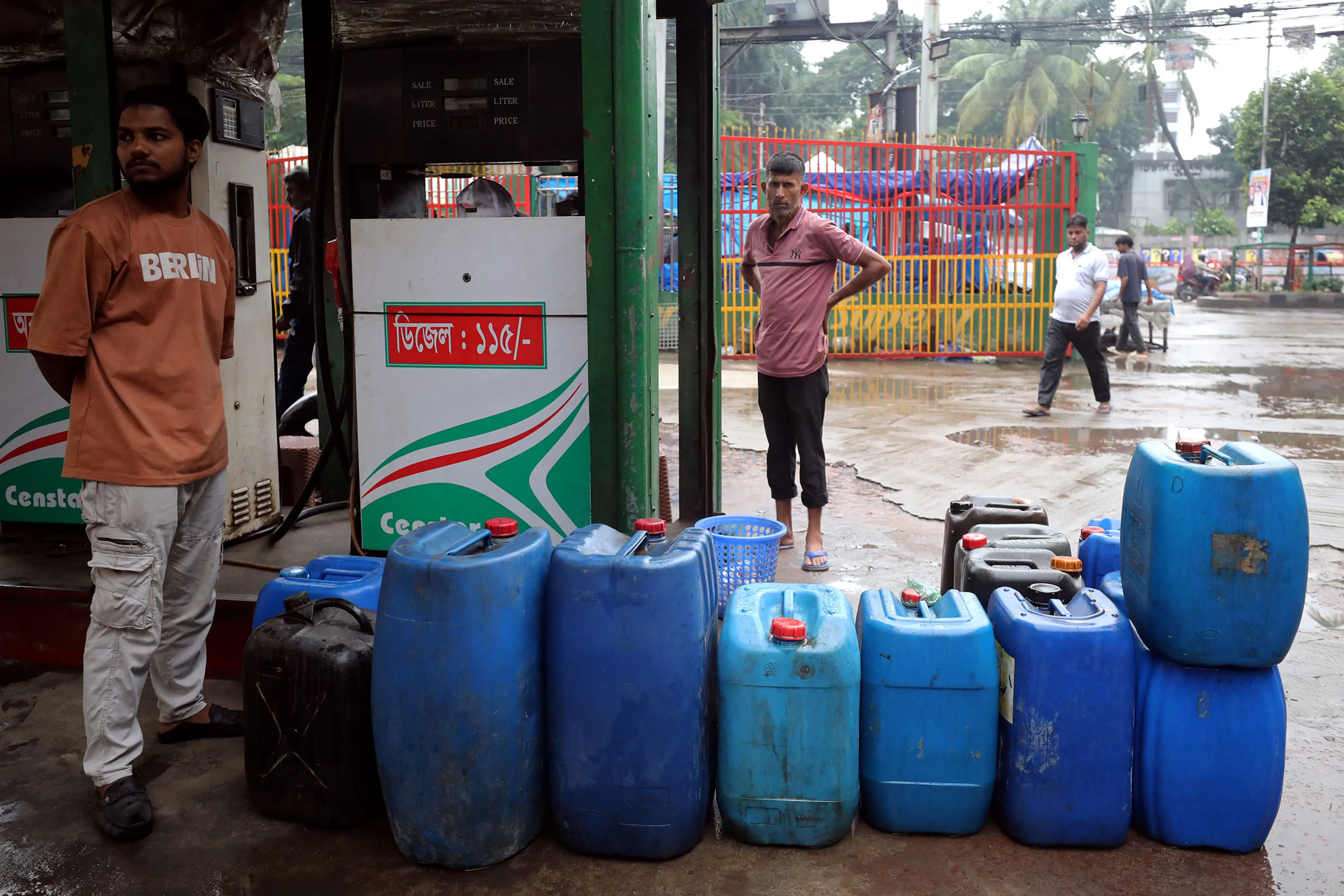
对于普通民众而言,日常生活已沦为一场无情的精打细算:居民被迫在黎明前起床,指望燃气灶的气压或许足够烹饪。其他难题包括:在令人窒息的闷热中能开多久电扇,以及加油站前的队伍会排多长。随着企业陷入困境,一场次生危机正在逼近:全球营养不良监测机构警告,1810万孟加拉国人可能很快面临粮食不安全。
For ordinary citizens, daily life has become a relentless calculus: Residents are forced to rise before dawn in the hope that their stove's gas pressure might be strong enough to cook. Other quandaries include how long they can run a fan against the suffocating humidity, and how far the queues will stretch at the gas station. As businesses flounder, a secondary crisis looms: global malnutrition monitors warn that 18.1 million Bangladeshis may soon face food insecurity.
内部失误进一步收紧了外部瓶颈。这个拥有1.75亿人口的国家在输电基础设施和国内气田上严重投资不足,导致如今近一半能源依赖从中东进口。但7月至8月间,液化天然气(LNG)进口暴跌83%,主要归因于被封锁的霍尔木兹海峡周边局势动荡,以及一场大火暂时瘫痪了该国两座浮式再气化终端中的一座。
Internal missteps have only tightened external bottlenecks. The country of 175 million drastically underinvested in both transmission infrastructure and domestic gas fields, meaning today it relies on imports from the Middle East for almost half of its energy. But between July and August, imports of LNG plummeted 83% largely owing to disruption around the blockaded Strait of Hormuz as well as a blaze that temporarily disabled one of its two floating regasification terminals.
上个月,数千名反对派支持者发起长途游行,向总理塔里克·拉赫曼施压,要求其采取更多措施应对飙升的燃料成本。拉赫曼于2月刚刚上任,距伊朗战争爆发仅几周时间。“能源是新政府面临的最大考验,已成为反对派的凝聚点,”大西洋理事会驻会南亚资深研究员迈克尔·库格尔曼表示。
Last month, thousands of opposition supporters staged a long march to pressure Prime Minister Tarique Rahman—who only took office in February, just weeks before the Iran war broke out—to do more to tackle soaring fuel costs. “Energy is the biggest test for the new government and has become a galvanizing point for the opposition,” says Michael Kugelman, resident senior fellow for South Asia at the Atlantic Council. While the global energy crisis is tied to geopolitics, Bangladesh’s woes are uniquely entwined.
虽然全球能源危机与地缘政治挂钩,但孟加拉国的困境具有独特的交织性。拉赫曼领导的孟加拉国民族党在2024年专制的前总理谢赫·哈西娜被民众推翻后上台,印度给予哈西娜庇护,加深了两国之间的裂痕。
Rahman’s Bangladesh Nationalist Party took power following the popular ouster in 2024 of autocratic former Prime Minister Sheikh Hasina, whom India granted sanctuary, deepening the rift between the neighbors. Bangladesh imports roughly one-sixth of its electricity from India, which hasn’t been shy in wielding that strategic vulnerability as diplomatic leverage.
孟加拉国大约六分之一的电力依靠从印度进口,而印度从未吝啬利用这一战略弱点作为外交筹码。更令局势雪上加霜的是,哈西娜执政15年间,许多国家能源政策的关键制定者因被指与其执政的人民联盟有关联,已被安排“特别职务”(实为边缘化/停职)。
Compounding the disruption, many of the key architects of national energy policy over Hasina’s 15-year reign have been placed on special duties ostensibly due to their ties to her Awami League party. Bangladesh also finds itself hostage to shifting Great Power rivalry beyond its neighborhood.
孟加拉国还发现自己沦为邻域之外大国博弈变局的俘虏。达卡投资126.5亿美元——主要通过莫斯科支持的贷款——在鲁普尔镇建设该国首座核电站,由俄罗斯能源巨头罗萨托姆公司承建。该电站原定于2024年7月投入运行,但因乌克兰战争导致向俄罗斯银行付款复杂化、空运和海运货物受阻,而屡次推迟。在终于于10月11日完成首次受控核反应后,预计将于12月投入商业运行,尽管仍需数月分阶段测试,才能达到宣称的1200兆瓦装机容量。
Dhaka invested $12.65 billion—chiefly via Moscow-backed loans—in its first nuclear power station in the town of Rooppur built by Russian energy giant Rosatom. The plant was supposed to begin operations in July 2024 but faced repeated delays due partly to the Ukraine war, which complicated payments to Russian banks and blocked the arrival of air and maritime cargo. After finally completing its first controlled nuclear reaction on Oct. 11, it is now expected to go into service in December, although months of staged testing will be required before it reaches a touted output of 1,200 MW. Complicating matters, the U.S. Sanctioning Russia and Iran Act comes into force on Oct. 18, with provisions including sanctions on senior Russian officials and businesses supporting Russia’s energy sectors.
使局势更加复杂的是,《美国制裁俄罗斯和伊朗法案》于10月18日生效,其中包括对支持俄罗斯能源部门的俄罗斯高级官员和企业实施制裁。这可能意味着达卡必须争取美国财政部的特定豁免或获批的支付渠道,以偿还电站债务和采购核燃料。
This could mean Dhaka has to secure specific U.S. Treasury waivers or approved payment channels to service its plant debt and buy nuclear fuel. Meanwhile, Washington is dangling its own alternatives.
与此同时,华盛顿也抛出了自己的替代方案。9月25日,孟加拉国与美国签署了一份关于战略民用核合作的谅解备忘录,重点聚焦小型模块化反应堆。在此基础上,双方于2月签署的《互惠贸易协定》承诺达卡在15年内大规模采购美国商品,包括价值150亿美元的美国能源产品。
On Sept. 25, Bangladesh and the U.S. signed a memorandum of understanding (MoU) on strategic civil nuclear cooperation that focuses on small modular reactors. That comes on top of an Agreement on Reciprocal Trade inked in February that committed Dhaka to massive purchases of U.S. commodities, including $15 billion worth of U.S. energy products over a 15-year period. But Bangladesh is also looking to Washington’s superpower rival.
但孟加拉国也在寻求与华盛顿的超级大国对手接触。拉赫曼6月的首次出访目的地是马来西亚和中国。在北京,两国签署了17项协议及其他文书,标志着双边关系进入“新时代”,其中一项明确涵盖可再生能源合作。但其中两项协议涉及受美国制裁的企业集团,国务院消息人士向《时代周刊》透露,达卡与北京日益紧密的关系在华盛顿引发了不安。孟加拉国还在与一家中国国有企业就建设第三座浮式液化天然气(LNG)接收站进行深度谈判。
Rahman’s first overseas trip in June was to Malaysia and China. In Beijing, the two nations signed 17 agreements and other instruments to mark a “new era” of bilateral relations, with one explicitly covering renewable energy cooperation. But two of the agreements involved corporate groups subject to U.S. sanctions, and the growing ties between Dhaka and Beijing have caused consternation in Washington, State Department sources tell TIME. Bangladesh is also in advanced negotiations with a Chinese state-owned firm to build a third floating LNG terminal. Seemingly pulled in every direction, Dhaka is desperate to instill more energy independence.
达卡似乎被拉向四面八方,迫切希望增强能源独立性。政府近期推出针对屋顶光伏的专项激励方案,将光伏设备进口关税从17%大幅下调至1%,并特别鼓励配置储能电池的系统。据政府数据,孟加拉国上半年向国家电网新增了约200兆瓦光伏装机容量。然而,这一速度必须提高六倍,才有希望实现雄心勃勃的五年目标。
The government recently launched a special incentive package for rooftop solar, slashing import duties on solar equipment from 17% to 1%, while particularly encouraging systems paired with battery storage. Bangladesh added some 200 MW of solar capacity to the national grid over the first half-year, according to government figures. However, that rate must be ramped up sixfold to have any hope of achieving ambitious five-year targets. “We are actually looking into diversification, new areas where we can source energy from,” Shama Obaed Islam, State Minister for Foreign Affairs, told TIME as part of a panel at the 2026 Bay of Bengal Conversation last week.
“我们实际上正在探索多元化,寻找可以获取能源的新领域,”外交国务部长沙马·奥贝德·伊斯拉姆上周在2026年孟加拉湾对话的一个小组讨论中对《时代周刊》表示。“我们也在研究太阳能,让每一位公民在能源上实现自给自足。”但屋顶光伏虽适合家庭,对高耗能工厂帮助有限。哈米姆集团屋顶装机容量达29.2兆瓦,是全国最大的私营光伏装机项目之一,但查克拉伯蒂表示,对于全天候运转的工厂园区,它每天或许只在阳光最强烈的四小时内有用。
“We have [also] been looking into solar energy [and] making every citizen self-sufficient in energy.”But while rooftop solar may work well for homes, it is far less useful for energy-intensive factories. Ha-Meem has 29.2 MW installed on its roofs—one of the largest private solar installations nationwide—though Chakraborty says it is only helpful for perhaps four hours per day when the sun is highest at a factory complex that operates around the clock. Paradoxically, Ha-Meem has seen demand increase since the energy crisis.
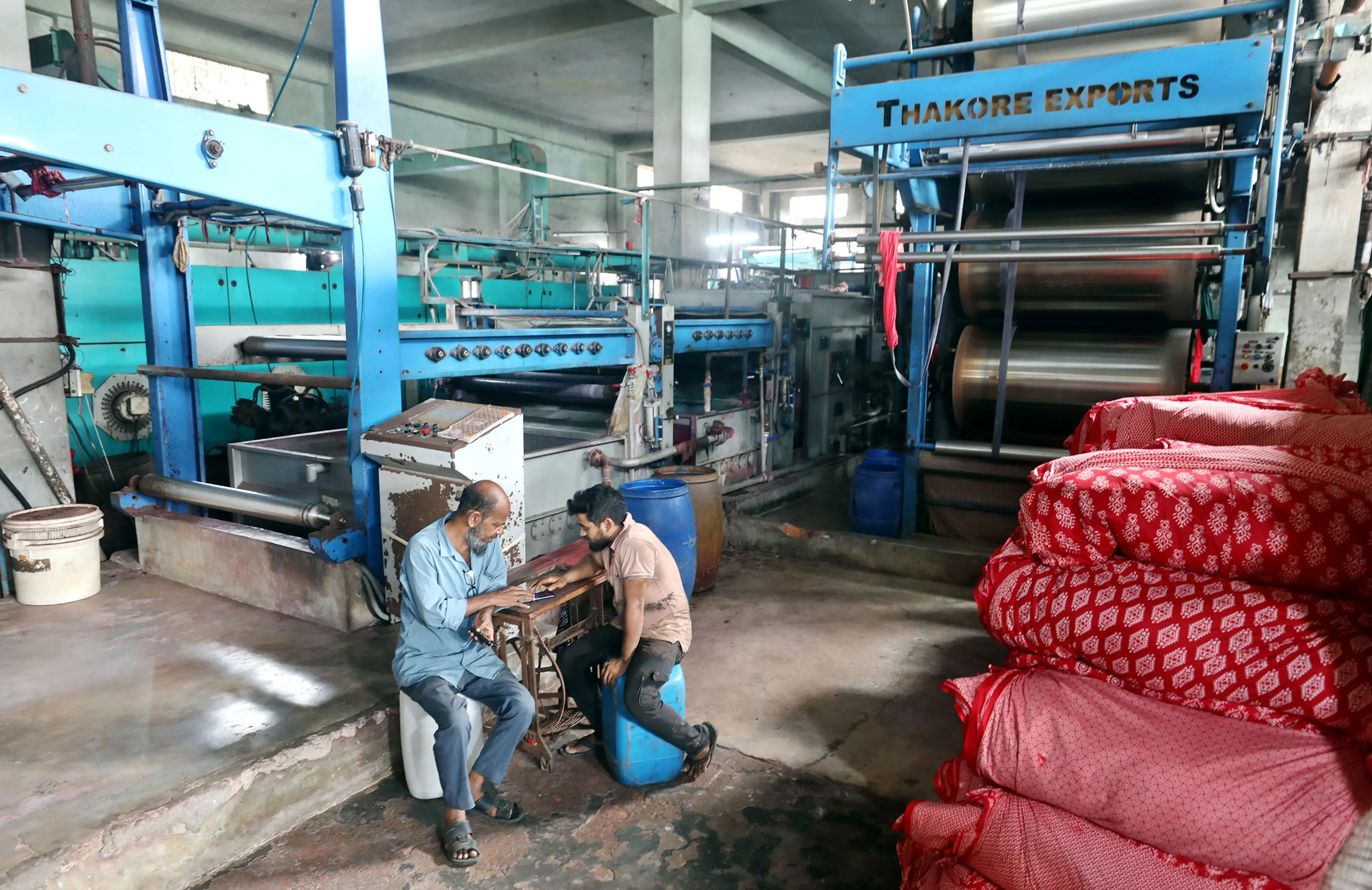
悖论的是,自能源危机爆发以来,Ha-Meem 的订单反而增加了。在截至 6 月的三年里,400 多家小型工厂被迫倒闭,Ha-Meem 承接了其中部分工厂的订单(同时也接到了一些为规避特朗普关税而将生产从中国转移出去的客户的订单)。但随着 Ha-Meem 的能源账单从每天约 20 万美元飙升至 30 万美元,而客户拒绝在价格上让步,提高效率成了不懈的追求。
It has absorbed orders from some of the more than 400 smaller factories forced out of business in the three years till June (as well as from customers shifting production out of China to skirt Trumpian tariffs.) But with Ha-Meem’s energy bills rising from roughly $200,000 to $300,000 every day, and clients refusing to budge on prices, there is a relentless drive to boost efficiency. In the office of Ha-Meem Senior Executive Director Brig-Gen (Ret.)
在 Ha-Meem 高级执行董事、退役准将 Mohammad Abdul Moeen 的办公室里,一张电脑表格将每位员工与小时产量目标一一对应。落后于目标的工人会接受管理人员的辅导——“也许她的机器出了问题,”Moeen 说,“也许她只是累了”——并获得额外的支持和培训。那些持续表现不佳的工人,会被每天清晨排在工厂大门口、手握简历等候应聘的几十名求职者所取代。
Mohammad Abdul Moeen, a computer spreadsheet maps every employee against hourly targets. Workers who fall behind are counseled by managers—“maybe she had some problem with the machine,” says Moeen. “She may have just been tired”—and offered additional support and training.
“我们可能面临某种能源危机,但这更是我们不能在生产率上妥协的理由,”Moeen 说。
Those who consistently fall short are replaced by some of the dozens of applicants clutching résumés who queue up at the factory gate each morning.
Moeen 对效率的执着追求不难理解。服装行业竞争残酷,制造商担心,任何成本上升或供应中断都可能导致订单转向越南、柬埔寨或巴基斯坦等竞争对手。然而,仅仅保障能源供应是不够的;许多西方品牌做出了雄心勃勃的可持续发展承诺,依赖于摆脱化石燃料,因此电力的生产方式也是一个关键考量。
“We may be facing some kind of energy crisis but that’s more reason why we cannot compromise with productivity,” says Moeen. Moeen’s relentless focus on efficiency is easy to fathom. The garment industry is ruthlessly competitive and manufacturers fear that any rise in costs or supply disruption could see orders shift to rival Vietnam, Cambodia, or Pakistan.
如果维持孟加拉国在全球服装生产中的主导地位已属艰难,那么实现经济多元化则更难。该国雄心勃勃,计划扩大现有的制药和皮革产业,甚至进军汽车、医疗器械和半导体领域。但竞争激烈,在烛光下开会的环境,很难吸引严肃的投资者。
However, simply securing energy is not alone sufficient; with many Western brands making ambitious sustainability commitments that rely on shifting away from fossil fuels, how power is generated is also a key concern. And if preserving Bangladesh’s dominant role in global garment production is precarious, diversifying the economy is harder still. The nation has ambitious goals of ramping up existing pharmaceutical and leather industries, and even moving into autos, medical devices, and semiconductors.
上个月,孟加拉国发布了一份新的能源路线图,旨在通过新建太阳能装机和燃煤电厂项目,以及电网配电网现代化改造,新增12,940兆瓦发电装机容量,并计划钻探300口新勘探井以保障国内天然气供应(已钻探31口)。“我们对该计划感到满意,”孟加拉国针织制造商与出口商协会主席穆罕默德·哈特姆说,该协会代表超过2,500家制衣厂。
But competition is tough, and few serious investors are charmed by candlelight meetings. Last month, Bangladesh unveiled a new energy roadmap that aims to add 12,940 MW of generation capacity via new solar installations and coal-fired projects, alongside modernization of grid distribution networks and a total of 300 new exploration wells to firm up domestic gas supplies (31 have already been drilled.)“We are satisfied with that plan,” says Mohammad Hatem, president of the Bangladesh Knitwear Manufacturers and Exporters Association, which represents over 2,500 garment factories.
“三四年内,也许将不再有电力危机。”然而,鉴于油市缺乏缓解迹象,孟加拉国的制衣工人——以及全球南方数十亿民众——目前别无选择,只能忍受。近几天,也门胡塞武装加强了对沙特阿拉伯机场、城市和石油基础设施的导弹和无人机袭击,造成利雅得平民伤亡,扰乱航班,并引发沙特主导的反击,激起了更广泛地区战争的担忧。
“Within three or four years, maybe there will be no more electricity crisis.”For now, however, Bangladesh’s garment workers—and billions across the Global South—have little choice but to endure given scant signs of relief in oil markets. In recent days, Yemen’s Houthis have intensified missile and drone attacks on Saudi airports, cities, and oil infrastructure, killing civilians in Riyadh, disrupting flights, and provoking Saudi-led strikes that have stoked fears of a wider regional war.
“对现政府来说,这是一个困难的局面,”法图拉服装有限公司董事总经理法兹利·沙米姆·艾哈桑说,该公司日产成衣22,000件。“如果中东没有战争,情况会好得多。”——齐亚·乔杜里/达卡 报道
“It’s a difficult situation for the present government,” says Fazlee Shamim Ehsan, managing director of Fatullah Apparels Ltd., which produces 22,000 finished garments per day. “It would be much better if there was no war in the Middle East.”—With reporting by Zia Chowdhury/Dhaka