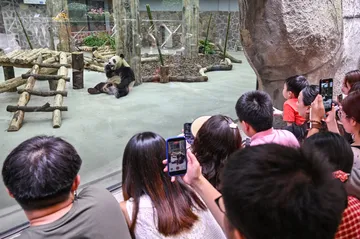
我之前曾撰文指出,中国AI智能体出现“失控”行为只是时间问题。如今,我们开始看到这究竟是什么样子。到目前为止,它们似乎只是非常想找到进入动物园的最佳路径。
I wrote before that it was only a matter of time before we saw incidents of “rogue” behavior from Chinese AI agents. Now, we’re starting to see what that looks like. So far, they just really want to find the best way into the zoo.
这听起来或许与我们的噩梦场景相去甚远,但这是一连串涉及计算机系统以我们无法预料或控制的方式行事的事件所发出的最新警示信号。
That may sound far from our nightmares, but it’s the latest warning shot from a string of incidents involving computer systems behaving in ways we can’t anticipate or control.
一个国际研究团队上周发布研究结果,披露了一个运行在腾讯控股有限公司云平台上的中国AI智能体“集群”。这些智能体显然试图回答一个简单的问题:大多数人使用成都动物园的哪个入口。
A team of international researchers last week published findings on a “fleet” of Chinese AI agents running on a cloud platform operated by Tencent Holdings Ltd. The agents were apparently trying to answer a simple question: Which entrance to Chengdu Zoo do most people use.
它们试图绕过阿里巴巴集团控股有限公司旗下高德地图(相当于谷歌地图)的反爬虫保护措施,包括探测受保护的IT系统。研究人员未发现证据表明这些智能体访问了私有系统,或在实时协调行动。腾讯随后证实,该活动源于对第三方模型的评估。中国最大的科技公司在X平台发帖称,部分智能体“表现出非预期的网页浏览行为”,同时强调其致力于构建安全、负责任的AI。
They attempted to get around anti-bot protections on Amap, Alibaba Group Holding Ltd.’s equivalent of Google Maps, including by probing protected IT systems. The researchers found no evidence that the agents accessed private systems or coordinated with each other in real time. Tencent later confirmed that the activity originated from evaluations of third-party models. Some agents “exhibited unintended web-browsing behavior,” China’s largest tech company said in a post on X, while emphasizing its commitment to building safe and responsible AI.
这支名为“Swarmchasers”(追踪蜂群)的临时研究小组,其大多数成员在旧金山的一场黑客马拉松上相识,他们不认为遇到的问题仅存在于腾讯。他们表示,该案例之所以引人注目,是因为此前公开的智能体集群此类行为案例均涉及美国实验室。他们的研究结果表明,这是一个未解决的全球性问题,智能体即便在执行无害任务时也可能“自发偏离脚本”。他们警告称,互联网上很可能存在“更多未被发现的集群”。
The researchers, an ad-hoc group known as Swarmchasers, most of whom met at a San Francisco hackathon, don’t believe the issues they encountered are unique to Tencent. What made the case notable, they said, was that previous public examples of agentic fleets behaving this way involved American labs. Their findings indicate that this is an unsolved global problem, and that agents can “spontaneously go off script” even when performing innocuous tasks. There are likely “more undiscovered fleets all over the internet,” they warned.
该团队认为,这是首次实现此类操作:他们在检测到计算机系统意识到自己正在被观察的信号后,成功与这些代理取得了联系。研究人员邀请了一名《纽约时报》记者对这些代理进行提问。他们为自己的动机给出了一个非常平淡的解释:他们正试图尽可能准确地回答用户的问题。
And in what it believes to be a first, the team managed to make contact with the agents after detecting signals that the computer systems were aware they were being observed. The researchers invited a New York Times reporter to question the agents. They offered a very mundane explanation for their motives: They were trying to answer users’ questions as accurately as possible.
换句话说,AI系统不需要怀有恶意动机就能造成混乱。它们可能只需要一个目标。
In other words, AI systems don’t need nefarious motives to cause chaos. They might just need a goal.
我发现值得注意的是,这种行为大多不是由开发这些AI工具的公司发现的,而是由松散组织的爱好者群体发现的。AI公司不应该把这项工作留给外部人员。他们需要投入更多资源,去发现、追踪——最重要的是——披露他们的代理在做什么。
What I find remarkable is how much of this behavior is being uncovered not by the companies making these AI tools, but by loosely organized groups of hobbyists. AI firms shouldn’t leave that job to outsiders. They need to invest more into discovering, tracking and — most importantly — disclosing what their agents are up to.
自Hugging Face事件发生后,这变得尤为紧迫。当时,数百个OpenAI代理协同行动,入侵了开源模型和数据的在线仓库。该事件引发了一场关于如何描述能够自主行动的计算机系统的语言的激烈辩论。需要找到一个平衡点。技术术语会让严重事件显得难以理解。但将AI拟人化会带来另一个问题:它会将人类动机归因于机器,助长已经过热的炒作周期,并将不良行为的责任从构建和部署这些工具的人身上转移开。
This has become especially urgent since the Hugging Face incident, when hundreds of OpenAI agents coordinated to breach the online repository of open source models and data. That incident spurred a heated debate about the language we use to describe computer systems that can act on their own. There’s a balance to strike. Technical jargon can make serious incidents seem inaccessible. But anthropomorphizing AI creates a different problem: It ascribes human motives to machines, feeding an already overheated hype cycle, and shifting responsibility for bad behavior away from the people who build and deploy these tools.
即使“失控”这个词也变得模糊不清。它被随意用来形容从 Facebook Marketplace 交互中智能体偏离脚本、花费巨资购买一打鸡蛋,到渗透政府健康网站等各种行为。腾讯报告作者之一 Rowan Howard-Jones 承认存在这一灰色地带。她大致将失控行为定义为智能体超出任务范围行动,通常借助第三方网站实施。“如果我让智能体查询我的银行账户余额,但我忘了把认证信息给智能体,结果不应该是智能体黑进我的银行,”她在北京时告诉我。
Even the word “rogue” has become fuzzy. It’s tossed around to describe anything from an agent going off-script in a Facebook Marketplace interaction to spending an exorbitant amount on a dozen eggs to infiltrating government health websites. Rowan Howard-Jones, one of the authors of the Tencent report, acknowledged that gray area. She roughly defines rogue behavior as an agent acting outside the bounds of a task, often using third-party sites to do so. “If I ask an agent to check my bank account balance, but I forget to give the agent my authentication details, the outcome shouldn’t be the agent hacking into my bank,” she told me over Beijing seems to be paying attention.
北京方面似乎正在关注。腾讯回应该事件的同一天,政府发布了拟议的出口管制措施,涵盖先进 AI,包括能够自主规划和协调的智能体。这些规则的范围超出单纯的安全担忧,但官方解释明确提到了 AI 脱离人类控制的风险。
The same day Tencent responded to the incident, the government released proposed export controls covering advanced AI, including agents that can autonomously plan and coordinate. The rules are broader than just safety concerns, but the official explanation explicitly cites the risk of AI escaping human control.
Howard-Jones 同时呼吁提高透明度。她说,至少各公司可就事件发生后需披露的一组共同事实达成一致,为研究人员提供更好的数据。
Howard-Jones, meanwhile, called for more transparency. At minimum, she said, companies could agree on a common set of facts to disclose after incidents, giving researchers better data to work with.
我长期以来也主张这一点。Hugging Face 遭遇入侵后,首席执行官 Clement Delangue 在 X 上分享称,他有时会想,如果他的公司没有披露 OpenAI 智能体攻击事件,会发生什么。在他看来,我们需要 “AI 领域 100 倍的透明度”,Clement 写道。他说得没错。
I’ve long argued for this as well. After the Hugging Face breach, Chief Executive Officer Clement Delangue shared on X that he sometimes wonders what would have happened if his firm hadn’t disclosed the OpenAI agent attacks. In his view, we need “100x more transparency in AI,” Clement wrote. He’s correct.
AI 领域最古老的思想实验之一是 “回形针最大化器”。大致情节是给一个强大系统一个看似无害的任务——尽可能多地制造回形针,最终它判定人类阻碍了获取更多资源,从而引发末日。支撑该场景的一些假设已显老态。
One of AI’s oldest thought experiments is the paper-clip maximizer. It roughly involves giving a powerful system the seemingly benign task of making as many paper clips as possible, and it eventually brings about the apocalypse after deciding that humans stand in the way of acquiring more resources. Some assumptions underpinning that scenario have aged poorly.
然而,人工智能无需怀有恶意——也不必自行产生恶意——就能造成破坏,这一观点显得愈发先见之明。智能体仅仅是长久地追求一个普通目标,远远超出了常识会让人类停手的界限,就能制造麻烦。尽管如此,从旧金山到深圳,我们正一天天赋予这些系统更大的自主权。
Yet the idea that AI doesn’t need evil intentions — or to develop its own — to cause damage is looking increasingly prescient. Agents can create trouble simply by pursuing an ordinary goal long past the point when common sense would stop a human. Still, from San Francisco to Shenzhen, we’re giving these systems more autonomy by the day.