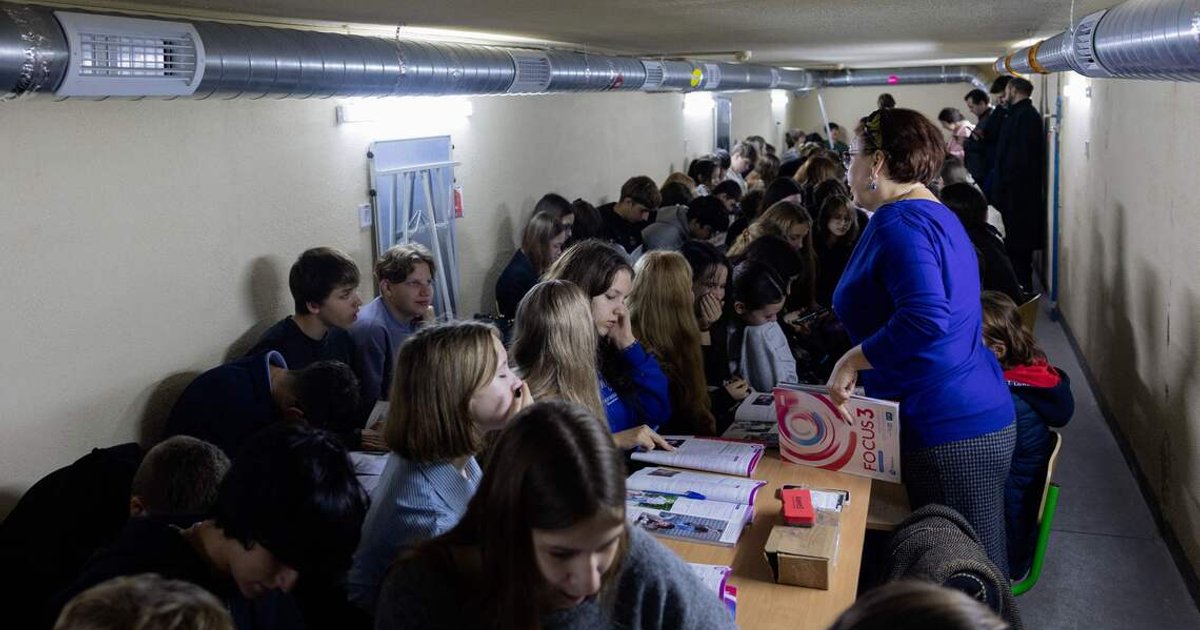
基辅的学童在防空警报响起时冲向避难所,俄罗斯的袭击昼夜不断,使地下上课成为日常。
Kyiv schoolchildren now rush to shelters during air raid alerts, as Russia’s attacks hit by day and make underground lessons part of daily life.
在UMKA小学,教师和工作人员安抚学生,家长在聊天群里获取安全信息,孩子们一起保持镇定。
At UMKA primary school, teachers and staff comfort pupils, while parents get safe updates in chat groups and children stay calm together.
只有40%的基辅学校拥有足够的避难空间,且许多设施简陋,但UMKA的私人地下避难所帮助课堂得以继续。
Only 40% of Kyiv schools have enough shelter space, and many are poorly equipped, but UMKA’s private underground shelter helps keep classes going.
AI生成的基辅——当基辅地区的防空警报响起时,孩子们知道该怎么做:他们抓起小背包,奔向避难所,抛下自行车、玩具,甚至是操场上的玩偶。
AI generated KYIV – When the air raid alert sounded over the Kyiv region, children knew exactly what to do: they grabbed their tiny backpacks and ran towards the shelter, abandoning bikes, toys and even a doll on the school playground.
老师们把落后的孩子抱起,领进避难所入口,清洁工则在操场上巡查,边检查是否有人被遗落边嘀咕。
Teachers scooped up the stragglers and ushered them into the shelter’s entrance, while the cleaner scanned the playground, muttering as she checked that no one had been left behind.
“大家快点进避难所,快,快,快!”基辅郊区UMKA小学的校长瓦伦蒂娜·库林娜说。风险让每个人都感到沉重。
“Everyone to the shelter, quickly, quickly, quickly!” said Valentyna Kurinna, director of the UMKA primary school in Kyiv’s suburbs. The risks weighed heavily on everyone’s minds.
就在几天前,一架无人机撞向同一操场,差点击中一名站在外面的老人,孩子们已经在地下避难。
Just a few days earlier, a drone slammed into the same playground, narrowly missing a grandfather who stayed outside while the children had taken cover underground.
法新社获得的监控录像显示,老人抬头望向天空,几秒后便跑开,随后爆炸产生的巨大火球燃烧了彩色的操场。
Security camera footage obtained by AFP showed him looking at the sky and running away just a few seconds before the explosion unleashed a huge ball of fire that burned the multicoloured playground.
另一段来自空教室的视频显示,冲击波掀碎窗户,击倒椅子,玻璃碎片飞散在屋内。
Other videos from an empty classroom showed the blast blowing out windows, knocking out chairs and sending shards of glass across the room.
俄罗斯入侵已进入四年半,乌克兰首都的许多人选择对防空警报置若罔闻——但在学校里,每次警报都会进入避难所。
Four and a half years into Russia’s invasion, many people in the Ukrainian capital choose to ignore the air raid sirens – but at schools, they seek shelter every time.
莫斯科过去主要在夜间袭击城市,但现在白天也会发动攻击,使得一次又一次把孩子们护送进出避难所的疲惫日常成为常态。
Moscow used to hit the city mainly at night but now also attacks throughout the day, making the exhausting routine of repeatedly shepherding children in and out of shelters part of daily life.
法新社到访学校的当天,防空警报在上午7点30分至下午5点之间响起了五次。
On the day AFP visited the school, air raid alerts rang out five times between 7.30am and 5pm.
“当情况变得可怕时……”几分钟内,学校里的130名孩子都转移到了地下教室继续上课。
‘When things are scary’Within minutes, all the school’s 130 children were carrying on with their classes underground.
雅莎、瓦尔瓦拉以及另外两个名叫安娜的女孩——她们从幼儿园起就是好朋友——围坐在一张桌子旁。她们原本迫不及待地想向记者们讲述自己的经历,但当镜头转向她们时,突然变得害羞起来。
Yasya, Varvara and two girls both named Anya – 11-year-old friends since kindergarten – huddled around a table. Practically jumping off the bench to speak to journalists, they suddenly became more shy when the camera turned to them.
“当情况变得可怕时,我们可以互相拥抱;我们也可以用言语来安慰彼此。”瓦尔瓦拉说。
“We can hug each other when things are scary. We can comfort each other with words too,” Varvara said.
回忆起一些有趣的往事(比如她们在睡衣派对上不小心把浴室弄湿的“闹剧”,这些回忆让她们忍不住笑了起来),也让她们感到些许安慰。在解释空袭警报时的应对规则时,她们的表情变得严肃起来:“我们都会一起前往避难所,并且要互相陪伴。”安娜说。
It also helped to reminisce, including about an episode they called “The Flood”, when they accidentally flooded the bathroom during a sleepover, the memory of which left them in stitches. Explaining the rules in case of air raid alert, they become serious. “We all go to the shelter together and stay with each other,” Anya said.
“我不明白为什么我们必须待得这么紧挨着……按理说,我们应该尽快跑到避难所才对。”学校校长库里娜努力防止学生们陷入恐慌。
“I don’t understand why we stay so close together. At the same time, we’re supposed to run to the shelter as quickly as possible.”Kurinna, the school director, worked hard to keep panic from setting in.
“我们没有权利表现出害怕的情绪。我们必须微笑着,拥抱孩子们,让他们感到安心。”她说。
“We have no right to show that we’re scared. We have to smile, hug the children and reassure them,” she said.
老师们也必须安抚家长们紧张的情绪。他们通过群聊发送消息,用表情符号表达“我们很安全!”的信息,并附上孩子们在地下教室里学习的照片。
Teachers also had to manage the fears from parents. They sent updates on group chats, posting emoji-filled messages saying “we are safe!” and photos of their children doing schoolwork underground. ‘Freedom!’
“自由!” UMKA贵族学校是乌克兰的一所顶尖私立学校。据市政府向法新社透露,在首都,只有40%的学校配备了能够容纳所有学生的避难所;而且这些避难所的设施往往也很简陋。
The UMKA Grand School, a high-level private school, is an exception in Ukraine. In the capital, only 40% of schools have shelters with sufficient capacity for all pupils, city hall told AFP. Even those are often ill-equipped.
随着空袭的持续时间和频率增加,家长们越来越向教育部门投诉,抱怨避难所的条件糟糕(比如缺乏饮用水或厕所)。
Parents have increasingly appealed to the education watchdog since air raids have become longer and more frequent, complaining of poor conditions including a lack of drinking water or access to toilets.
得益于私人资助,UMKA学校拥有专门的地下避难设施。战争爆发后,学校工作人员迅速将这个原本用于举办音乐活动的地下空间改造成了安全的避难所。
With private funding and an underground space, UKMA was lucky. After the start of the war, staff quickly transformed the underground space – initially meant to welcome a music school.
这个避难所设有四个不同的入口,以确保所有孩子能够顺利地进入地下空间;整个避难所由多个房间和走廊组成,每个房间都配备了供孩子们使用的书桌。
The shelter has four different entrances to allow all the children downstairs smoothly, and spans several rooms and corridors with desks for everyone.
在另一个装有双层床的房间里,年幼的孩子们坐在粉蓝色地垫上,全神贯注地听老师给他们讲故事。“我们在避难所里待的时间比在教室里还要长……”库里娜叹道。
In a separate room with bunk beds for napping, younger children sat on a pink-and-blue mat, captivated by a teacher reading them a story. “We spend more time in shelter than in classrooms,” Kurinna sighed.
尽管避难所非常舒适,但在地下待了两个小时后,当收到“安全撤离”的信号时,大家顿时兴奋不已。
As comfortable as their shelters were, after two hours underground, the all-clear signal was met with a wave of enthusiasm.
安雅、亚西亚和瓦尔瓦拉上完英语课后,立刻冲出去,在清新的秋日阳光下享受了15分钟的休息时间。
Anya, Yasya and Varvara finished their English class before dashing out to enjoy a 15-minute break in the fresh autumn sun.
“自由!”安雅用英语说道,随后她和同学们一起玩起了那个巨大的红黄蓝相间的气球。
“Freedom!”Anya said in English, before the girls joined classmates playing with a huge red, yellow and blue balloon.