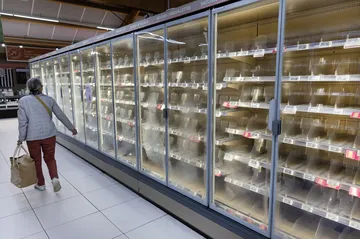
食品零售商利润微薄、商品易腐且承担重要社会职能,这些特点使其成为黑客极具吸引力的攻击目标。
Grocers have slim margins, perishable goods and an important social role, making them attractive targets for hackers.
记者 Maddie Parker、Jenny Che、Sabah Meddings 报道 当 Jérémy Béziaud 上周一抵达他管理的法国诺曼底大区一家 Intermarché 超市时,发现冷冻柜温度升至 40 摄氏度,鱼类冷藏间的通风设备温度更飙升至 70 摄氏度。
By Maddie Parker, Jenny Che and Sabah Meddings When Jérémy Béziaud arrived last Monday at the Intermarché supermarket he manages in France’s Normandy region, he found freezers heating at 40C and a cold room ventilator for fish that had risen to 70C.
监控团队当天早些时候已就制冷系统的温度异常向 Béziaud 发出警报。但他最初以为只是自家位于 Saint-Symphorien-le-Valois 的门店出现孤立故障,结果发现这其实是一场大规模网络攻击的一部分——攻击针对法国数百家超市的冰箱和冷冻柜发起。尽管当天晚些时候设备恢复运行,Béziaud 仍不得不销毁价值 3000 欧元(约合 3370 美元)的商品。
Monitoring teams had alerted Béziaud to temperature irregularities in the refrigeration system earlier that morning. But what he initially assumed to be an isolated issue at his store in Saint-Symphorien-le-Valois turned out to be part of a major cyberattack that had been launched on fridges and freezers across hundreds of French supermarkets. Even though his equipment was running again later that day, Béziaud had to dispose of €3,000 ($3,370) worth of products.
“我把所有生鲜食品都扔了,”他说,“冷链已中断,我不愿冒任何风险。” Béziaud 表示,补齐损失的库存将需要近一周时间,但顾客给予了理解和支持。“他们明白事态的严重性。” 目前尚无组织公开宣称对该次黑客攻击负责。
“I threw out all the fresh food,” he said. “I didn’t want to take any risks since the cold chain had been broken.”It will take nearly a week to replenish the stock that has been lost, but customers have been supportive, Béziaud said. “They understand how serious the situation is.”No group has publicly claimed responsibility for the hack.
此次波及 700 家门店(包括 Intermarché、Coopérative U 和 Carrefour SA 等连锁品牌)的瘫痪事件,是针对零售商的一系列网络攻击中的最新一起。去年,黑客袭击了英国超市 Co-op 的运营系统,导致配送受阻、部分门店生鲜短缺,并给该零售商造成超过 2 亿英镑(约合 2.67 亿美元)的销售损失。Marks & Spencer Group Plc 也在 2025 年遭遇重大网络攻击,在线服务中断长达四个月,导致营业利润估计下降 3 亿英镑。
The disruption in France, which affected 700 stores, including those from the Intermarché, Coopérative U and Carrefour SA chains, is the latest in a series of cyberattacks on retailers. Last year, hackers targeted UK supermarket the Co-op’s operations, affecting deliveries, leaving some stores short of fresh food, and causing the grocer a sales hit of more than £200 million ($267 million). Marks & Spencer Group Plc was also struck by a major cyberattack in 2025, disrupting online services for four months and contributing to an estimated £300 million fall in operating profit.
专家表示,这些事件暴露了食品零售商在网络攻击面前的脆弱性。杂货商往往利润微薄,供应链经过精密调控,且处理大量易腐产品,即使是相对较短的中断也可能导致产品变质。它们还是各国粮食安全的关键环节,因此成为想要制造混乱的攻击者的诱人目标。
Experts said that the incidents expose how vulnerable food retailers are to cyberattacks. Grocers often run on thin margins with tightly-calibrated supply chains and large volumes of perishable products, which can be spoiled by even relatively short disruptions. They are also a vital element of countries’ food security, making them an attractive target for attackers who want to create chaos.
“黑客瞄准零售业,是因为它们薄弱,且能对社会造成巨大影响,”英国华威大学网络安全讲席研究员哈金德·辛格·拉利说。“我们看到一种滚雪球效应——随着其他网络攻击者发现这是一个准备极不充分的领域,更多攻击者开始将目标对准零售业。”拥有 Intermarché(家乐福注:原文为 Intermarché,隶属 Groupement Mousquetaires,中文常译为“欧尚”或“家乐福”旗下品牌,此处按原文翻译)的 Groupement Mousquetaires 发言人称,其 300 家门店遭到攻击。Carrefour(家乐福)表示,80 家超市受到影响。
Hackers are “targeting retail because they’re weak and it can have a massive impact on society,” said Harjinder Singh Lallie, reader in cybersecurity at the University of Warwick. “We’ve got this kind of snowball effect — as other cyberattackers see that this is an area that is very underprepared, more of them are targeting the retail sector.”A spokesperson from Groupement Mousquetaires, which owns Intermarché, said 300 of its stores were attacked. Carrefour said 80 supermarkets were impacted.
据报道,针对英国 M&S(马克斯·斯宾塞)和 Co-op(合作社)的攻击是试图向这些公司勒索钱财,对这两起事件的调查均聚焦于以使用“社会工程学”著称的团伙,即入侵者欺骗人们交出凭证或以其他方式提供访问权限。
The attacks on M&S and Co-op in the UK were reportedly attempts to extort money from the companies, and investigations into both centered on groups known for using “social engineering,” in which intruders dupe people into giving up their credentials or providing access in some other way.
法国的黑客攻击是通过连接互联网的中央冰箱控制器实施的,这些控制器允许承包商远程监控温度。攻击者访问了其中一些系统并篡改设置,触发长时间的除霜循环,导致冰箱和冷柜温度升高。受影响设备制造商之一的丹佛斯表示,大多数被攻陷的设备是已停产的旧型号,不再接收软件或安全更新。
The hacks in France were executed through centralized fridge controllers, connected to the internet, which allow contractors to remotely monitor temperatures. Attackers gained access to some of those systems and manipulated their settings, triggering prolonged defrost cycles that caused refrigerators and freezers to heat up. Danfoss, one of the manufacturers whose equipment was affected, said most of the compromised devices were obsolete models that no longer received software or security updates.
为了管理库存并满足食品安全标准,零售商投资了物联网,将其基础设施连接到互联网,以实现实时监控和数据收集。然而,这些设备随着时间推移会产生漏洞,因为它们会老化,且其所有者往往忽视跟上不断演变的网络威胁。
The need to manage stock and meet food safety standards mean that retailers have invested in the internet of things, connecting their infrastructure to the internet to allow for real-time monitoring and data collection. However, these devices create vulnerabilities over time, as they age, and as their owners neglect to keep up with evolving cyber threats.
网络安全公司Xona Systems首席执行官比尔·摩尔表示,零售店中的制冷以及供暖、通风和空调系统通常已有10到15年历史,安装于网络威胁尚不突出的时期。他说,零售商在认识到联网设备所带来的风险方面,已落后于制造商。“对其中许多人来说,这并非首要考虑因素,”摩尔说。
Bill Moore, chief executive officer of cybersecurity firm Xona Systems, said refrigeration and heating, ventilation and air-conditioning systems in retail stores were often 10 to 15 years old, installed when cyber threats were less prominent. Retailers, he said, had fallen behind manufacturers in recognizing the risks posed by connected equipment. “It has not been a top consideration for many of them,” Moore said .
传统上,控制机械和冰箱等物理设备的系统与企业IT网络是分离的,这有助于限制入侵从一个环境扩散到另一个环境的风险。但远程维护、软件更新和其他连接可能会使设备暴露于互联网,从而可能为攻击者创造机会。
Traditionally, the systems that control physical equipment such as machinery and refrigerators were separated from corporate IT networks, which helped limit the risk of an intrusion spreading from one environment to another. But remote maintenance, software updates and other connections can expose equipment to the internet, potentially creating opportunities for attackers.
“零售商依赖庞大的互联技术网络来维持业务运行,”巴黎Palo Alto Networks Unit 42威胁情报总监卢卡·伯尼说。“随着零售商扩大数字化运营,在每个地点、每个平台和每个合作伙伴之间保持一致的安全性变得越来越困难。”这类攻击对杂货商造成的业务中断是严重的。食物很快就会腐烂,解冻的冷冻柜可能会造成大量损失。
“Retailers depend on vast networks of interconnected technologies to keep their businesses running,” said Luca Berni, threat intelligence director at Palo Alto Networks Unit 42 in Paris. “As retailers expand their digital operations, maintaining consistent security across every location, platform and partner becomes increasingly difficult.”The disruption to business that these kinds of attacks can cause for grocers is severe. Food perishes quickly, and defrosting freezers can cause a lot of damage.
“地板上会有大量的水,”伦敦南岸大学供暖与制冷组副教授艾伦·福斯特(Alan Foster)说。“东西会变得又黏又脏,清理起来不会简单。”清理和重启操作也很耗时。在重启冰柜之前,超市可能需要进行安全检查,在某些情况下,还需要制冷工程师评估损坏情况。一些柜子可能当天就能重新投入运营——就像比佐(Béziaud)的商店那样——而损坏更严重的设备可能需要更换。
“There would have been a lot of water on the floor,” Alan Foster, associate professor in the Heating and Cooling Group at London South Bank University. “Stuff would have gone really gooey and disgusting, so removing it wouldn’t have been simple.”The clean-up and restart operations are also time consuming. Before restarting the fridges, supermarkets would likely need safety checks and, in some cases, refrigeration engineers to assess the damage. Some cabinets could be back in operation the same day — as happened at Béziaud’s store — while more badly damaged equipment may need replacing.
穆斯凯特(Mousquetaires)的一位发言人表示,他们的制冷供应商负责清理其系统。合作社U(Coop U)和家乐福(Carrefour)未回应置评请求。
Mousquetaires’ spokesperson said that their refrigeration supplier is responsible for cleaning up its systems. Coop U and Carrefour did not respond to requests for comment.
专家表示,零售商的利润率较低,因此往往没有将投资于保障系统安全放在优先位置。“零售业并非利润丰厚,这意味着它们运营必须非常精简,因而更容易遭受打击,”伦敦普华永道(PwC)零售与消费品网络安全合伙人劳拉·邓肯(Laura Duncan)说。邓肯表示,零售商越来越关注如何从黑客攻击中恢复,包括确保在必要时业务可以离线运行:“你能否用笔和纸手动操作?”她说。
Retailers’ low margins mean that they have often not prioritized investing in securing their systems, experts said. “They don’t print money as a sector, which means they’ve got to be very lean in how they operate, which means they are more exposed to getting hit,” Laura Duncan, cyber security partner, leading retail and consumer at PwC in London, said. Duncan said retailers were increasingly looking at how to recover from a hack, including ensuring their business can run offline if required: “Could you do things manually with pen and paper?” she said.
安全专家警告称,随着攻击者越来越多地利用人工智能,威胁可能变得更难以遏制。人工智能可能帮助犯罪分子识别弱点、编写可信的钓鱼信息或加速入侵的部分过程。
Security experts warn that the threat could become harder to contain as attackers make greater use of artificial intelligence, which may help criminals identify weaknesses, develop convincing phishing messages or accelerate parts of an intrusion.
专家指出,网络犯罪分子经常重复使用那些已被证明有效的攻击手段,这增加了某次攻击所暴露的漏洞被其他犯罪分子利用的风险。这些攻击应该成为零售商和政府的警钟。华威大学的辛格·拉利(Singh Lallie)表示:“现在,食品杂货店显然成了攻击的目标;网络犯罪分子圈子中已经公开宣称这些目标非常容易攻击。”
Cybercriminals frequently reuse tactics that have proved successful, raising the risk that vulnerabilities exposed by one attack are subsequently targeted by others. The attacks should be a wake-up call for retailers and governments, experts said. Grocers are “now clearly kind of open targets,” the University of Warwick’s Singh Lallie said. “They’ve been announced out there in the cyber criminal fraternity that these are easy target.”