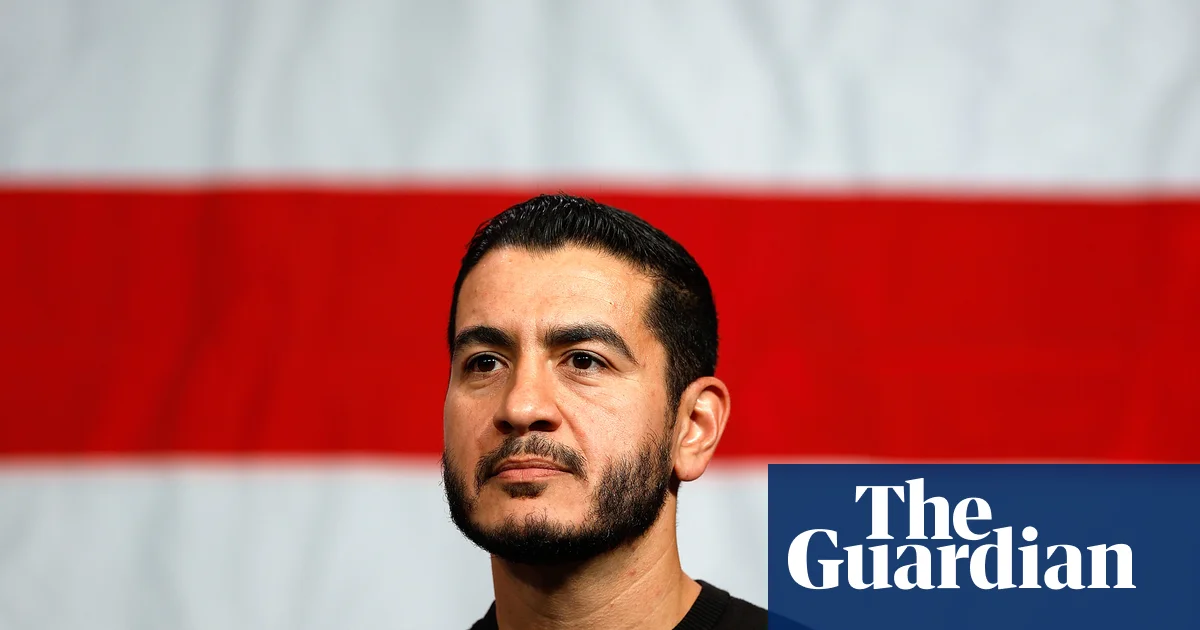
阿卜杜勒·埃尔-赛义德本月早些时候在密歇根州凯迪拉克市的一场活动中发表了讲话。
Abdul El-Sayed at an event in Cadillac, Michigan, earlier this month.
分析:“你到底想说什么?”——面对日益加剧的批评声,埃尔-赛义德直接与批评者进行了交锋。在伊斯兰恐惧情绪日益高涨的背景下,这位密歇根州参议院候选人不断回应那些关于穆斯林兄弟会、以色列以及他个人信仰的质疑。作为处于“9·11”事件后最严重的伊斯兰恐惧主义攻击浪潮中心的候选人,许多人本以为他会选择简单地为自己辩护然后继续前进。
Analysis‘What are you implying?’: El-Sayed confronts critics head-on as attacks ramp up Joseph Gedeon in Washington Against a backdrop of rising Islamophobia, Michigan Senate hopeful has challenged premise of repeated questions on Muslim Brotherhood, Israel and faith As a candidate positioned at the center of what researchers say are the worst Islamophobic attacks seen since the aftermath of 9/11, many would expect Abdul El-Sayed to simply defend himself and move on. Instead, the Democratic candidate for US Senate in Michigan has repeatedly demanded those who question his positions on Israel, the Muslim Brotherhood, and his faith, explain the premise of their enquiry.
然而,这位民主党参议员却多次要求那些质疑他立场的人明确说明他们提出这些问题的真正目的。他没有让别人来评判自己的忠诚度,而是反过来质疑他们的假设和立场。
Rather than let others put his loyalties on trial, he has tried to put their assumptions on trial.
最典型的例子发生在本周末的一场公开辩论中:现场有观众要求他公开否认与穆斯林兄弟会的任何关联。埃尔-赛义德回答道:“当然可以,我完全同意。”接着他反问道:“你到底想说什么?难道你认为我会拒绝这么做吗?”他花了五分钟时间详细解释这一要求的荒谬性,将其比作人们过去对约翰·肯尼迪天主教信仰的质疑,并反问对方是否也会试图将宗教教义强加到美国法律中。那人表示自己不会这么做,埃尔-赛义德则指出,真正需要了解宪法的人其实是对方。现场观众对此表示赞同。
The clearest example is a town hall exchange from this weekend that has been viewed more than 50m times. A man in the crowd demanded he disavow the Muslim Brotherhood. “Sure, yeah, absolutely,” El-Sayed said. Then: “What are you implying? Do you assume that I wouldn’t?”For five minutes he stayed on it, comparing the question to the doubts people once had about JFK’s Catholicism, and asking the man whether he would disavow reading religious doctrine into American law. The man said he wouldn’t. El-Sayed told him he was the one who needed to understand the constitution. The room cheered.
这名提问者名叫托马斯·蒂佩尔,曾是共和党参议员乔什·霍利的助手。根据美国联邦选举委员会(FEC)的文件,他父亲的公司在一次反对埃尔-赛义德的活动中获得了25万美元的资助(用于选民动员和影响者营销工作),不过并未有任何证据表明托马斯·蒂佩尔本人也收到了报酬。虽然这一关联并不能证明他们的提问是事先协调好的,但它进一步展现了埃尔-赛义德的应对方式——他总是用理性和事实来反驳对手的质疑。
The man turned out to be Thomas Teepell, a former aide to the Republican senator Josh Hawley. His father’s firm was paid $250,000 by a non-profit for “canvassing and influencer marketing” against El-Sayed, according to an FEC filing, though nothing shows the son was paid. The connection did not establish that the question was coordinated, but it added another dimension to an exchange that showed El-Sayed’s preferred method in action.
他这种直率的言辞方式为他赢得了一个绰号——““刻薄的马姆达尼”(Mean Mamdani)”。虽然纽约市长、同样身为穆斯林的佐兰·马姆达尼(Zohran Mamdani)以热情和亲和力赢得了人们的支持,但埃勒-赛义德(El-Sayed)却直接与批评者针锋相对。两人都将与既得势力的对抗视为自己政治立场的一部分;不过埃勒-赛义德将这种对抗视为揭露那些被操纵的政治辩论的手段。民主党的主流势力对于他的这种做法感到不知所措。
His direct approach has yielded a nickname: “Mean Mamdani”, or “Meandami”. While New York City mayor and fellow Muslim Zohran Mamdani wins people over with warmth, El-Sayed goes at his critics head-on. Both have made establishment resistance part of their political identity, but El-Sayed treats confrontation itself as a way to expose what he sees as a rigged political debate. It is an approach the Democratic establishment doesn’t quite know what to do with.
当马姆达尼支持的候选人击败了党内那些受到主流势力支持的候选人时,民主党在众议院的少数党领袖哈基姆·杰弗里斯(Hakeem Jeffries)对这些胜利反应冷淡。在密歇根州,州长格雷琴·惠特默(Gretchen Whitmer)和参议员加里·彼得斯(Gary Peters)支持埃勒-赛义德的竞争对手黑莉·史蒂文斯(Haley Stevens),并且有超过6000万美元的外部资金(主要来自亲以色列的组织)流向了她。
When Mamdani-backed challengers beat establishment favorites in New York primaries, the party’s minority leader in the House of Representatives, Hakeem Jeffries, played the wins down. In Michigan, state governor Gretchen Whitmer and senator Gary Peters backed El-Sayed’s rival for the Democratic nomination, Haley Stevens, and more than $60m in outside money, mostly from pro-Israel groups, went her way.
最终埃勒-赛义德以微弱的优势获胜——他甚至公然挑衅美国以色列公共事务委员会(AIPAC),说:“来对付我吧!”
El-Sayed won by about a point and a half, after daring the American Israel Public Affairs Committee (Aipac) to “come for me”.
他的初选胜利打破了这样一个固有观念:即任何在以色列问题上与有权势的捐助者对抗的民主党人都会付出沉重的代价。
His victory in the primaries challenged the assumption that a Democrat who confronts powerful donors over Israel must pay a prohibitive price.
在初选期间,CNN记者卡西·亨特(Kasie Hunt)对他的采访很好地反映了这种矛盾:亨特三次追问以色列是否拥有存在的权利。埃勒-赛义德回应道:“我不会参与这种‘设圈套’的游戏。”他还补充说:“从来没有人问过我是否认为巴勒斯坦有存在的权利。”他质疑:为什么人们对他在以色列问题上的立场如此关注,却从不问及关于巴勒斯坦的类似问题;他觉得真正的问题应该是:以色列是否有权使用我们的税款。
During the primary, an interview with CNN’s Kasie Hunt encapsulated the same dynamic. Hunt asked three times whether Israel has a right to exist. “I’m not going to play this gotcha game,” El-Sayed said, adding: “Nobody’s ever asked me whether or not I believe Palestine has a right to exist.”He challenged why his position on Israel’s existence was being treated as a test of political legitimacy while the equivalent question about Palestine went unasked.
在赢得初选后,福克斯电视台的杰西·沃特斯与埃尔-赛义德进行了长达25分钟的对话,讨论了伊斯兰教法、跨性别议题等问题。埃尔-赛义德多次试图将话题引回到价格问题上,并说道:“你们总是想挑起这些文化冲突……”他的策略是阻止对手将选举焦点集中在他的个人身份上,而是让讨论围绕经济和医疗保健问题展开。
The real question was whether Israel has a right to “our tax dollars”, he suggested. After winning the primary, Fox’s Jesse Watters spent 25 minutes with El-Sayed on Ice, Sharia and transgender issues. “You want to bring up all this culture war,” El-Sayed told him, repeatedly steering back to prices. The strategy is to stop his opponents from defining the election around his identity, and keep it focused on the economy and healthcare.
然而,这一策略并不总是奏效。在《Meet the Press》节目中,当被问及自己或家人是否与某个极端组织有关联时,他两次都予以否认。但《华盛顿自由灯塔报》随后发现了他同父异母的妹妹在2012年发布的帖子,这些帖子提到了他们母亲在20世纪70年代参与该组织活动的情况。目前没有证据表明埃尔-赛义德本人参与过该组织,他也向NBC表示:“我并不是由我的母亲抚养长大的。”不过他称这些质疑“毫无根据”,并质问主持人是否在“暗示我在撒谎”。
But the tactic doesn’t always land. On Meet the Press, asked whether he or his family had any ties to the Brotherhood, he said no, twice. The Washington Free Beacon then dug up his half-sister’s 2012 posts about their mother’s activism in the group in the 1970s. There is no evidence El-Sayed took part, and he told NBC: “I wasn’t raised by my mother.”But he also called the questions “not serious” and asked the host if he was “insinuating that somehow I was lying”. All of this is happening against a hostile backdrop.
所有这些事件都发生在充满敌意的背景下:根据“有组织仇恨研究中心”的数据,他在初选获胜后的那一周,针对他的伊斯兰恐惧症言论增加了近1900%;图伯维尔称他为恐怖分子,唐纳德·特朗普则称他为“圣战分子”。罗格斯大学周二发布的一份报告指出,自2001年以来,针对穆斯林候选人的类似攻击手段屡见不鲜。
Islamophobic posts naming him jumped almost 1,900% in the week after his primary win, according to the Center for the Study of Organized Hate Tuberville called him a terrorist within hours, and Donald Trump has called him a “jihadist”. A Rutgers report released on Tuesday, covering more than 30 cases since 2001, finds the same playbook has been used against Muslim candidates again and again.
媒体对埃尔-赛义德在公开辩论中的表现的反应进一步凸显了社会的分裂。CBS新闻首席法律记者简·克劳福德最初称赞了提问者的提问方式,并将埃尔-赛义德的回应视为其自食其果的表现,但随后她删除了相关帖子并公开道歉。这一事件引发了质疑:一个穆斯林候选人仅仅因为拒绝接受某些无端指责,就可能会被当作针对他的证据。
The media response to El-Sayed’s viral town hall exchange offered another example of the divide. CBS News chief legal correspondent Jan Crawford praised the questioner and described El-Sayed’s response as a “self-own”, then deleted the post and apologized. The episode raised questions about how a Muslim candidate’s refusal to accept an insinuation can itself be portrayed as evidence against him.
据报道,CBS新闻总编辑巴里·韦斯曾鼓励该网络的记者追踪与艾赛义德据称同情“穆斯林兄弟会”有关的报道角度。(CBS新闻的一位发言人告诉Semafor:“我们将让我们的新闻报道——而非毫无根据的指控——自己说话。”)对于穆斯林和中东裔候选人而言,负担可能不仅在于证明他们能胜任工作,还在于证明他们的宗教、家庭和外交政策观点不会使他们构成威胁。对候选人履历进行合理审视是必要的;但将穆斯林身份视为怀疑的理由则是另一回事。
CBS News editor-in-chief Bari Weiss has reportedly encouraged the network’s journalists to pursue story angles related to El-Sayed’s supposed sympathy toward the Muslim Brotherhood. (A spokesperson for CBS News told Semafor: “We’ll let our journalism – not baseless accusations – speak for itself.”) For Muslim and Middle Eastern candidates, the burden can extend beyond proving they can do the job, to proving their religion, family and foreign policy views do not make them a threat. Legitimate scrutiny of a candidate’s record is necessary; treating Muslim identity as grounds for suspicion is something else.
艾赛义德的对抗性风格旨在将这一区别公开化,即使他反击的本能有时会对他不利。
El-Sayed’s confrontational style is an attempt to force this distinction into the open, even if his instinct to counter-attack can sometimes work against him.
他在初选中的胜利表明,民主党选民想要的不仅仅是一个与他们政策偏好一致的候选人。他们想要一个敢于对抗他们认定无视其价值观的捐赠者和党魁的候选人。现在,全密歇根州的选民将做出选择。
His primary victory suggested that Democratic voters wanted more than a candidate who shared their policy preferences. They wanted one willing to confront the donors and party leaders they believed had ignored their values. Now all of Michigan gets a say.