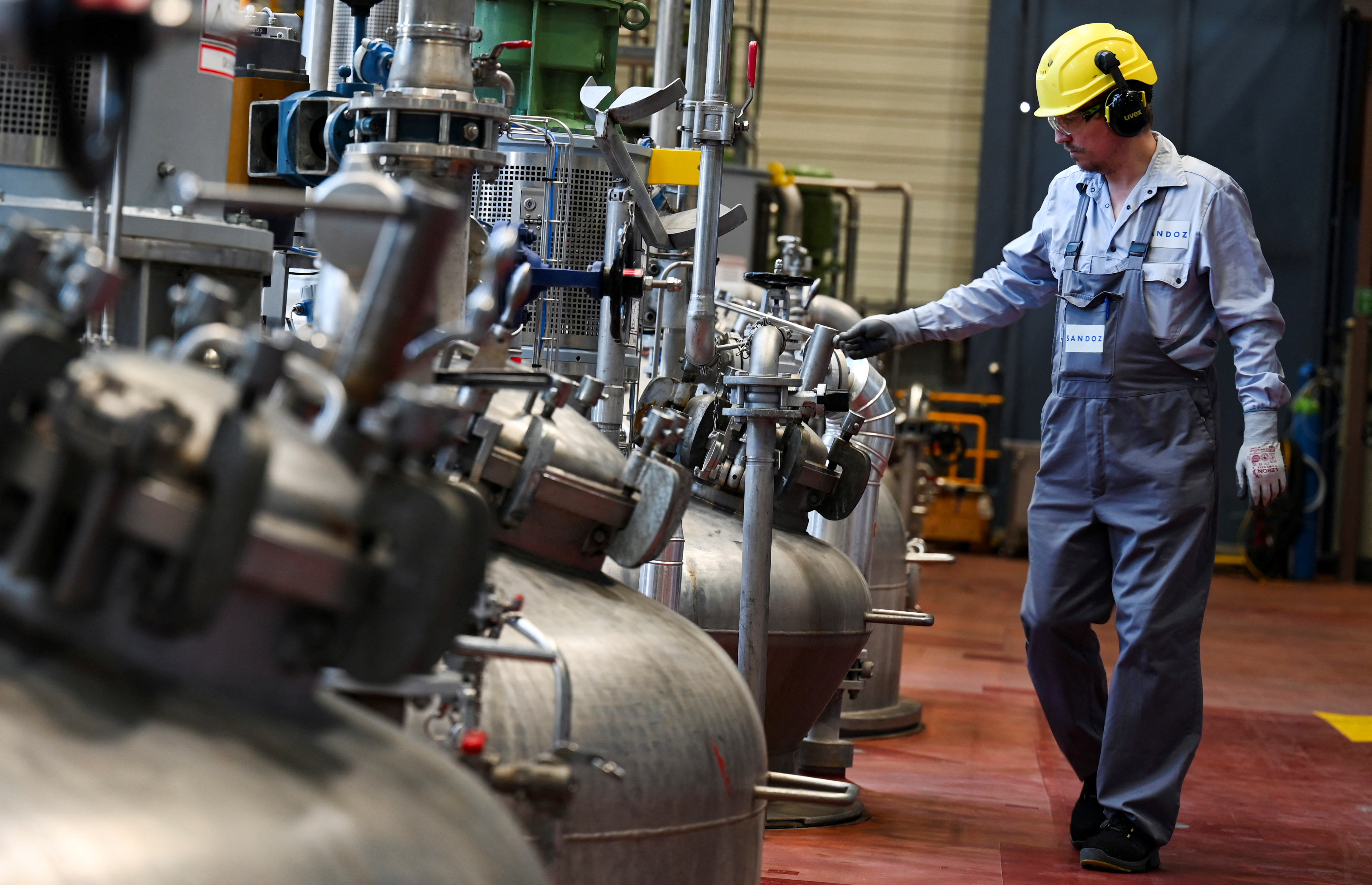
这座位于奥地利阿尔卑斯山绿色山丘中的欧洲唯一一家完全整合的青霉素生产工厂,正面临着充满不确定性的未来——这一切都源于中国日益崛起的工业实力。
Tucked away in the green foothills of the Austrian Alps, the last fully integrated European penicillin plant faces an uncertain future in the shadow of rising Chinese industrial power.
原因在于:中国正在以远低于奥地利昆德尔(Kundl)地区桑多兹(Sandoz)工厂的成本,为欧洲市场生产同样的抗生素及其原料。
The reason: China is churning out the same antibiotics and ingredients as the Sandoz factory in Kundl, Austria, at much lower cost for the European market.
价格下降对注重成本控制的欧洲各国政府来说无疑是一大福音,但对昆德尔工厂来说却构成了生存威胁:该工厂是欧洲唯一一家能够从原料到成品全程生产青霉素的工厂。
The falling prices are a boon for cost-conscious European governments' public healthcare programs but an existential threat to the Kundl site - the only one making penicillin from start to finish in Europe, including key active ingredients.
在多家同类工厂宣布关闭或将生产转移到中国后,这座工厂成为了关于欧洲自给自足能力讨论的焦点。
After a number of peers announced they were closing or moving production to China, the plant has become a focal point for a widening debate about the West's self-sufficiency.
就在三年前,这家工厂刚刚完成了一项耗资2亿欧元(约合2.25亿美元)的扩建工程(其中5000万欧元来自公共资金),如今桑多兹公司已向欧盟委员会提出反倾销调查的请求,这可能导致针对中国的关税措施。
And, just three years after a €200-million ($225-million) expansion that included €50 million of public funds, Sandoz has asked the European Commission to open an anti-dumping investigation that could result in tariff measures against Beijing.
昆德尔工厂的经理斯蒂芬妮·杰德纳(Stephanie Jedner)在接受路透社采访时指出:“如果这家工厂倒闭,欧洲将完全依赖中国。”
If the plant went out of business, Europe "would be fully dependent" on China, Kundl site manager Stephanie Jedner told Reuters in offices looking out over the plant's gleaming storage tanks, ringed by the Tyrolean Alps.
一个世纪前,亚历山大·弗莱明(Alexander Fleming)在伦敦发现了青霉素,而青霉素至今仍是治疗危及生命的感染的主要抗生素。如今,欧洲每年使用的约15亿剂抗生素及其原料的制造工作几乎完全由中国主导。
Alexander Fleming discovered penicillin a century ago in London, and it remains the main antibiotic class for life-threatening infections. Today, the manufacturing of ingredients for some 1.5 billion daily doses Europe administers each year is dominated by China.
根据欧盟统计局的数据,中国在欧洲青霉素及其衍生物进口中的份额已从2019年的44%上升至去年的86%;这一变化与中国政府提出的“中国制造”十年计划(旨在提升本国在全球制造业价值链中的地位)密切相关。
China's share of EU imports of penicillins and their derivatives in mostly bulk active pharmaceutical ingredient form has nearly doubled from 44% in 2019 to 86% last year, Eurostat data show, coinciding with Beijing's "Made in China" 10-year plan to move up the global manufacturing value chain.
与此同时,欧洲同类产品的出口量如今仅相当于21世纪初高峰时期的五分之一。
Meanwhile, Europe's exports of the same are today barely a fifth of their early 2000s peak.
这是一个例子,说明中国是如何从纺织业和装配厂转型为先进制造业的;同时,欧洲的传统产业(如制药业和机床制造业)也受到了中国的影响。随着欧盟与中国之间的商品贸易逆差在2025年激增至每天约10亿欧元(是2020年的两倍),政策制定者们正在紧急寻找新的措施来保护本国企业和就业机会。
It's one example of how China has graduated from textiles and assembly plants to advanced manufacturing and traditionally European industries from pharmaceuticals to machine tools. With the EU goods trade deficit with China ballooning to around €1 billion per day in 2025, double the level of 2020, policymakers are scrambling for new measures to protect companies and jobs.
今年早些时候,赛诺菲(Sandoz)在向英国立法者提交的书面文件中指出:除非各国政府愿意为青霉素支付更高的价格,否则该公司向欧洲供货的能力“在商业上是不可持续的”。赛诺菲认为,中国政府对青霉素供应链的控制构成了“固有的战略风险”——这种风险类似于中国对关键矿产的垄断。
Sandoz, in written evidence to British lawmakers earlier this year, said Kundl's capacity to supply Europe was "not commercially sustainable" unless governments paid more for penicillin. It argued that Beijing's control of the penicillin supply chain creates an "inherent strategic risk" akin to China's stranglehold on critical minerals.
赛诺菲在提交给立法者的文件中写道:“在外交紧张时期,抗生素的供应很可能会被用作经济胁迫或混合战争的工具。”该公司因此呼吁获得更多支持。
"Antibiotic supply could feasibly become a tool of economic coercion or hybrid warfare, particularly during periods of diplomatic tension," Sandoz wrote in the submission to lawmakers, asking for more support. China spent years establishing itself as a reliable supplier of essential medicines and is increasingly a player in cutting-edge pharmaceuticals.
多年来,中国一直努力树立自己作为重要药品可靠供应者的形象,并在尖端制药领域发挥着越来越重要的作用。据赛诺菲称,目前全球90%的抗生素活性成分都是在欧洲以外的地区生产的,其中大部分产自中国或使用中国生产的化学原料的印度。
Sandoz says up to 90% of global antibiotic active ingredients are now produced outside Europe, mainly in China, or in India with Chinese chemicals. "This is something that you should worry about," because China's market power gives it leverage to defend strategic interests, said Tim Rühlig, a China analyst at EU foreign policy think tank, the European Union Institute for Security Studies.
“这是一个值得关注的问题,”欧盟外交政策智库“欧洲安全研究学院”(European Union Institute for Security Studies)的中国问题分析师蒂姆·鲁利格(Tim Rühlig)表示:“中国的市场力量使其有能力维护自身的战略利益。”
China could face reputational damage if it used such leverage.
如果中国真的利用这种市场优势,可能会对其声誉造成损害。不过,与中国在稀土提炼领域的近乎垄断地位不同,中国政府并未将抗生素市场的控制权视为国家安全问题。
Unlike its near monopoly over rare-earth refining, Chinese policy does not frame power in the antibiotic market in national-security terms. Nonetheless, Chinese economist Daokui Li, a former member of the Chinese central bank's monetary policy committee, spooked Western nations during the COVID-19 pandemic when he suggested supplies of APIs should be on the table in trade disputes.
尽管如此,前中国央行货币政策委员会委员、经济学家李道奎(Daokui Li)在COVID-19疫情期间曾提出,在贸易争端中应将抗生素活性成分的供应问题纳入讨论范围,这一观点曾令西方国家感到担忧。
One US official in China, speaking on condition of anonymity, told Reuters that Chinese counterparts had suggested in meetings that Beijing could cut off exports of APIs for some medicines as retaliation in a trade conflict.
一名在中国的美国官员以匿名条件对路透社表示,中国方面在会谈中暗示,北京可能在贸易冲突中作为报复,切断部分药物活性药物成分的出口。
The Chinese foreign ministry said economic and trade differences with the EU could be resolved through dialogue and consultation.
中国外交部表示,中欧之间的经贸分歧可以通过对话和协商解决。该部在回应路透社提问时表示:“中国一贯反对各种形式的贸易保护主义。”美国国务院未立即置评。
"China consistently opposes all forms of trade protectionism," it said in response to Reuters questions. The US State Department did not immediately provide comment.
斯洛文尼亚制药合同研发公司Labena业务发展主管Bostjan Ceh表示,对欧洲政策制定者而言,这一战略产业的衰落使欧盟在流行病或冲突期间面临供应受限的脆弱性。“这将严重损害欧洲应对卫生危机的能力,”Ceh表示。
For European policymakers, the withering of such a strategic industry leaves the bloc vulnerable to restrictions on supplies during pandemics or conflicts, said Bostjan Ceh, head of business development at Labena, Slovenia-based pharmaceutical contract research and development firm. "It would seriously compromise Europe's ability to cope with a health crisis," Ceh said.
普罗夫迪夫医科大学政策专家Anna Mihaylova表示,只有在新冠疫情之后——当欧洲注意到对亚洲医疗用品的依赖时——政策制定者才开始将药品生产视为战略问题。
Only after the COVID-19 pandemic – when Europe noticed its dependence on Asian medical supplies – did policymakers begin treating pharmaceutical output as a strategic matter, said Anna Mihaylova, a policy expert at the Medical University of Plovdiv.
2022年,当新冠疫情后呼吸道感染激增导致欧洲青霉素类药物阿莫西林供应短缺时,警报声响起。阿莫西林是在昆德尔生产的。
Alarm bells sounded in 2022, when supplies of amoxicillin, the penicillin type made at Kundl, ran low in Europe during a surge in respiratory infections after the pandemic. A year later, citing repeated shortages, the European Commission approved €28.3 million toward the Kundl expansion, which raised production capacity by 20%.
一年后,欧盟委员会引用反复出现的短缺问题,批准了2830万欧元用于昆德尔扩建,该扩建使产能提高了20%。
Wearing a white coat and safety goggles, Cecile Stolz, head of Sandoz's manufacturing unit in Kundl, demonstrated in a small vial how green mould is cultivated to make the compound Scottish scientist Fleming in 1928 found destroyed harmful bacteria.
身穿白大褂和安全护目镜,Sandoz昆德尔制造部门负责人Cecile Stolz展示了如何在一个小瓶中培养绿色霉菌,以制造苏格兰科学家弗莱明于1928年发现能够破坏有害细菌的化合物。
Fleming's discovery won him a Nobel prize.
弗莱明的发现使他获得了诺贝尔奖。多年以后,中国长期严重依赖欧洲生产青霉素和其他仿制药。
For years after, China depended heavily on Europe for production of penicillin and other generic drugs. But Beijing's industrial investment has now reversed the roles, said analyst Rühlig.
分析人士吕睿(Rühlig)表示,北京的工业投资如今已经颠倒了角色。中国新近取得的主导地位,也源于环境法规较少、劳动力成本大幅降低以及国家补贴,还有西方制药公司为追求成本节约而进行的投资。
China's newfound dominance also stems from fewer environmental regulations, drastically lower labour costs and state subsidies, along with investment by Western pharmaceutical companies seeking cost savings. At the Sandoz site, which employs more than 2,000 people, Stolz's team ferments nutrients in metal vats to produce the penicillin.
在雇佣超过2000人的桑德斯(Sandoz)工厂,施托尔茨(Stolz)的团队在金属罐中发酵营养物质以生产青霉素。这一过程能耗高,是欧洲生产商竞争力较弱的另一个因素:国际能源署(International Energy Agency)的统计数据显示,2025年欧盟能源密集型产业的电价平均比中国高出近50%。
The process is energy intensive, another factor making Europe's producers less competitive: EU electricity prices for energy-intensive industries averaged nearly 50% above China in 2025, International Energy Agency statistics show. Europe's high energy costs are acutely felt at the Kundl plant, which uses as much energy as the nearby city of Innsbruck, home to over 130,000 people, said its manager Jedner at the site Sandoz shares with former parent Novartis (NOVN.S) and chemicals maker BASF .
库恩德尔(Kundl)工厂的用电量与附近人口超过13万的因斯布鲁克(Innsbruck)市相当,该工厂经理耶德纳(Jedner)表示,高昂的能源成本在该工厂感受尤为深刻。该工厂与前母公司诺华(Novartis,NOVN.S)和化工巨头巴斯夫(BASF,)共用场地。
As energy prices rise, Europe's penicillin prices have been flat or falling, she added. Sandoz complains it cannot raise prices due to competition and the procurement processes of European countries.
她补充说,随着能源价格上涨,欧洲的青霉素价格一直持平或下跌。
The Kundl plant remains vulnerable, the company says, because of European governments' policy of procuring medicine based on the lowest price rather than seeking to maintain diverse supplies.
桑德斯抱怨称,由于竞争以及欧洲各国的采购流程,它无法提高价格。
The company argues China is flooding the market with cheap APIs.
该公司表示,库恩德尔工厂仍然脆弱,原因在于欧洲各国政府基于最低价格而非维持多元化供应来采购药品的政策。
In March, it filed a complaint to the European Commission about China's hold on parts of the antibiotics market.
该公司认为,中国正以廉价原料药(APIs)充斥市场。3月,该公司向欧盟委员会提交投诉,指控中国在部分抗生素市场上占据主导地位。该案件的核心在于证明,中国阿莫西林原料药在欧洲以低于生产成本的价格销售,并得到补贴支持。
The case centres on proving Chinese amoxicillin APIs are being sold in Europe below production cost, propped up by subsidies. The European Commission is expected to open the anti-dumping probe soon, though the timing remains unclear due to a backlog of complaints, EU trade experts, European officials and China scholars told Reuters. The people told Reuters EU duties were likely to be levied given Europe is hardening its approach to China more broadly.
欧盟委员会预计将很快启动反倾销调查,但由于投诉积压,具体时间仍不明确,欧盟贸易专家、欧洲官员和中国问题学者向路透社(Reuters)表示。
Of 23 ongoing EU anti-dumping and anti-subsidy investigations, all but three have China as the sole or joint target.
这些人告诉路透社,鉴于欧洲对中国的态度日益强硬,欧盟很可能会对中国征收关税。在欧盟正在进行的23项反倾销和反补贴调查中,除了3项外,其余所有调查都将中国作为唯一的或共同的目标对象。欧盟委员会拒绝对此发表评论。
The Commission declined to comment. Other outcomes are possible. European Trade Commissioner Maros Sefcovic recently announced a deal with Beijing to lower its exports of hybrid vehicles rather than imposing tariffs, a bid to salvage Europe's automakers.
当然,也有可能出现其他结果。欧盟贸易专员马罗斯·塞夫科维奇最近宣布与北京达成协议,要求中国减少混合动力汽车的出口量,而不是对其征收关税——这一举措旨在帮助欧洲的汽车制造商度过难关。
In public statements, Beijing says its subsidy support is in line with WTO rules. It accuses other countries of protectionism hurting global supply chains.
在公开声明中,北京方面表示其提供的补贴支持符合世界贸易组织的规则,并指责其他国家实施保护主义行为,从而扰乱了全球供应链的稳定。
As Sandoz struggles with global trade dynamics, its CEO Richard Saynor said that to be sustainable, the life-saving medicines need more pricing power than everyday candy.
随着山度士(Sandoz)在全球贸易环境中的处境日益艰难,该公司首席执行官理查德·塞诺尔(Richard Saynor)表示:“为了实现企业的可持续发展,这些救命药品的价格必须比普通糖果或零食更高才行。”他对路透社表示:“我们常常对这些事情习以为常,直到它们真的消失为止。”
"I find it upsetting that we sell a pack of antibiotics more cheaply than a packet of Ricola in Switzerland or a Mars Bar in the UK," he told Reuters. "We take a lot of these things for granted – and we take them for granted until they're no longer around."