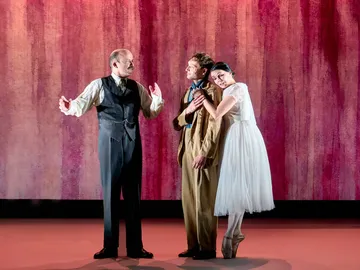
在詹姆斯·格雷厄姆的新剧《凯恩斯》中,最精彩的一幕发生在国王学院礼拜堂的屋顶上。凯恩斯与同为经济学家的弗里德里希·哈耶克正在值火警勤务,两人在等待德国炸弹投下的间隙展开激辩。这一幕之所以更引人入胜,是因为它基于史实。
In the best scene in , James Graham’s new play about John Maynard Keynes, Keynes and fellow economist Friedrich Hayek are on fire duty on the roof of King’s College chapel, locked in debate as they wait for German bombs to drop. It’s all the better for being based in fact.
哈耶克主张,经济低迷时期政府对市场的干预只会让情况恶化。凯恩斯则回应以他惯常的主张,支持公共开支,但他补充了一个有趣的尾声。他说,自1930年以来,政治舞台上最关键的力量都来自极左或极右。他心爱的剑桥大学许多最优秀的本科生,都被马克思主义那种欺骗性的确定性所诱惑。他辩称,哈耶克的立场只会强化这种倾向,而文明的未来取决于振兴至关重要的中间派。观众不得不克制住冲上台鼓掌的冲动。
Hayek argues that government intervention in markets during a downturn only makes things worse. Keynes responds with his familiar argument in favor of public spending, but adds an interesting coda. Since 1930, he says, the most vital forces in politics have been on the far left or the far right. Many of the brightest undergraduates at his beloved University of Cambridge were seduced by the deceptive certainties of Marxism. Hayek’s stance will only reinforce this tendency, he argues, while the future of civilization depends on reviving the vital center. The audience had to restrain itself from leaping to its feet and applauding.
《凯恩斯》并非格雷厄姆的最佳作品。他采用的“传记片”形式在电影中比在戏剧中更奏效,用于政治家比用于知识分子更奏效,尤其是从事经济学这门枯燥学科的知识分子。格雷厄姆不断插入对乘数效应等概念的简短解释,既有让行家感到厌烦的风险,也有让外行感到困惑的风险。
is not one of Graham’s best works. The “biopic” format that he adopts works better in films than plays and better with politicians than with intellectuals, particularly intellectuals who practice a dry subject such as economics. Graham is constantly inserting brief explanations of the multiplier effect and so on that run the risk of boring aficionados and confusing laypeople.
尽管如此,如果你的生活水准足以支付西区剧院那严重虚高的票价,这部剧仍值得一看。它提出了两个引人入胜的问题:凯恩斯为何在去世80年后依然让我们着迷?更重要的是——在我们应对自由主义秩序的又一次危机时,他能给我们提供什么启示?
The play is nevertheless worth seeing if you enjoy a standard of living sufficiently elevated to afford the grossly inflated cost of West End theatre. It raises two intriguing questions: Why does Keynes continue to fascinate us 80 years after his death? And — more importantly — does he have any lessons for us as we grapple with yet another crisis of the liberal order?
第一个问题的答案很简单:凯恩斯是一位了不起的人物——他是我们这个时代几乎已经消失的杰出典范。他不仅是一位一流的经济学家,同时也是一位才华横溢的作家;他既是成功的学者,又深入现实世界参与社会活动;同时,他还是战后世界秩序的主要奠基者之一。哲学家伯特兰·罗素曾评价说:“凯恩斯的智慧是我所认识的人中最敏锐、最清晰的;每当我与他争论时,都感觉自己像是在拿自己的生命冒险,而且几乎每次争论后都会觉得自己像个傻瓜。”
The answer to the first question is easy. Keynes was a great man of a sort that we have almost lost today: a first-rate economist who was also one of the best writers of his generation; a successful academic who was also immersed in the real world; a public figure who also hung out with bohemian intellectuals; and, of course, one of the leading architects of the postwar order. The philosopher Bertrand Russell, hardly a numbskull, said that Keynes’s intellect was “the sharpest and clearest that I have ever known. When I argued with him, I felt that I took my life in my hands, and I seldom emerged without feeling something of a fool.”
第二个问题则要复杂得多。因为一个显而易见的答案(即我们需要另一场‘凯恩斯主义革命’来摆脱当前的困境)其实是完全错误的。这种观点得到了格雷厄姆的支持;从观众的反应来看,那些有能力观看这部戏剧的人也很认同这一观点。他们的论点是这样的:凯恩斯主义时代是英国历史上辉煌的时期:政府在推动经济增长的同时,也在必要时提供社会保障服务。在戏剧的结尾部分,威廉·贝弗里奇(英国福利制度的奠基人)感谢凯恩斯让他的理念得以实现。
The second question is a more difficult one because the obvious answer — that we need another Keynesian revolution to pull us out of our current despond — is completely wrong. This is the argument endorsed by Graham in and, judging by the audience’s reaction, by the sort of people who have the money to see the play. It goes like this: The Keynesian era was a glorious period in British history, one in which the state kept the economy growing but also provided welfare services when circumstances demanded it. Toward the end of the play, William Beveridge, whose ideas shaped Britain’s welfare state, thanks Keynes for making his vision possible.
然而,隐藏在暗处的危险人物却是哈耶克。他和他的追随者们利用20世纪70年代的经济危机,掌控了全球经济,重新推行那些导致大萧条的自由市场理论。公共支出被大幅削减,自由市场被奉为至高无上的“神明”;而福利制度则被削弱到几乎消失的地步。
But there is a poisonous snake in the grass: Hayek. He and his acolytes took advantage of the troubles of the 1970s to seize control of the global economy and reintroduce the dismal free market orthodoxies that led to the Great Depression. Public spending was reined in. The free market was turned into a god. And the welfare state was pared back to almost nothing.
格雷厄姆的观点在西区赢得了轻易的喝彩,但遗憾的是,这大多是胡说八道。哈耶克所谓的反革命,更多停留在思想和修辞层面,而非现实。凯恩斯革命一直延续至今——尽管是以“活尸”的形式。凯恩斯主张,我们应将赤字支出作为一种选择性手段,以摆脱萧条。如今,我们将其作为常规政策工具,不顾经济周期。自20世纪70年代末以来,重大赤字(占GDP比重超过1%)已成为大型资本主义国家的常态。
Graham’s argument wins easy applause in the West End but, alas, is largely nonsense. Hayek’s supposed counter-revolution was more in the world of ideas and rhetoric than reality. The Keynesian revolution continued into our own time — albeit in zombified form. Keynes argued that we should use deficit spending as a selective instrument to get us out of depression. We now use it as a routine tool of policy regardless of the business cycle. Significant deficits (larger than 1% of GDP) became the norm among large capitalist countries starting in the late 1970s.
福利国家既臃肿又失调。大约有700万英国人(占人口的10%以上)至少领取一种疾病或残疾福利。多付款、欺诈和彻头彻尾的荒谬现象屡见不鲜。有一个让人难以置信的例子:一名声称自己患有七种残疾(多动症、自闭症、阅读障碍、运动协调障碍、计算障碍、书写障碍和经前焦虑症)的女性,从政府的“工作准入计划”领取了5.6万英镑(7.5万美元),用于支付两名助手帮助她工作——而她的工作正是帮助他人申领残疾福利。
The welfare state has become as dysfunctional as it is bloated. Some 7 million Britons (more than 10% of the population) receive at least one sickness or disability benefit. Overpayment, fraud and downright perversity are rife. In one you-can’t-make-it-up example, a woman who claimed to have seven disabilities (ADHD, autism, dyslexia, dyspraxia, dyscalculia, dysgraphia and premenstrual dysphoric disorder) received £56,000 ($75,000) from the government’s Access to Work scheme to pay for two assistants to help her with her job — which was helping people claim disability benefits.
那么,如果我们最不需要的就是更多赤字支出和福利供给,凯恩斯为何仍然重要?答案之一是一个悖论:他对智力灵活性的承诺。虽然这句话常被归于他,但凯恩斯可能并未真正说过“当事实改变时,我会改变我的想法”,但这确实表达了他思想的精神。我们需要像凯恩斯重新思考“活尸式自由放任”遗产那样,积极重新思考“活尸式凯恩斯主义”的部分遗产。这意味着降低全球债务水平,以便在真正的萧条威胁来临时,我们有更多的操作空间;同时改革福利国家,将社会照护引导至真正需要的人。
So, why is Keynes still relevant if the last thing we need is more deficit spending and welfare provision? One answer is a paradoxical one: his commitment to intellectual flexibility. Though frequently attributed to him, Keynes may not have actually said “when the facts change, I change my mind,” but it does express the spirit of his thinking. We need to be as vigorous in rethinking some of the legacies of zombie Keynesianism as Keynes was in rethinking the legacies of zombie laissez-faire. This means bringing the level of global debt down in order to give ourselves more room for maneuver when real depression threatens and reforming the welfare state in order to direct social care to those who truly need it.
另一个答案是,凯恩斯在一件大事上急切地是对的:生活水平的真正含义。凯恩斯明白,经济学是一种手段,而非目的本身。真正的目标是文明的生活。他在剑桥大学国王学院的朋友兼同事、文学学者戴迪·莱兰兹说,马修·阿诺德的那本书——主张教育应聚焦于“世界上所说和思考的最佳之作”——对他产生的影响,超过了任何一位19世纪经济学家。
The other answer is that Keynes is urgently right on one big thing: the real meaning of the standard of living. Keynes understood that economics was a means to an end, not an end in itself. The true end is civilized living. His friend and colleague at King’s College Cambridge, the literary scholar Dadie Rylands, said that Matthew Arnold’s book , which argued that education should focus on “the best that has been said and thought in the world,” had a greater influence on him than any 19th-century economist.
尽管这部作品对经济学的处理笨拙,有时甚至误入歧途,但它对此观点阐述得动人至深。它回顾了凯恩斯1918年说服财政部拨给他2万英镑,为国家购买埃德加·德加作品的成就(他还为自己购买了一些杰作,并暂时将它们藏在树篱里)。它详述了他与当时顶尖芭蕾舞演员莉迪亚·洛波科娃的恋情,并描绘了他布鲁姆斯伯里圈子的朋友们对这位坚定的同性恋者“至少在某种程度上”转向异性恋的惊讶。
For all its clumsy and sometimes misguided treatment of economics, makes this point eloquently. It recalls Keynes’s 1918 achievement in persuading the Treasury to give him £20,000 to buy works from Edgar Degas for the nation (he also bought some masterpieces for himself and stored them temporarily in a hedge). It dwells on his love affair with Lydia Lopokova, a premier ballerina of her time, and evokes the surprise of his Bloomsbury friends that this committed homosexual should go straight, at least after a fashion.
格雷厄姆恰当地让这部戏剧以凯恩斯在建立英国艺术委员会中的作用收尾,而非以布雷顿森林战后经济秩序的建立收尾。如果灵魂因缺乏文化而萎缩,那么在财务上拥有高生活水平也毫无意义。
Graham rightly ends the play not with the creation of the postwar economic order at Bretton Woods, but with Keynes’s role in establishing the Arts Council of Great Britain. There is no point in a high standard of living, in financial terms, if your soul shrinks through lack of culture.