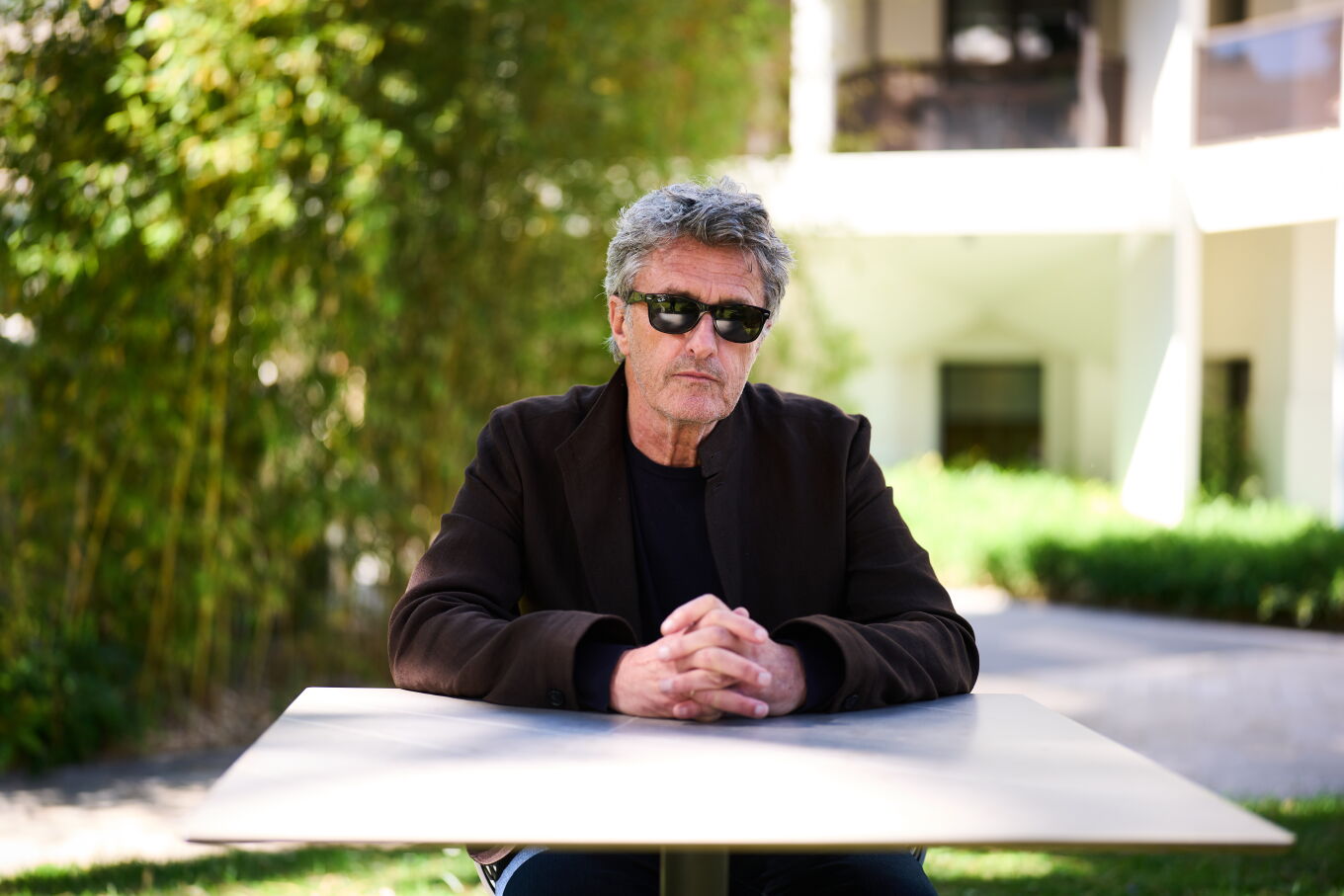
杰克·科伊尔 纽约——电影中的叙事经济可能供不应求,但帕维乌·帕夫利科夫斯基却凭借一种如今看来几乎堪称激进的简洁风格成就了自己的事业。
JAKE COYLE NEW YORK — Storytelling economy can be in short supply at the movies, but Paweł Pawlikowski has made a career out of a concision that now seems almost radical.
他最近的三部电影——《修女艾达》《冷战》以及最新的《祖国》——时长都在90分钟或更短。每部都以黑白拍摄,采用方正的老式学院画幅。而且没有一帧是多余的。
His last three films — “Ida,” “Cold War” and his latest, “Fatherland” — are all 90 minutes or less. Each is shot in black and white, in a boxy academy ratio. And none has a single ounce of fat on it.
“我做的事情感觉有点争议性,”帕夫利科夫斯基笑着说。“我很清楚,如此精简是具有挑衅性的。”在三小时电影司空见惯的时代,这位69岁的波兰电影人精炼出一种少即是多的风格。他的电影短小却不仓促,精简却深刻。“你试图提炼它,提炼它,再提炼它,”他说。
“It feels a bit controversial what I’m doing,” Pawlikowski says, chuckling. “I’m quite aware that it’s provocative to be so stripped down.”In an era where three-hour movies are commonplace, Pawlikowski, the 69-year-old Polish filmmaker, has refined a style of less is more. His movies are brief but unhurried, lean yet profound. “You try to distill it, distill it, distill it,” he says.
这种方式使帕夫利科夫斯基成为国际影坛的领军人物,也成为短片爱好者的英雄。《修女艾达》(2013)讲述一名波兰女子在即将成为修女时发现自己其实是犹太人的故事,获得了奥斯卡最佳国际影片奖。《冷战》(2018)讲述战后波兰一段注定失败的爱情,为他赢得了戛纳电影节最佳导演奖和奥斯卡最佳导演提名。《祖国》也在今年5月为他赢得了戛纳最佳导演奖。
That approach has made Pawlikowski a leading international filmmaker and a hero to lovers of short movies. “Ida” (2013), about a Polish woman who finds out she’s Jewish just as she’s about to become a nun, won the Academy Award for best international film. “Cold War” (2018), about a doomed romance in postwar Poland, won him best director at the Cannes Film Festival and an Oscar nomination for best director. “Fatherland,” too, won him best director in Cannes in May.
在这部82分钟的影片中(Mubi于周五在部分影院上映),汉斯·齐施勒饰演德国诺贝尔文学奖得主、小说家托马斯·曼,桑德拉·惠勒饰演他的女儿埃里卡。二战结束后,他们踏上了一段穿越德国废墟的公路之旅。他们在自己的祖国四处漂泊,往返于美国控制的法兰克福和苏联控制的魏玛之间。
In the 82-minute film, which Mubi releases in select theaters Friday, Hanns Zischler plays the German Nobel Prize-winning novelist Thomas Mann and Sandra Hüller his daughter, Erika. In the aftermath of World War II, they take a road trip through the ruins of Germany. They’re itinerant in their home country, traveling between U.S.-controlled Frankfurt and Soviet-controlled Weimar.
“斯大林还是米老鼠”——片中一个角色如此概括曼家父女在一个开始直面、或遗忘过去的德国所面临的选择。对帕夫利科夫斯基来说,这种二元对立与当今的政治分歧有相似之处。在波兰,《修女艾达》曾遭到右翼民族主义者的批评,他们称该片让国家形象受损。
“Stalin or Mickey Mouse” is how one character frames the choice before the Manns in a Germany beginning to reckon with, or forget, the past. For Pawlikowski, it’s a dichotomy with shades of today’s political divisions. In Poland, “Ida” was criticized by right-wing nationalists who said it showed the country in a bad light.
“当时正值竞选期,展示这部电影的时机很不好,”帕夫利科夫斯基说。“但攻击并不只来自右翼。它被指责为反犹太主义。所有这些人都能在他们的叙事中找到切入点,在你的电影里发现他们憎恨的东西。”“艺术对你有益,但解决不了任何问题,”他补充道。
“There was an election campaign going on, and it was a bad time to show it,” Pawlikowski says. “But it wasn’t just the right that attacked. It was attacked for being antisemitic. All these people can be struck in their narratives and find something in your film that they hate.”“Art is good for you, but it’s not going to solve any problems,” he adds.
艺术相对于政治权力的价值是《故土》的核心。曼恩为逃避纳粹而流亡美国,此时正受到西方和东方的双重拉拢。与此同时,前纳粹分子正重返社会,并推行他们自己对德国的看法。
The value art has next to political power is at the center of “Fatherland.”Mann, having fled to America to escape the Nazis, is being courted by both the West and the East. Meanwhile, former Nazis are returning to society and advancing their own view of Germany.
帕夫利科夫斯基从真实事件入手,将其浓缩。曼恩是同妻子同行,而非女儿。他们在更长的时间里走访了更多地方,但帕夫利科夫斯基将故事限制在两座城市、五天时间里。
Pawlikowski began by taking real events and condensing them. Mann’s trip was with his wife, not his daughter. They visited more places over a longer period of time, but Pawlikowski limited himself to two cities and five days.
这只是帕夫利科夫斯基精简素材的开始。事后你会意识到,《故土》最缺少的,是那些通向场景或离开场景的过渡时刻。
That was only the start of Pawlikowski paring things down. What’s most missing in “Fatherland,” you realize afterward, are the transitory moments that lead into or out of a scene.
“你不需要那些从 A 点带到 B 点的场景。只要把有力的场景并排放,它们照样能发挥作用,”帕夫利科夫斯基说。“关键在于它要有音乐感和良好的节奏。”与他严肃、简练的电影风格不同,帕夫利科夫斯基本人健谈、自嘲且爱笑。他喜欢一周拍五天,休一天,再用一天剪辑——这通常是制作结束后才开始的环节。
“You don’t need the scenes that get you from A to B. Just have strong scenes side by side. They will function regardless,” Pawlikowski says. “The main thing is that it has music and a good rhythm.”Unlike his somber, terse movies, Pawlikowski is chatty, self-deprecating and quick to laugh. He likes to shoot for five days in a week, have a day off and spend the other day editing — a part of the process usually not begun until after production is over.
“人们说:‘哦,你的剧本写得真好,’”他说。“构思都在,有开头、中间和结尾。但其实,这得益于可以不断写作、反复修改的奢侈条件,有时还能拍点别的素材,再废弃掉另一些。”大制作的补拍成本高昂,但在《故土》上则容易得多。
“People say, ‘Oh your scripts are so well done,’” he says. “The ideas are there and there’s a beginning and a middle and an end. But actually, it’s the luxury of being able to write and rewrite all the time and sometimes shoot something else and scrap another thing.”Reshoots for larger productions can be costly. But on “Fatherland,” it was easier.
帕夫利科夫斯基准备了两个布置好的拍摄地点——酒店房间,以防万一。他原本安排了一场重头戏:埃里卡得知哥哥去世的消息,随后与一名名为贝蒂的美联社记者角色(安娜·马德利 饰)会面。看过素材后,他决定重拍这场戏,让悲痛万分的埃里卡只是打开窗户,对着夜晚街道下的德国人尖叫。
Pawlikowski kept two locations, hotel rooms, dressed for shooting, just in case. He originally had a big emotional scene when Erika finds out her brother died and meets up with an Associated Press reporter character named Betty (Anna Madeley). After looking at it, he decided to reshoot the scene with Erika, feeling overwhelmed with grief, simply opening her window and screaming at loud Germans on the nighttime street below.
“我看了之后想,‘也许贝蒂不是关键。也许她应该独自面对对克劳斯的回忆,把气撒在那些可怜的纳粹身上,’”帕夫利科夫斯基说。
“I looked at it and wondered, ‘Maybe Betty’s not the thing. Maybe she should just be alone with her memory of Klaus and take it out on the poor Nazis,’” says Pawlikowski.
这一处理成为了许勒原本克制表演中最突出的时刻之一。许勒在出演《祖国》前就预感,帕夫利科夫斯基的精准把控会升华她的戏份;她近期的佳作还包括《火星救援》作者新作《哈尔玛计划》(Project Hail Mary)、《掘墓人》(Digger)和《玫瑰》(Rose)。
The result is one of the standout moments in Hüller’s otherwise restrained performance. Hüller, whose remarkable 2026 has also included the films “Project Hail Mary,” “Digger” and “Rose,” suspected going into “Fatherland” that Pawlikowski’s precision would heighten her scenes.
“这很大程度上关乎临场感和觉知,”许勒说。“还关乎一种丰富的内心流动,不一定外露在表面。但你能以某种方式感受到它。这种内心流动越精准,在那个极其精准的(镜头)框架里效果就越好。这是我必须摸索出来的。”尽管如此,仍有许勒钟爱的台词不得不接受被删减。
“It has a lot to do with presence and awareness,” Hüller says. “And with a rich inner movement that’s not necessarily seen on the outside. But you can feel it, in some way. The more precise this inner movement is, the better it works in that very precise (camera) frame. That’s something I had to find out.”Still, there was dialogue Hüller loved that she had to accept being cut.
“有一句台词桑德拉说,‘哦,我喜欢那句,’”帕夫利科夫斯基说。“好吧,但你永远不会怀念它,因为我们现在拥有的东西有着如此美妙的流动感。仅仅因为它是句巧妙的台词,并不意味着我们非得保留它。”对帕夫利科夫斯基而言,删繁就简不仅是一种美学,更是一种生活方式。
“There was one line where Sandra said, ‘Oh, I love that line,’” says Pawlikowski. “OK, but you’re never going to miss it because what we have has such a beautiful flow to it. Just because it’s a clever line doesn’t mean we have to have it.”For Pawlikowski, paring away isn’t just an aesthetic. It’s a way of life.
“我反正就热衷于简化生活,”他笑着说。“坚守你的朋友。喜欢你喜欢的东西。努力做个诚实的人。如果你能在电影里,或任何艺术形式里做到这一点,会有帮助。而且你会感觉你回归了自我。”
“I’m all into simplifying life, anyways,” he says, smiling. “Stick to your friends. Like what you like. Try to be honest. If you can do that in film, or any kind of art form, it helps. And you feel you’re within yourself.”