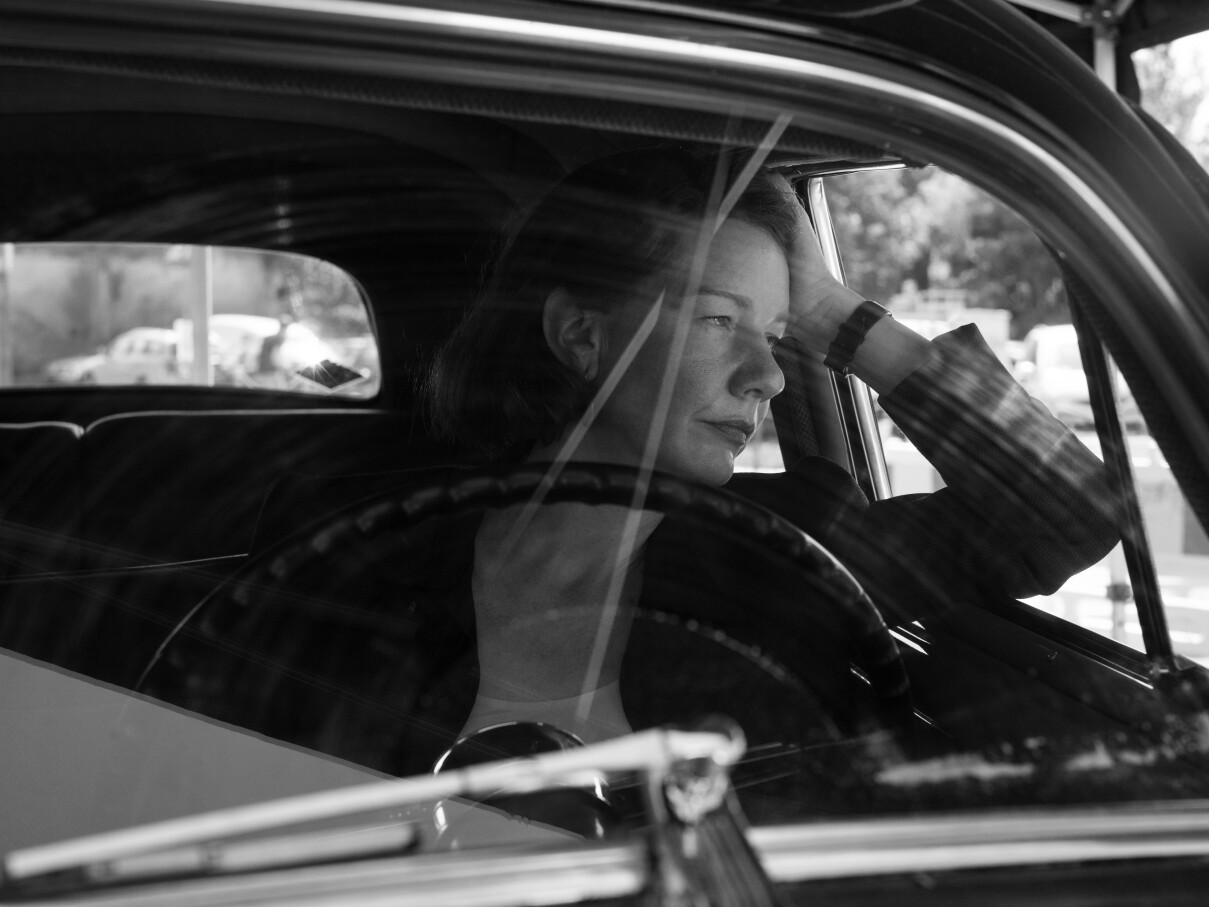
林赛·巴赫(Lindsey Bahr):1949年,诺贝尔奖得主托马斯·曼(Thomas Mann)在流亡多年后重返德国,接受了两项歌德奖(Goethe Prize)。西德的法兰克福(Frankfurt)是歌德200年前的出生地;而东德的魏玛(Weimar)则是歌德的故乡——托马斯·曼在那里度过了晚年并去世。这两座城市都希望借助这一机会来纪念歌德诞辰200周年。托马斯·曼本人于1933年离开了德国,他将这次回国视为一个机会,以便重新审视自己分裂的祖国。
LINDSEY BAHR In 1949, Nobel laureate Thomas Mann returned to Germany after years in exile to accept dual Goethe Prizes. Frankfurt, in West Germany, was Goethe’s birthplace 200 years earlier. Weimar, in communist East Germany, was where he lived and died. Both cities felt a claim to Mann’s return for the bicentennial of Goethe’s birth. And Mann, who left Germany in 1933, saw it as an opportunity to address his divided homeland.
正是这次旅行,以及科尔姆·托宾(Colm Tóibín)的小说《魔术师》(The Magician),激发了电影导演帕维尔·帕维科夫斯基(Paweł Pawlikowski)创作《祖国》(Fatherland)的灵感。在这部电影中,帕维科夫斯基继续探讨了家庭与国家之间的关系,以及铁幕(Iron Curtain)对人们生活的影响。
It’s this trip, along with Colm Tóibín’s “The Magician,” that inspired filmmaker Paweł Pawlikowski’s “Fatherland,” in which the Polish auteur continues his exploration of family and country along the Iron Curtain. In “Ida,” he looks at identity and trauma through a novice nun who learns she’s Jewish.
在《伊达》(Ida)中,他通过一位初出茅庐的修女的角色来探讨身份认同与心理创伤;在《冷战》(Cold War)中,一段炽热的爱情成为了被边境与流亡所摧残的人们的象征;而在《祖国》中,他的焦点从波兰转移到了德国。影片讲述了父亲汉斯·齐施勒(Hanns Zischler)和女儿桑德拉·许勒(Sandra Hüller)在多年分离后,如何面对破碎的国家现实以及他们自己的家庭困境。
In “Cold War,” a passionate love affair becomes a microcosm for lives interrupted and defined by borders and exile. In “Fatherland,” he shifts his focus from Poland to Germany, where a father (Hanns Zischler) and daughter (Sandra Hüller) grapple with the realities of their broken country, and their own family, after years away.
与帕维科夫斯基之前的两部电影一样,《祖国》同样具有强烈的视觉冲击力与深刻的主题内涵。影片采用明亮的黑白画面和4:3的宽银幕格式拍摄,摄影师卢卡什·扎尔(Łukasz Żal)的摄影技艺令人赞叹。影片时长仅有82分钟,尽管主题极为沉重,但拍摄手法却极为精炼。帕维科夫斯基总是能够以简洁有力的方式呈现复杂的社会问题。
Like Pawlikowski’s previous two films , “Fatherland” is painterly and stark, shot in luminous black-and-white and a 4:3 “academy ratio” by cinematographer Łukasz Żal. It’s also quite short, running a trim 82 minutes. Pawlikowski’s economy of means while taking on the gravest of subjects continues to be a marvel.
如果说《冷战》是一部充满激情与悲剧的电影,那么《祖国》则更多地表达了人们的沮丧与疲惫感。影片的叙事风格更为内敛、更为严肃,是对战后一切乐观情绪的深刻批判。
If “Cold War” was a raw expression of passion and tragedy, “Fatherland” is one of depression and weariness. It’s more buttoned up, more austere, a somber indictment of any postwar optimism.
影片的开场场景非常引人注目:托马斯·曼的长子克劳斯·曼(Klaus Mann,由奥古斯特·迪尔饰演)赤裸着上身,瘫倒在床边,正在给他的妹妹埃丽卡(Sandra Hüller 饰演)打电话。他告诉妹妹,自己已经记不起上一次感受到情感是什么时候了,也不再相信任何东西——无论是文学还是文化。
The film opens with a character who looms large but appears very little: Klaus Mann (August Diehl), Thomas’ eldest son, slumped, unclothed, near the side of a bed with a lover still sleeping in it, speaking on the phone to his sister Erika (Hüller). He tells her he can’t remember the last time he felt anything and he doesn’t believe in anything, literature or culture, anymore.
在这个战后世界里,似乎每个人都想知道这些流亡在外的德国人究竟站在哪一边。克劳斯面无表情地回答说:“他们的选择只有两个:要么支持斯大林,要么支持米老鼠(即支持西方势力)。”他憎恨德国,也憎恨自己的父亲——因为父亲选择了回国。“那是一个糟糕的国家,那里的人也都糟糕透顶。”
In this postwar world, everyone seems to want to know what side these Germans in exile are on. The choice, Klaus deadpans, is either “Stalin or Mickey Mouse.”He hates Germany and his father for returning. “A horrible country with horrible people,” he says.
帕维科夫斯基和编剧亨德里克·汉德洛格滕在故事创作中对一些历史事实进行了艺术化的处理:1949年陪伴托马斯的其实不是他的女儿,而是他的妻子。不过,想象这两代人共同踏上这段旅程,确实能体现出战争的深远影响,以及不同世代在面对困境时的不同反应,这本身也具有一定的诗意。一个流离失所的人,真的还能回到故乡吗?那些被摧毁的一切,真的还能重建吗?重建后的故乡,还会和从前一样吗?
Pawlikowski and screenwriter Hendrik Handloegten take some liberties with historical facts to feed their story. It was not Thomas’ daughter but his wife who accompanied him in 1949. Yet there is some poetry in imagining two generations making this trip together, showing the war’s ripple effects and how one generation might be coping with things differently than another. Can a displaced individual ever really return home? Can a ruin be rebuilt? Will it be the same? The choice also leaves room for the casting of Hüller in a main role, which is never a bad idea.
这样的故事设定也为胡勒(Hüller)担任主角提供了合理的理由——这位演员无疑是一位极具天赋的演员,她只需一个眼神就能掌控整个场景,她的表演总给人一种真实感。在电影中,克劳斯批评埃里卡始终陪伴在父亲身边;埃里卡虽然曾经是一名演员,但现在却变成了父亲的监护人、知己、助手,同时还是他为某个她自己都不再完全认同的“事业”撰写演讲稿的人。他们都在实时地面对着现实中的种种困境。
The actor is certainly a generational talent , who can command a scene with just a look and somehow always feels so tangibly real. In “Fatherland,” Klaus criticizes Erika for continuing to stay by her father’s side. Once an actor, she’s turned into a kind of chaperone, confidant, assistant and speechwriter for a voice and a cause she’s not even quite sure she’s behind anymore, driving him to his stops in a slick Buick. But both are processing what they’re seeing in real time.
在西德的一场豪华派对上,托马斯遇到了理查德·瓦格纳的孙子们,他们希望得到他的帮助,以复兴他们父亲的音乐节,让瓦格纳的音乐得以传承下去。与此同时,埃里卡与她的前夫古斯塔夫·格伦登斯(Gustaf Gründgens)发生了不愉快的对话——她的前夫同样与纳粹政权有过密切关系。如今,他们都在寻求“新的开始”和“救赎”,但那些流亡者却并不愿意给予他们这样的机会……一位记者甚至警告他们不要去东德,以免他们被东德人误认为支持共产主义理想。
At a fancy party in West Germany filled with former Nazi associates, Thomas is approached by Richard Wagner’s grandsons, hoping to get his help in reviving a festival to keep their father’s music alive. Erika, meanwhile, has an uncomfortable exchange with her ex-husband, actor Gustaf Gründgens, who also became cozy with the Nazi establishment. Now, they’re looking for clean slates and redemption that the exiles aren’t prepared to give. A journalist even cautions them from visiting East Germany at all, lest their adopted home starts to believe them sympathetic to communist ideals.
当他们越过边境后,东德的实际状况显得十分糟糕;尽管当地人试图通过仪式和歌声来掩盖这些负面现实。有一个人被保安迅速带走,他告诉他们布痕瓦尔德(Buchenwald)实际上是一个关押政权敌人的集中营,并恳求托马斯在演讲中提及此事。
When they cross the border, things look very bleak in the east in a different way, though attempts are made to distract from the blight with ceremony and song. One person, who is quickly hustled away by security, tells them that Buchenwald is operating as a camp for enemies of the regime and begs Thomas to speak of it in his speech.
与此同时,曼恩(Mann)家族也遭遇了悲剧,这使托马斯那层“道德优越感”的伪装开始破裂。这个曾经充满智慧与荣誉的家庭,其实与战后的德国如出一辙:表面上看似光鲜亮丽、充满理想主义,但实际上根基十分脆弱。
In the midst of all of this, a tragedy befalls the Mann family as well, and you start to see cracks in Thomas’ veneer of moral superiority. The broken family, with all their intellect and acclaim, starts to mirror postwar Germany itself, all pomp, bluster and ideals, but with a flimsy foundation.
在帕维科夫斯基(Pawlikowski)这些充满悲剧色彩的电影中,几乎找不到什么希望……不过还有巴赫(Bach)的音乐——这是克劳斯(Klaus)最喜爱的音乐家;当语言和思想无法表达人们的情感时,巴赫的音乐却能给予人们慰藉。有时候,这已经足够让人们重新振作起来。
There may not be much hope to be found in “Fatherland” — there rarely is in Pawlikowski’s beautiful, aching films — but there is Bach, a favorite of Klaus, whose music provides an emotional release where words and ideas have failed. And sometimes that’s enough to scrape you off the floor.
《祖国》(Fatherland)将于周五在部分影院上映,该片尚未获得美国电影协会(Motion Picture Association)的评级。影片时长为82分钟,评分为四星中的三星。
“Fatherland,” a Mubi release in select theaters Friday, has not been rated by the Motion Picture Association. Running time: 82 minutes. Three stars out of four.